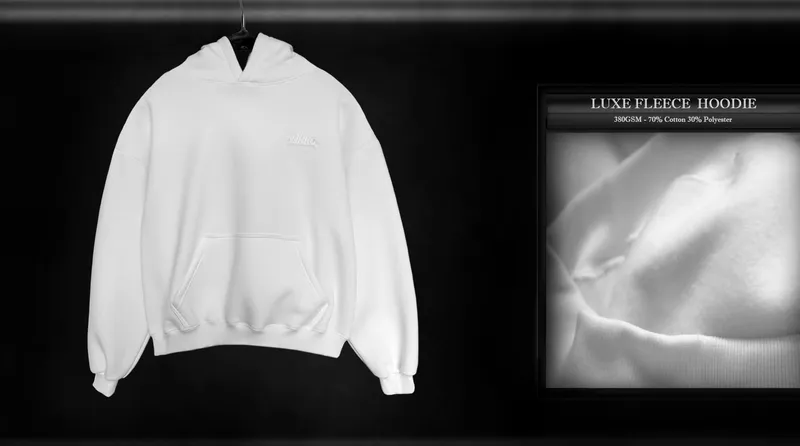
Digital pattern files
Versions can be named, reviewed and passed into sampling without relying on memory alone.
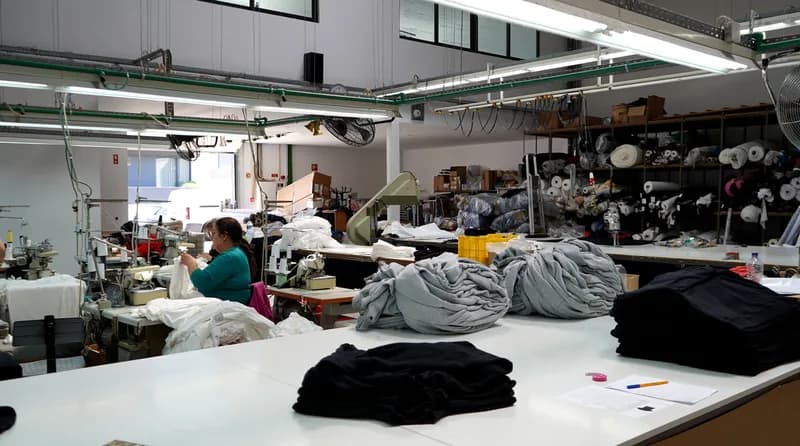
Field note · present + possibility
We start on the real factory floor. Then we ask which tools could improve a decision—without pretending a speculative lab is already White Cotton's production reality.
01 / Present tense
Better files. Clearer approvals. Fewer lost decisions. A future-facing production system is not defined by how futuristic it looks, but by whether the same product truth reaches development, cutting, sewing, finishing and the next reorder.
Versions can be named, reviewed and passed into sampling without relying on memory alone.
Layout decisions can be compared before fabric is committed to the table.
The approved sample, trim references and decoration files can become a repeatable production record.
Photos, measurements and corrections can move between brand and factory before the next physical parcel.
02 / Tool and operator
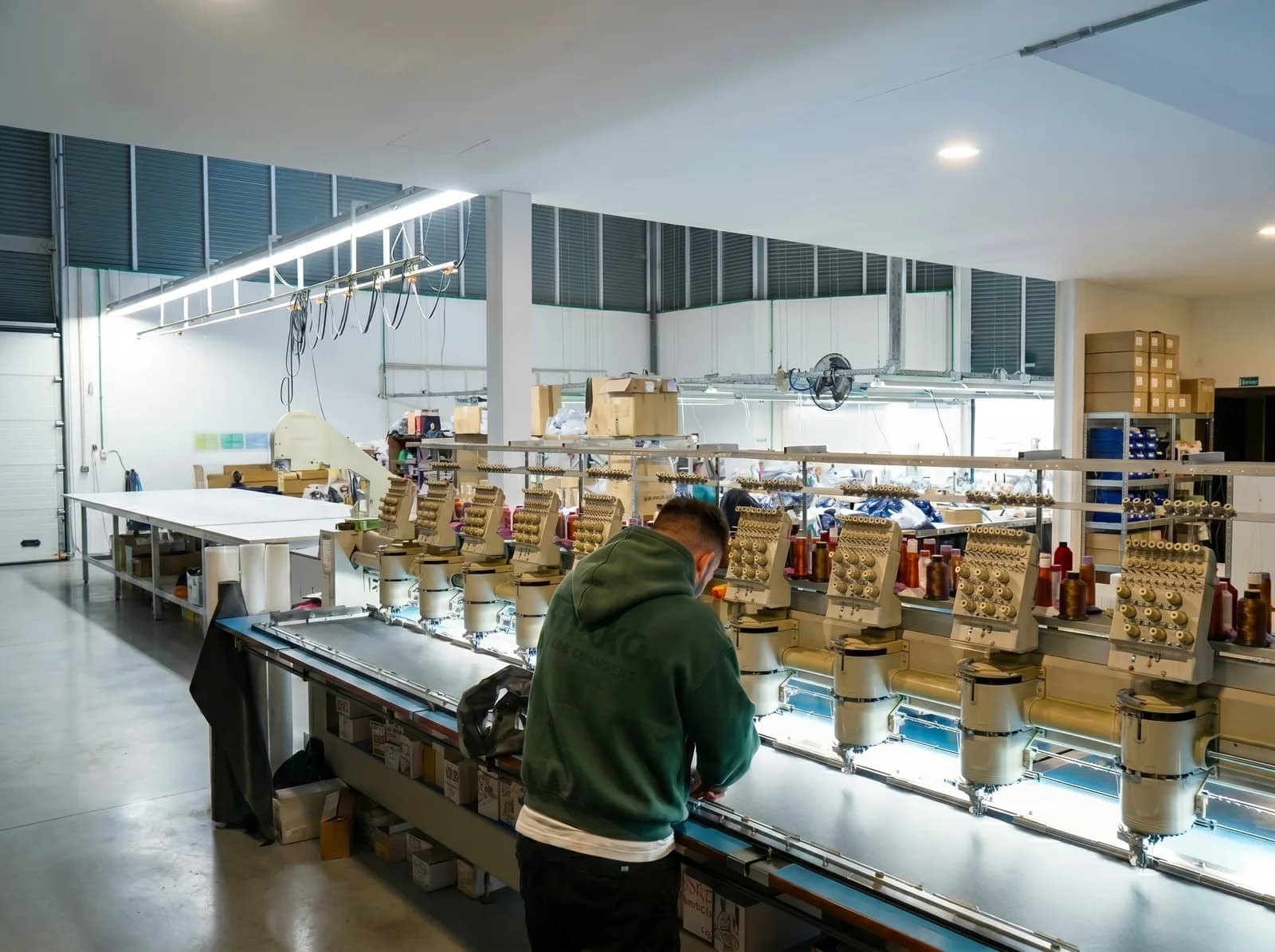
Machines repeat a defined operation with discipline. Garments introduce variation: a knit stretches, a seam turns, a logo sits differently on a new size. The opportunity is not to erase the operator, but to give skilled people clearer inputs and faster feedback.
03 / Clearly labelled possibilities
Each idea earns its place only if it improves a real production decision.
Possibility / planning
Software can compare cutting layouts and help operators evaluate material use. The operator still validates grain, defects and fabric behaviour.
Possibility / development
3D garments can make early proportion questions visible before a physical sample. They do not replace fabric hand-feel or a fit session.
Possibility / records
A structured record can connect the approved fabric, components, care information and production route to the finished style.
Possibility / demand
Better demand signals can support more deliberate quantities and reorder decisions instead of treating a large first run as certainty.
04 / Material intelligence
Fibre composition, weight, colour, finish, source documents and care instructions can all travel with a style. But data is not transparency by itself. The brand still needs to know which record was checked, what it applies to and where a decision changed.
See the proof-trail approach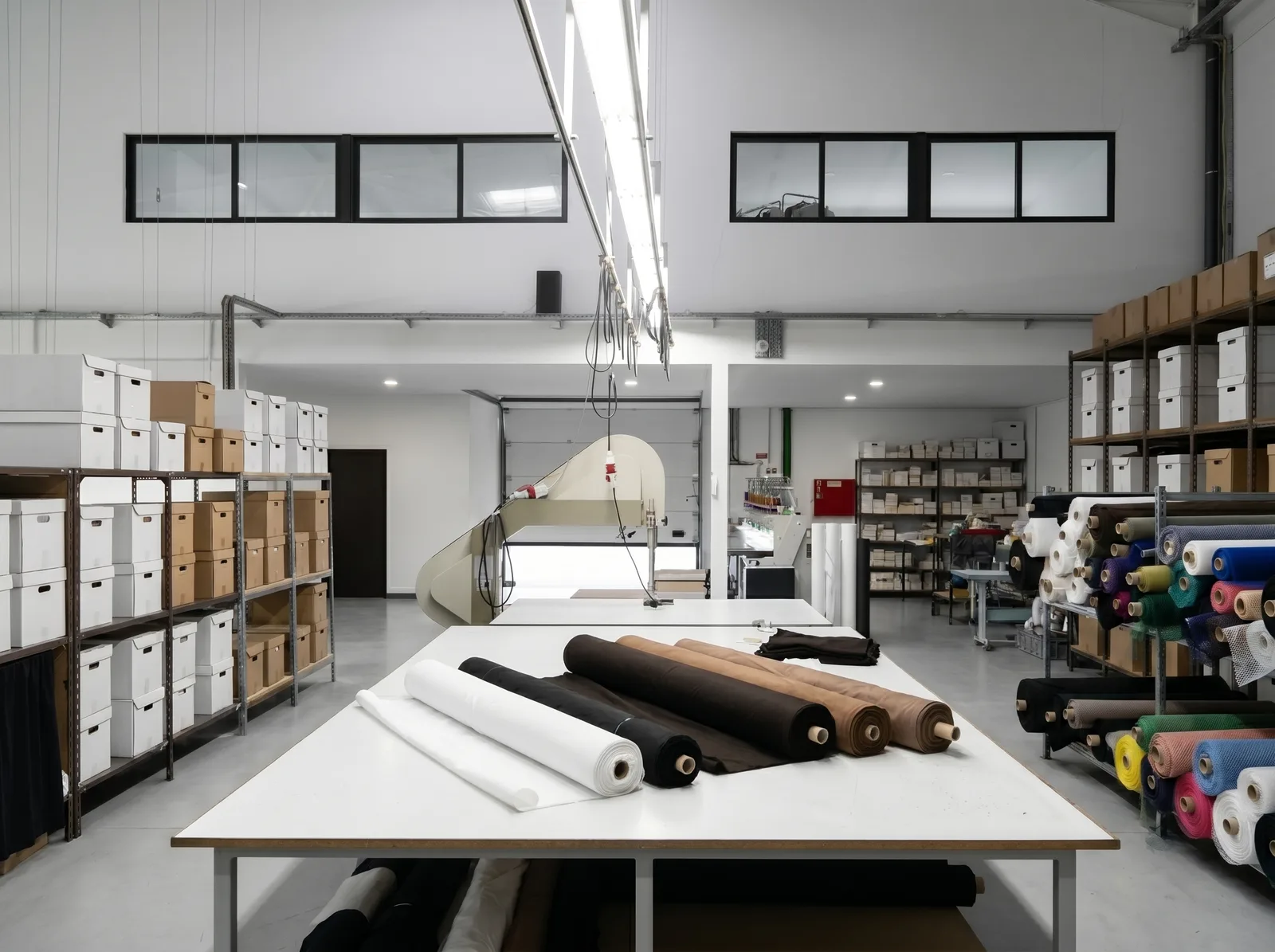 Current environment / material handling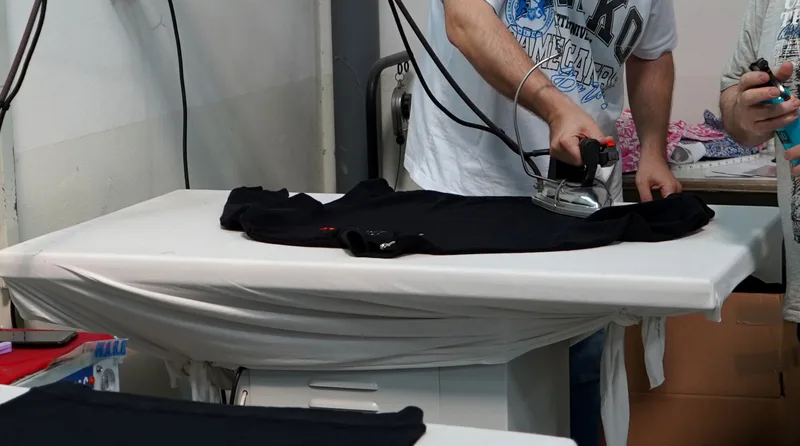
05 / The stubbornly human part
That last judgement is built through repetition: how the hood falls, whether the seam twists, how the surface responds to pressing, whether the approved intention survived the process.
For brands building now
Keep one approved tech pack, one named sample status and one source for measurements, trims, colours and decoration files.
Choose a real delay—marker planning, fit communication or reorder consistency—and judge the tool by what it improves.
Fabric changes under tension, heat, wash and handling. A useful system helps experienced people see and act earlier.
The near future starts with a clear brief
Bring the tech pack, the intended material, the quantity and the uncertainty you need resolved. We can help turn that into a production conversation.
Start the conversationSee today's process
White Cotton · Barcelos
Three generations of manufacturing — minimums from 75 pieces per colourway, and a quotation within a few days.