European Fashion Manufacturing 2026 — Trends & What's Changing
Nearshoring is accelerating, EU sustainability rules are tightening, Asian MOQs are rising. What smart brands are doing to stay ahead in 2026.
 Pedro Carreira··7 min read
Where European Fashion Manufacturing Stands
The European garment manufacturing landscape has shifted more in the past five years than in the previous twenty. Supply chain disruptions, regulatory changes, sustainability demands, and changing consumer expectations have reshaped how and where brands produce their clothing.
This is not a trend report about what colours will be popular next season. This is about the structural changes affecting how garments are manufactured in Europe — and what those changes mean for brands working with European factories.
The Numbers
The European textile and clothing industry employs approximately 1.3 million people across the EU, generating over €160 billion in turnover. The major manufacturing countries:
- —Italy — The largest producer by value, dominant in luxury and premium fashion
- —Portugal — The fastest-growing manufacturing destination for emerging and mid-range brands. Over €8 billion in annual textile revenue, 130,000+ workers
- —Turkey — The largest producer by volume in the wider European region (though not an EU member). Strong in denim, wovens, and high-volume production
- —Romania and Bulgaria — Cost-competitive EU producers, primarily for fast fashion and mid-market brands
- —Spain — Home to vertically integrated fast-fashion giants, with a growing focus on sustainability
- —Germany and France — Primarily design and retail markets, with limited domestic manufacturing
The Nearshoring Wave
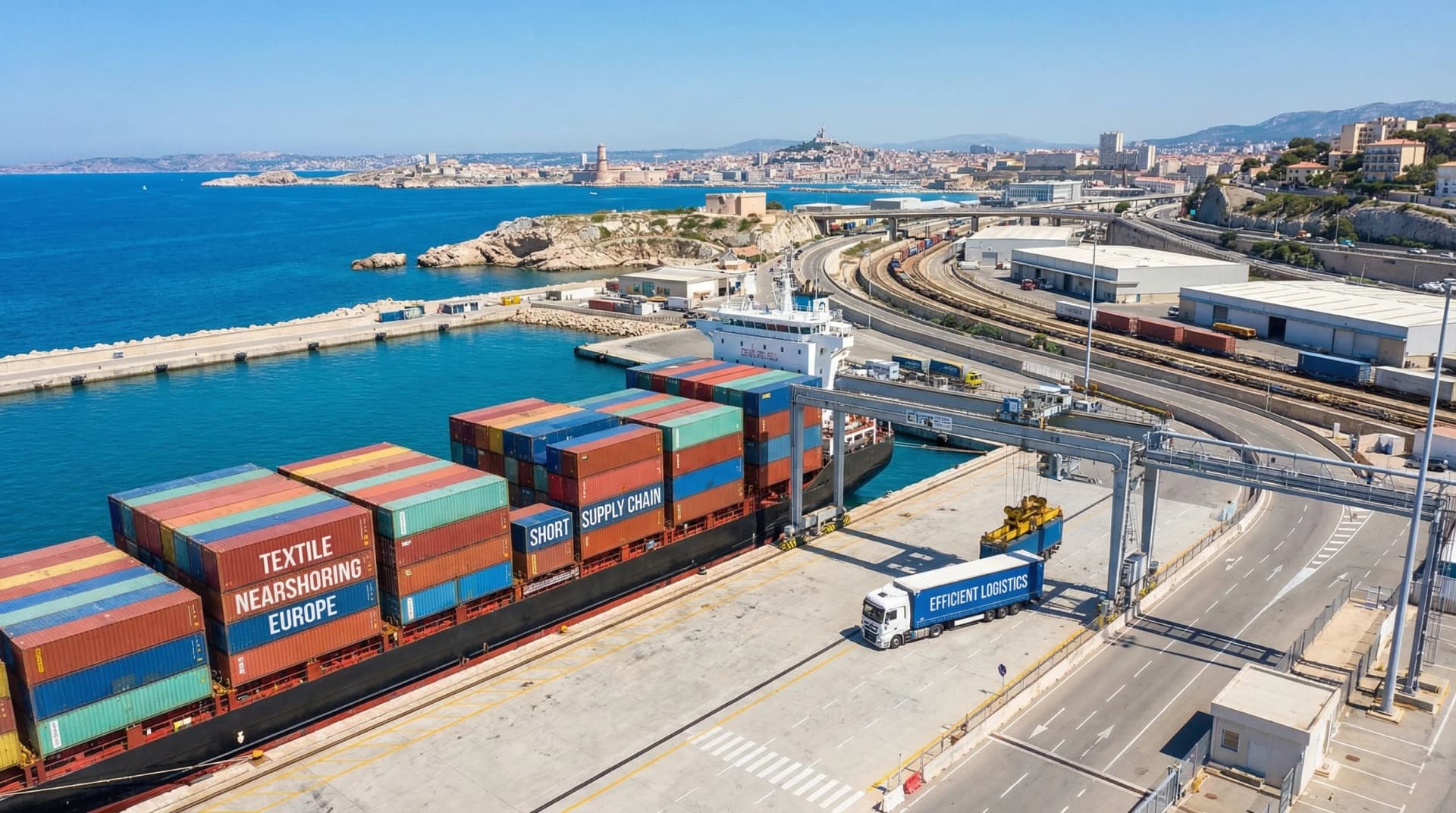
The most significant trend in European fashion manufacturing is nearshoring — the movement of production from Asia back to Europe.
What Is Driving It
- 1.Supply chain resilience — Post-pandemic awareness that 10,000-kilometre supply chains are fragile
- 2.Shipping costs — Container rates have stabilised from 2021 peaks but remain higher than pre-2020 levels. The Red Sea disruptions in 2024 reinforced the vulnerability of ocean shipping routes
- 3.Speed — European brands need faster production cycles to compete: usually 6–12 weeks of production from the deposit in Portugal (4–8 when the fabric is in stock) vs 10–18 weeks from China
- 4.Sustainability — Shorter supply chains mean lower carbon emissions. European environmental standards are enforced, not aspirational
- 5.Consumer demand — "Made in Europe" commands a pricing premium and builds brand trust
- 6.Regulation — EU supply chain due diligence requirements make transparent European sourcing easier to comply with
Who Is Moving
- —DTC brands that built on dropshipping and are graduating to custom manufacturing
- —Mid-range brands that were producing in China and are repositioning as premium
- —Sustainable brands that need verifiable European supply chains for credibility
- —European brands selling primarily to European customers, where the logistics case for local production is overwhelming
For a detailed guide on making this transition, read our nearshoring guide.
Regulatory Changes Reshaping the Industry
EU Textile Strategy
The EU has committed to making all textile products more durable, repairable, and recyclable by 2030. Key elements include:
- —Ecodesign requirements — Minimum durability standards for garments
- —Digital Product Passport (DPP) — Every garment sold in the EU will require a digital passport containing information about materials, origin, environmental impact, and repair instructions. Expected implementation from 2027–2028
- —Extended Producer Responsibility (EPR) — Brands will be financially responsible for the end-of-life management of their products (collection, sorting, recycling)
- —Green claims regulation — Generic claims like "sustainable" or "eco-friendly" will require substantiation. Unverified sustainability marketing may become illegal
CSRD (Corporate Sustainability Reporting Directive)
Large and listed companies must report on their environmental and social impact — including their supply chain. This cascades to their suppliers, including garment factories.
Due Diligence Directive
Brands above certain revenue thresholds must verify and report on human rights and environmental practices across their supply chain.
What This Means for Brands
- —European production becomes simpler to comply with. EU factories already operate under EU environmental and labour law. Compliance is built in
- —Documentation matters. Certifications (GOTS, OEKO-TEX, GRS), traceability records, and factory audits are becoming necessities, not differentiators
- —Transparency is moving from marketing to legal requirement. Brands that have invested in transparent supply chains are ahead of the curve
Portugal's Position in 2026
Portugal has emerged as the most popular nearshoring destination for premium and mid-range brands. Several factors explain this:
The Cluster Advantage
The northern textile corridor (Porto–Guimarães–Barcelos–Braga) concentrates thousands of textile companies in a small geographic area:
- —Garment factories
- —Knitting and weaving mills
- —Dyeing and finishing houses
- —Trim and accessory suppliers
- —Packaging companies
This density means short lead times, easy communication, and a complete supply chain within a one-hour drive. Read our deep dive into Barcelos and the textile cluster.
The MOQ Sweet Spot
Portuguese factories, predominantly family-owned and small-to-medium sized, are structured for the MOQ range that emerging brands need: 75–200 pieces per style per colour. This is below what most Asian and Turkish factories offer, making Portugal uniquely accessible to startups and growing brands.
Quality Reputation
Portugal's reputation for quality knitwear — hoodies, sweatshirts, t-shirts, jersey garments — is well-established. Italian mills and factories specialise in luxury; Portuguese factories specialise in premium-quality everyday wear at accessible price points.
Sustainability Credentials
EU membership means automatic compliance with environmental and labour standards. GOTS, OEKO-TEX, and GRS certifications are widely available. The "Made in Portugal" label carries sustainability associations that support brand positioning.
Challenges Facing European Manufacturing
Labour
Finding skilled garment workers is becoming harder across Europe. The textile workforce is ageing, and younger generations often prefer different career paths. Factories that maintain training programmes and competitive working conditions are better positioned, but the talent pipeline is a long-term concern.
Cost Pressure
European manufacturing cannot compete on price with Asian production. The value proposition must be built on quality, speed, flexibility, and brand positioning — not unit cost. Brands that choose European production for cost savings alone will be disappointed.
Raw Material Dependence
Europe imports the majority of its raw cotton and synthetic fibres. While fabric production (spinning, knitting, dyeing) is local, the raw material supply chain remains global. This creates a dependency that cannot be fully eliminated.
Scale Limitations
European factories are smaller than their Asian counterparts. A brand needing 100,000 units per month will not find that capacity in Portugal. European manufacturing is best suited for small-to-medium volumes where quality and flexibility justify the premium.
What This Means for Your Brand
If You Are Starting Out
European manufacturing — particularly in Portugal — is more accessible than ever for startups. Low MOQs, direct factory relationships, and "Made in Europe" positioning create a strong foundation. The regulatory environment is trending towards transparency and sustainability, which favours European supply chains.
Start small, prove your product, and scale gradually. Read our guide on how to start a clothing brand for a practical roadmap.
If You Are Growing
The economics of European production improve with scale. Higher volumes unlock better fabric pricing, lower per-unit manufacturing costs, and more favourable terms. Brands producing 500–5,000 pieces per style can access excellent value from Portuguese factories.
If You Are Established
For brands with existing Asian production, selectively nearshoring premium lines to Europe can strengthen brand positioning, improve lead times for key products, and simplify sustainability compliance. Most brands do not move everything — they move strategically.
Our Position
White Cotton is a three-generation family factory in Barcelos, in the heart of Portugal's textile corridor. We produce hoodies, sweatshirts, t-shirts, shirts, jackets, and joggers for brands across Europe and beyond.
We are part of this industry's story — and we believe the trends shaping European manufacturing in 2026 play to the strengths of factories like ours: quality, flexibility, transparency, and genuine craft.
If you are building a brand and want to manufacture in Europe, start a conversation with us. We will give you an honest assessment of what we can do for your brand — and what European manufacturing can do for your business.

Pedro Carreira
Founder of White Cotton, a textile manufacturer in Barcelos, Portugal. Producing custom clothing collections for brands across 15+ countries.
Continue Reading

15 Best Clothing Manufacturers in Portugal, Compared (2026)

AI in Fashion Manufacturing: How Technology Is Changing Production
![Barcelos Textile Industry — Portugal's Factory Capital [Inside Look]](/_next/image?url=%2Fimages%2Fgenerated%2Fblog%2Fbarcelos-textile-industry.webp&w=1920&q=75)
Barcelos Textile Industry — Portugal's Factory Capital [Inside Look]
Nearshoring Fashion to Europe — The Numbers