15 Best Clothing Manufacturers in Portugal, Compared (2026)
Side-by-side comparison of 15 Portuguese factories — MOQs from 75 to 1,000 units, specialities, lead times, strengths. By a competing factory owner.
 Pedro Carreira··42 min read
Why Are Clothing Manufacturers in Portugal So Popular?
Portugal has quietly become one of the most sought-after locations for clothing manufacturers in Europe. While Italy gets the luxury headlines and Turkey competes on price, Portuguese clothing manufacturers occupy a position that is genuinely difficult to replicate anywhere else: high quality, reasonable minimums, strong sustainability credentials, and geographic proximity to every major European market.
The Portuguese textile industry employs over 130,000 people and generates billions of euros in exports annually. The northern region — spanning from Porto down through Braga, Guimaraes, Barcelos, and Famalicao — is one of the densest clusters of textile expertise on the continent. Within a 50-kilometre radius, you can find spinning mills, weaving and knitting operations, dyehouses, cut-and-sew factories, embroidery specialists, and finishing plants. That concentration means shorter supply chains, faster communication between production stages, and the ability to solve problems in person rather than over email across time zones.
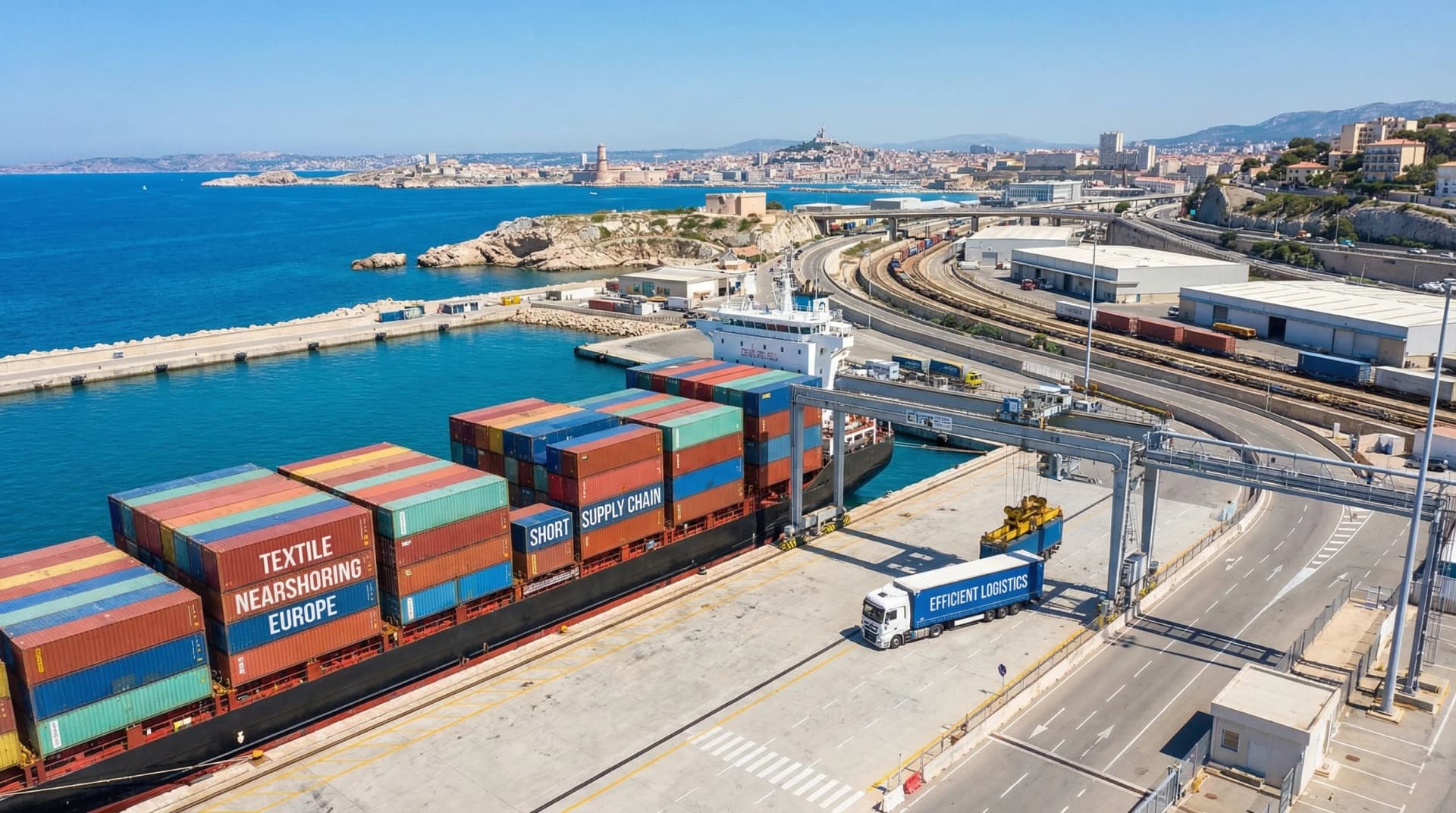
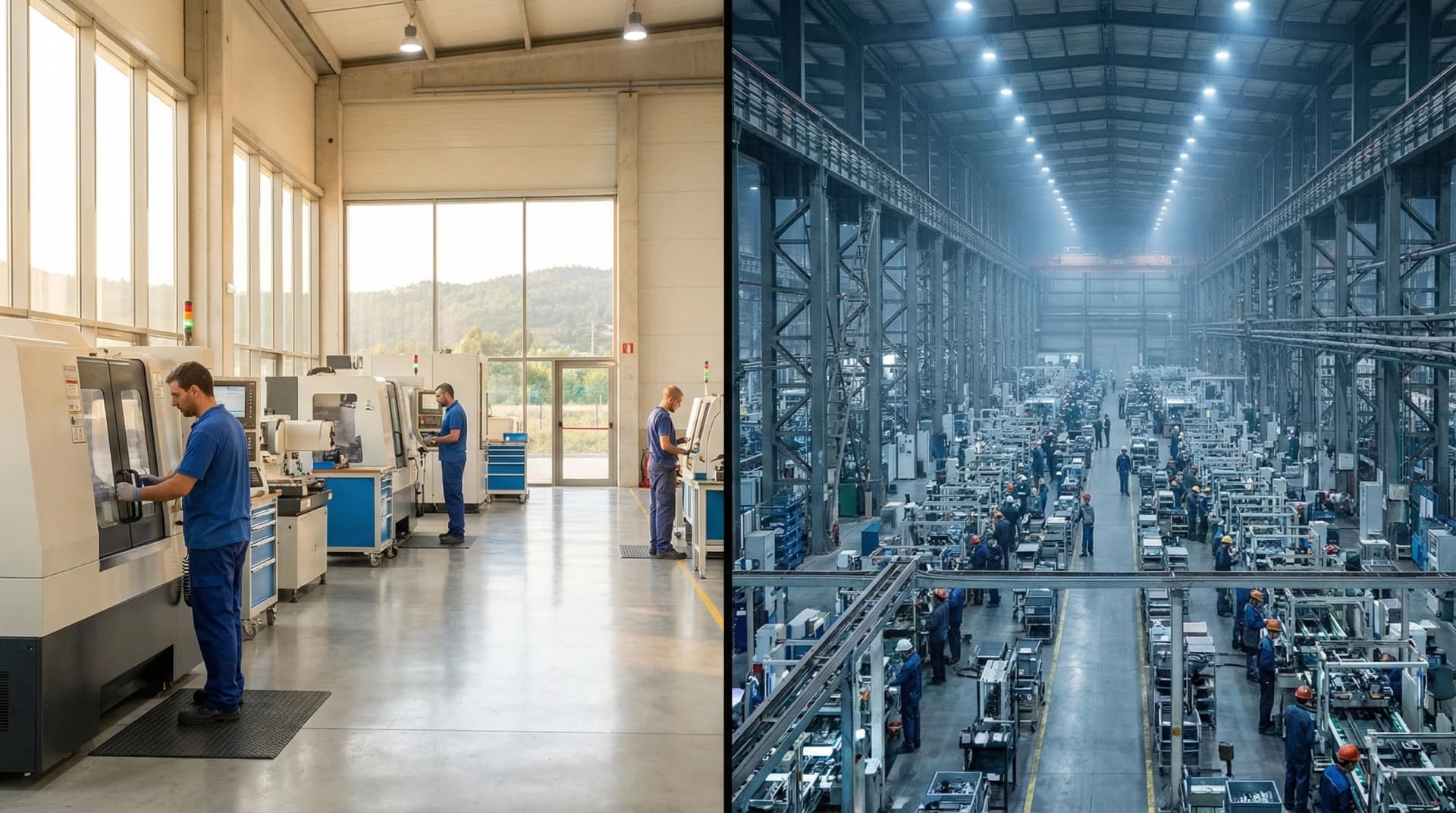
For brands coming from Asia-based manufacturing, the shift to Portugal typically means higher per-unit costs but dramatically lower total cost of ownership. Lead times drop from 90–120 days to usually 6–12 weeks of production. Minimum order quantities fall from thousands to hundreds — sometimes as low as 75 units. Shipping to European customers takes days, not weeks. Quality rejects decrease because you can visit the factory, approve samples in person, and maintain a real relationship with the people making your product.
Portugal also leads in sustainability. Many Portuguese factories hold GOTS, OEKO-TEX, BCI, and GRS certifications as standard. The country's textile industry has invested heavily in organic cotton, recycled materials, water-efficient dyeing, and solar-powered production. For brands whose customers care about where and how their clothes are made, "Made in Portugal" carries genuine weight.
The trade-off is real: you will pay more per garment than you would in Bangladesh, Pakistan, or China. But for brands producing under 5,000 units per style — which describes the vast majority of independent labels — Portugal often works out more economically when you factor in shipping costs, import duties, quality control trips, minimum order requirements, and the hidden time costs of managing production across continents.
This guide covers the 15 best clothing manufacturers in Portugal for 2026. We have included factories of all sizes — from small family operations to some of Europe's largest textile groups — so you can find the right fit regardless of where your brand is in its journey.
A note on transparency: we are White Cotton, and we are on this list. We have placed ourselves at number one because we believe in what we do. But we have written honestly about every manufacturer here, including their genuine strengths. If another factory on this list is a better fit for your specific needs, we would rather you find the right partner than choose the wrong one. That is what makes a guide useful.
Already know what you need? Skip the comparison and get a low-MOQ quote from our factory — MOQ from 75 units per colourway, 4–6 week lead time, factory-direct pricing.
Portuguese Clothing Manufacturers Compared: The Full Table
Every figure in this table was read off each company's own website on 18 August 2026 — not from a directory, an aggregator, or another list. Where a company does not publish a figure, the cell reads —. We have not estimated, rounded, or filled a gap with an industry average, because a made-up MOQ is worse than no MOQ when you are about to send a tech pack.
Two things this table will tell you that no other list does. First, several well-known names on it are not factories — they are agencies, sourcing platforms, or factory networks that place your order somewhere else. That is not a criticism, but you should know whether you are talking to the people who will sew your garment. Second, most Portuguese manufacturers publish no MOQ and no lead time at all, which is why comparing them from a search results page is so frustrating.
| Factory | Location | MOQ | Lead time | Speciality | Certifications (as they state them) | Best for |
|---|---|---|---|---|---|---|
| White Cotton | Barcelos (Lijo), Braga | 100 in a single colourway, 75 per colourway on 2+ (hoodies, sweatshirts, joggers, shorts); 150 / 100 for t-shirts and other jersey | Samples 4–8 weeks; bulk 6–12 weeks | Cut-and-sew casualwear and streetwear | Sources OEKO-TEX Standard 100, GOTS and BCI fabrics from partner mills; holds no factory certification | First collections and low-volume runs that still need real factory quality |
| ASBX | Cutting and manufacturing in Barcelos; logistics in Vila Nova de Gaia | 50–100 per style/colour (custom 100, knitted 50, denim 150) | Blanks bulk 3–4 weeks; custom bulk 6–9+ weeks | Jersey streetwear, knitwear and denim, plus a separate blanks store | — | Streetwear brands starting on blanks and graduating to custom |
| Create Fashion Brand | Barqueiros; production in Beiriz, Póvoa de Varzim | 150 per model/colour developed from scratch; 50 per colour on blanks customisation | Sampling 3–6 weeks; production 8–10 weeks | Jersey, wovens, outerwear and denim, knitting to sewing in-house | GOTS 6.0, OEKO-TEX 100, OCS 3.0, ISO 45001, UN Global Compact | Sustainability-led brands wanting one vertical supplier |
| Friendly Factories | Maia, Porto | 150 per style and colour (100 described as their "sweet spot") | — | Menswear, womenswear and kidswear routed across a 32-manufacturer network | States its partner manufacturers hold GOTS and OEKO-TEX; claims none itself | Brands wanting one contact across many specialist factories |
| Portugal Textile | Felgueiras, near Porto | — ("customised for each project") | — ("dependent on your specific needs") | Broad apparel plus homeware, placed across 20+ factories | States it holds GOTS; GRS also named | Brands who want a sourcing agent rather than a single factory |
| ExploreTex | Lisbon head office; production in Portugal and Dhaka, Bangladesh | 500 per style, 1,000 per order | Bulk 30–45 days after sample approval | Knit, woven, denim, sweaters and caps | Lists BSCI, WRAP, SEDEX, SMETA, GOTS, OEKO-TEX 100, GRS, RCS, ISO 9001 | Higher-volume orders where a Portugal/Asia dual hub is useful |
| Fashion Roof Services | — | — | — | — | — | — |
| Simetex | Milhazes, Barcelos | — | — | Luxury and high-end garments in both knits and wovens; 30+ years | — | Premium and luxury work where finish matters more than price |
| Riopele | Vila Nova de Famalicão | — | — | Vertically integrated fashion-fabric mill (since 1927) that also runs a garment production service | — | Custom fabric development and woven production at scale |
| Soeiro | Zona Industrial de Cete, Paredes, Porto | — | — | Private label for men, women, children and baby in the medium-high segment; founded 1986, 90 staff | States it holds GOTS, GRS, OCS and OEKO-TEX Standard 100 (Ecocert licence 149097) | Private-label programmes that need full certification paperwork |
| Labwear Studios | Not stated beyond "our Portuguese factories" | 50–100 per style in Portugal; 100–300 in China | Portugal: bulk 5–7 weeks, sampling 5–7 weeks | Cut-and-sew basics, denim, workwear and activewear placed across a 30+ factory network in Portugal and China | — | Brands wanting one platform spanning Portugal and China |
| RTG Textiles | Manhente, Barcelos (plus a Copenhagen office) | — | — (states 3–5 day delivery across Europe once production finishes) | Cut-and-sew casualwear for men, women and children, part in-house and part subcontracted | — | Brands whose priority is fast delivery inside Europe |
| Trotinete | Leça do Balio, Matosinhos, Porto | 50 units per style | Development 2–4 weeks (simple) to 6–8 weeks (complex); production up to 30 days | School and corporate uniforms; founded 1992 | ISO 9001, OEKO-TEX and NP 4552, each published with an expiry date | Schools, colleges and corporate uniform programmes |
| Lopes & Carvalho | Vermoim, Vila Nova de Famalicão, Braga | — (positions itself on "small quantities or limited editions") | 5–7 weeks after final sample approval | Cut-and-sew for men, women and children plus knitwear, socks and home textiles; founded 1995 | OEKO-TEX Standard 100 Class 1 since 2014; ISO 9001:2015 | Limited editions and short runs from an established factory |
| CAIFAI | — | — | — | — | — | — |
A few cells deserve a word of explanation rather than a dash.
Fashion Roof Services and CAIFAI could not be verified at all. On 18 August 2026 fashionroofservices.com did not resolve on either .com or .pt, and caifai.pt returned an expired TLS certificate, which means a browser shows a full-page security warning instead of the site. Both appear on other lists of Portuguese manufacturers, including ours, so we have kept their entries below — but we will not restate specifications we cannot currently source. If you want to approach either, expect to find them by phone or through the Barcelos textile cluster rather than through their websites.
A blank certifications cell does not mean a factory is uncertified. It means the company does not name a certification on its own website. Several factories in Portugal hold OEKO-TEX or GOTS and simply never put it online, because their customers ask for the certificate directly. Always ask for the document and its expiry date — Trotinete is the only company here that publishes expiry dates unprompted, which is worth noticing.
Read the MOQ column carefully, because the units differ. Most of these figures are "per style", which counts every colour of that style together. Ours is per colourway, which is the stricter definition — 75 per colourway across two colours is a 150-piece order, while "50 per style" elsewhere may mean 50 pieces total. Ask which definition a factory means before you compare two numbers.
The 15 Best Clothing Manufacturers in Portugal
1. White Cotton
Location: Barcelos (Lijo), Braga district — approximately 40 minutes from Porto.
Specialisation: Cut-and-sew manufacturing across the full casualwear spectrum: hoodies, sweatshirts, t-shirts, polo shirts, shirts, outerwear, joggers, shorts, and pants. Both custom production (your designs, your patterns) and private label development where we help you build the product from a concept or reference.
MOQ: 75 units per style per colourway — 100 if you run a single colourway. Most factories in Portugal require 200–500. We work with startups on their first production run and scale with them as they grow. There is no penalty pricing at low volumes — the per-unit cost is higher at 75 units than at 500, naturally, but we do not inflate it artificially to discourage small orders.
Certified fabrics: We source OEKO-TEX Standard 100 certified fabrics, GOTS-certified organic cotton (with transaction certificates from certified mills), and cotton from BCI-member supply chains. These are fabric-level certifications from our partner mills — we provide the documentation for your compliance and marketing needs.
What makes White Cotton different: We are a family-run factory, not an agency or intermediary. When you work with us, you are working directly with the people who cut and sew your garments. There is no middleman margin, no communication delays, and no ambiguity about who is responsible for quality.
Our sample turnaround is usually 4 to 8 weeks from payment. Bulk production usually runs 6 to 12 weeks from the deposit, depending on order size and fabric availability. We source fabrics from certified mills in the Porto and Guimaraes region, which means we can offer organic cotton, recycled cotton, recycled polyester, French terry, fleece, jersey, pique, and a range of blends without the lead times that come from importing fabric from overseas.
We are particularly strong for brands that need a manufacturing partner, not just a factory. Many of our clients are building their first collection or transitioning from print-on-demand to cut-and-sew. We help with pattern development, fabric selection, construction advice, and sampling — not because we charge for consulting, but because getting the product right at the sample stage saves everyone time and money in production.
Best for: Independent brands, startups launching their first collection, DTC labels scaling from small runs to medium production, streetwear and casualwear brands that need low MOQs without sacrificing quality.
Website: whitecotton.pt — Low-MOQ manufacturing from 75 units →
2. ASBX
Location: Cutting and manufacturing at Vila Frescainha, Barcelos; logistics centre at Pedroso, Vila Nova de Gaia.
Specialisation: Streetwear-focused manufacturing with both a blank clothing line and custom manufacturing services. ASBX describes itself as a manufacturer of jersey-based garments — hoodies, t-shirts, joggers, track shorts, crewnecks — and has added knitwear and denim since 2024. They offer a ready-to-ship blanks programme alongside full custom cut-and-sew production, with printing, embroidery and washes handled in-house.
MOQ: Published as 50–100 pieces per style and colour. Their FAQ breaks it down: 100 pieces per style/colour for custom products (50 possible with an upcharge), 50 for knitted, 150 for denim, with the minimum counted across all sizes.
Certifications: Not published. ASBX runs a sustainability page but does not name a specific certification on it — ask them directly for documents.
What makes ASBX different: The blanks programme is genuinely useful for brands that are not yet ready for full custom production. You can order their heavyweight hoodies or t-shirts, add your branding (labels, embroidery, print), and sell a product that is manufactured in Portugal with decent quality — all without committing to hundreds of units. When you are ready to move to custom, they can handle that transition.
Their marketing and brand presence are strong. ASBX has invested heavily in content, social media, and community building, which makes them one of the most visible Portuguese manufacturers internationally. They also publish their lead times openly, which is rare here: 3-4 weeks for a blanks bulk order and 6-9+ weeks for custom bulk, with the caveat on their own FAQ that the custom timeline is not guaranteed.
Best for: Streetwear brands, new labels that want to start with blanks before moving to custom, brands that value a modern and responsive manufacturer with strong digital communication.
Website: asbx.pt — note that the older asbx.co address no longer resolves.
3. Create Fashion Brand (CFB)
Location: Porto region.
Specialisation: Eco-friendly and sustainable manufacturing. CFB positions itself as a manufacturer for conscious fashion brands, offering both a luxury blanks line and private label manufacturing services. Their product range includes t-shirts, hoodies, sweatshirts, dresses, and accessories, with a strong emphasis on organic and recycled materials.
MOQ: 150 pieces per model and colour for a garment developed from scratch, and 50 units per colour for customising their blanks. Woven brand labels carry a separate 1,000-unit minimum per design.
Certifications: They display GOTS 6.0, OEKO-TEX 100, OCS 3.0, ISO 45001 and UN Global Compact badges on their private-label page. Their site does not spell out which of these they hold themselves and which sit with their suppliers, so ask to see the certificates.
What makes CFB different: CFB has carved out a niche in the intersection of sustainability and luxury. Their blanks use premium fabrics — the kind of hand-feel and weight that positions a product at a higher retail price point. For brands that want to tell a sustainability story without compromising on the tactile quality of the garment, CFB delivers.
They also provide design assistance and product development support, which is valuable for brands that have a vision but need help translating it into a manufacturable product. Their published timeline is 3-6 weeks for sampling and 8-10 weeks for production once fabrics are on site - slower than several factories here, which is the trade-off for doing the knitting, dyeing, cutting and sewing under one roof.
Best for: Sustainable fashion brands, eco-conscious labels, brands targeting the premium/luxury segment that want organic and recycled materials as standard.
Website: createfashionbrand.com
4. Friendly Factories
Location: Offices in Maia, Porto district; production spread across their partner factories.
Specialisation: Friendly Factories is a group of 32 partner manufacturers rather than a single factory - their own description, and an important distinction. Operating since 2009, they cover menswear, womenswear and kidswear, and match each order to whichever factory in the network suits that product type. They report 53 active brands.
MOQ: 150 units per style and colour on their homepage; their contact page describes 100 per style and colour as their sweet spot. That is lower than their scale might suggest.
Certifications: They state that most of their partner manufacturers hold certifications such as GOTS and OEKO-TEX. Friendly Factories does not claim to hold any itself - the certificate belongs to whichever factory makes your order, so ask which one that is.
What makes Friendly Factories different: Scale and versatility. If you need to produce a full collection that spans t-shirts, outerwear, and knitwear, most single factories cannot handle all of those in-house. Friendly Factories can, because they route each product type to the appropriate specialist factory within their network. You get a single point of contact but access to multiple production capabilities.
This model works well for established brands with diverse collections. The trade-off is that you are not building a direct relationship with one factory floor — you are working through a management layer. For some brands, that is a benefit (less to manage). For others, particularly those who value the intimacy of knowing exactly who is making their garments, it is a consideration.
Best for: Mid-size to large brands with diverse product lines, brands that need one-stop manufacturing across multiple garment categories, labels that want to consolidate their Portuguese production under a single partner.
Website: friendlyfactories.com
5. Portugal Textile
Location: Felgueiras, a town near Porto in northern Portugal.
Specialisation: Portugal Textile describes itself as a manufacturer group and agency that places clothing production with the right factories in Portugal, working with more than 20 of them. Founded in 2007, it covers a very broad range - basics, activewear, swimwear, denim, loungewear, underwear, outerwear, kidswear and suits, plus bedding and homeware. Worth knowing before you approach them: you are engaging a sourcing partner, not booking a specific sewing floor.
MOQ: Not published. Their site states that minimums are customised for each project and vary by style and colour.
Certifications: Their certifications page states that Portugal Textile holds GOTS certification, and names GRS as well.
What makes Portugal Textile different: Nearly two decades of experience means they have refined their processes and built reliable supplier relationships. They understand the European market deeply and can advise on fabric trends, construction methods, and production planning. Their sustainability focus is not a marketing add-on — it is woven into their operations from fabric sourcing to finishing.
They do not publish lead times either - their site says the timeline depends on your specific needs. For a brand that does not yet know which factory type suits its product, having someone else run that matching is genuinely useful; for a brand that already knows exactly what it needs, it is a layer you may not want.
Best for: Brands that prioritise sustainability, mid-size labels looking for a reliable production partner, fashion brands that need consistent quality and on-time delivery.
Website: portugaltextile.com
6. ExploreTex
Location: Head office in Lisbon, with managed production units in northern Portugal and a directly operated facility in Dhaka, Bangladesh.
Specialisation: Custom clothing manufacturing with a structured, process-driven approach, run on what they call a dual-hub production model. They handle the full cycle from fabric sourcing to packed garments across knit (t-shirts, hoodies, polos, sportswear), woven (shirts, trousers, dresses, blazers), denim, sweaters and caps. Read that dual-hub point carefully if Made in Portugal is part of your proposition - confirm in writing which hub your order will run in.
MOQ: 500 pieces per style and 1,000 pieces per order. This is the highest published minimum on this list, which means ExploreTex is better suited to brands that have proven their designs and are ready to produce at volume. They note that custom fabrics, trims or printing are open to discussion.
Certifications: They list BSCI, WRAP, SEDEX and SMETA for social compliance; GOTS, OEKO-TEX Standard 100, GRS and RCS for materials; and ISO 9001 for quality. Their site does not separate what they hold from what their partner factories hold.
What makes ExploreTex different: Their process is methodical. ExploreTex is not the factory for experimental one-off samples or tiny test runs. They are the factory for brands that know what they want and need it produced reliably at scale. Their production management is structured around clear milestones — fabric approval, pre-production sample, size set, bulk production, quality inspection — with formal sign-offs at each stage.
This structured approach reduces errors and miscommunication. When you are producing 500+ units, a mistake in production is expensive. They quote 30-45 days for bulk production after sample approval, plus 5-10 days by air or 20-35 days by sea depending on the hub.
Best for: Established brands with proven products, labels ready to scale production, brands that value a structured and process-driven manufacturing partner.
Website: exploretex.com
7. Fashion Roof Services
Location: Operations in both Portugal and Italy.
Specialisation: Luxury and premium garment manufacturing. Fashion Roof Services bridges the Portuguese and Italian manufacturing ecosystems, offering production capabilities that span from contemporary fashion to high-end luxury. Their dual-country presence allows them to leverage the strengths of both markets — Portugal's competitive pricing and Italy's luxury finishing.
MOQ: Not verifiable. See the note below.
Certifications: Not verifiable. See the note below.
Site status (18 August 2026): fashionroofservices.com does not resolve, and neither does the .pt equivalent. We could not reach a first-party page, so nothing in this entry has been re-verified this year and no figure for them appears in the table above. The description below is retained from our March 2026 edition and should be treated as unconfirmed.
What makes Fashion Roof Services different: The Portugal-Italy axis is their key differentiator. If your brand sits in the premium-to-luxury space and you need certain elements produced in Italy (for the "Made in Italy" cachet or access to specific Italian fabrics and techniques) but want to keep your core production costs manageable in Portugal, Fashion Roof can orchestrate that.
They understand luxury market expectations — construction quality, finishing details, fabric quality, packaging — at a level that most Portuguese factories frankly do not prioritise. If you are producing garments that will retail above EUR 150–200, Fashion Roof speaks your language.
Best for: Luxury and premium fashion brands, labels that need production in both Portugal and Italy, brands where construction quality and finishing details are paramount.
Website: fashionroofservices.com
8. Simetex
Location: Barcelos, Braga district.
Specialisation: Luxury and high-end garment manufacturing. Simetex describes its work as covering all types of luxury and high-end apparel in both wovens and knits — a broader remit than knitwear alone, which is how we characterised them previously. They have been operating for over 30 years, which in the Portuguese textile industry means they have weathered multiple market cycles and survived on the strength of their product quality. Their service list runs from product design and sample creation through production, labelling, quality-control inspection, shipping, and even product photography.
MOQ: Not published. Their site carries no minimum anywhere, so you will have to ask.
Certifications: Not published. They describe more than 30 years of experience and list quality-control inspection among their services, but name no certification on their site.
What makes Simetex different: Knitwear is a different discipline from cut-and-sew, and factories that do it well are specialists. Simetex is exactly that. Their machinery, their workforce skills, and their pattern-making expertise are all tuned for knitted garments. If you need a fully-fashioned merino wool sweater, a cotton-blend cardigan, or a fine-gauge knitted polo, Simetex has the machinery and know-how to produce it at a level that a general cut-and-sew factory cannot match.
Their location in Barcelos places them in the heart of Portugal's textile manufacturing zone, with access to the same yarn and fabric supplier network that supports the broader industry.
Best for: Knitwear-focused brands, luxury labels that need knitted garments (sweaters, cardigans, knitted dresses), brands that require experienced knitwear pattern-making and production.
Website: simetex.pt
9. Riopele
Location: Vila Nova de Famalicao, Braga district.
Specialisation: Riopele is one of Europe's largest vertically integrated textile mills. Unlike most factories on this list, Riopele controls the process from yarn to finished fabric — spinning, weaving, dyeing, and finishing all happen in-house. They produce fabrics for suiting, shirting, casualwear, and technical applications, and also offer garment manufacturing.
MOQ: Not published. Riopele operates at industrial scale and does not put minimums online; expect fabric and garment runs suited to medium and large brands.
Certifications: Not published in a form we could retrieve. Their site is JavaScript-rendered and its sustainability section did not return a named certification to us, though their vertical integration does mean they control environmental impact at every stage. Ask for the current list directly.
What makes Riopele different: Vertical integration at this scale is rare. Most Portuguese factories buy fabric from mills. Riopele is the mill. If you need a specific fabric developed — a particular weave, weight, or blend that does not exist in anyone's current catalogue — Riopele has the R&D capability and production machinery to develop it. They invest significantly in fabric innovation, including sustainable and technical textiles.
They supply fabric to some of Europe's largest fashion houses and also produce finished garments. The scale of their operation means they are not the right partner for a startup producing 100 hoodies. But for a brand that needs custom fabric development or large-scale woven garment production, Riopele is world-class.
Best for: Medium to large brands, brands that need custom fabric development, woven garment production (suits, shirts, trousers), labels that want vertical integration and full supply chain traceability.
Website: riopele.pt
10. Soeiro
Location: Zona Industrial de Cete, Paredes, Porto district.
Specialisation: Private label clothing manufacturing, founded in 1986 and now around 90 staff. Soeiro produces for men, women, children and babies in the medium-high segment, entirely under private label, and states that exports are 100% of its activity. Modelling, cutting, embroidery, production, quality control and shipping are all listed as in-house departments.
MOQ: Not published as a number. Their about page has a section headed "flexibility in quantities" but states no figure.
Certifications: The strongest published set on this list. Soeiro states it holds GOTS, GRS, OCS and OEKO-TEX Standard 100, certified by Ecocert Greenlife under licence number 149097. If your buyer or retailer demands certification paperwork, this is the entry to look at twice.
What makes Soeiro different: Longevity and consistency. A factory that has been operating since 1986 has built deep institutional knowledge about garment construction, fabric behaviour, and production management. Soeiro's strength is in reliable, repeatable quality — the kind of manufacturing partner that produces your spring collection to the same standard as your autumn collection, year after year.
Their private label expertise means they understand brand building from the manufacturing side. They can advise on labelling, packaging, garment finishing, and the small details that differentiate a mid-market product from a premium one.
Best for: Established brands looking for a long-term production partner, private label brands in the medium-to-high segment, labels that value consistency and manufacturing experience over trend-chasing.
Website: soeiro.pt
11. Labwear Studios
Location: Not stated beyond "our Portuguese factories" – no city or address is published.
Specialisation: Labwear Studios is a manufacturing-as-a-service platform rather than a factory: their own description is an integrated network of 30+ specialist manufacturers, with your tech pack matched to a suitable supplier. They cover cut-and-sew basics (t-shirts, hoodies, sweatpants, crewnecks) plus denim, workwear jackets, windbreakers, tracksuits, activewear, leggings and caps. Production runs in Portugal and in China, and they publish separate figures for each.
MOQ: 50–100 pieces per style in Portugal, 100–300 in China. No per-colour qualifier is published, so confirm whether that covers one colourway or several.
Certifications: Not published. They reference strong sustainability and labour standards in Portugal without naming a certification.
What makes Labwear Studios different: Breadth, and unusual transparency about timing. They publish lead times most manufacturers keep private — in Portugal, 5–7 weeks for both bulk and sampling; in China, 6–11 weeks bulk and 3–6 weeks sampling — and they publish how their factory network is tiered in each region. They also run a public price calculator and offer 2,600+ Pantone TCX colours.
The trade-off is the one that comes with any network model: you are not building a relationship with a single sewing floor, and the factory making your garment may change between orders. If "Made in Portugal" is load-bearing for your brand story, note that China is an equal half of what they offer and confirm in writing which hub your order runs in.
Best for: Brands that want one platform spanning Portugal and China, labels that want to compare both regions before committing, and founders who value published lead times over a direct factory relationship.
Website: labwearstudios.com
12. RTG Textiles
Location: Manhente, Barcelos, with an office in Copenhagen.
Specialisation: Garment manufacturing for men, women and children — t-shirts, sweatshirts, polos, dresses, jackets, shirts and boxer shorts, described on their site as everything from basic cuts to advanced fashion silhouettes. They state openly that they use a mixture of in-house production and subcontractors, with prints, textile sourcing and embroidery handled by subcontractors.
MOQ: Not published.
Certifications: Not published.
What makes RTG Textiles different: European delivery speed. They commit publicly to 3–5 day delivery anywhere in Europe once production is complete, and the Copenhagen office suggests the Nordic market is a deliberate focus. Read that figure precisely, though: it covers the shipping leg only. They do not publish a production lead time, so ask separately how long the making itself takes.
The mixed in-house and subcontracted model is worth a direct question too — which parts of your garment are sewn on their own floor, and which go out. That is a fair question to ask any manufacturer, and their site is unusually upfront that the answer is "both".
Best for: Brands with tight deadlines, labels that need quick restocks, fashion brands operating on fast seasonal cycles, anyone who has been burned by production delays elsewhere.
Website: rtgtextiles.com
13. Trotinete
Location: Centro Empresarial Arroteia, Leça do Balio, Matosinhos, Porto district.
Specialisation: School and corporate uniforms. This is the entry most likely to be miscategorised on lists of Portuguese manufacturers, including our own previous edition — Trotinete is not a general contract manufacturer for fashion brands. Founded in 1992, they produce and personalise uniforms for schools and companies, organised into Casual, College, Sports and Basics collections, and they run a private online store for each school they serve.
MOQ: 50 units per style. Smaller quantities are accepted with a price increase.
Certifications: ISO 9001 (IQNET), OEKO-TEX and NP 4552 — each published on their company page with its expiry date, which no other manufacturer on this list does. It is a small thing, but publishing expiry dates unprompted is the behaviour of a company whose certificates are actually current.
What makes Trotinete different: Depth in a category most factories treat as an afterthought. A school uniform programme is a genuinely hard operational problem — hundreds of individual sizes, an immovable September deadline, parents ordering directly rather than a single buyer, and colour consistency that has to hold across cohorts for years. Their per-school storefront solves the ordering half of that. Named clients include Colégio Militar, TASIS and Colégio Rainha D. Leonor.
They also publish their timelines clearly: 2–4 weeks to develop a simple project, 6–8 weeks for a complex one, and up to 30 calendar days for production of standard items, extending to 45 for special sizes. They state their uniforms are developed with 100% ECO materials, and they belong to the BEAT bioeconomy consortium of 57 Portuguese textile companies.
Best for: Schools and colleges, corporate uniform programmes, and any organisation that needs the same garment reproduced consistently year after year. If you are a fashion brand looking for contract cut-and-sew, start with the other entries on this list.
Website: trotinete.pt — note that trotinete.com is now a parked domain-leasing page, not their site.
14. Lopes & Carvalho
Location: Vermoim, Vila Nova de Famalicão, Braga district — inside the Ave Valley cluster.
Specialisation: Cut-and-sew garment manufacturing for men, women and children, plus knitwear, socks and home textiles. We had this entry wrong in our March 2026 edition, where we described them as a circular-knit fabric mill. Their own site describes a garment factory that sources its fabric locally rather than producing it. Founded in 1995, they state that exports are 100% of their business.
MOQ: Not published. They position themselves on high-quality small quantities and limited editions without naming a figure, so raise your quantity early in the conversation.
Certifications: OEKO-TEX Standard 100 Class 1, held since 2014, and ISO 9001:2015. They are members of the Green Textile Club and a Lean & Green Europe partner.
What makes Lopes & Carvalho different: Thirty years in one place, aimed deliberately at short runs. Class 1 is the strictest OEKO-TEX tier — the one written for articles intended for babies and small children — so holding it across the range says something real about their fabric sourcing discipline even though they do not knit the fabric themselves.
They also run a made-to-order and made-to-measure service alongside contract manufacturing, which is unusual and useful if you want to prove a garment before committing to a production run. Their published lead time is 5–7 weeks once a sample is fully approved.
Best for: Limited editions and short runs, brands that want an OEKO-TEX Class 1 supply chain, and labels producing across several categories at once — garments, knitwear, socks and home textiles under one roof.
Website: lopescarvalho.pt
15. CAIFAI
Location: Barcelos, Braga district.
Specialisation: Clothing manufacturing with a commitment to excellence, operating since 1987. CAIFAI is a Barcelos-based factory with nearly four decades of production experience. Like many Barcelos manufacturers, they benefit from the region's deep textile heritage and extensive supplier network. They produce across multiple casualwear categories with a focus on quality craftsmanship.
MOQ: Not verifiable. See the note below.
Certifications: Not verifiable. See the note below.
Site status (18 August 2026): caifai.pt returns an expired TLS certificate, which means a browser shows a full-page security warning rather than the site. We could not reach a first-party page, so no figure for CAIFAI appears in the table above and the description below is retained from our March 2026 edition as unconfirmed. An expired certificate is usually an administrative oversight rather than a sign of a closed business, but you will need to reach them by phone.
What makes CAIFAI different: Experience and location. Barcelos is the epicentre of Portuguese textile manufacturing, and CAIFAI has been producing there since the late 1980s. That means generational knowledge, established relationships with local fabric suppliers and finishing specialists, and the kind of production expertise that only comes from decades of repetition and refinement.
They may not have the flashiest website or the most aggressive marketing, but factories like CAIFAI represent the backbone of Portuguese textile manufacturing — solid, experienced, and focused on the craft of making garments well.
Best for: Brands that value manufacturing experience, labels looking for a reliable Barcelos-based partner, anyone who wants to work with a factory that has proven itself over nearly 40 years.
Website: caifai.pt
Also Worth Knowing: Portuguese Garment Makers
This one is not on the list of fifteen, and the reason is the most useful thing we can tell you about it.
Portuguese Garment Makers (portuguesegarmentmakers.com) is one of the most-searched names in this space, and a lot of people arrive at it expecting a factory. It is not one. It is a retail brand selling its own finished garments, one unit at a time, through a standard shop checkout. There is no custom manufacturing brief, no quote form, no MOQ, and no tech-pack path anywhere on the site. You cannot hire them to make your product.
What they actually sell, as listed on 18 August 2026: a T-001 tee at £39, a T-002 heavyweight and heavyweight-stretch tee at £39, a T-003 heavyweight dry tee at £39, a HOOD-001 hoodie at £89, and a QZIP-001 quarter-zip at £59. Prices are in pounds, not euros. Fabric weight appears only inside the product codes — the 220 in T-001_220, the 250 in T-002_250 — and is never stated as a specification on the product page, along with no composition percentages. Of 31 items in the catalogue, 7 were in stock when we checked. The operating company is Brand Clo Ltd, registered in the UK, and the shipping policy refers to UK bank holidays.
So who is it for? If what you actually want is a small number of well-made blanks from Portugal — to sample the quality, to print on for a small drop, or simply to buy good tees — this is a legitimate and easy way to get them, with no minimum at all. That is a real need and it is worth naming.
When it is the wrong door: the moment you want your own pattern, your own fabric weight, your own labels, or more than a handful of units. At that point you need a manufacturer, and the fifteen entries above are that. If you are somewhere between the two, blank clothing manufacturers in Europe covers the middle ground — buying blanks, branding them, and knowing when to graduate to cut-and-sew.
We are including this deliberately, even though it sends some readers away from every factory on this list including ours. A brand that orders 75 units from us when what it needed was five sample tees is a brand we have failed.
How to Choose the Right Portuguese Manufacturer
Choosing a manufacturer is one of the most consequential decisions you will make for your clothing brand. It affects your product quality, your margins, your lead times, your flexibility, and your stress levels. Here is how to approach the decision systematically.
Match the Factory to Your Product
Not every factory does everything well. A knitwear specialist will produce better sweaters than a general cut-and-sew factory. A factory that focuses on streetwear understands oversized fits and heavyweight fabrics better than one that primarily produces formalwear. Look at each factory's existing production — what do they make most? That is what they make best.
Be Honest About Your Volume
MOQs exist for a reason — they reflect the factory's setup costs, fabric minimums, and production efficiency thresholds. If you need 75 units, do not approach a factory whose minimum is 500 and try to negotiate down. You will either get a no, or you will get a yes at a price that does not work. Find a factory whose MOQ matches your actual order size.
Evaluate Communication Before Evaluating Product
The most common complaint brands have about their manufacturer is not quality — it is communication. Before committing to production, evaluate how the factory communicates during the enquiry and sampling phase. Do they respond within 24 hours? Do they ask clarifying questions about your specifications? Do they proactively flag potential issues? If communication is poor before you place an order, it will not improve after.
Visit the Factory
Portugal is accessible. If you are in Europe, a flight to Porto is short and affordable. If you are outside Europe, combine a factory visit with a broader sourcing trip. Seeing the production floor, meeting the team, and understanding the physical reality of where your clothes are made is invaluable. It also signals to the factory that you are a serious partner, which tends to improve the attention your orders receive.
Ask for References
Any factory worth working with can connect you with existing clients who will speak honestly about the experience. If a factory hesitates to provide references, that tells you something. When you speak with references, ask about consistency (do they deliver the same quality on repeat orders?), communication (are problems flagged proactively?), and timelines (do they meet their stated lead times?).
Consider the Long Term
The best manufacturing relationships in fashion last years, sometimes decades. The factory learns your brand, your quality standards, your preferred fabrics, and your communication style. Switching manufacturers is expensive and disruptive. Choose a partner you can grow with, not just one that fills your first order.
What to Ask Before Signing with a Factory
Use this checklist when evaluating any Portuguese clothing manufacturer. These questions will surface important information that websites and sales presentations often skip.
Production Capabilities
- —What garment categories do you produce most frequently?
- —What is your monthly production capacity in units?
- —Do you have in-house pattern making, or is it outsourced?
- —What printing and embellishment capabilities do you have in-house (screen print, DTG, embroidery, heat transfer)?
- —Can you handle garment dyeing, or only piece-dyed fabrics?
Minimums and Pricing
- —What is your minimum order quantity per style per colour?
- —Is there a minimum per colourway within a style?
- —What is included in your quoted price (fabric, trims, labels, packaging)?
- —Are sample costs credited against the bulk order?
- —How does pricing change at different volume tiers (e.g., 100 vs. 500 vs. 1000 units)?
Fabric and Materials
- —Do you source fabric, or do I need to supply it?
- —Which fabric mills do you work with?
- —Can you provide fabric certificates (GOTS, OEKO-TEX, GRS) for the specific fabrics used in my production?
- —What is your lead time for fabric sourcing?
- —Can you develop custom fabrics (specific weights, blends, colours)?
Timelines
- —What is your sample turnaround time?
- —What is your standard bulk production lead time?
- —What is your current production schedule — how far out are you booked?
- —How do you handle rush orders?
- —What happens if you miss a delivery deadline?
Quality Control
- —What quality checks do you perform during and after production?
- —What is your defect tolerance (AQL level)?
- —Do you provide pre-shipment inspection reports?
- —How do you handle garments that fail QC?
- —Can I or a third-party inspector visit during production?
Certifications and Compliance
- —What certifications does your factory hold (OEKO-TEX, GOTS, BCI, ISO, GRS)?
- —Are these certifications current and verifiable?
- —Do you conduct social compliance audits?
- —Can you provide chain-of-custody documentation for organic or recycled materials?
Communication and Account Management
- —Who will be my primary point of contact?
- —What communication channels do you use (email, WhatsApp, phone)?
- —What is your typical response time?
- —Do you provide production progress updates?
- —Do you have English-speaking staff?
Shipping and Logistics
- —Do you handle shipping, or is that my responsibility?
- —Do you quote DAP or EXW shipping terms, and who handles import clearance?
- —How are garments packed (individual polybags, bulk, folded, hanging)?
- —Can you ship directly to my 3PL or fulfilment centre?
Print this checklist, bring it to factory meetings, and work through it systematically. The answers will tell you more about a factory than any amount of website browsing.
Conclusion
Portugal's clothing manufacturing industry is mature, diverse, and globally competitive. Whether you are launching your first collection with 75 units or scaling an established brand to thousands of pieces per month, there is a Portuguese factory equipped to be your production partner.
The manufacturers on this list represent the breadth of what Portugal offers — from vertically integrated textile mills like Riopele to specialist knitwear producers like Simetex, from large factory networks like Friendly Factories to family-run operations like White Cotton and CAIFAI. Each serves a different niche, and the best choice depends entirely on your product, your volume, and your priorities.
If we are one of the three to five you are weighing, we have written the other half of this argument down too: how White Cotton compares to a typical Portuguese factory and a typical Asian one, including the four situations where you should pick someone else — formal tailoring, 10,000+ unit runs, lowest-price-wins buying, and technical performance fabrics.
Our advice: start with three to five manufacturers from this list that match your product category, volume, and values. It also helps to read up on how to start a clothing brand, understand clothing production costs, and compare Portugal vs China vs Turkey before making your decision. Request quotes, evaluate communication quality, and order samples before committing to bulk production. Visit at least your top two choices in person if possible. The investment in finding the right factory pays dividends for years.
If your brand produces casualwear — hoodies, t-shirts, sweatshirts, joggers, outerwear — and you need a low MOQ clothing manufacturer in Portugal that can start at 75 units and scale with you, we would be glad to hear from you. We are White Cotton, based in Barcelos, and we have been helping brands like yours bring their products to life.
See our low-MOQ manufacturing, from 75 units → or email us at comercial@whitecotton.pt to discuss your project.

Pedro Carreira
Founder of White Cotton, a textile manufacturer in Barcelos, Portugal. Producing custom clothing collections for brands across 15+ countries.
Frequently Asked Questions
Across the 15 factories in this guide, minimums run from 75 to 1,000 units per style per colour. The smaller family operations sit at the bottom of that range — ours is 75 units per style per colourway — 100 if you run a single colourway — while the large vertically integrated groups start much higher. Match the factory to your actual order size rather than trying to negotiate a 500-unit minimum down to 75; you will either get a no or a price that does not work.
Brands moving from Asian production typically see total lead times fall by roughly half. At our factory in Barcelos, samples usually take 4 to 8 weeks from payment and bulk production usually runs 6 to 12 weeks from the deposit. EU delivery adds 5 to 7 working days with no customs delay, which is part of what makes reordering a bestseller practical mid-season.
Per garment, yes — you will pay more than you would in Bangladesh, Pakistan or China. For brands producing under 5,000 units per style, which is most independent labels, the total often works out lower once you add shipping, import duties, quality-control trips, higher minimums and the time cost of managing production across continents. That calculation is the one worth running, not the unit price on its own.
The certification usually sits with the mill, not the sewing factory, and it is worth knowing the difference when a supplier claims it. We source OEKO-TEX Standard 100 certified fabrics, GOTS-certified organic cotton with transaction certificates from certified mills, and cotton from BCI-member supply chains — fabric-level certifications from our partner mills, documented for your own compliance and marketing use. Ask any factory to show you the certificate and the transaction paperwork behind it.
Look at what each factory already produces most, because that is what it produces best — a knitwear specialist will beat a general cut-and-sew factory on jersey every time. Then be honest about your volume, judge the quality of communication during the enquiry and sampling phase, and ask for references you can actually call. Start with three to five factories that match your category and volume, and order samples before committing to bulk.
Yes, and we would rather say so than pretend otherwise. We are White Cotton, we are a competing factory in Barcelos, and we placed ourselves at number one. What we have tried to do instead of hiding that is make every other entry genuinely useful: each figure comes from that company's own website with the date we read it, unpublished figures are left blank rather than guessed, and where a competitor is the better choice for your project we say so plainly. If you find something here that is wrong or out of date, tell us and we will correct it.
Continue Reading
![How to Find a Clothing Manufacturer in Portugal: A Factory Owner's Honest Guide [2026]](/_next/image?url=%2Fimages%2Fgenerated%2Fblog%2Fhow-to-find-clothing-manufacturer-portugal.webp&w=1920&q=75)
How to Find a Clothing Manufacturer in Portugal: A Factory Owner's Honest Guide [2026]
![Barcelos Textile Industry — Portugal's Factory Capital [Inside Look]](/_next/image?url=%2Fimages%2Fgenerated%2Fblog%2Fbarcelos-textile-industry.webp&w=1920&q=75)
Barcelos Textile Industry — Portugal's Factory Capital [Inside Look]
Nearshoring Fashion to Europe — The Numbers
Portugal vs China — Costs, Lead Times, Risk