Garment Certifications Explained: GOTS, OEKO-TEX, GRS & More
A complete guide to textile and garment certifications. What each one covers, what it costs, and which certifications matter most for your clothing brand.
 Pedro Carreira··8 min read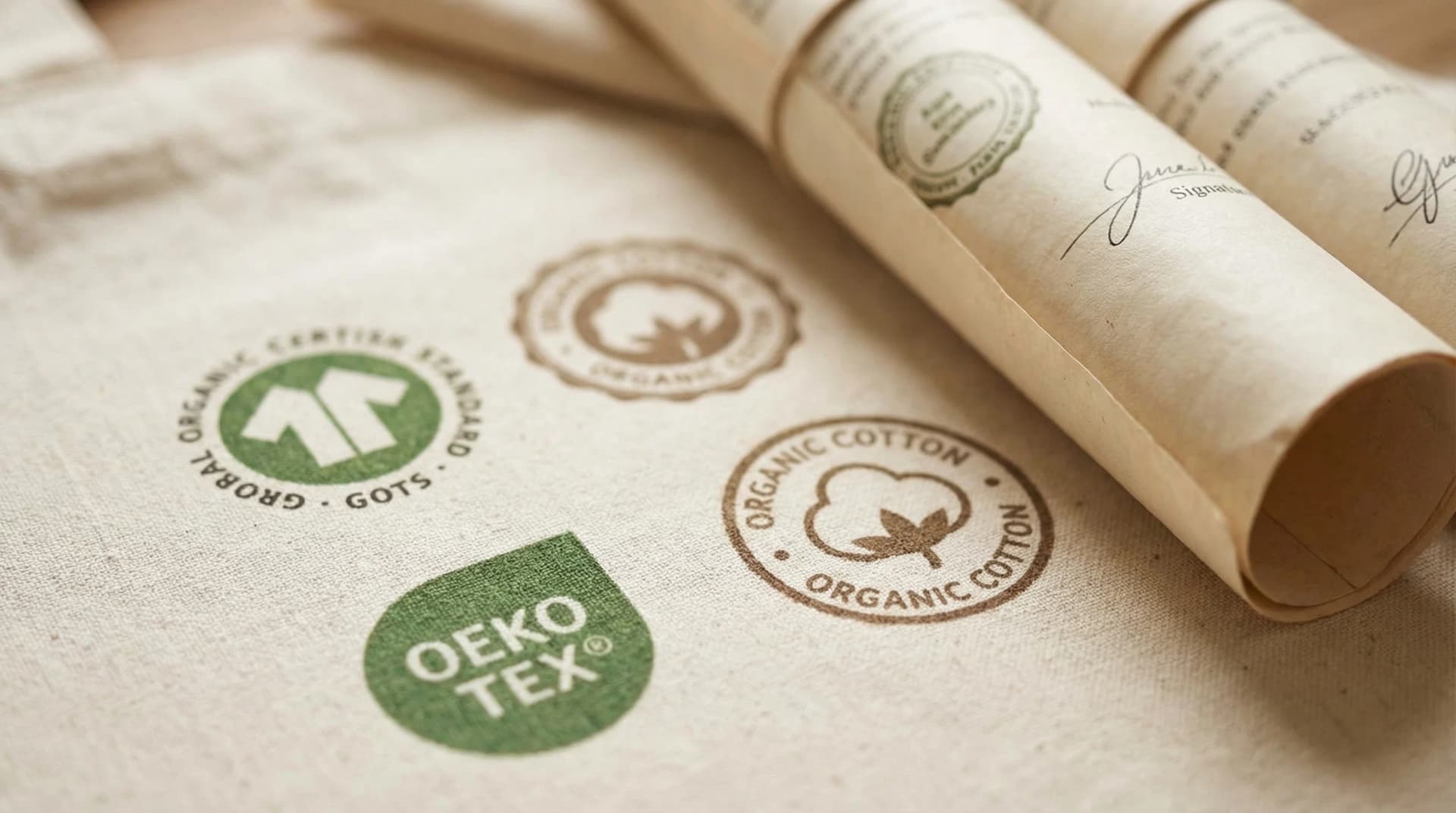
Why Certifications Matter
Certifications in garment manufacturing are third-party verifications that a product, process, or facility meets specific standards. They exist because "sustainable," "organic," and "ethical" have become marketing terms that anyone can claim without proof.
A certification means an independent body has audited the supply chain and confirmed that the claims are true. For brands, certifications provide credibility. For consumers, they provide trust. And with the EU tightening regulations around greenwashing, certifications are moving from "nice to have" to legally necessary.
This guide covers the certifications that matter most in garment manufacturing — what they certify, what they cost, and which ones you should consider for your brand.
Material Certifications
GOTS — Global Organic Textile Standard
What it certifies: The entire supply chain for organic textiles — from raw fibre to finished product.
Requirements:
- —Minimum 70% certified organic natural fibres (for "made with organic" label)
- —Minimum 95% certified organic natural fibres (for "organic" label)
- —All chemical inputs (dyes, finishes) must meet GOTS criteria (no toxic heavy metals, no formaldehyde, no aromatic solvents)
- —Water treatment must comply with environmental standards
- —Social criteria: fair wages, safe conditions, no child labour
Who needs it: Every link in the supply chain — the farm, the gin, the spinner, the knitter, the dyer, and the garment manufacturer. If one link is not GOTS-certified, the chain breaks.
Cost: €2,000–5,000+ per facility per year (audit costs vary by facility size and location)
Why it matters: GOTS is the gold standard. If you want to claim "organic" on your labels, GOTS is the only certification that covers the entire process credibly. Read our detailed guide on organic cotton manufacturing.
OEKO-TEX Standard 100
What it certifies: That the finished textile product does not contain harmful substances above safe thresholds.
What it tests for: Over 1,000 substances — heavy metals, pesticides, phthalates, formaldehyde, chlorinated phenols, allergenic dyes, and more. The restricted substance list is reviewed and expanded annually.
What it does NOT certify: How the cotton was grown, working conditions, or environmental practices during production.
Who needs it: The fabric or finished garment is tested — no supply chain certification required.
Cost: €1,000–3,000 per test (depends on product type and number of components)
Why it matters: OEKO-TEX Standard 100 is the minimum credibility standard for any quality garment. It assures customers that the product is safe to wear. At White Cotton, all our fabrics carry this certification.
OEKO-TEX MADE IN GREEN
What it certifies: An extension of Standard 100 that also verifies the production conditions (environmental management and social responsibility) at every facility in the supply chain.
Why it matters: Combines chemical safety (Standard 100) with production responsibility. More comprehensive than Standard 100 alone, but less widely adopted.
GRS — Global Recycled Standard
What it certifies: Recycled content in textiles. Verifies that recycled materials (recycled polyester from PET bottles, recycled cotton) are genuinely recycled and properly tracked through the supply chain.
Requirements:
- —Minimum 20% recycled content (for GRS claim)
- —Full chain of custody tracking
- —Environmental and social criteria at each processing stage
Cost: €2,000–4,000 per facility per year
Why it matters: Essential for brands using recycled materials and claiming sustainability. Without GRS, a "recycled polyester" claim is unverifiable. We offer GRS-certified recycled jersey (160–260 GSM) for brands requiring this credential.
BCI — Better Cotton Initiative
What it certifies: Cotton farming practices — reduced pesticide use, improved water management, fair labour. Not organic, but better than conventional.
Key distinction: BCI uses a mass balance system, not physical traceability. This means BCI-sourced cotton may be mixed with conventional cotton in the supply chain. You are supporting better farming practices, but the specific cotton in your garment may not be from a BCI farm.
Cost: Membership fees based on company revenue (€500–10,000+/year)
Why it matters: A pragmatic middle ground for brands that want to improve their cotton sourcing without the full cost and complexity of GOTS organic.
Process and Facility Certifications
ISO 9001 — Quality Management
What it certifies: That the facility has a formal quality management system in place.
What it does NOT certify: The actual quality of the products — only that processes exist to manage quality consistently.
Why it matters: ISO 9001 indicates that a factory takes quality management seriously and has documented procedures. However, many excellent small factories (including ours) operate to high quality standards without ISO 9001 certification — the cost and bureaucracy of formal certification can be disproportionate for a 20-person operation.
ISO 14001 — Environmental Management
What it certifies: That the facility has an environmental management system in place.
Why it matters: Demonstrates commitment to minimising environmental impact. Required by some larger brands as a supplier qualification.
SA8000 — Social Accountability
What it certifies: Working conditions, child labour prevention, health and safety, freedom of association, fair wages.
Based on: ILO conventions, UN Declaration of Human Rights, and national labour laws.
Why it matters: The most comprehensive social audit standard for garment manufacturing. Important for brands selling to socially conscious markets.
WRAP — Worldwide Responsible Accredited Production
What it certifies: Ethical manufacturing practices — labour conditions, health and safety, environmental compliance, legal compliance.
Why it matters: Commonly required by US retailers and larger brands as a supplier qualification.
Sustainability Certifications
EU Ecolabel
What it certifies: Products with reduced environmental impact throughout their lifecycle — from raw material extraction to production, use, and disposal.
Requirements: Strict limits on harmful substances, water and air pollution, waste management, and energy use.
Why it matters: An EU-recognised label that carries weight with European consumers. Available to products made within the EU.
Bluesign
What it certifies: Sustainable textile production — chemicals management, resource productivity, consumer safety, water emissions, air emissions.
Why it matters: Particularly strong on chemical management in the dyeing and finishing process. Well-recognised in the outdoor and activewear industry.
Cradle to Cradle (C2C)
What it certifies: Product design for circular economy — material health, material reutilisation, renewable energy, water stewardship, social fairness.
Why it matters: Goes beyond manufacturing to evaluate the product's entire lifecycle, including end-of-life recyclability. Ambitious but meaningful for brands building true circularity.
Which Certifications Do You Need?
The answer depends on your brand positioning, your target market, and your budget.
Minimum (every brand should have this)
- —OEKO-TEX Standard 100 — Ensures your garments are safe. This is the baseline
Recommended for premium and sustainable brands
- —GOTS — If you are using organic cotton and want to claim it credibly
- —GRS — If you are using recycled materials
- —BCI — If you want improved cotton sourcing without full GOTS complexity
For brands targeting large retailers or corporate clients
- —ISO 9001 — Quality management system
- —WRAP or SA8000 — Social accountability
- —ISO 14001 — Environmental management
For brands targeting the EU market (increasingly important)
- —EU Ecolabel — Voluntary but growing in recognition
- —Digital Product Passport readiness — Not a certification, but upcoming EU regulation will require detailed product information including materials, origin, and environmental impact
The Cost of Certification
| Certification | Annual Cost (Factory) | Who Pays |
|---|---|---|
| OEKO-TEX Standard 100 | €1,000–3,000 per test | Factory or brand |
| GOTS | €2,000–5,000 | Every facility in chain |
| GRS | €2,000–4,000 | Every facility in chain |
| BCI | €500–10,000 | Brand (membership) |
| ISO 9001 | €3,000–10,000 | Factory |
| SA8000 | €5,000–15,000 | Factory |
These costs are typically absorbed by the factory and reflected in production pricing. When comparing factory quotes, a factory with GOTS and OEKO-TEX certifications may be slightly more expensive per unit — but the certifications are built into the price.
Certifications at White Cotton
We maintain the following certifications:
- —OEKO-TEX Standard 100 — All our fabrics are tested and certified
- —GOTS Organic — Available for organic cotton production runs
- —BCI Cotton — Better Cotton sourcing available
- —GRS Recycled — For our recycled jersey and recycled blend fabrics
We provide transaction certificates for every certified production run — including our low-MOQ orders from 75 pieces per colourway — ensuring full traceability from fabric to finished garment.
If you need specific certifications for your brand or retail partners, discuss your requirements with us. We can advise on what is achievable within your budget and supply chain. Learn more about our clothing manufacturing in Portugal.
For more on sustainable manufacturing, read our guide on sustainable fashion manufacturing.

Pedro Carreira
Founder of White Cotton, a textile manufacturer in Barcelos, Portugal. Producing custom clothing collections for brands across 15+ countries.
Continue Reading
What Is a Tech Pack for Clothing? A Real Example, Page by Page

How Much Does It Cost to Start a Clothing Brand in 2026? Real Numbers
![Hoodie Manufacturing Costs: Real Prices from a Portuguese Factory [2026]](/_next/image?url=%2Fimages%2Fgenerated%2Fblog%2Fhoodie-manufacturing-costs-breakdown.webp&w=1920&q=75)
Hoodie Manufacturing Costs: Real Prices from a Portuguese Factory [2026]
![How to Find a Clothing Manufacturer in Portugal: A Factory Owner's Honest Guide [2026]](/_next/image?url=%2Fimages%2Fgenerated%2Fblog%2Fhow-to-find-clothing-manufacturer-portugal.webp&w=1920&q=75)
How to Find a Clothing Manufacturer in Portugal: A Factory Owner's Honest Guide [2026]
![How to Vet a Clothing Manufacturer: The Due Diligence Checklist [2026]](/_next/image?url=%2Fimages%2Fgenerated%2Fblog%2Fhow-to-vet-clothing-manufacturer.webp&w=1920&q=75)