Cotton vs Polyester — Which for Your Brand?
Comfort, durability, print behaviour, cost and shrinkage compared — and when a blend beats both. From a factory that cuts all three.
 Pedro Carreira··11 min read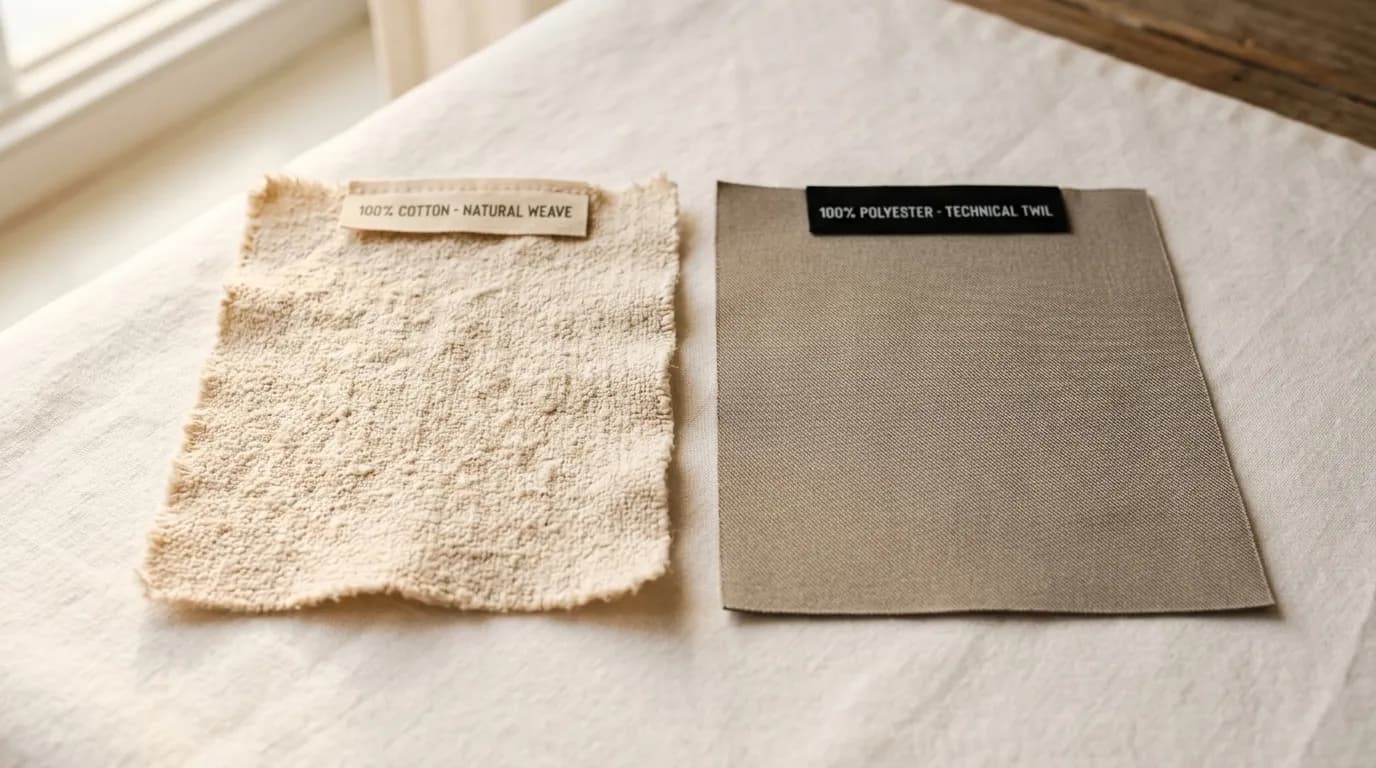
Why This Decision Matters More Than You Think
Every clothing brand, at some point, faces the same fundamental question: cotton vs polyester. It sounds simple. It is not. The fabric you choose shapes every aspect of your product — how it feels on skin, how it prints, how it washes, what it costs, and what story your brand tells.
This is not just a material decision. It is a positioning decision. A cotton hoodie and a polyester hoodie can look identical on a hanger, but they create entirely different brand experiences. The wrong choice can mean returns, negative reviews, or a product that does not match your customer's expectations.
We manufacture garments in both cotton and polyester blends at White Cotton as a clothing manufacturer in Portugal, and we see the consequences of this decision every day. This guide breaks down what actually matters when choosing between cotton or polyester for clothing — from a production perspective, not a marketing one.
Cotton — Properties, Strengths, and Limitations
Cotton is a natural fibre harvested from the cotton plant. It has been used in textile production for thousands of years and remains the most popular fabric in fashion for good reason.
Cotton fibres are hollow and twisted, which gives them natural breathability and a soft hand feel. The fabric absorbs moisture well, pulling sweat away from the body and releasing it through evaporation. This is why cotton feels comfortable against skin in most climates.
Strengths
- —Breathability — air circulates freely through cotton's natural fibre structure
- —Soft hand feel — improves with every wash, unlike most synthetics
- —Printability — absorbs ink directly into the fibre, producing sharp, durable prints via screen printing and DTG
- —Sustainability story — biodegradable, renewable, and available as GOTS-certified organic
- —Hypoallergenic — gentle on sensitive skin, no chemical irritants in the fibre itself
- —GSM versatility — available from 150 GSM lightweight tees up to 500+ GSM heavyweight hoodies
Limitations
- —Wrinkles — cotton creases easily without blending or finishing treatments
- —Shrinkage — can shrink 2–5% on the first wash if not pre-shrunk or enzyme-washed
- —Slower drying — absorbs and retains moisture longer than synthetics
- —Pilling — can develop surface pills with wear, especially on lower-quality cotton
- —Weight — heavier than polyester at comparable thickness
Polyester — Properties, Strengths, and Limitations
Polyester is a synthetic fibre derived from petroleum. It is the most produced fibre in the world by volume, surpassing cotton in global textile production since 2000.
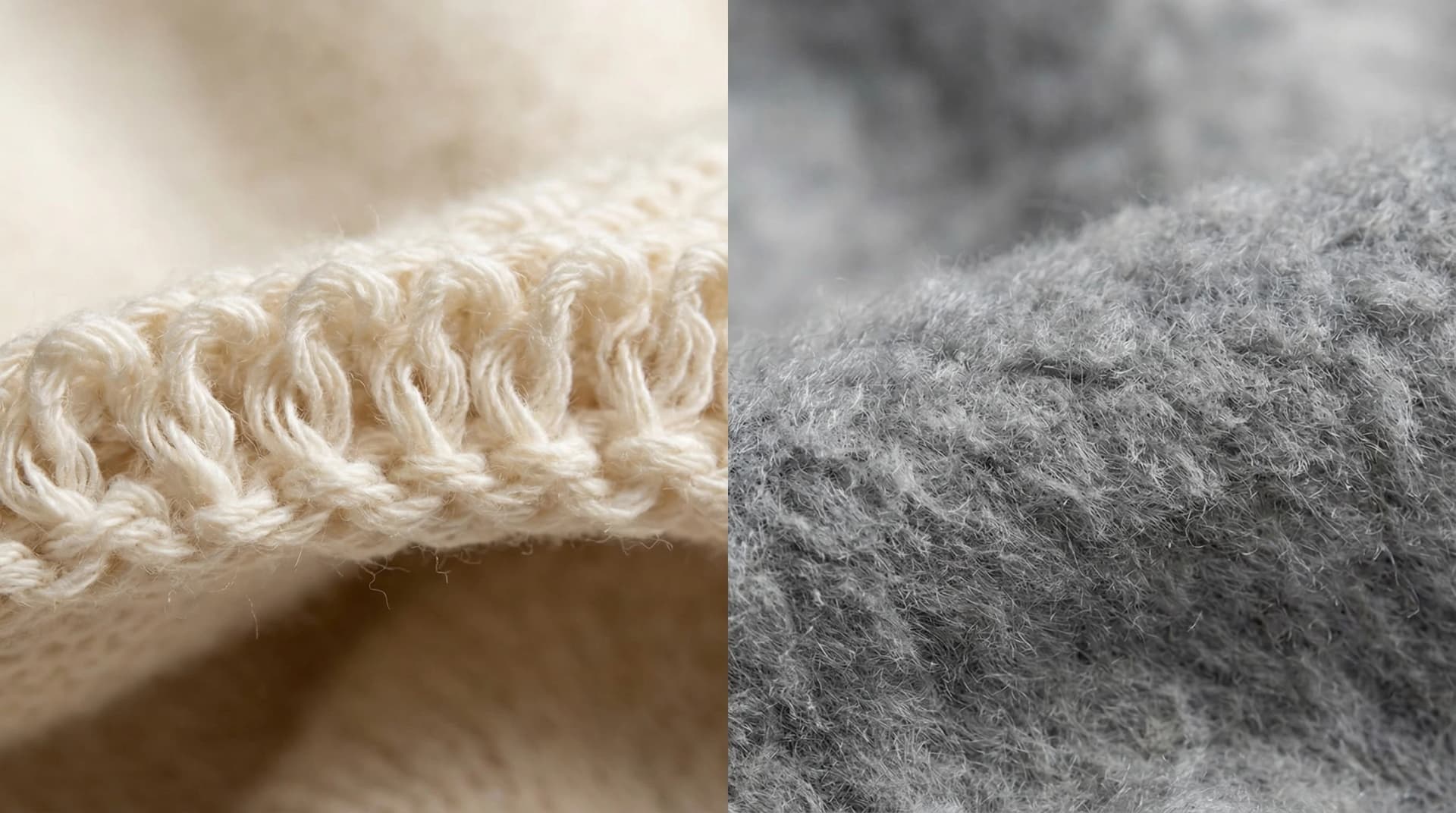
Polyester fibres are smooth, uniform, and hydrophobic — they repel water rather than absorbing it. This gives polyester its characteristic quick-dry performance and wrinkle resistance. The fabric holds its shape well and resists stretching, making it popular for sportswear and performance apparel.
Strengths
- —Durability — resists abrasion, stretching, and tearing better than cotton
- —Shape retention — holds its form wash after wash with minimal distortion
- —Quick-dry — moisture-wicking properties pull sweat to the surface for fast evaporation
- —Wrinkle resistance — maintains a clean appearance without ironing
- —Colorfastness — holds dye exceptionally well, resists fading from UV exposure and washing
- —Lower cost at scale — raw polyester is cheaper than cotton, especially for large production runs
Limitations
- —Synthetic feel — lacks the natural softness that cotton provides
- —Odour retention — traps bacteria and body odour more than natural fibres
- —Less breathable — the hydrophobic structure can feel stuffy in warm weather
- —Microplastic shedding — releases microplastic particles during washing
- —Difficult to dye naturally — requires disperse dyes applied at high temperatures
- —Environmental impact — petroleum-based, non-biodegradable, energy-intensive to produce
Side-by-Side Comparison
| Factor | Cotton | Polyester |
|---|---|---|
| Fibre origin | Natural (plant) | Synthetic (petroleum) |
| Breathability | High | Low to moderate |
| Moisture | Absorbs and retains | Wicks and releases |
| Durability | Good | Excellent |
| Shrinkage | 2–5% (if not pre-shrunk) | Minimal (under 1%) |
| Wrinkle resistance | Low | High |
| Print quality (screen/DTG) | Excellent | Requires special inks |
| Embroidery | Excellent | Excellent |
| Dyeing | Easy (reactive/natural dyes) | Requires disperse dyes at high temps |
| Sustainability | Biodegradable, renewable | Non-biodegradable, petroleum-based |
| Price (raw material) | Higher | Lower |
| GSM range | 150–500+ | 100–400+ |
| Best for | Streetwear, premium basics, casual | Activewear, performance, sportswear |
How Each Fabric Performs in Production
The cotton vs polyester decision does not just affect the finished product — it changes how the garment is manufactured. Here is what happens at each stage.
Cutting and Sewing
Cotton has a natural give and drape that makes it straightforward to cut. Grain direction matters — cutting against the grain produces garments that twist after washing. Experienced cutters know how to lay cotton fabric to minimise waste while respecting the grain.
Polyester is more dimensionally stable on the cutting table, with less fraying at cut edges. However, it generates static electricity and heat during high-speed sewing. Needles need to be changed more frequently, and operators adjust tension settings to prevent puckering along seams.
Printing and Embroidery
Cotton is superior for screen printing and DTG (direct-to-garment) printing. The ink absorbs directly into the cotton fibre, producing vibrant colours with excellent wash durability. This is why most print-heavy brands choose cotton.
Polyester requires different inks and processes. Sublimation printing works exceptionally well on polyester — the ink bonds permanently with the fibre at a molecular level, producing vivid, photo-quality prints that never crack or peel. However, DTG on polyester requires pretreatment and specialised inks to prevent dye migration.
Both fabrics perform excellently for embroidery. The main consideration is backing material — polyester's slippery surface sometimes requires a heavier stabiliser.
Dyeing
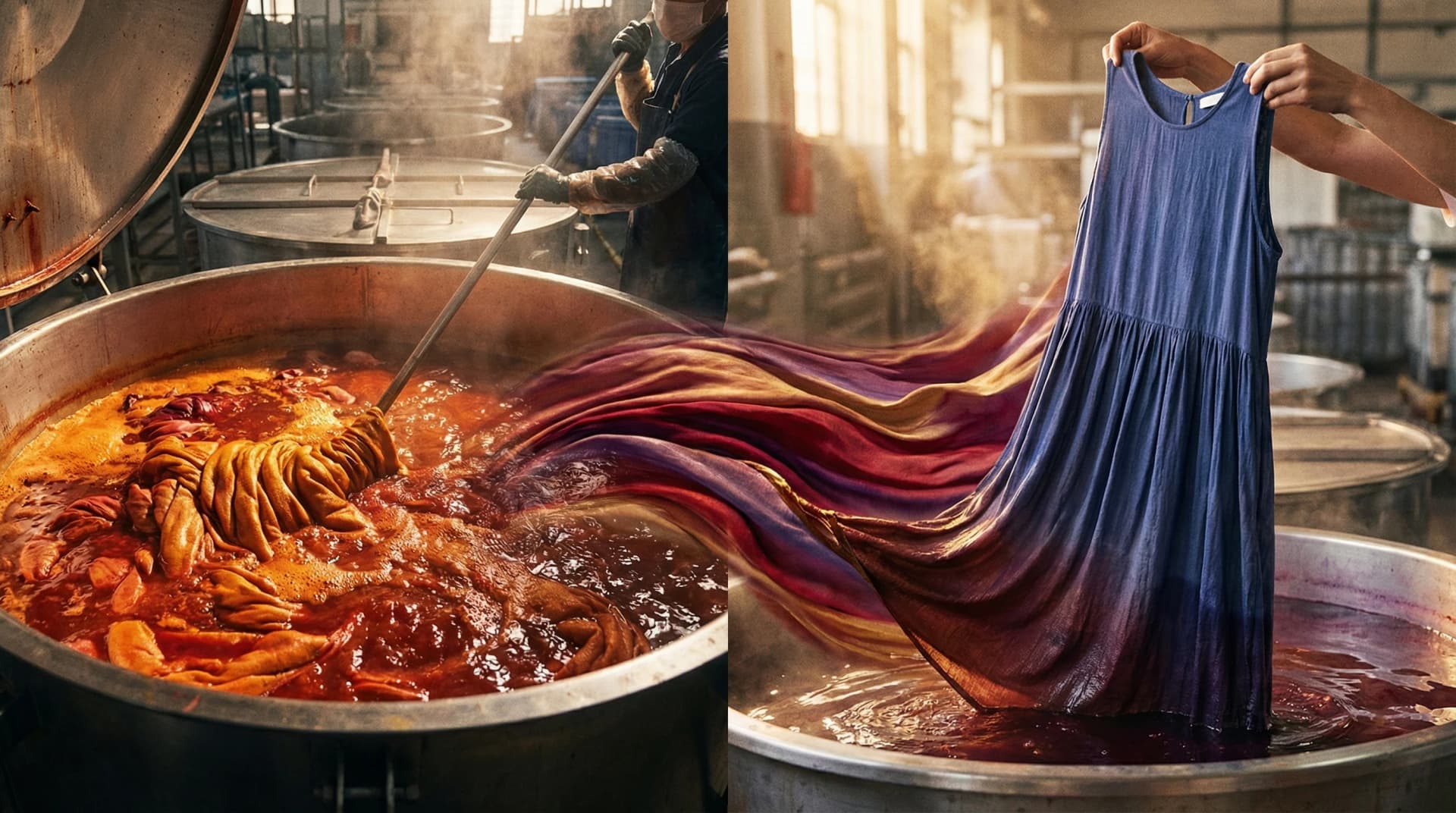
Cotton accepts natural and reactive dyes easily at standard temperatures. Garment dyeing — where the finished garment is dyed rather than the fabric — works beautifully with cotton, allowing brands to dye to order and reduce deadstock. See our guide on garment dyeing vs piece dyeing for more detail.
Polyester requires disperse dyes applied at temperatures above 130°C under pressure. It cannot be effectively garment-dyed, which limits flexibility for small brands wanting to dye finished goods. Colour matching across batches is generally more consistent with polyester, though, due to its uniform fibre structure.
Washing and Finishing
Cotton can shrink 2–5% on the first wash if not treated. Pre-shrunk and enzyme-washed finishes reduce this to under 1%, and we apply these treatments as standard. Enzyme washing also softens the hand feel, giving garments a lived-in quality straight off the rack.
Polyester retains its shape with minimal shrinkage. However, low-quality polyester can develop pilling over time, especially in areas of friction. Anti-pilling treatments exist but add cost.
Blends — The Middle Ground
Not every garment needs to be 100% cotton or 100% polyester. Cotton polyester blend fabrics combine the strengths of both fibres, and understanding the ratio is key to getting the result you want.
CVC (Chief Value Cotton) blends contain more cotton than polyester — typically 60/40 or 80/20 cotton/poly. These retain cotton's softness and breathability while gaining polyester's shape retention and reduced shrinkage.
TC (Chief Value Polyester) blends flip the ratio — typically 65/35 poly/cotton. These lean toward polyester's performance characteristics while the cotton content adds breathability and a softer hand feel than 100% polyester.
What Percentage of Polyester Changes the Feel?
Under 20% polyester, the fabric still feels like cotton. The small polyester addition improves durability and shape retention without sacrificing the natural hand feel that cotton is known for. This is the sweet spot for brands that want cotton's character with slightly better longevity.
At 50/50, the synthetic feel becomes noticeable. The fabric is lighter, more wrinkle-resistant, and significantly cheaper — but customers who expect cotton will notice the difference. This blend works well for basics where cost matters more than premium feel.
Above 65% polyester, the fabric feels and performs like sportswear. Moisture-wicking dominates, the hand feel is distinctly synthetic, and the garment behaves like a performance product rather than a fashion piece.
Does Blending Affect Sustainability Certifications?
Yes, significantly. GOTS certification requires a minimum of 70% certified organic fibres, so any blend with more than 30% polyester is ineligible for GOTS. OEKO-TEX Standard 100 applies to any fibre composition — it tests the finished product for harmful substances regardless of blend ratio.
Recycled polyester certified under the GRS (Global Recycled Standard) can be blended with organic cotton. A garment made from 80% GOTS organic cotton and 20% GRS recycled polyester carries strong sustainability credentials with both certifications verified.
Which Fabric Fits Your Brand?
The right fabric depends on your product category, target customer, price point, and brand values. Here is a practical framework.
Streetwear and premium brands — 100% cotton or high-cotton blends (80/20 CVC). The weight, texture, and print quality of cotton are non-negotiable in this segment.
Activewear and performance brands — polyester or poly-dominant blends. Moisture-wicking, quick-dry, and shape retention are functional requirements that cotton cannot match.
Basics and everyday essentials — cotton or CVC blends. Comfort and softness drive repeat purchases in this category. A 60/40 CVC blend hits the balance of quality and cost.
Budget-conscious brands — polyester or 50/50 blends. When price per unit is the primary concern, polyester's lower raw material cost and reduced shrinkage (fewer returns) make a measurable difference.
Is Cotton Better for Streetwear?
Yes. The hand feel, weight, and print quality of 100% cotton are the standard in streetwear. Most premium streetwear brands use 300–500 GSM cotton or cotton French Terry for hoodies, crewnecks, and joggers. The heavy, substantial feel of thick cotton is part of the product's perceived value and cannot be replicated with synthetics.
Is Polyester Cheaper to Manufacture?
The raw material is cheaper, but the total cost difference depends on volume, finishing, and decoration method. For small production runs under 500 units, the per-garment difference between cotton and polyester is often negligible — labour, cutting, sewing, and finishing dominate the cost. At scale, polyester can be 15–25% cheaper on raw material alone.
Can You Mix Cotton and Polyester in the Same Collection?
Yes — many brands use cotton for core pieces (hoodies, tees, crewnecks) and poly blends for performance items (joggers, track jackets, training tops). Consistency in labelling and marketing is key. Be transparent about composition on hang tags and product pages so customers know what they are buying.
Which Fabric Is More Sustainable?
Neither fabric is universally "better" for the environment — both have trade-offs. Cotton is biodegradable and renewable, but it is water-intensive to grow (conventional cotton uses roughly 10,000 litres of water per kilogram). Polyester is not biodegradable and is derived from petroleum, but it requires less water and land to produce.
Organic cotton with GOTS certification is the strongest sustainability story available today — it reduces water use by up to 91% compared to conventional cotton and eliminates synthetic pesticides. See our detailed guide on organic cotton manufacturing.
What About Recycled Polyester?
Recycled polyester (rPET) is made from post-consumer PET bottles or post-industrial polyester waste. It reduces virgin plastic use by roughly 60% and cuts energy consumption by 30–50% compared to virgin polyester. GRS (Global Recycled Standard) certification verifies the recycled content and responsible production.
However, recycled polyester still sheds microplastics during washing — the recycling process does not eliminate this issue. Demand for recycled polyester is growing rapidly, driven by brands with public sustainability commitments and consumers who check fibre composition labels.
Fabric Options at White Cotton
We manufacture with both cotton and polyester-blend fabrics, and we help brands choose the right composition for their product category and positioning.
100% organic cotton (GOTS-certified) is available from 150 GSM lightweight tees through to 500+ GSM heavyweight hoodies and sweatshirts. This is our most requested fabric category.
Cotton/polyester blends are available in CVC and TC ratios, with custom compositions for specific performance or cost requirements. All blends are produced to the same quality standards as our pure cotton fabrics.
Every fabric we work with is OEKO-TEX Standard 100 certified as a minimum. For brands requiring specific weight, composition, or finish characteristics, we offer custom fabric development — working with our mill partners to produce exactly what your product needs.
Browse our full fabric library, learn about our manufacturing process, or request a quote to start your project.
Also see: French Terry vs Fleece, Fabric Sourcing for Clothing Brands, Guide to Fabric Weights, GSM Fabric Weight Chart.

Pedro Carreira
Founder of White Cotton, a textile manufacturer in Barcelos, Portugal. Producing custom clothing collections for brands across 15+ countries.
Continue Reading
Garment Dyeing vs Piece Dyeing: Pros, Cons & When to Use Each
French Terry vs Fleece: Which Fabric for Your Hoodies & Sweatshirts?
Sweatshirt Production: Fabrics, Construction & What to Ask Your Factory
Understanding Fabric Weights: A Complete Guide for Fashion Brands