Sustainable Fashion Manufacturing: A Practical Guide for Brands
How to make your clothing brand more sustainable — from fabric selection to certifications, waste reduction, and choosing the right manufacturing partner.
 Pedro Carreira··6 min read
Beyond the Buzzwords
Sustainability in fashion has become a marketing term. Every brand claims to be "eco-friendly" or "conscious" — but what does sustainable manufacturing actually look like in practice?
This guide cuts through the noise. We will cover what genuinely matters, what is greenwashing, and what practical steps you can take as a brand to reduce your environmental impact without destroying your margins.
The Biggest Impact Areas
Not all sustainability efforts are equal. Here is where the real impact lies, ranked by significance:
1. Fabric Choice (60–70% of environmental impact)
The fabric you choose determines the majority of your garment's footprint. This includes water usage, chemical inputs, energy consumption, and end-of-life biodegradability.
Lower impact options:
- —Organic cotton (GOTS certified): Uses 91% less water than conventional cotton, no synthetic pesticides, no GMO seeds
- —Recycled cotton: Made from pre- or post-consumer cotton waste, reduces landfill and virgin resource use
- —Linen / hemp: Requires minimal water and pesticides, naturally biodegradable
- —TENCEL / Lyocell: Closed-loop production from sustainably sourced wood pulp
- —Recycled polyester (rPET): Diverts plastic bottles from landfill, but still sheds microplastics
Higher impact options to minimise:
- —Conventional cotton (enormous water usage — 10,000 litres per kg)
- —Virgin polyester (petroleum-based, non-biodegradable)
- —Viscose / rayon from non-certified sources (linked to deforestation)
2. Manufacturing Location and Process (15–20% of impact)
Where and how your garments are made matters:
- —Energy sources: A factory running on renewable energy has a fraction of the footprint of one burning coal
- —Water treatment: Dyeing and finishing use enormous amounts of water. Proper treatment prevents river pollution
- —Waste management: How does the factory handle fabric offcuts, chemical waste, packaging waste?
- —Transport distance: A garment made and sold in Europe has a tiny fraction of the carbon footprint of one shipped from Asia
3. Product Design and Longevity (10–15% of impact)
The most sustainable garment is one that lasts:
- —Durable construction: Reinforced seams, quality thread, proper finishing
- —Timeless design: Classic styles that do not become unwearable after one season
- —Repairability: Simple construction that can be mended
- —Care instructions: Clear guidance that extends garment life
Certifications That Matter
Not all certifications are equal. Here are the ones that carry real weight:
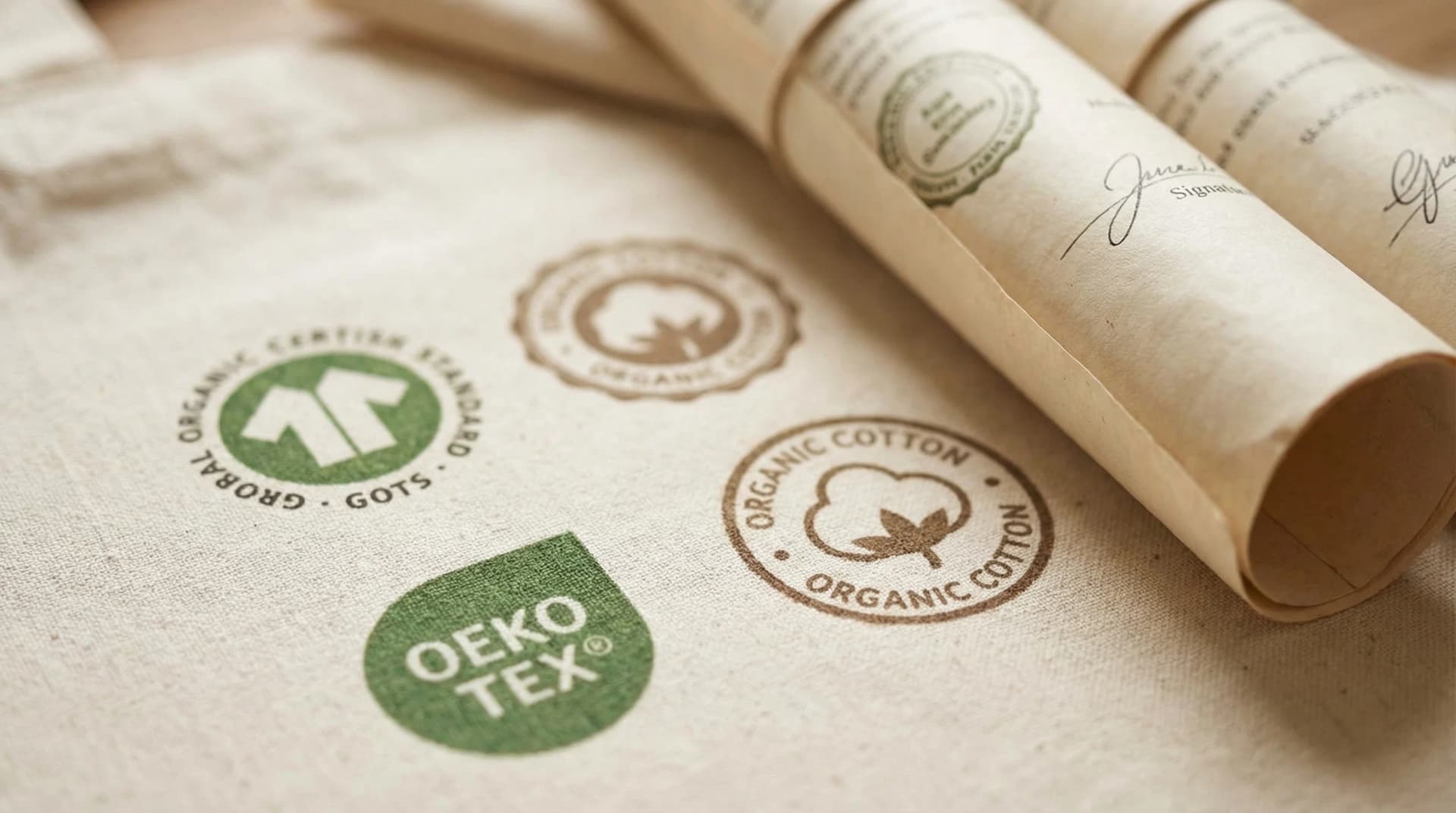
GOTS (Global Organic Textile Standard)
What it means: The entire supply chain — from raw fibre to finished product — meets organic and environmental standards. Covers chemical inputs, water treatment, labour conditions.
Trust level: High. Third-party audited annually.
OEKO-TEX Standard 100
What it means: The finished product has been tested for over 100 harmful substances. Safe for human health, including baby clothing.
Trust level: High. Independent laboratory testing.
BCI (Better Cotton Initiative)
What it means: Cotton is sourced from farms that meet BCI's sustainability standards — reduced water, fewer chemicals, better soil health.
Trust level: Medium. Mass-balance system means BCI cotton is not physically traced through the supply chain.
Fair Trade Certified
What it means: Workers receive fair wages and work in safe conditions. Includes a community development premium.
Trust level: High for social standards. Less relevant for environmental impact.
Bluesign
What it means: Chemicals used in manufacturing meet strict safety and environmental standards.
Trust level: High for chemical management specifically.
Certifications to be sceptical about
- —Self-created "eco" labels with no third-party audit
- —"Sustainable collection" capsules from fast-fashion brands (often less than 5% of total production)
- —"Carbon neutral" claims based on offsets rather than actual emission reduction
Practical Steps for Your Brand
Start with fabric
Switch your core styles to organic or certified cotton. The cost increase is typically 10–20% on fabric, which translates to 5–10% on the finished garment. For a hoodie, that might be €1–2 per unit.
Choose your factory carefully
Ask potential manufacturers:
- —What certifications do you hold? (GOTS, OEKO-TEX, ISO 14001)
- —How do you handle fabric waste?
- —What is your energy source?
- —Can you provide a sustainability report?
A factory that cannot answer these questions clearly is not one you want to work with.
Reduce overproduction
The fashion industry produces 30–40% more than it sells. This is the single biggest waste problem. Solutions:
- —Start with smaller orders and reorder based on demand
- —Use pre-order models for new styles
- —Invest in demand forecasting
- —Work with factories that offer low MOQs so you can test before scaling
Design for longevity
Use heavier fabrics (180+ GSM for tees, 350+ GSM for hoodies), reinforced stitching at stress points, and quality trims. A garment that lasts 5 years is inherently more sustainable than one that falls apart after 5 washes — regardless of what the fabric is made from.
Be honest in your marketing
Consumers are increasingly savvy about greenwashing. Instead of claiming to be "sustainable" (an almost meaningless word at this point), be specific:
- —"Made from GOTS-certified organic cotton"
- —"Produced using OEKO-TEX certified fabrics in Portugal"
- —"Our factory is 15km from our fabric supplier, minimising transport emissions"
Specificity builds trust. Vagueness destroys it.
The Cost of Sustainability
Let us be transparent. Sustainable manufacturing costs more:
- —Organic cotton fabric: 15–25% more than conventional
- —GOTS certification for factories: €5,000–15,000 per year
- —European vs Asian production: 50–100% higher per unit
- —Proper waste management: Built into overhead
But the market is moving. McKinsey research across UK and German consumers found that 67% consider the use of sustainable materials an important purchasing factor, and 35% are willing to pay more for sustainably made products. For premium brands, sustainability is not a cost — it is a value driver.
How We Approach It
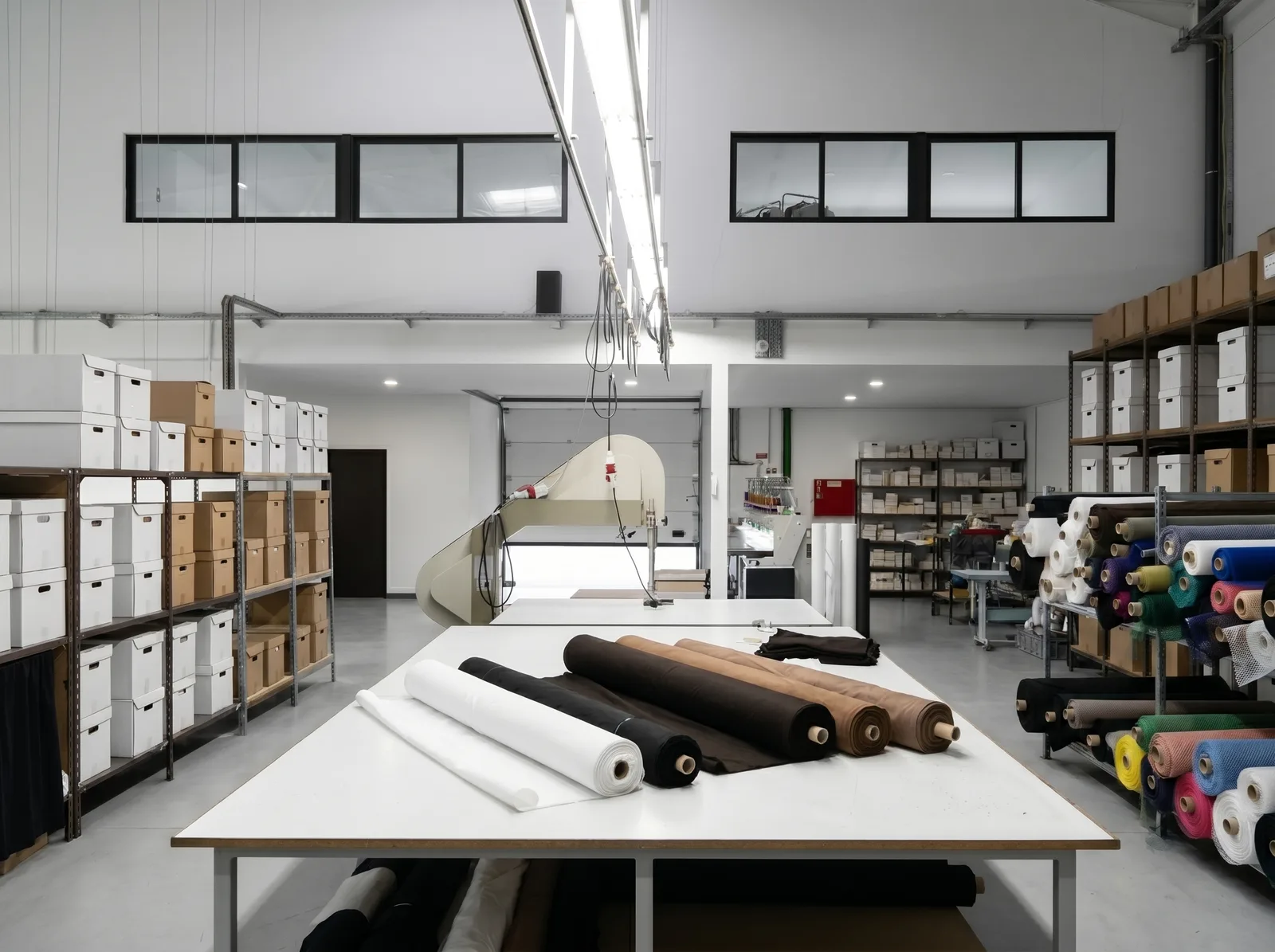
At White Cotton, sustainability is not a marketing angle — it is how we have always operated. As a family business in Barcelos, our community, our water, and our workforce are not abstract concepts. They are our neighbours.
We source OEKO-TEX Standard 100 certified fabrics. We source GOTS-certified organic cotton and BCI cotton. Our fabric waste is recycled through local textile recyclers. Our supply chain is almost entirely within a 30km radius of our factory.
We are not perfect. No manufacturer is. But we are transparent about where we are and where we are going. Ask us anything — we will give you an honest answer.

Pedro Carreira
Founder of White Cotton, a textile manufacturer in Barcelos, Portugal. Producing custom clothing collections for brands across 15+ countries.
Continue Reading
Garment Certifications Explained: GOTS, OEKO-TEX, GRS & More

How Much Does It Cost to Start a Clothing Brand in 2026? Real Numbers
![Hoodie Manufacturing Costs: Real Prices from a Portuguese Factory [2026]](/_next/image?url=%2Fimages%2Fgenerated%2Fblog%2Fhoodie-manufacturing-costs-breakdown.webp&w=1920&q=75)
Hoodie Manufacturing Costs: Real Prices from a Portuguese Factory [2026]
![How to Find a Clothing Manufacturer in Portugal: A Factory Owner's Honest Guide [2026]](/_next/image?url=%2Fimages%2Fgenerated%2Fblog%2Fhow-to-find-clothing-manufacturer-portugal.webp&w=1920&q=75)
How to Find a Clothing Manufacturer in Portugal: A Factory Owner's Honest Guide [2026]
![How to Vet a Clothing Manufacturer: The Due Diligence Checklist [2026]](/_next/image?url=%2Fimages%2Fgenerated%2Fblog%2Fhow-to-vet-clothing-manufacturer.webp&w=1920&q=75)