MOQ in Clothing Manufacturing: What It Is, Why It Exists & How to Negotiate It Down
Why do factories have minimum order quantities? What is realistic for a startup brand? How to negotiate lower MOQs — explained by a manufacturer with 75-unit minimums.
 Pedro Carreira··6 min read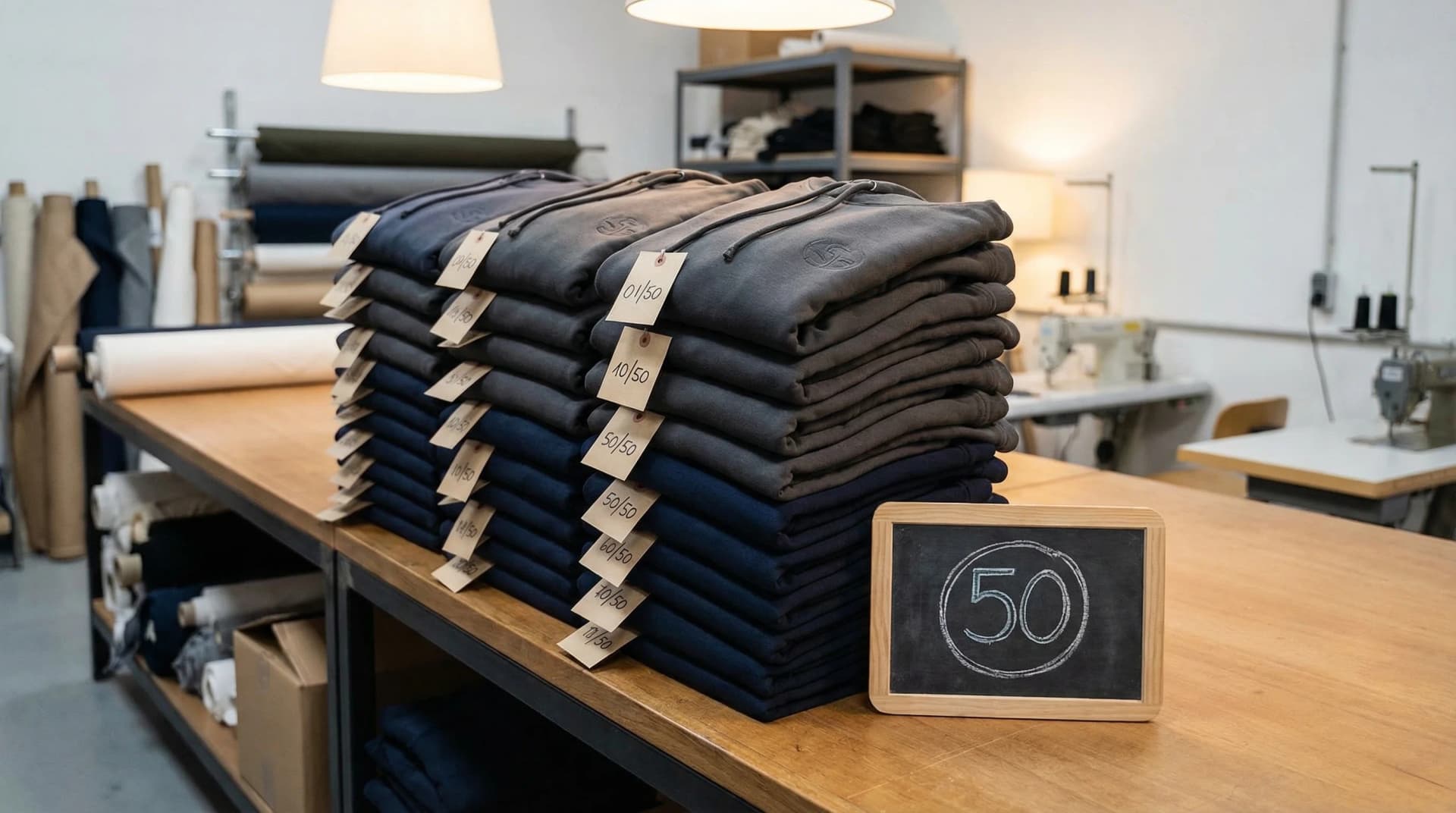
What Is MOQ?
MOQ stands for Minimum Order Quantity — the smallest number of units a manufacturer will produce in a single production run. Every garment factory has an MOQ, though the numbers vary dramatically depending on the factory's size, location, and business model.
Understanding MOQ is essential for any clothing brand, whether you are placing your first order or scaling to larger volumes.
Why Do Factories Have MOQs?
MOQs exist because of how garment production works:
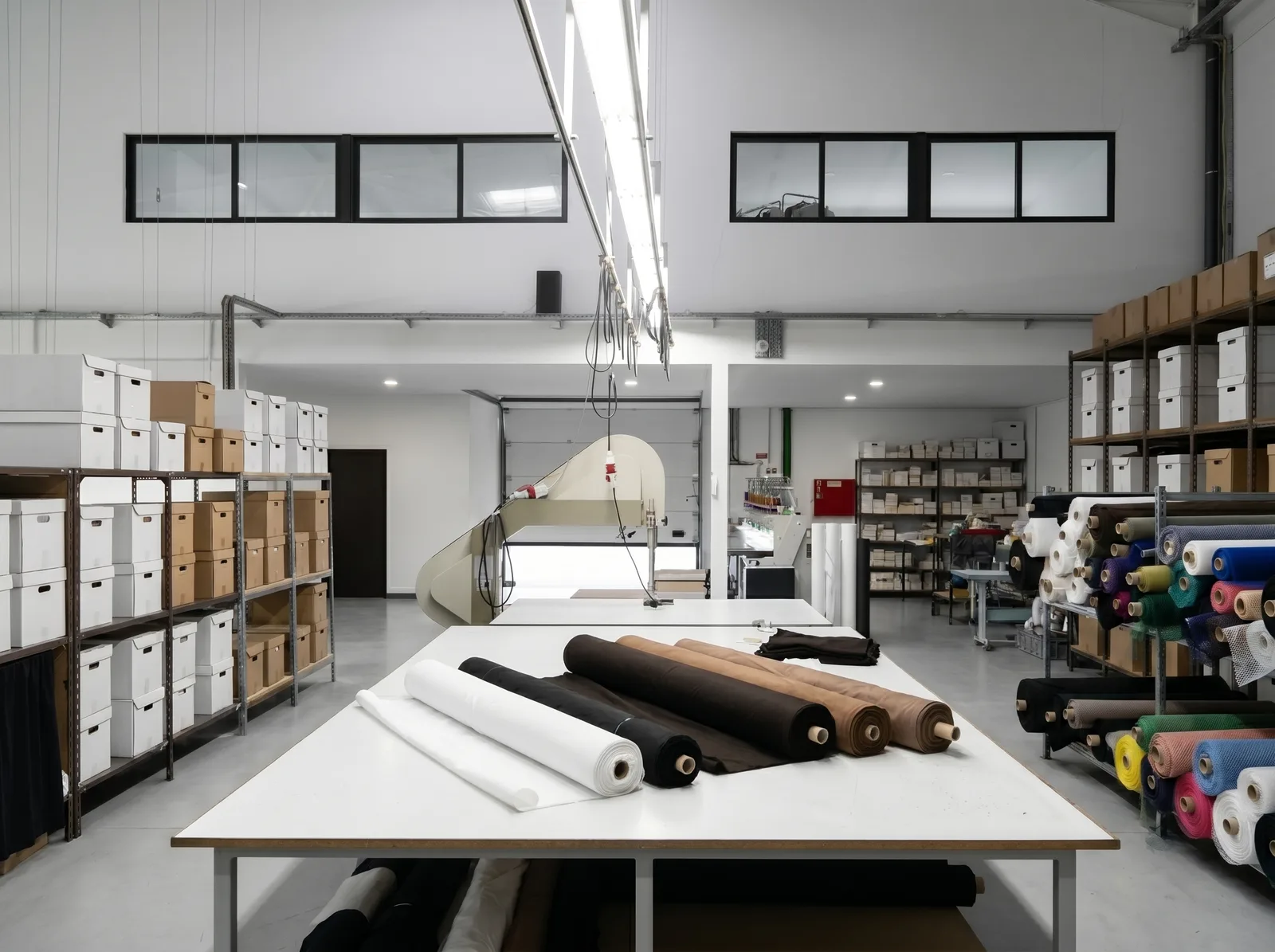
Setup costs: Every production run requires pattern cutting, machine setup, thread changes, and quality control protocols. These fixed costs are the same whether you produce 20 units or 2,000. Below a certain volume, the cost per unit becomes impractical.
Fabric minimums: Fabric mills have their own minimums — typically 100–500 metres per colour. A factory needs enough orders to meet these fabric minimums or risk paying premium prices for small rolls.
Efficiency: Sewing lines are designed for continuous production. Stopping to change styles, colours, or sizes frequently reduces efficiency and increases the cost per unit.
Typical MOQ Ranges
- —Asian factories (China, Bangladesh, Vietnam): 500–5,000 units per style per colour. Some go as high as 10,000.
- —Turkish factories: 200–1,000 units per style per colour.
- —Portuguese factories: 50–500 units per style per colour.
- —Small ateliers / micro-factories: 10–50 units, but at a significantly higher per-unit cost.
How to Work With MOQ
Start with your core styles
If your MOQ is 75 units per colourway, and you want to launch with 3 colours across 5 sizes, that is 75 × 3 = 225 units for one style. Start with your strongest 2–3 styles rather than spreading thin across a large collection.
Consolidate colours
Instead of 6 colours at the minimum each, consider 2–3 colours at higher quantities. This often results in better pricing and less inventory risk.
Plan your size ratios
Not every size sells equally. A typical ratio might be:
- —XS: 5%
- —S: 20%
- —M: 35%
- —L: 25%
- —XL: 15%
Apply this ratio to your MOQ to avoid ending up with excess stock in unpopular sizes.
Negotiate based on commitment
If you plan to reorder, tell your manufacturer upfront. A factory is more likely to offer flexibility on MOQ if they know you are building a long-term relationship.
The True Cost of Low MOQ
For context on all the costs involved, read our full clothing production cost breakdown.
A lower MOQ does not always mean lower risk. Consider:
- —Per-unit cost: Lower quantities mean higher per-unit cost. A hoodie at 100 units might cost €20 per piece; the same hoodie at 500 units might cost €15.
- —Fabric selection: Some premium fabrics have their own minimums. At very low quantities, you may be limited to the standard fabric library.
- —Production priority: Larger orders often receive priority scheduling.
The sweet spot is usually the lowest volume that gives you reasonable per-unit pricing while limiting your financial exposure.
Our Approach
At White Cotton, our MOQ is 100 units per style in one colourway, dropping to 75 per colourway when you run two or more — hoodies, sweatshirts, zip-ups, joggers and shorts. T-shirts, long sleeves, polos, tank tops and shirts sit one tier higher at 150 in one colourway, or 100 per colourway across two or more. We chose these thresholds because below them we cannot hold our quality standards and fair pricing at the same time.
For first-time orders, we recommend starting with 100–150 units of your strongest style. This gives you enough stock to test the market while keeping your investment manageable. As your brand grows, larger orders bring better per-unit pricing.
We are transparent about pricing at every volume — ask us for a quote at any quantity and we will give you an honest breakdown. New brands should also read our guides to clothing manufacturing for startups and blank clothing manufacturers in Europe for lower-commitment options. See how to get started or browse our product catalogue to see what we manufacture.

Pedro Carreira
Founder of White Cotton, a textile manufacturer in Barcelos, Portugal. Producing custom clothing collections for brands across 15+ countries.
Frequently Asked Questions
It depends almost entirely on where the factory is and how it is built. Asian factories generally run 500–5,000 units per style per colour, Turkish factories 200–1,000, and Portuguese factories 50–500; small ateliers will go as low as 10–50 but at a significantly higher per-unit cost. Ours is 100 units per style in one colourway, or 75 per colourway across two or more — 150 / 100 for t-shirts, long sleeves, polos, tanks and shirts.
Because a chunk of the cost is fixed regardless of run length: pattern cutting, machine setup, thread changes and quality control protocols cost the same for 20 pieces as for 2,000. Fabric mills impose their own minimums, typically 100–500 metres per colour, so a factory needs enough volume to avoid paying small-roll prices. Sewing lines are also built for continuous production, and every style or colour change costs efficiency.
Yes, and it is worth seeing the trade honestly: a hoodie at 100 units might cost around €20 per piece where the same hoodie at 500 units costs around €15. Very low volumes can also limit you to the standard fabric library, since premium materials carry their own mill minimums, and larger orders tend to get scheduling priority. The sweet spot is the lowest volume that still gives you reasonable per-unit pricing without over-exposing your cash.
A typical ratio is 5% XS, 20% S, 35% M, 25% L and 15% XL, and applying it stops you ending the season holding the sizes nobody bought. On a first order we suggest 100–150 units of your strongest style rather than spreading a minimum across several. Consolidating into two or three colours instead of six usually gives better pricing and less dead stock at once.
Sometimes — but the lever is commitment, not pressure. If you intend to reorder, say so upfront, because a factory weighs a long-term relationship differently to a one-off run. What rarely works is approaching a factory whose minimum is 500 and asking for 50; you will either get a no, or a yes at a price that does not work for either side.
Continue Reading

How Much Does It Cost to Start a Clothing Brand in 2026? Real Numbers
![Hoodie Manufacturing Costs: Real Prices from a Portuguese Factory [2026]](/_next/image?url=%2Fimages%2Fgenerated%2Fblog%2Fhoodie-manufacturing-costs-breakdown.webp&w=1920&q=75)
Hoodie Manufacturing Costs: Real Prices from a Portuguese Factory [2026]
![How to Find a Clothing Manufacturer in Portugal: A Factory Owner's Honest Guide [2026]](/_next/image?url=%2Fimages%2Fgenerated%2Fblog%2Fhow-to-find-clothing-manufacturer-portugal.webp&w=1920&q=75)
How to Find a Clothing Manufacturer in Portugal: A Factory Owner's Honest Guide [2026]
![How to Vet a Clothing Manufacturer: The Due Diligence Checklist [2026]](/_next/image?url=%2Fimages%2Fgenerated%2Fblog%2Fhow-to-vet-clothing-manufacturer.webp&w=1920&q=75)
How to Vet a Clothing Manufacturer: The Due Diligence Checklist [2026]
![27 Questions to Ask a Clothing Manufacturer Before Placing Your Order [2026]](/_next/image?url=%2Fimages%2Fgenerated%2Fblog%2Fquestions-to-ask-clothing-manufacturer.webp&w=1920&q=75)