Clothing Manufacturing Cost: €9–€29 a Unit
Real per-unit prices from a Portuguese factory — t-shirts €9–€13, hoodies €21–€29 before decoration. Fabric, sewing, decoration and sampling, itemised.
 Pedro Carreira··13 min read
Why Transparency on Manufacturing Costs Matters
One of the most common reasons new brands end up in financial trouble is not a bad product or poor marketing — it is a production budget that was built on guesswork. Vague estimates, hidden fees, and costs that only appear at invoice stage can easily turn a viable project into a loss before a single piece is sold.
We believe that knowing the real numbers is the foundation of a sustainable brand. This guide breaks down what clothing manufacturing actually costs in Europe in 2026 — fabric, labour, decoration, sampling, and shipping — with real examples from what we produce at White Cotton in Portugal.
How European Manufacturing Costs Compare
Europe is not a single manufacturing market. Costs vary significantly by country, and the difference is not just about labour rates — it is about infrastructure, certification access, proximity to fabric mills, and production quality consistency.
Portugal
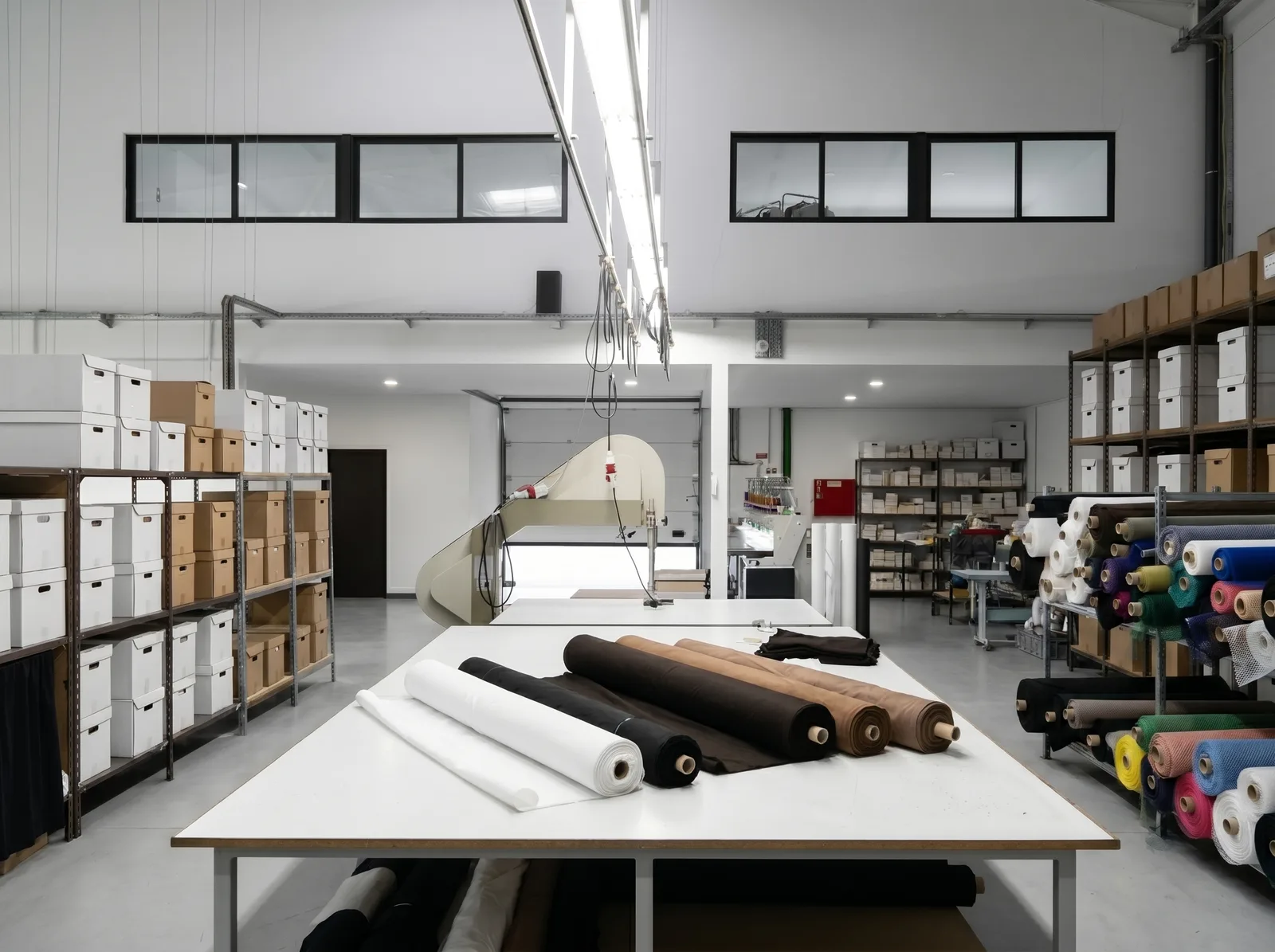
Portugal sits in a strong position: more affordable than Italy or France, with comparable quality, and significantly better infrastructure, certification, and reliability than Turkey or Eastern Europe for many product categories. Labour costs run approximately €8–€14/hour for skilled garment workers. Portugal has a long industrial textile heritage — Barcelos, where we are based, has been a manufacturing centre for decades, and in our own factory production starts from 75 pieces per colourway.
Italy
Premium positioning, premium costs. Italian garment workers earn €14–€20/hour. Italian manufacturing commands a price premium in the market, but unit costs are 40–70% higher than Portugal for equivalent products. Justified for certain luxury or heritage brand positioning. Less so for contemporary or streetwear brands.
Turkey
Lower labour costs — around €4–€8/hour — make Turkey attractive for volume. The tradeoff is communication complexity (time zone, language), longer shipping times to European end markets, and variable quality consistency depending heavily on which factory you choose. MOQs at Turkish factories tend to be higher, often 300–500 pieces per style minimum.
Eastern Europe (Romania, Bulgaria, North Macedonia)
Labour costs are similar to Turkey (€4–€8/hour) with the advantage of shorter shipping to Western Europe. Quality varies more than Portugal or Italy. Many factories in these regions are CMT (cut, make, trim) only — meaning you need to source and ship fabric to them, adding cost and complexity that is easy to underestimate.
Why Unit Cost Is Not the Whole Story
A lower headline unit cost can easily be offset by:
- —Higher sampling costs or longer sample iterations
- —Fabric sourcing overhead (if the factory does not supply fabric)
- —Quality control failures requiring rework or partial order rejection
- —Shipping costs and import complexity
- —Communication delays extending timelines and increasing your own time cost
The most important cost is the total cost of a successful, on-time production run.
Fabric Costs
Fabric is typically the largest single input cost in a garment. At White Cotton, we supply all fabric in-house from our certified fabric range — which means you get consistent quality at predictable pricing without the overhead of sourcing it separately.
Here is what fabric costs look like in 2026 for the main categories we work with:
| Fabric | Weight Range | Approx. Cost per Metre |
|---|---|---|
| Organic Cotton Jersey | 140–300 GSM | €3.50–€6.50/m |
| Brushed Fleece | 260–580 GSM | €5–€10/m |
| French Terry | 280–500 GSM | €5–€9/m |
| Polycotton Fleece | 280–550 GSM | €4–€7.50/m |
| Recycled Jersey | 160–260 GSM | €5–€8/m |
| Waffle Knit | 180–360 GSM | €4.50–€8/m |
| Sherpa Cotton | 350–400 GSM | €9–€14/m |
| Cotton Canvas | 220–480 GSM | €4–€8/m |
| Linen | 150–200 GSM | €6–€11/m |
A standard hoodie uses approximately 1.8–2.2 metres of fabric depending on size. A t-shirt uses 1.2–1.6 metres. A sweatshirt uses 1.4–1.8 metres.
For custom fabric development — a bespoke weight, custom colour, or proprietary blend — add roughly 3–4 weeks to lead time and expect a minimum of 300–500 metres. See our guide to fabric weights and fabric sourcing guide for more on how to choose the right specification.
Labour Costs: What Goes Into a Garment
Labour is the second major cost driver. A garment is not one operation — it is a sequence of them. Cutting, sewing, pressing, finishing, QC, packing. Each adds time, and time costs money.
For a standard Portuguese factory operating with skilled workers, here is a rough breakdown by garment type:
T-Shirt
Simple construction — front, back, neckband, sleeves. Approximately 20–30 minutes of operator time across the full sequence. At Portuguese labour rates, this translates to €2.50–€5.50 in labour cost per unit.
Sweatshirt
Crew neck with ribbing, hem, cuffs. Slightly more complex than a t-shirt. Approximately 35–50 minutes of operator time. Labour cost: €4–€9 per unit.
Hoodie
Most complex of the casual category — hood construction, kangaroo pocket or split pockets, drawstring channel, cuffs, hem. Approximately 50–80 minutes of operator time. Labour cost: €6–€14 per unit depending on style and details.
These are factory-floor labour costs only. Overhead (building, equipment, management, energy, certifications) adds a factor to arrive at the total manufacturing cost.
Decoration Costs
Decoration is often the most variable part of your cost structure, and one of the most commonly underestimated.
Embroidery
Embroidery is priced primarily by stitch count — the number of individual stitches that make up your design.
- —Under 5,000 stitches: €1.20–€2.50 per piece (small chest logo, tab)
- —5,000–10,000 stitches: €2.50–€4 per piece (medium chest or sleeve placement)
- —10,000–20,000 stitches: €4–€7 per piece (large back placement, detailed graphic)
- —20,000+ stitches: €7–€15+ per piece (full back, complex artwork)
Setup/digitisation fee: from about €20 up to €200 per design, depending on the size, the number of colours and above all the stitch count — a one-time cost for converting your artwork into a stitch file. This is charged once and not repeated on reorders.
Specialty embroidery — 3D/puff, chenille, chain stitch, appliqué — is priced on quote and runs 30–80% higher than standard flat embroidery depending on technique and complexity.
Screen Printing
Screen printing is priced by number of colours (each colour is a separate screen) and whether the print is single-location or multi-location.
- —1 colour: €1–€1.80 per piece (at 100+ units)
- —2 colours: €1.80–€3 per piece
- —3 colours: €2.50–€4 per piece
- —4+ colours: €3.50–€6 per piece
Setup fee: about €20–€35 per screen, one screen per colour — around €20 up to 15 cm, €25–€30 up to 30 cm, €35 above. A 3-colour design has 3 screens = about €60–€105 in setup costs.
Specialty inks — puff, foil, glow-in-the-dark, flock, water-based discharge — add €0.50–€2 per piece depending on ink type and application.
Digital Printing (DTG, DTF, Sublimation)
No setup costs or colour limitations. Cost is per piece, based on print size and complexity.
- —DTG (Direct to Garment): €3–€8 per print. Best for complex multicolour artwork, photography, short runs. Slightly softer feel than screen print on cotton.
- —DTF (Direct to Film): €2–€5 per transfer. Works on any fabric, including synthetics. Versatile.
- —Sublimation: €3–€7 per piece. Requires polyester or high-poly blends. Excellent colour vibrancy, fully embedded in fabric.
Sampling Costs
Sampling is a real cost and should be budgeted properly. A proto sample at White Cotton typically costs €60–€300 per sample depending on garment complexity and decoration requirements.
Most brands need 2–3 rounds of sampling to reach a production-ready specification, and a revised sample costs about half the first. Budget €90–€600 per style for the full sampling process.
Our sample lead time is usually 4 to 8 weeks from payment. See our full post on the clothing sample process for a complete breakdown.
Packaging and Labels
Labels and packaging are easy to overlook until invoice day. Here is a realistic range:
- —Woven main label: €0.20–€0.50 each (neck, size, care combined or separate)
- —Hang tag: €0.10–€0.40 each (printed card, basic)
- —Polybag (individual): €0.05–€0.15 each
- —Custom box: €0.80–€3 each depending on size and print quality
For a basic label and polybag setup, budget €0.30–€0.80 per unit. For custom packaging with branded boxes and tissue, budget €1.50–€4 per unit.
Our full guide to clothing labels and packaging covers this in detail.
Shipping Costs Within Europe
Shipping from our factory in Barcelos, Portugal to major European markets:
| Destination | Mode | Approx. Cost |
|---|---|---|
| Spain | Road freight | €80–€200 per pallet |
| UK | Road + ferry | €150–€350 per pallet |
| Germany | Road freight | €120–€280 per pallet |
| Netherlands | Road freight | €120–€260 per pallet |
| France | Road freight | €100–€220 per pallet |
| Australia/USA | Air freight | €3–€6/kg |
A typical first order of 300 pieces (3 styles, 100 each) will typically fit on 1 pallet and weigh 80–200 kg depending on garment type.
Real Cost Examples: What a Garment Actually Costs to Make
These are the prices our price calculator gives for each spec at 100 pieces per colour — garment, decoration, a woven neck label, a care label and a polybag — excluding VAT and shipping. Organic, custom-dyed and specialty fabrics are priced on the quotation, and the quotation is always the final price.
T-Shirt (cotton jersey, 190–230 GSM, one-colour screen print)
| Component | Cost |
|---|---|
| Garment (fabric, cutting, sewing, finishing) | €10–€11 |
| Screen print (1 colour, up to 25 cm) | about €2 |
| Neck label + care label | about €0.30 |
| Polybag | about €0.10 |
| Total per piece | about €13–€14 |
| One-time screen setup | about €25 |
Sweatshirt (cotton fleece, 300–350 GSM, embroidered logo)
| Component | Cost |
|---|---|
| Garment (fabric, cutting, sewing, finishing) | €17.50–€20 |
| Embroidered logo (up to 10 cm) | about €1.50 |
| Neck label + care label | about €0.30 |
| Polybag | about €0.10 |
| Total per piece | about €19.50–€22 |
| One-time embroidery program | about €20 |
Hoodie (brushed fleece, 350–420 GSM, embroidered chest logo + back print)
| Component | Cost |
|---|---|
| Garment (fabric, cutting, sewing, finishing) | €22.50–€26 |
| Embroidered chest logo (up to 10 cm) | about €1.50 |
| Screen print back (2 colours, 30 cm) | about €2.40 |
| Neck label + care label | about €0.30 |
| Polybag | about €0.10 |
| Total per piece | about €27–€30 |
| One-time setup (embroidery program + two screens) | about €80 |
The garment line falls as the run grows — 5% from 150 pieces per colour, 10% from 300, 15% from 500 and 20% from 1,000 — while decoration, labels and packaging stay the same per piece. The hoodie above comes to about €23.50–€26.50 at 500 pieces and about €22.50–€25 at 1,000.
These are the costs that do not always appear in an initial quote and catch brands by surprise.
Digitisation and screen setup fees — charged once per design, easy to miss when you are comparing unit prices. A brand with 5 designs, each with 2 screens, has about €200–€350 in setup costs before a single piece is made.
Repeat sample charges — if your third sample round requires a new fabric, a significant construction change, or a decoration re-do, that round may be charged. Clarify upfront how many rounds are included in the sampling fee.
Colour matching fees — if you need a custom Pantone-matched colour (for printing or fabric dyeing), expect an additional lab dip fee of around €15 per colour.
Size grading — if your brand runs a non-standard size range (e.g., XS–3XL or custom proportions), grading additional sizes beyond a base set may be charged separately.
Freight insurance — not always included. Worth adding for larger shipments.
Import duties — within the EU, none. Into the UK post-Brexit: 12% on most clothing. Into Australia or the US: 5–17% depending on classification.
Building Your Cost Model
The framework for a sustainable clothing brand is simple: unit cost × target margin = minimum retail price. If the retail price is realistic for your market, the business works. If it is not, you need to either reduce cost (volume, simpler construction, fewer decoration elements) or reposition the product.
A useful rule of thumb for brands building at the premium end: target a 3–4× markup on manufactured cost. A hoodie costing €25 to make should retail at €75–€100. That is not arbitrary — it needs to cover marketing, returns, platform fees, fulfilment, and profit.
Understanding the real cost of production — not an inflated quote or an impossibly low figure — is what lets you make that calculation accurately.
We publish a full production costs breakdown that goes deeper on margins and pricing strategy. And if you want a real quote for your specific project, we can have one to you within a few days.

Pedro Carreira
Founder of White Cotton, a textile manufacturer in Barcelos, Portugal. Producing custom clothing collections for brands across 15+ countries.
Frequently Asked Questions
At 100 pieces per colour, a 190–230 GSM cotton jersey t-shirt with a one-colour screen print comes to about €13–€14 per piece at our factory: €10–€11 for the garment, about €2 for the print and about €0.40 for the labels and polybag, plus a one-time screen setup of about €25. A plain t-shirt runs about €9 to €13 depending on fabric weight, and the garment price falls from 150 pieces per colour. Ask any factory which quantity, fabric weight and decoration a quote assumes before you compare it to another.
A 350–420 GSM brushed fleece hoodie with an embroidered chest logo and a two-colour back print comes to about €27–€30 per piece at 100 pieces, of which €22.50–€26 is the garment itself. The garment price is 15% lower from 500 pieces and 20% lower from 1,000, which brings the same hoodie to about €23.50–€26.50 and €22.50–€25. A plain hoodie runs about €21 to €29 depending on fabric weight.
The ones that catch brands out are one-off setup fees: about €20–€200 to digitise an embroidery file (by size, colours and stitch count), about €20–€35 per screen for screen printing, and around €15 per colour for a Pantone lab dip. Sampling is separate again at €60–€300 per sample, and most styles need 2–3 rounds with each revision costing about half the first, so budget €90–€600 per style. Inside the EU there is no import duty; into the UK it is 12% on most clothing, and 5–17% into Australia or the US depending on classification.
A hoodie uses roughly 1.8–2.2 metres depending on size, a sweatshirt 1.4–1.8 metres, and a t-shirt 1.2–1.6 metres. With organic cotton jersey at €3.50–€6.50 per metre and brushed fleece at €5–€10 per metre, that is where the largest single line of your cost sits. Custom fabric development adds 2–3 weeks and needs a minimum of 300–500 metres, so it only makes sense once your volumes justify it.
Continue Reading

How Much Does It Cost to Start a Clothing Brand in 2026? Real Numbers
![Hoodie Manufacturing Costs: Real Prices from a Portuguese Factory [2026]](/_next/image?url=%2Fimages%2Fgenerated%2Fblog%2Fhoodie-manufacturing-costs-breakdown.webp&w=1920&q=75)
Hoodie Manufacturing Costs: Real Prices from a Portuguese Factory [2026]
![How to Find a Clothing Manufacturer in Portugal: A Factory Owner's Honest Guide [2026]](/_next/image?url=%2Fimages%2Fgenerated%2Fblog%2Fhow-to-find-clothing-manufacturer-portugal.webp&w=1920&q=75)
How to Find a Clothing Manufacturer in Portugal: A Factory Owner's Honest Guide [2026]
![How to Vet a Clothing Manufacturer: The Due Diligence Checklist [2026]](/_next/image?url=%2Fimages%2Fgenerated%2Fblog%2Fhow-to-vet-clothing-manufacturer.webp&w=1920&q=75)
How to Vet a Clothing Manufacturer: The Due Diligence Checklist [2026]
![27 Questions to Ask a Clothing Manufacturer Before Placing Your Order [2026]](/_next/image?url=%2Fimages%2Fgenerated%2Fblog%2Fquestions-to-ask-clothing-manufacturer.webp&w=1920&q=75)