Blank Clothing Manufacturer in Europe: Premium Wholesale Blanks
Why brands are moving from mass-market blanks to European-made premium blanks. The quality difference, MOQs, and how Portuguese manufacturing changes the game.
 Pedro Carreira··8 min read
The Problem with Mass-Market Blanks
Every clothing brand starts somewhere. For many, that starting point is buying blank garments from wholesale suppliers — Gildan, Fruit of the Loom, Bella+Canvas — and adding their own labels, prints, or embroidery.
It works. It is fast, it is cheap, and it lets you test your market without committing to custom manufacturing. But eventually, almost every brand that grows beyond its first year hits the same wall: the blanks do not match the brand.
The fabric is too thin. The fit is too generic. The t-shirt pills after five washes. The hoodie shrinks unevenly. The fabric weight is listed as 280 GSM but feels like 240. And every other brand at the market or on Instagram is wearing the same silhouette because they all sourced from the same supplier.
This is when brands start looking for a blank clothing manufacturer — not a wholesaler who resells pre-made garments, but a factory that produces blank, unbranded garments to a higher specification.
Premium blanks (also called white-label garments) are unbranded, ready-to-customise garments manufactured to specific quality standards. Unlike mass-market blanks, they are typically:
- —Made from higher-grade fabrics (ring-spun cotton, organic cotton, certified materials)
- —Available in heavier GSM options (200+ GSM tees, 400+ GSM hoodies)
- —Constructed with side-seam stitching, taped shoulders, and cover-stitched hems
- —Offered in more contemporary fits (relaxed, oversized, boxy) rather than just standard
- —Produced in smaller quantities with more customisation options
The difference between a €2 wholesale blank and a €8–15 European-made blank is immediately obvious. The fabric has weight. The stitching is clean. The garment holds its shape wash after wash.
For a detailed comparison of the two models, read our guide on private label vs white label.
Mass-Market Blanks vs European-Made Blanks
Fabric Quality
- —Mass-market blanks typically use open-end (carded) cotton yarn. This produces a rougher, less consistent fabric that pills more easily. Many are produced with conventional (non-organic) cotton and synthetic blends to keep costs down
- —European-made blanks from factories like ours use ring-spun cotton or combed ring-spun cotton. The yarn is smoother, stronger, and produces a fabric with better drape and a softer hand feel. GOTS-certified organic options are standard, not a premium upgrade
Construction
- —Mass-market blanks often use tubular construction (no side seams) for t-shirts, which is cheaper but causes the garment to twist after washing. Hems are typically double-needle with basic overlocking
- —European-made blanks use side-seam construction, taped neck seams, reinforced shoulders, and cover-stitched hems. Every detail is considered because the garment has to stand on its own — there is no brand story to distract from poor construction
Fit and Silhouette
- —Mass-market blanks come in standard, boxy fits designed to be inoffensive for the broadest possible market. Limited size ranges, limited silhouette options
- —European-made blanks can be produced in contemporary fits — relaxed, oversized, slim, cropped — because they are manufactured to order rather than mass-produced. You can specify the exact proportions you want
Consistency
- —Mass-market blanks suffer from batch variation. A hoodie ordered in January may not match one ordered in June — different fabric lots, different factories, different QC standards
- —European-made blanks from a single factory maintain consistency because the same team, the same machines, and the same fabric sources produce every order. When you reorder, you get the same garment
Why Brands Move to European Blanks
The brands that come to us for blank manufacturing typically share the same trajectory:
- 1.Started with wholesale blanks — Low investment, quick to market, learned what sells
- 2.Outgrew the quality — Customers complained about fabric feel, fit, or durability. Returns increased
- 3.Needed differentiation — Every competitor had access to the same blanks from the same suppliers
- 4.Wanted control — Control over fabric weight, composition, fit, labels, and packaging
- 5.Valued the story — "Made in Portugal" or "Made in Europe" carries real weight with conscious consumers
The transition is not just about better fabric. It is about building a product that genuinely reflects the brand — something that cannot be replicated by anyone with a wholesale account and a heat press.
What We Offer: White Cotton's White-Label Programme
At White Cotton, we produce premium blanks for brands that want European-made quality without committing to a fully custom development process.
How It Works
- 1.Choose from our existing silhouettes — We have 34 styles across hoodies, sweatshirts, t-shirts, shirts, jackets, longsleeves, and bottoms. Browse the full catalogue
- 2.Select your fabric — Choose from our 12 core fabric options, from 140 GSM lightweight jersey to 580 GSM brushed fleece. Custom fabric development is also available
- 3.Specify your details — Colour (custom Pantone dyeing available), labels (woven, printed, heat transfer), hang tags, packaging
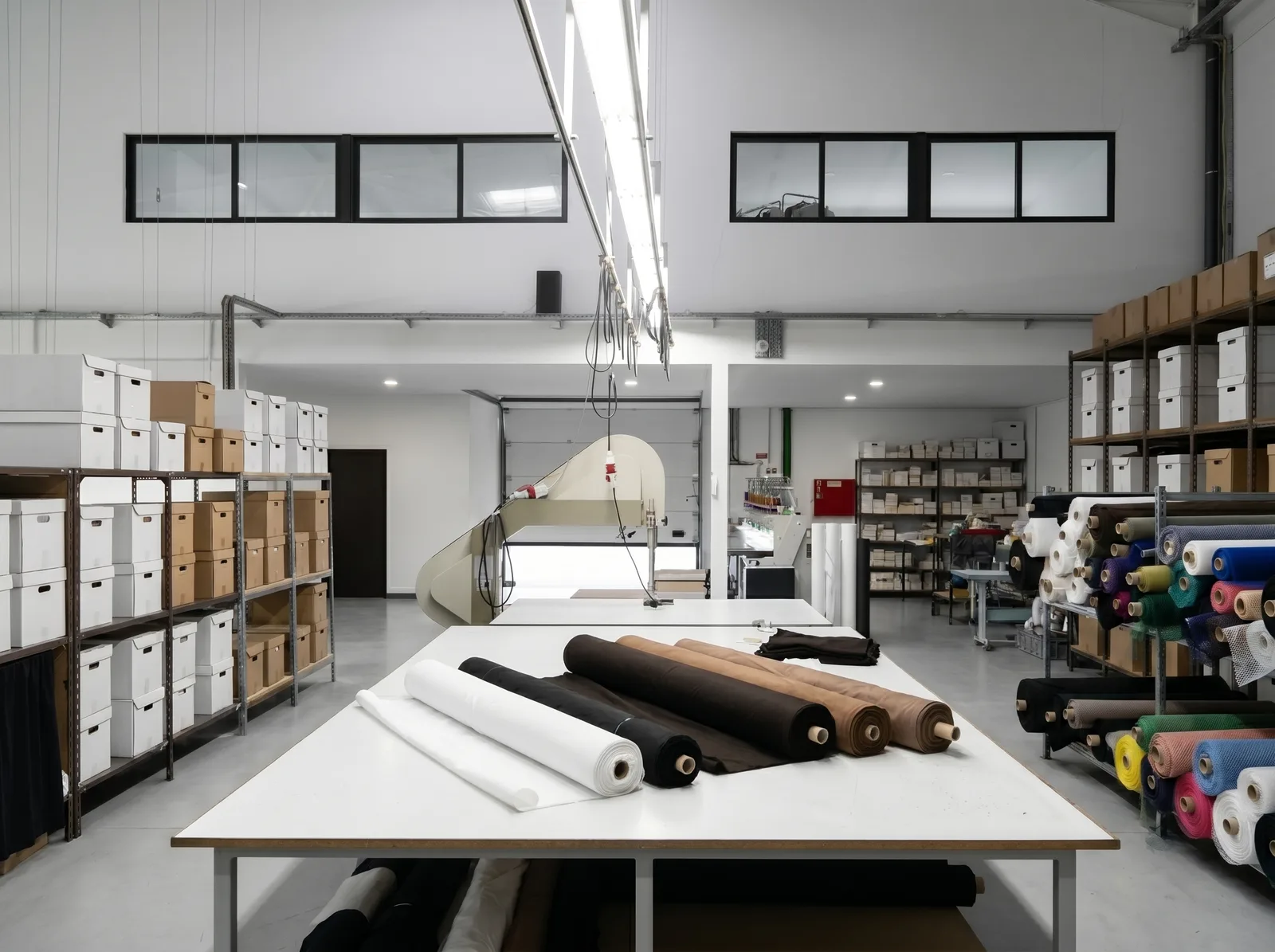
- 4.We produce — Every garment is cut, sewn, finished, and quality-checked in our Barcelos factory
MOQs for White-Label
- —T-shirts and shirts: 100 pieces per colour and fit (75 if ordering 2+ colourways)
- —Hoodies and sweatshirts: 75 pieces per colour and fit (50 if ordering 2+ colourways)
- —Other garments: 50–150 pieces depending on complexity
These minimums are significantly lower than what most wholesale blank suppliers require for custom specifications — and every piece is made to your exact requirements.
What Is Included
- —Garment production (cut, sew, finish, QC)
- —Custom Pantone dyeing
- —Label insertion (main label, care label, size label)
- —Individual polybag packing
- —Worldwide shipping
What Is Available as Add-Ons
- —Custom fabric development (adds 2–3 weeks, requires 300–500 metre fabric MOQ)
- —Decoration (embroidery, screen printing, DTG/DTF)
- —Custom packaging (branded boxes, tissue paper, stickers)
- —Hang tags
The Portugal Advantage for Blank Manufacturing
Portugal is uniquely positioned for blank garment manufacturing in Europe:
- —Fabric mills nearby — The cotton, jersey, fleece, and terry mills are within an hour's drive of our factory. We can source, inspect, and receive fabric within days, not weeks
- —Vertically integrated supply chain — Fabric sourcing, cutting, sewing, dyeing, finishing, and shipping all happen within the same region. Short supply chains mean faster lead times and fewer communication breakdowns
- —European quality standards — Every fabric is tested to OEKO-TEX Standard 100 at minimum. GOTS organic and GRS recycled certifications are readily available
- —"Made in Portugal" label — Carries weight with European and increasingly global consumers. Read more about why brands choose Portuguese manufacturing
- —Lead times — Samples in 7–10 working days, production in 3–5 weeks. Shipping to anywhere in Europe in 2–5 days
Cost Comparison
A direct comparison, based on typical per-unit costs for a 300 GSM French Terry crewneck sweatshirt:
- —Mass-market wholesale blank (imported, basic quality): €3–6
- —Premium wholesale blank (branded, better quality): €8–15
- —European-made white-label (custom specs, Portuguese factory): €12–22
- —Fully custom private label (bespoke pattern, custom fabric): €15–30
The European-made option costs more per unit, but the total cost equation changes when you factor in:
- —Fewer returns due to better quality
- —Higher retail pricing enabled by "Made in Portugal"
- —No minimum order of 500+ pieces (start at 50–100)
- —Full control over specifications
- —Consistent reorders from the same factory
For a detailed cost breakdown, read our production costs guide.
Making the Transition
If you are currently using wholesale blanks and considering the move to European-made, here is a practical path:
- 1.Start with your bestseller — Do not move your entire range at once. Take your best-selling style and produce it as a white-label in Portugal. Compare the quality, customer response, and return rate
- 2.Match or exceed your current specs — Tell your factory exactly what you have now (fabric weight, composition, fit measurements) and ask them to match or improve it
- 3.Budget for samples — You will want 2–3 sample rounds to dial in the fit and fabric. Budget €100–400 for sampling
- 4.Test the market — Sell the European-made version alongside your existing blanks. Let the product speak for itself
- 5.Scale gradually — Once you have validated the quality and customer response, expand to more styles
At White Cotton
We work with brands at every stage — from those placing their first white-label order to established labels running consistent production. Our factory in Barcelos produces everything in-house, so you deal directly with the people making your garments.
If you are ready to move beyond wholesale blanks, send us a message. See also: clothing manufacturing for startups, how to start a clothing brand, t-shirt manufacturer Portugal. We will discuss your current products, recommend fabrics and specifications, and provide a detailed quotation — no commitment, no minimum for quotes.

Pedro Carreira
Founder of White Cotton, a textile manufacturer in Barcelos, Portugal. Producing custom clothing collections for brands across 15+ countries.
Continue Reading
![How to Find a Clothing Manufacturer in Portugal: A Factory Owner's Honest Guide [2026]](/_next/image?url=%2Fimages%2Fgenerated%2Fblog%2Fhow-to-find-clothing-manufacturer-portugal.webp&w=1920&q=75)
How to Find a Clothing Manufacturer in Portugal: A Factory Owner's Honest Guide [2026]

How Much Does It Cost to Start a Clothing Brand in 2026? Real Numbers
![Hoodie Manufacturing Costs: Real Prices from a Portuguese Factory [2026]](/_next/image?url=%2Fimages%2Fgenerated%2Fblog%2Fhoodie-manufacturing-costs-breakdown.webp&w=1920&q=75)
Hoodie Manufacturing Costs: Real Prices from a Portuguese Factory [2026]
![How to Vet a Clothing Manufacturer: The Due Diligence Checklist [2026]](/_next/image?url=%2Fimages%2Fgenerated%2Fblog%2Fhow-to-vet-clothing-manufacturer.webp&w=1920&q=75)
How to Vet a Clothing Manufacturer: The Due Diligence Checklist [2026]
![27 Questions to Ask a Clothing Manufacturer Before Placing Your Order [2026]](/_next/image?url=%2Fimages%2Fgenerated%2Fblog%2Fquestions-to-ask-clothing-manufacturer.webp&w=1920&q=75)