Full-Package Production
Cut and Sew Manufacturer in Portugal
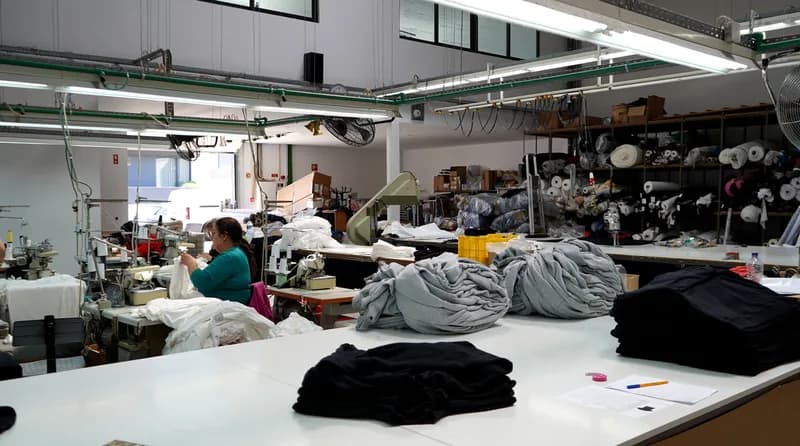
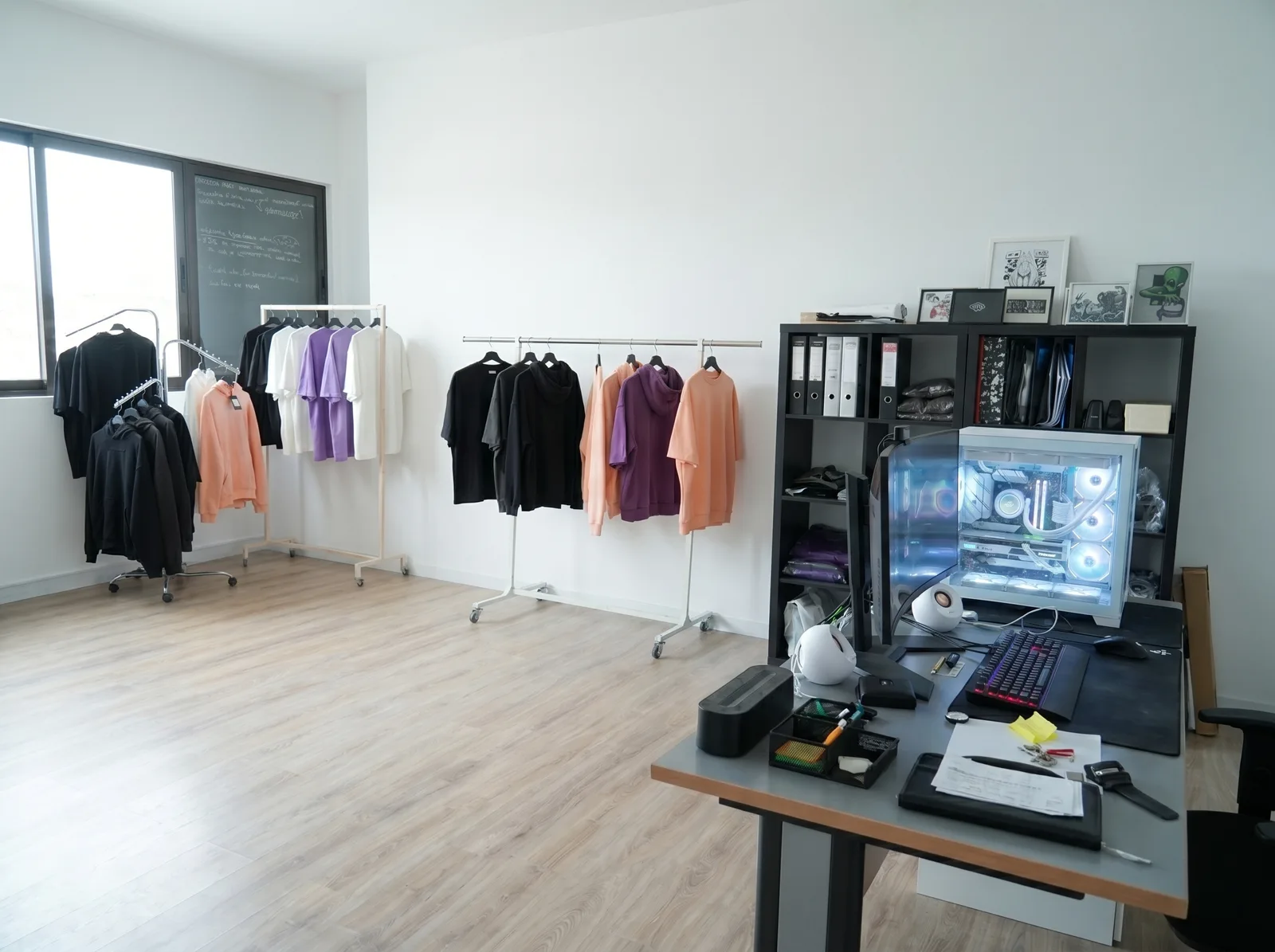
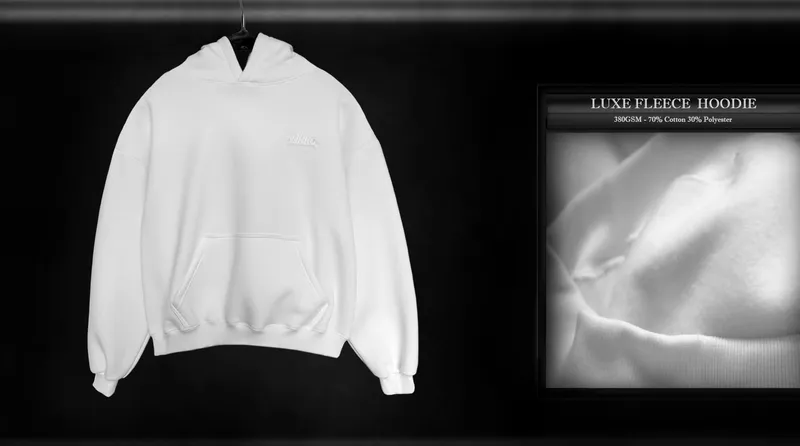
White Cotton is a cut-and-sew manufacturer in Barcelos, Portugal, producing custom garments from scratch for brands worldwide. Every step happens under one roof — pattern grading, marker making, fabric cutting, sewing assembly, finishing, quality control, and packing. No outsourcing, no subcontracting, no middlemen. We offer full-package production with a minimum order of just 100 units per style in one colourway, or 75 per colourway when you order two or more.
In-House
Every step on-site
MOQ from 75 Units
Per colourway · 100 in one colour
Full-Package
Fabric to finished
Barcelos
Made in Portugal
The Core Method
What Is Cut and Sew Manufacturing?
Cut and sew is the traditional method of garment manufacturing where raw fabric is cut into pattern pieces and sewn together to create a finished product. Unlike print-on-demand or decorated blanks, cut-and-sew production gives you complete control over every aspect of your garment — the fabric, the construction, the fit, the labels, and the finishing. It is how every serious clothing brand manufactures.
The process starts with a pattern — the blueprint for your garment. This pattern is graded across your size range, then arranged on a digital marker that maps how the pieces will be laid out on the fabric to minimise waste. The fabric is then cut, either by hand for small runs or by CNC machine for production quantities. Cut pieces are bundled by size and sent to the sewing floor, where they are assembled step by step on industrial machines. Once sewn, garments go through finishing (pressing, steaming, thread trimming), quality control, and packing.
At White Cotton, every stage of this process happens in our own factory in Barcelos. We do not outsource cutting to one facility, sewing to another, and finishing to a third. Having everything under one roof means we control quality at every step, we can respond quickly to issues, and your lead times are shorter because there is no transport between workshops. When we say full-package, we mean it — one factory, one point of contact, one standard of quality from start to finish.
Our Production Workflow
The Cut and Sew Process — Step by Step
Pattern Grading
Your approved pattern is graded across every size in your range. Each size is scaled proportionally to ensure consistent fit from XS to 3XL. Digital grading ensures precision down to the millimetre.
Marker Making
Pattern pieces for all sizes are arranged on a digital marker to maximise fabric utilisation and minimise waste. Our CAD software optimises placement to achieve 80-85% fabric yield — every centimetre of fabric is accounted for.
Fabric Cutting
Fabric is laid up in multiple plies on the cutting table and cut using our CNC cutting system. CNC cutting ensures every piece is identical across the entire production run — no variation between the first unit and the last.
Sewing & Assembly
Cut pieces move to the sewing floor where they are assembled by skilled operators on industrial machines. Each garment follows a construction sequence: panels are joined, seams are finished, collars and cuffs are attached, and closures (zips, buttons, snaps) are installed.
Finishing & Pressing
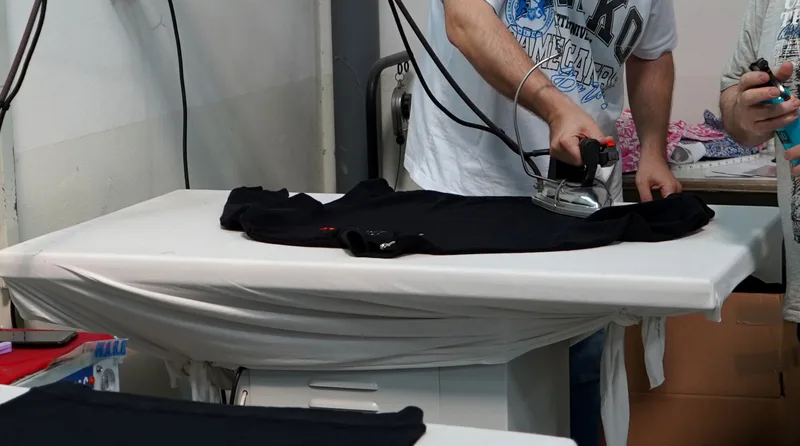
Completed garments go through finishing: loose threads are trimmed, seams are pressed, garments are steamed to remove wrinkles and set the shape. Any decorative elements — embroidery, prints, patches — are applied at this stage if not done inline.
Quality Control
Every garment is inspected against your approved sample. We check measurements, stitch quality, fabric defects, colour consistency, label placement, and overall construction. Garments that do not pass QC are flagged, repaired, or rejected. We follow AQL 2.5 standards.
Packing & Shipment
Approved garments are labelled (woven labels, care labels, hang tags), folded to spec, poly-bagged individually, and packed into cartons by size and colour. We provide a packing list and can ship directly to your warehouse, fulfilment centre, or end customer.
No Outsourcing
Why In-House Cut and Sew Matters
Many factories that call themselves cut-and-sew manufacturers are actually coordinators — they subcontract cutting to one workshop, sewing to another, and finishing to a third. This fragmentation creates quality gaps, communication delays, and longer lead times. When something goes wrong at stage three, stages one and two have already moved on to the next order.
At White Cotton, every operation is performed by our own team in our own facility. Our cutting department is twenty metres from the sewing floor, and the finishing station is next to quality control. If a fabric defect is spotted during cutting, sewing stops immediately. If a construction issue appears at QC, the sewing team adjusts in real time. This tight feedback loop is only possible when everything is under one roof.
In-house production also means consistency. The same operators who sewed your sample are the ones sewing your bulk order. The same quality inspector who approved your pre-production garment checks every unit in the final run. There is no variation between what you approved and what you receive — because the same hands, the same machines, and the same standards are involved from first sample to last carton.
Production Models
CMT vs Full-Package Production
We offer two production models depending on your needs. CMT (Cut, Make, Trim) means you supply the fabric and trims — we handle cutting, sewing, and finishing. This works well if you have an existing fabric supplier or need a specific material that we do not stock. You ship us the materials, we produce the garments.
Full-Package Production (FPP) means we handle everything from sourcing to shipment. We source the fabric from our network of European mills, procure all trims (zips, buttons, labels, hang tags), and deliver finished, packed garments. Most clients choose full-package because it reduces the number of suppliers they need to manage and we can often get better fabric pricing through our mill relationships.
Both models include pattern grading, marker making, cutting, sewing, finishing, QC, and packing. The only difference is who supplies the raw materials. Pricing is provided separately for each model so you can compare and choose what works best for your brand.
Common Questions
Frequently Asked Questions
What is cut and sew vs print on demand?
Cut and sew means every garment is built from scratch — fabric is cut into pattern pieces and sewn together to create a completely custom product. Print on demand uses pre-made blank garments and adds a print. With cut and sew, you control everything: fabric weight, composition, construction, fit, labels, and finishing. This is how real clothing brands manufacture. Print on demand is suitable for testing designs, but cut and sew is the only way to build a product that is truly yours.
What is included in full-package cut and sew?
Full-package production (FPP) means we handle every step from raw material to finished, packed garment. This includes: fabric sourcing, pattern grading, marker making, fabric cutting, sewing and assembly, finishing (pressing, steaming, thread trimming), quality control inspection, labelling (woven labels, care labels, hang tags), folding, poly-bagging, and boxing for shipment. You send us a design — we deliver finished goods ready for your warehouse or direct to your customers.
Do you offer CMT or only full-package production?
We offer both. CMT (Cut, Make, Trim) means you supply the fabric and trims and we handle cutting, sewing, and finishing. Full-package production (FPP) means we source everything — fabric, trims, labels — and deliver the complete garment. Most of our clients choose full-package because it simplifies logistics and we can leverage our relationships with European mills for better fabric pricing. CMT is available for clients who have their own fabric suppliers or specialty materials.
What machinery do you use for cut and sew?
Our factory is equipped with industrial single-needle lockstitch machines, overlock (serger) machines for seaming and edge finishing, coverstitch machines for hems and decorative stitching, flatlock machines for activewear seams, buttonhole and button-sew machines, and a CNC fabric cutting system for precision pattern cutting. We also have heat presses, embroidery machines, and a steam finishing station. All equipment is maintained on a strict schedule to ensure consistent stitch quality across every production run.
What is the turnaround time for cut and sew production?
Samples usually take 4-8 weeks from payment, depending on garment complexity and fabric availability. Once the sample is approved, bulk production usually takes 6-12 weeks from the deposit, depending on order complexity and quantity. Rush production is possible — mainly for returning clients and subject to capacity — at an extra charge. We provide a detailed timeline with every quotation.
How do you manage fabric waste in cut and sew?
Fabric waste is an inherent part of cut and sew — the space between pattern pieces on the cutting marker is waste. We minimise this through computerised marker making that optimises pattern placement to achieve 80-85% fabric utilisation. Remaining offcuts are sorted by fibre type: cotton and natural fibres go to recycling partners who turn them into industrial rags or insulation material. We do not send textile waste to landfill. Clients can also request deadstock fabric options, which gives a second life to surplus materials from European mills.
What is the minimum order quantity for cut and sew?
Our minimum order quantity is 100 pieces per style in one colourway, or 75 per colourway when you order two or more. Most factories in Portugal require 200-500 units minimum for genuine cut-and-sew manufacturing. Our low MOQ makes it possible for emerging brands to produce custom-built garments without committing to large quantities upfront. For repeat orders, the same MOQ applies — there is no requirement to increase quantities over time.
Can I send my own patterns and tech packs?
Yes, absolutely. If you have production-ready patterns and a detailed tech pack, we can work directly from your specifications. We accept patterns in digital format (DXF, AI, PDF) or physical patterns. If you have a design concept but no patterns yet, our pattern-making team can develop them from your sketches, reference garments, or design brief. We also offer pattern grading across your full size range as part of our pre-production service.
Ready to Start Cut and Sew Production?
Send us your design or tech pack. No commitment required.