Digital Printing
Sublimation Printing
Sublimation printing uses heat to convert dye from solid to gas, permanently bonding full-colour artwork into polyester or poly-rich fabrics at a molecular level. At White Cotton, we use sublimation for all-over prints, sportswear, and edge-to-edge designs where the colour becomes part of the fabric itself — zero hand-feel, infinite durability.
From Our Factory
How It Works
Artwork is printed onto sublimation transfer paper using special dye-sublimation inks — the print appears dull at this stage.
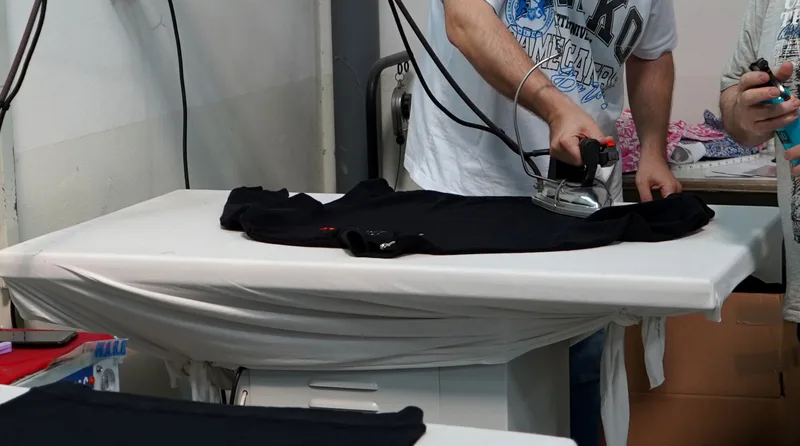
The transfer paper is positioned on the garment (or fabric roll for cut-and-sew) and loaded into a heat press or calendar press.
Heat (195–205°C) and pressure are applied for 45–60 seconds — the solid ink sublimes into gas and penetrates the polyester fibres.
The transfer paper is removed, revealing the final vibrant print — colours appear dramatically more vivid after sublimation.
For all-over designs, fabric is sublimated on rolls before cutting and sewing to ensure print continuity across seams.
Best Fabrics
Best For
Pros & Cons
Pros
- +Zero hand-feel — the print is literally inside the fabric, not on top
- +Infinite wash durability — colours cannot crack, peel, or fade
- +All-over prints possible, including across seams (cut-and-sew sublimation)
- +Unlimited colours at no extra cost — photographic quality with smooth gradients
- +No ink layer means the fabric retains its original stretch, drape, and breathability
Cons
- −Only works on polyester or poly-rich fabrics (65%+ polyester minimum)
- −Only works on white or very light base colours — dark garments are not possible
- −Cannot produce white — white areas are simply unprinted fabric
- −Cotton and natural fibres are incompatible (ink will wash out immediately)
- −Polyester content can feel less premium than 100% organic cotton for some brand positioning
Common Questions
Frequently Asked
What is sublimation printing?
Sublimation printing is a heat-based process where dye-sublimation inks transition from solid to gas under heat (200°C) and pressure, permanently bonding with polyester fibres at a molecular level. The result is a full-colour print with zero hand-feel, infinite wash durability, and vibrant colour that becomes part of the fabric itself.
Why does sublimation only work on polyester?
Sublimation dye bonds at a molecular level with polyester (a synthetic polymer). Natural fibres like cotton and linen do not have the polymer structure to accept the dye — it simply washes out. For cotton garments, we recommend screen printing, DTG, or DTF instead. For blends, the minimum polyester content should be 65% for acceptable colour vibrancy.
Can sublimation print white?
No. Sublimation is a dyeing process, not an ink deposit. White areas in your design are simply the unprinted base fabric showing through. This means sublimation only works on white or very light garments — any base colour will show through and alter the print colours. For white on dark garments, use screen printing, DTF, or embroidery.
What is cut-and-sew sublimation?
Cut-and-sew sublimation prints the design onto fabric rolls before cutting and sewing the garment. This allows the print to extend across seams and cover the entire garment edge-to-edge — impossible with pre-made garment printing. It is the method used for all-over print hoodies, jerseys, and sportswear where every centimetre of fabric is printed.
Is sublimation eco-friendly?
Sublimation uses no water in the printing process itself (the dye transfers as gas), produces minimal waste (leftover transfer paper is recyclable), and requires no pre-treatment chemicals. However, it is limited to polyester fabrics, which are petroleum-derived. At White Cotton, we offer sublimation on recycled polyester (from PET bottles) to offset the environmental impact.
→ Free tech packs — 13 garments, graded specs, ready to send
Related Reading
Interested in Sublimation Printing?
Explore More