DTG vs Screen Printing vs Embroidery vs DTF
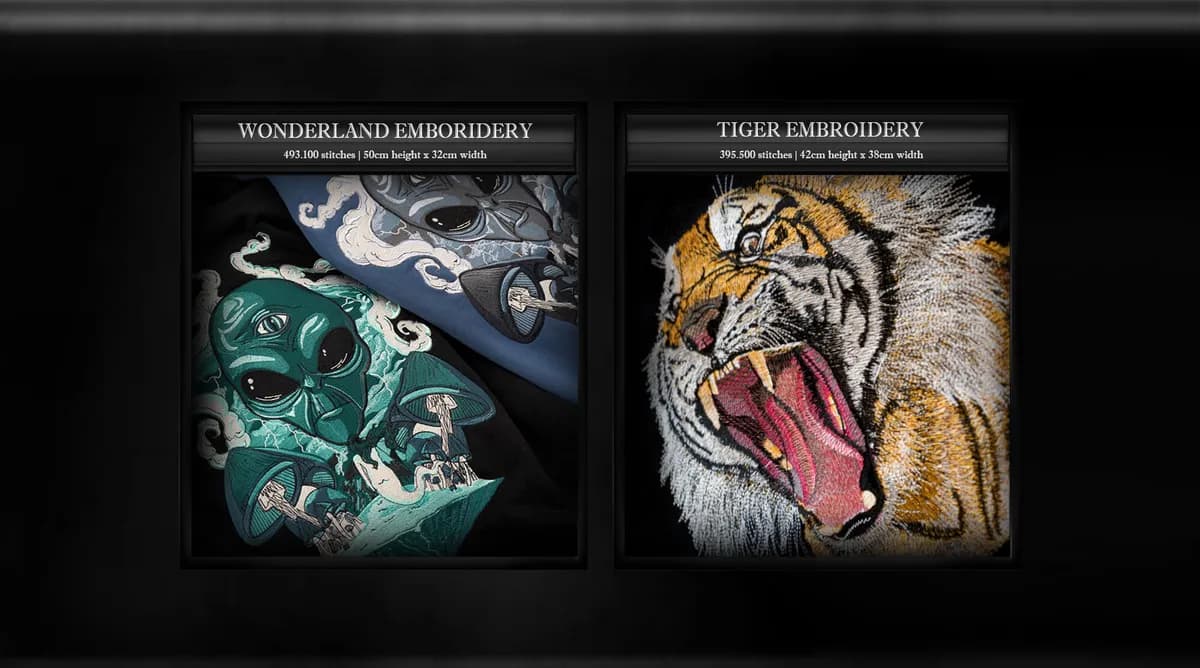
The four core decoration methods split by cost curve and finish: DTG (Direct-to-Garment) inkjet-prints water-based ink straight onto the fabric with zero setup cost, screen printing pushes ink through mesh stencils that get cheaper per unit at scale, embroidery stitches thread into the fabric for a permanent, tactile result, and DTF (Direct-to-Film) heat-transfers a printed film onto any fabric type or colour. Sublimation, a fifth option, dyes polyester fibres directly and only works on polyester-rich fabric. This page compares DTG and screen printing head-to-head — the two most common methods for cotton apparel — and routes to embroidery, DTF, or sublimation where they fit better.
Head-to-Head
DTG Printing
Strengths
- No setup costs — one unit costs the same per-colour price as one thousand
- Unlimited colours — photographic, gradient, and complex designs at no extra cost
- Soft hand-feel — water-based ink absorbs into cotton fibres rather than sitting on top
- Fast turnaround — no screen preparation, production starts in 1–3 days
- Best on cotton and natural fibres — inks bond to cellulose; performance on polyester blends varies
Best For
Screen Printing
Strengths
- Lowest cost per unit at scale — drops below €1/print at 500+ units per design
- Vibrant, opaque colours — spot-colour inks pop on dark garments
- Superior wash durability — properly cured prints survive 50–100+ washes
- Largest practical design area — full front, full back, and all-over placements
- Special effects available — puff, metallic, glow-in-the-dark, discharge, foil
Best For
Detailed Comparison
| Criteria | DTG Printing | Screen Printing |
|---|---|---|
| Setup Cost | €0 | About €20–35 per screen (per colour), by print size |
| Cost at 50 Units | €3–5/unit | €5–8/unit |
| Cost at 150 Units (crossover zone) | €3–5/unit — flat regardless of volume | ≈€1.50–3/unit for 1–2 colours — this is where screen printing typically overtakes DTG on price |
| Cost at 500 Units | €3–5/unit | €0.80–1.50/unit |
| Minimum Viable Order | 1 unit | 50–100 units |
| Max Colours | Unlimited (CMYK) | 1–8 spot colours |
| Wash Durability | 30–50 washes | 50–100+ washes — embroidery outlasts both, effectively permanent |
| Fabric Compatibility | Best on cotton and natural fibres; polyester bond is inconsistent | Works on virtually all fabric types — DTF is the more versatile digital option, printing cleanly on cotton, polyester, and blends alike |
| Hand-Feel | Soft — water-based ink absorbs into the fibres | Thicker plastisol sits on the surface (water-based screen ink is softer, at a premium) — DTF sits between the two with a slight film texture |
| Design Size | Limited to the printer bed, typically up to A3 | Full front, full back, and all-over placements are practical — embroidery tops out around 30cm x 30cm before stitch count makes it impractical |
| Setup / Turnaround | No setup — production starts in 1–3 days | Screen prep adds 30–60 minutes per colour, then 1–2 days at volume |
| Dark Garments | Needs a white ink under-base, +€1–2/unit | Opaque plastisol handles dark fabric naturally — DTF also handles dark garments well without DTG's extra under-base cost |
| Special Effects | None beyond standard CMYK print | Puff, metallic, foil, glow-in-the-dark, discharge — sublimation goes further still, dyeing colour permanently into polyester for zero-hand-feel, edge-to-edge coverage |
| Best Use Case | Small runs, samples, and photographic or gradient artwork | Bulk runs with 1–8 spot colours and bold graphics — embroidery is the better call for logos and premium branding, DTF for mixed-fabric or dark-garment runs under 500 units |
Verdict
Our Recommendation
Start from your quantity and fabric, not the design. Screen printing wins on cost at 100+ units per design with 1–8 spot colours — the crossover from DTG typically lands around 150–200 units, earlier for 1–2 colour designs and later for anything approaching photographic detail. Below that, DTG's zero setup cost makes small batches, samples, and full-colour or gradient artwork cheaper, provided the garment is cotton — DTG stays soft where screen printing's plastisol sits on the surface. If the design has to survive on polyester, nylon, or a mixed-fabric range, or needs to look equally vibrant on black and white garments, DTF is the more consistent digital choice at any of these volumes. Choose embroidery instead of any print method for logos and brand marks where durability and premium perception matter more than large-format coverage — it outlasts every ink-based method and works on virtually every fabric weight above 180 GSM. Sublimation sits apart from the other three: it only works on polyester-rich fabric, but for all-over prints, jerseys, and performance wear it produces a permanent, zero-hand-feel result none of the other methods can match.
Common Questions
Frequently Asked
At what quantity should I switch from DTG to screen printing?
The crossover depends on colour count, but screen printing typically becomes cheaper at 150–200 units for a single design — for 1–2 colour designs it can be as low as 50 units, while photographic or gradient artwork may stay cheaper on DTG at any quantity. Below the crossover, DTG's zero setup cost wins; above it, screen printing's per-print cost falls below €1 at 500+ units.
Which decoration method lasts longest after washing?
Embroidery is the most durable — stitched thread doesn't fade, crack, or peel, and it effectively outlasts the garment. Among the print methods, screen printing survives 50–100+ washes when properly cured, DTF holds 40–60 washes thanks to its adhesive film bond, and DTG typically shows fading after 30–50 washes. Sublimation is permanent on polyester because the dye becomes part of the fibre rather than sitting on it.
Can I combine decoration methods on one garment?
Yes — it's a common way to get a premium result. An embroidered chest logo paired with a screen-printed back graphic is the most popular combination; screen print first, then embroider, to avoid hooping over cured ink. DTG is also used to sample a design cheaply before committing to a screen-printing production run once the artwork is finalised.
Which method should I use for dark garments or polyester fabric?
DTF is the most consistent choice across dark garments and polyester — it prints on any fabric type or colour without a white under-base and stays vibrant on black. DTG needs a white ink under-base on dark garments, which adds roughly €1–2/unit. Screen printing's opaque plastisol inks also handle dark fabric naturally. Sublimation is the exception: it only bonds to polyester (65%+) and cannot print on cotton at all.
Related Comparisons
Related Reading
→ Free tech packs — 13 garments, graded specs, ready to send
Need Help Choosing?