Hoodie Manufacturing: GSM, Costs, Build
320–500 GSM french terry or brushed fleece? Fabric, construction, print methods, MOQ from 75 units per colourway and real per-unit pricing.
 Pedro Carreira··12 min read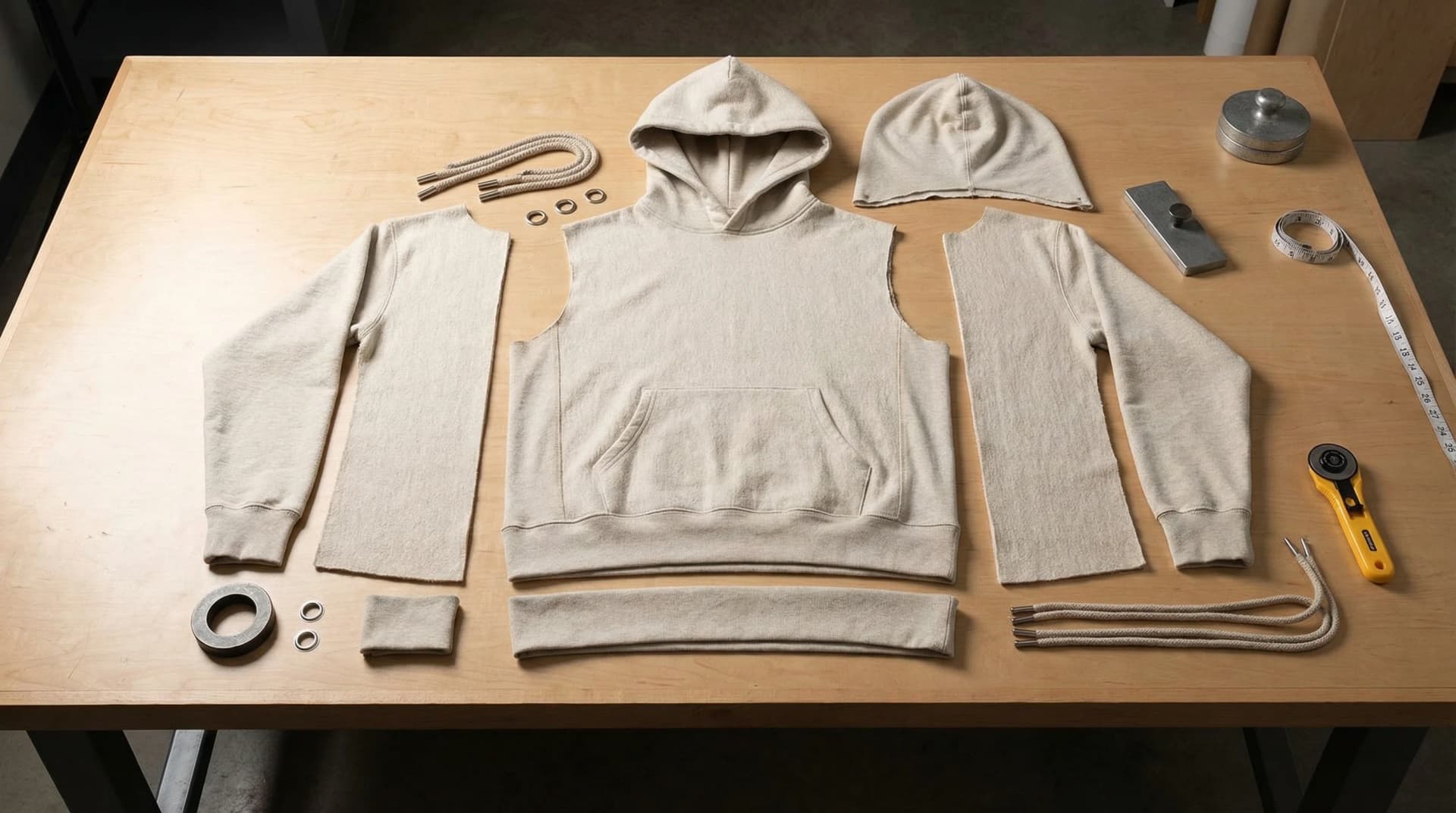
Why Hoodies Are a Brand Staple
See also: hoodie manufacturers in Europe compared, sweatshirt production guide, screen printing vs DTG vs embroidery.
The hoodie is the most popular product category we manufacture — and for good reason. Hoodies have the highest perceived value of any casual garment, they work across seasons, and they are the first item many new brands produce. Hoodie production is also less forgiving than a t-shirt: more panels, more trims, more places for a spec to be misread.
Whether you are launching a clothing brand, an athleisure brand, or a premium basics line, understanding hoodie construction will help you make better decisions and communicate more effectively with your manufacturer.
Choosing Your Fabric
Fleece Types
French terry — looped interior, smooth exterior. See our deep-dive into French terry vs fleece for a full comparison. Lighter weight (280–350 GSM), year-round wearable. The loops give a slight stretch and breathability. Best for: three-season hoodies, lighter weight pieces, brands targeting warmer climates.
Brushed fleece — interior loops are brushed into a soft, fuzzy pile. Heavier feel (320–450 GSM), warmer. The brushing creates the cosy feeling people associate with premium hoodies. Best for: autumn/winter, premium positioning, streetwear.
Reverse fleece — the looped side faces outward, creating a textured exterior. The smooth side sits against the skin. Best for: fashion-forward brands, unique texture, differentiation.
Weight
- —280–320 GSM: Lightweight hoodie. Good for spring/summer, layering. Think technical fleece.
- —320–380 GSM: Midweight. The versatile sweet spot. Warm enough for cool weather, not too heavy for milder days.
- —380–450 GSM: Heavyweight. Substantial, premium feel. The weight you associate with brands like Essentials or Represent.
- —450+ GSM: Ultra-heavy. Makes a statement. Oversized, structured silhouette. Common in high-end streetwear.
Composition
- —100% cotton: Softest hand feel, most natural drape. Higher shrinkage (5–8% if not pre-shrunk). Wrinkles more.
- —80/20 cotton-polyester: The industry standard blend. Good balance of softness, shape retention, and reduced shrinkage (2–4%).
- —95/5 cotton-elastane: Slight stretch for movement. Common in fitted or athleisure styles.
- —100% organic cotton: Same properties as cotton but with GOTS certification. 15–25% fabric premium. See our fabric weight guide and fabric sourcing guide for more detail.
Construction Details
Hood construction
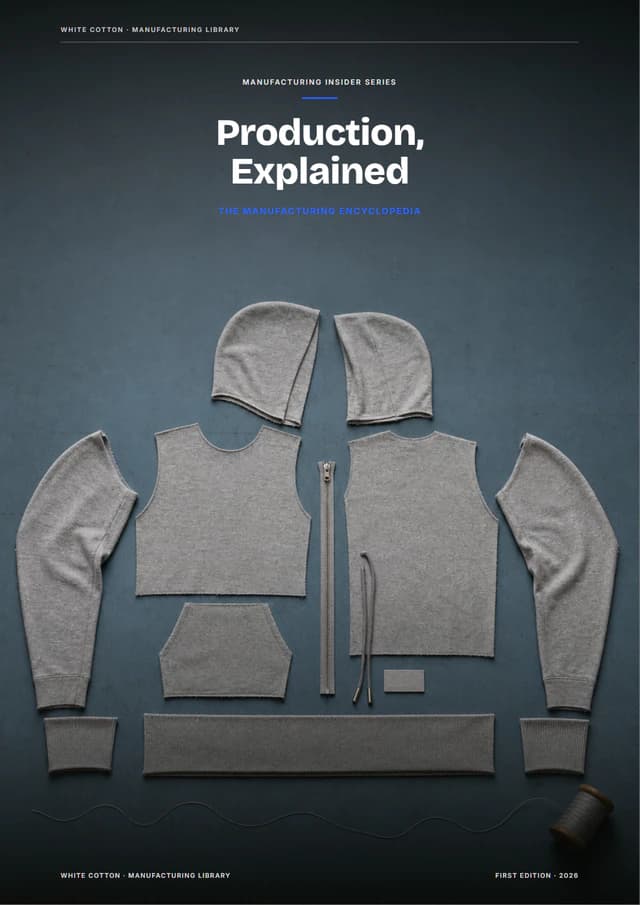
Two-panel hood: Front and back panels joined by a centre seam. Most common, clean look.
Three-panel hood: Two side panels with a centre strip. Creates a more structured, rounded shape. Common in premium and fashion hoodies.
Lined hood: Interior lined with jersey or contrasting fabric. Adds weight, warmth, and a premium detail.
Double-layer hood: Full double-thickness hood. Maximum warmth and structure. Used in heavyweight streetwear.
Pocket types
Kangaroo pocket: Single front pocket across the abdomen. The classic hoodie pocket. Open ends for hand warming.
Split kangaroo pocket: Kangaroo pocket with a centre seam creating two compartments. Slightly more structured look.
Side seam pockets: Pockets set into the side seams. Cleaner, more minimal aesthetic. Common in premium and athleisure.
No pocket: Clean, minimal front. Growing trend in premium basics.
Ribbing
Cuffs and waistband ribbing affects both aesthetics and function:
- —1x1 rib: Standard, balanced stretch
- —2x2 rib: More visible texture, slightly more stretch
- —Width: 5–8cm is standard. Wider ribbing = more casual/streetwear. Narrower = cleaner look
- —Self-fabric hem: No ribbing at the waist. Clean, modern. Common in oversized and drop-shoulder styles
Drawcords
Often overlooked, but a significant design detail:
- —Flat cotton cord: Classic, minimal. 8–12mm width
- —Round cotton cord: Traditional, casual. 5–8mm diameter
- —Woven tape cord: Branded or contrasting. Fashion-forward
- —Metal aglets: Tipped with metal for a premium detail
- —No drawcord: Clean, minimal look. Growing trend
Fit and Silhouette
Regular fit
Standard body width, set-in sleeves at the natural shoulder point. The classic hoodie shape.
Oversized fit
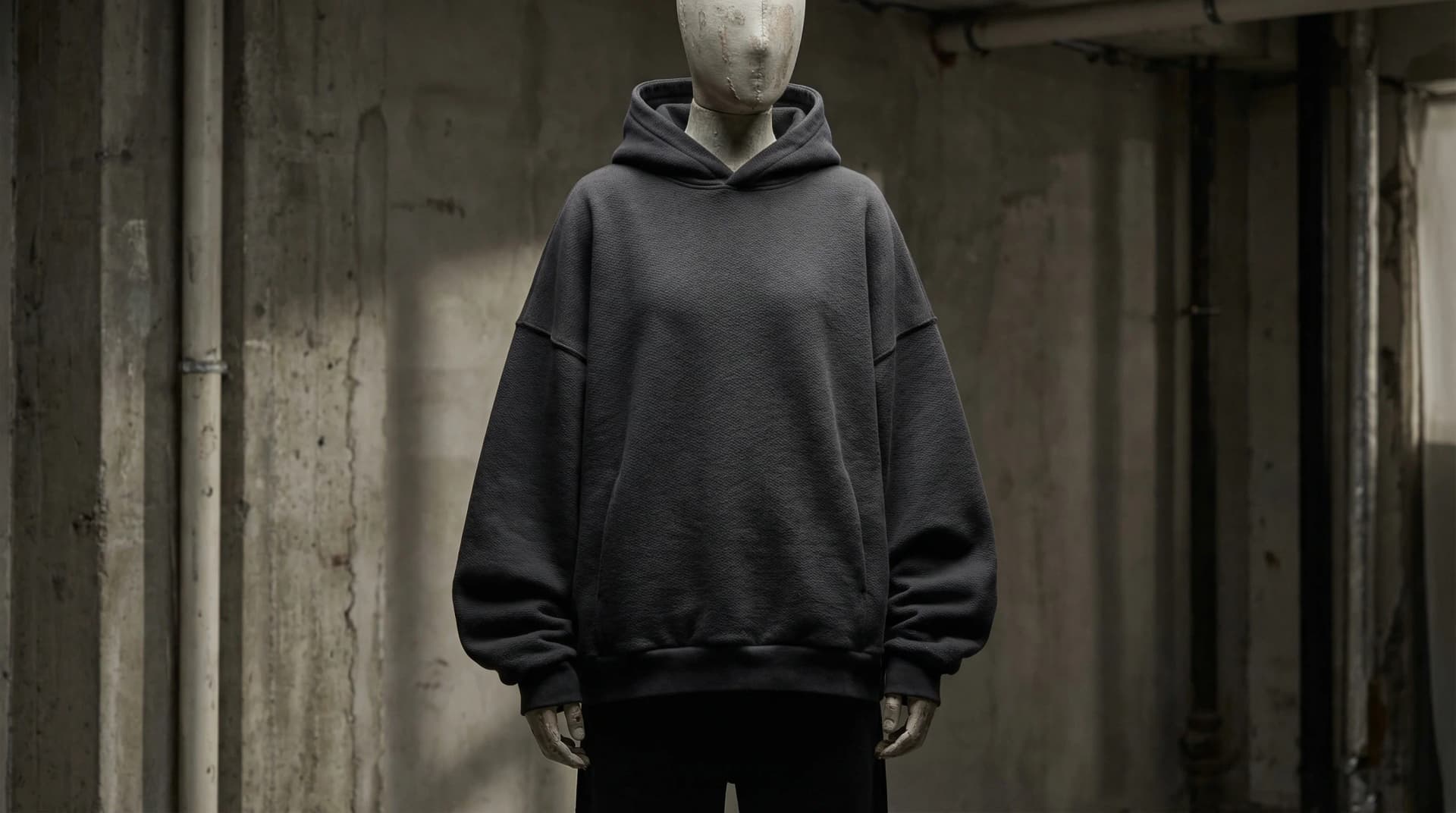
Extended body width (10–15cm wider than regular), drop shoulders (seam falls below natural shoulder), longer body and sleeves. Currently dominant in streetwear and premium basics.
Boxy / cropped
Wide body with a shorter length, creating a square silhouette. Popular in women's and gender-neutral collections.
Fitted / athletic
Closer to the body, sometimes with raglan sleeves. Performance or athleisure positioning.
Printing and Decoration
Screen printing
Best for: bold graphics, solid colours, high volume. Cost-effective at scale. Each colour requires a separate screen (setup cost €30–60 per colour). The industry standard for streetwear and branded hoodies.
DTG (Direct to Garment)
Best for: complex, multi-colour designs, photo-realistic prints, small runs. No setup costs but higher per-unit cost. Works best on lighter coloured fabrics.
Embroidery
Best for: logos, small designs, premium branding. Creates a tactile, premium finish. Digitisation cost (one-time €30–80) plus per-unit stitching cost. Heavier fabrics handle embroidery better than lightweight ones.
Puff print
Screen print with a raised, three-dimensional effect. Popular in streetwear. Adds €0.50–1.50 per position over standard screen print.
Appliqué
Cut fabric pieces sewn onto the garment. Labour-intensive but creates a high-end, handcrafted look. Common in varsity and luxury streetwear.
Size Grading
A standard hoodie size chart (regular fit, in cm):
- —XS: Chest 52, Length 66, Shoulder 44, Sleeve 62
- —S: Chest 54, Length 68, Shoulder 46, Sleeve 63
- —M: Chest 56, Length 70, Shoulder 48, Sleeve 64
- —L: Chest 58, Length 72, Shoulder 50, Sleeve 65
- —XL: Chest 60, Length 74, Shoulder 52, Sleeve 66
- —XXL: Chest 62, Length 76, Shoulder 54, Sleeve 67
For oversized fit, add 6–10cm to chest width and 2–4cm to length, with drop shoulders extending 4–8cm beyond natural shoulder.
Important: These are garment measurements, not body measurements. Your size chart for customers should include both.
The Hoodie Production Process
Everything above is what you decide. This is what we do with those decisions once the order is placed. Seven stages, in order, and the honest answer about which one actually eats your calendar.
1. Design and tech pack
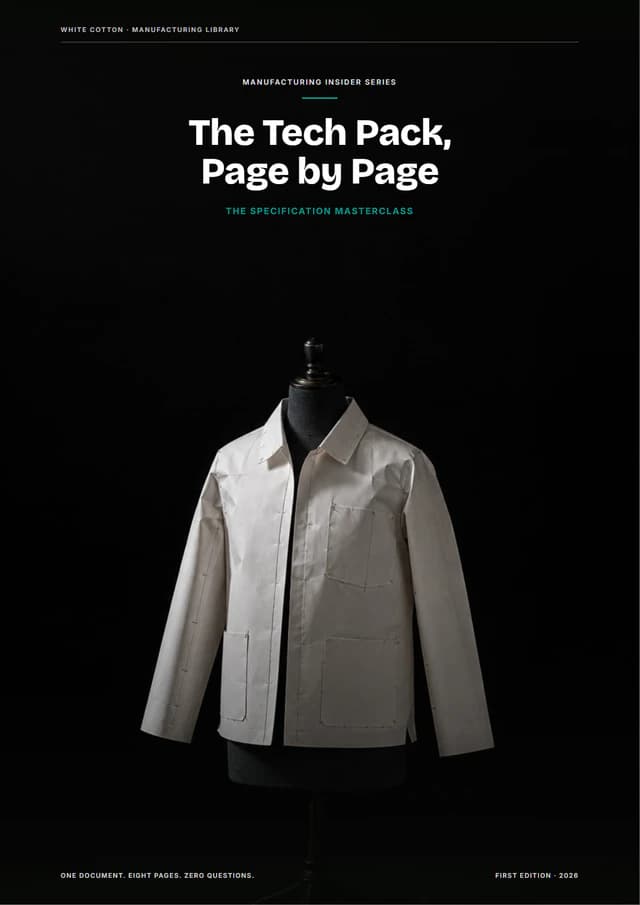
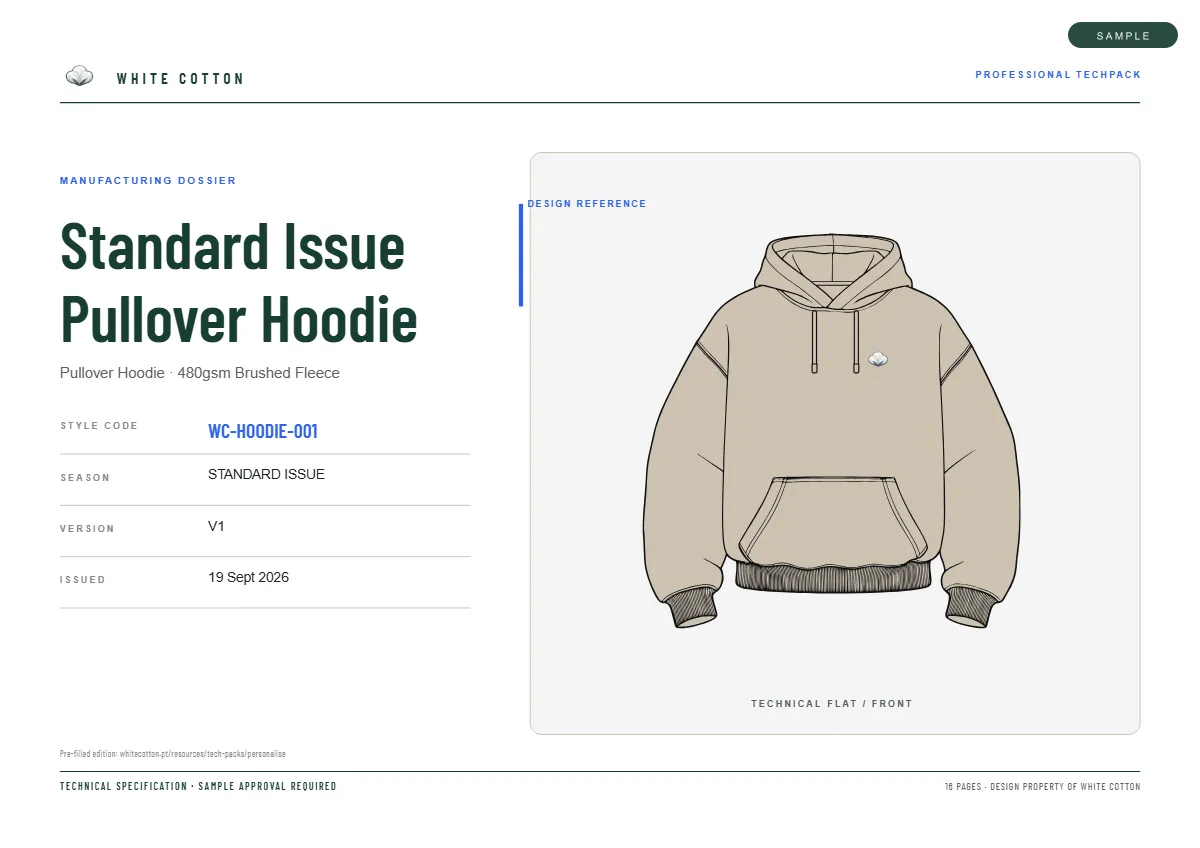
Nothing is cut from a mood board. The tech pack is what turns your intent into instructions a cutting room can follow: flat sketches, points of measure, seam and stitch types, hood panel count, pocket construction, rib width, drawcord and eyelet specification, label placement, and the packing method. A tech pack ensures we manufacture your exact vision — still developing yours? We can help refine it. The stages below are only as reliable as this one, because every ambiguity here becomes a question later, and questions cost days.
2. Fabric sourcing
Here the timeline forks. If your hoodie uses a standard fabric from our library, it's bought to order on the normal timeline and this stage adds no extra wait. If you want a custom Pantone, it becomes the longest single wait in the whole project — the mill needs roughly 300 metres per colour as a minimum dye run, and a lab dip has to be approved before the bulk dye happens at all. Budget roughly three to four additional weeks for lab dip plus dyeing.
This is where hoodie orders stall. Not sewing, not printing — dyeing. Custom trims follow the same logic: bespoke hardware and branded drawcord tipping carry their own minimums, in the region of a thousand units, so a custom aglet on a 100-piece run is usually the wrong call. Standard trims with a custom woven label get you 90% of the perceived custom feel with none of the delay.
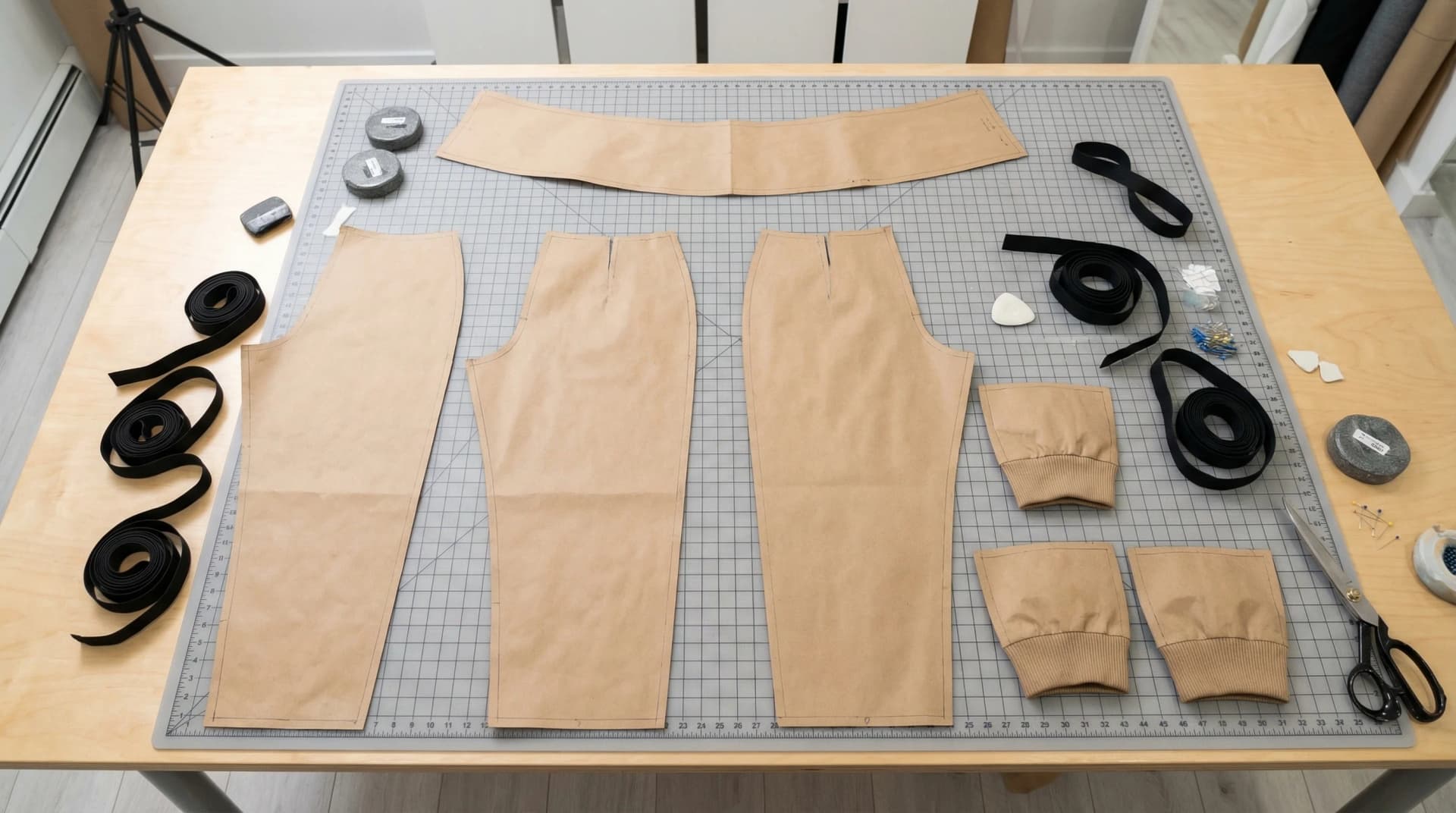
3. Pattern making and grading
Your approved sample measurements become a pattern, and the pattern is graded across the size run. Then a marker is made — the jigsaw layout that determines how many garments come out of each metre of fabric. Marker efficiency is invisible to the customer and directly visible in your unit price, which is why an oversized hoodie with drop shoulders and wide panels costs more per unit than a regular fit in the same fabric, even at the same GSM.
4. Sampling
We produce a physical sample before anything goes into bulk. Sampling runs from €80 per piece and usually takes 4 to 8 weeks from payment, and most hoodies need more than one round: the first sample is where you discover the hood sits differently than the sketch suggested, or the rib is tighter than you wanted, or the pocket opening is 2cm too high. Approving a sample you have not worn is the single most expensive shortcut in this process.
5. Bulk cutting and sewing
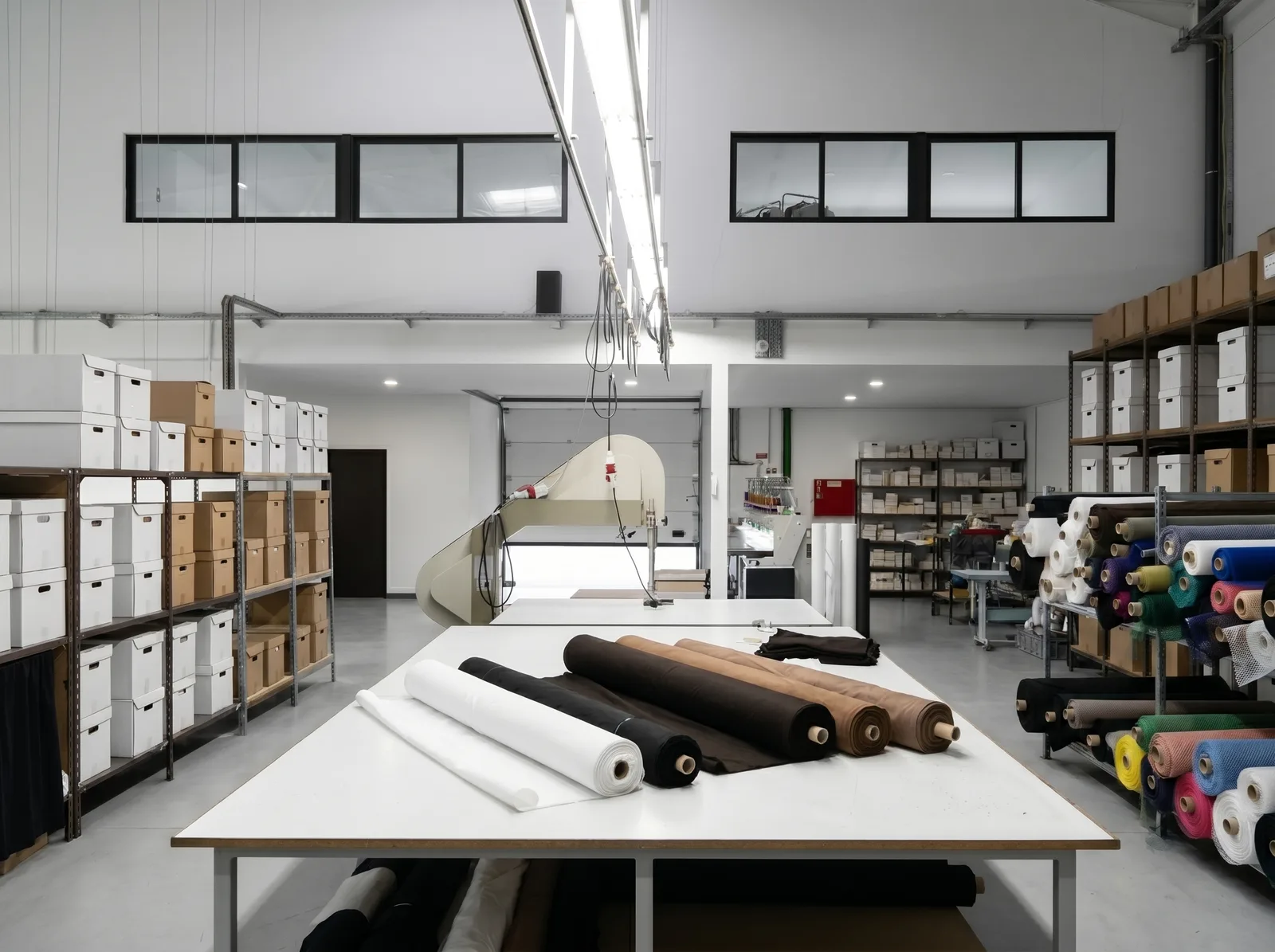
Fabric is spread in layers on the cutting table and cut through the whole stack at once, which is why volume lowers the per-unit cost. Weight matters here in a way most brands do not expect: a table that handles roughly 50 layers of 180 GSM jersey manages around 20 layers of 500 GSM fleece. Heavyweight hoodies are physically slower to cut, and heavier fabrics also need stronger needles, higher thread tension, and slower machine speeds through the seam intersections where four or more layers stack up. Cutting is a matter of days; sewing is where the bulk of the production window sits.
6. Decoration
Decoration happens after sewing and before final QC, on the finished garment. Screen printing, embroidery, puff print, and discharge printing each behave differently on fleece — plastisol gives the best opacity on heavy fabric, embroidery prefers the stability of a heavier weight, and discharge produces a print with no hand at all on 100% cotton. Sequencing matters: if the garment is going to be washed or distressed, that happens after decoration, because the wash affects everything applied before it.
7. Finishing and quality control
Trimming, pressing, folding, labelling, poly-bagging, and cartoning. Every garment is individually inspected before packing — measurements against the approved sample, seam integrity, decoration placement and registration, and the trims. This stage is short in days and is the one that decides whether the customer opening the box believes the price you charged.
If you would rather not build the grading from scratch, our free hoodie tech pack carries the same rows already drawn — every point of measure graded XS–XXL with tolerances, plus the hood group, drawcord channel and pocket geometry — as a vector PDF and an editable .ai file.
Hoodie Production Timeline
For a hoodie order (100 units, with screen print):
- —Fabric sourcing: no extra wait for a standard fabric; roughly 3-4 weeks added for a custom-dyed colour
- —Cutting: 1–2 days
- —Printing: 2–3 days
- —Sewing: 1–2 weeks
- —Finishing + QC: 2–3 days
- —Total: 2–6 weeks (depending on fabric availability)
Pricing Benchmarks
For a 380 GSM brushed fleece hoodie with screen print, made in Portugal:
- —75 units per colourway: €28–38 per unit
- —100 units: €22–32 per unit
- —250 units: €18–26 per unit
- —500 units: €15–22 per unit
These are indicative ranges. Your specific design, fabric choice, and finishing will affect the final price. For a detailed breakdown, read our clothing production costs guide.
Our Hoodie Expertise
Hoodies are our specialty at White Cotton. We produce them in every weight from 280 to 480 GSM, in organic cotton, conventional cotton, and blends. From classic pullovers to double-layer constructions, we have the patterns, the machines, and the expertise to produce exactly what your brand needs.
Our MOQ for hoodies is 100 units per style in a single colourway, dropping to 75 per colourway when you order two or more colourways. We offer sampling from €80 per piece, with turnaround usually 4–8 weeks from payment. See how we manufacture from 75 units, browse our hoodie collection, or get started with a quote. For a broader view of the industry, see our list of top clothing manufacturers in Portugal.
Hoodie Production Questions

Pedro Carreira
Founder of White Cotton, a textile manufacturer in Barcelos, Portugal. Producing custom clothing collections for brands across 15+ countries.
Frequently Asked Questions
For a 100-unit run on a standard fabric with screen print, the production window usually runs 6 to 12 weeks from the deposit: cutting, sewing, printing, and finishing plus QC all fit inside that window. The variable that moves the total is fabric. A custom Pantone dye adds roughly three to four weeks on its own, because a lab dip has to be approved before the bulk dye run happens.
280–320 GSM is a lightweight hoodie, 320–380 GSM is the midweight sweet spot, 380–450 GSM reads as premium, and 450 GSM and above is ultra-heavy statement territory. Most brands pricing hoodies in the €50–100 retail range land between 380 and 420 GSM. Our GSM fabric weight chart covers what each range feels like in the hand, with the oz/yd² conversion.
Dyeing. Sewing and printing run to a predictable schedule, but a custom colour needs a minimum dye run of around 300 metres per colour and a lab dip approved before bulk dyeing starts — roughly three to four weeks that do not exist if you choose a stock colour. Custom hardware and branded trims cause the same problem for the same reason: their own minimums, in the region of a thousand units.
Usually more than one. The first sample is where the hood shape, rib tension, and pocket placement stop being drawings and become things you can wear, and something almost always needs adjusting. Sampling runs from €80 per piece and usually takes 4 to 8 weeks from payment, so a second round is cheap insurance against a fault multiplied across the whole run.
Yes, at the cutting table and on the sewing line. A stack that takes roughly 50 layers of 180 GSM jersey handles around 20 layers of 500 GSM fleece, so heavyweight hoodies are physically slower to cut. Heavier fabric also needs stronger needles, higher thread tension, and slower machine speeds where four or more layers meet at a seam intersection.
Continue Reading
What Is a Tech Pack for Clothing? A Real Example, Page by Page
Your First Clothing Sample: What to Expect, What It Costs & Timeline
Manufacturing Oversized Streetwear: Patterns, Fabrics & Production Tips
Polo Shirt Manufacturing: Piqué, Jersey & Premium Construction