Bilateral decision runway
Put the trade-off
in the open.
Material against material. Method against method. Production route against production route. The point is not to name a universal winner—it is to show what changes for your product.
Start comparing ↓The decision board
Choose the question closest to the decision in front of you.
Fabric
8 comparisons
The key difference between French Terry and Fleece is the inner surface: French Terry has looped, uncut terry loops that wick moisture and breathe, while Fleece has a brushed, napped interior that traps heat. French Terry is the three-season choice (240–350 GSM); Fleece is the cold-weather insulator (280–400 GSM).
↗02Organic CottonversusRecycled PolyesterThe key difference between Organic Cotton and Recycled Polyester is the source material and end-of-life: organic cotton is a biodegradable natural fibre grown without synthetic pesticides (GOTS-certified), while recycled polyester (rPET) is a synthetic fibre made from post-consumer plastic bottles that diverts waste from landfill but sheds microplastics.
↗03Cotton JerseyversusPiquéThe key difference between Cotton Jersey and Piqué is the knit structure: jersey is a single-knit with a smooth face and soft drape, while piqué is a double-knit with a raised diamond or honeycomb texture that gives it more structure and a sportier appearance. Jersey is the default for t-shirts; piqué is the classic polo fabric.
↗04CanvasversusTwillThe key difference between Canvas and Twill is the weave density and weight: canvas is a heavyweight plain-weave (or sometimes basket-weave) fabric at 280–500 GSM designed for maximum durability, while twill uses a diagonal weave pattern at 200–350 GSM that balances durability with drape and comfort.
↗05Brushed FleeceversusSherpaThe key difference between Brushed Fleece and Sherpa is the pile structure: brushed fleece has a low, even napped surface on the interior (created by brushing the knit loops), while sherpa has a deep, curly pile that mimics sheepskin — making it warmer, bulkier, and more tactile. Sherpa is typically used as a lining; fleece is used for the full garment.
↗06PoplinversusOxfordThe key difference between Poplin and Oxford is the weave and hand-feel: poplin is a tightly woven plain-weave fabric (100–140 GSM) with a smooth, crisp finish suited to formal and smart-casual shirts, while Oxford cloth uses a basket weave (140–200 GSM) with a softer, more textured surface suited to casual button-downs.
↗07LinenversusCottonThe key difference between Linen and Cotton is the fibre source and thermal regulation: linen is made from flax stalks and is 30% stronger and more breathable than cotton, but wrinkles easily and costs more. Cotton (from cotton bolls) is softer, cheaper, easier to care for, and available in far more fabric constructions.
↗08French TerryversusWaffle KnitThe key difference between French Terry and Waffle Knit is the thermal mechanism: French Terry traps warmth in its uncut interior loops, while Waffle Knit uses a honeycomb cell structure that creates small air pockets for insulation. Both are lightweight warm fabrics, but waffle knit is thinner, more breathable, and better for layering.
↗Technique
2 comparisons
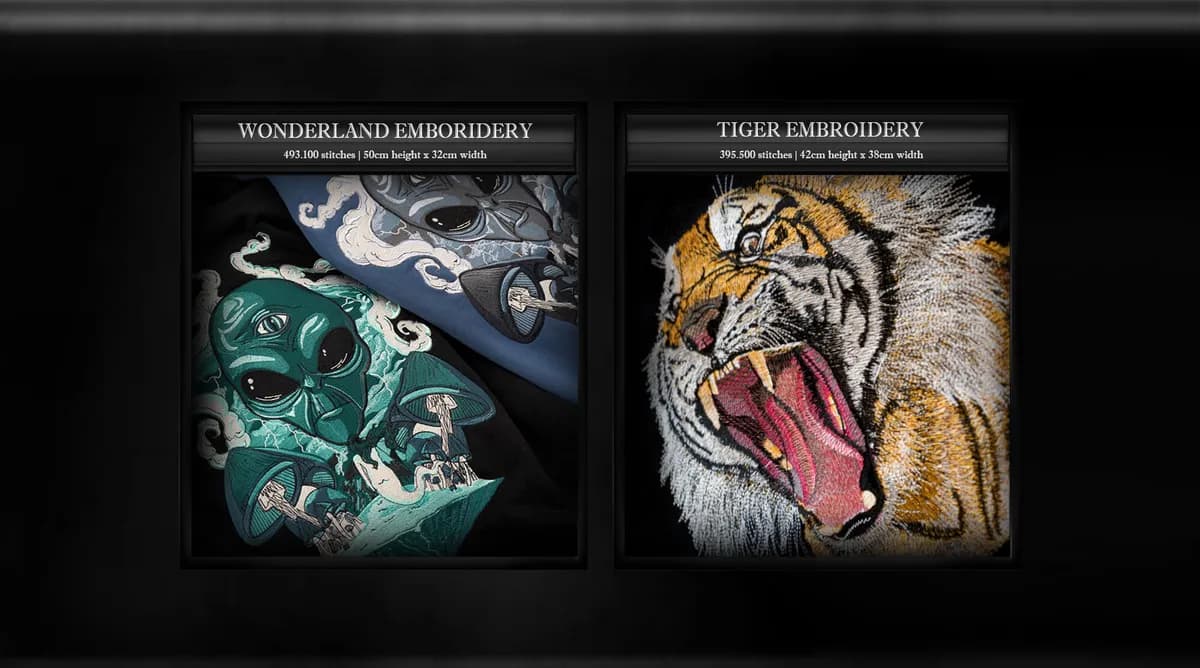
The four core decoration methods split by cost curve and finish: DTG (Direct-to-Garment) inkjet-prints water-based ink straight onto the fabric with zero setup cost, screen printing pushes ink through mesh stencils that get cheaper per unit at scale, embroidery stitches thread into the fabric for a permanent, tactile result, and DTF (Direct-to-Film) heat-transfers a printed film onto any fabric type or colour. Sublimation, a fifth option, dyes polyester fibres directly and only works on polyester-rich fabric. This page compares DTG and screen printing head-to-head — the two most common methods for cotton apparel — and routes to embroidery, DTF, or sublimation where they fit better.
↗02Embroideryversus3D Puff EmbroideryThe key difference between flat embroidery and 3D puff embroidery is the foam insert: standard embroidery stitches lie flat against the fabric, while 3D puff embroidery stitches over a layer of foam (typically 3mm thick) that raises the design above the garment surface. Puff adds dimension and a premium, sporty look — especially popular on caps.
↗Business
2 comparisons
Most people asking this question are really asking one of two much simpler things: 'can I put my label on something that already exists?' (white label) or 'can someone make my design for me?' (private label). White label means buying finished blank garments and adding your own labels, tags and branding — you own the brand, not the garment. Private label means the fabric, pattern, cut and construction are specified by you and made exclusively for you — you own the product itself, including the pattern. That single distinction drives everything below: cost, minimum order, lead time, margin, and whether a competitor can buy the same body you did. At White Cotton, white label means one of our base styles made to order for you — nothing comes off a shelf — so there is no pattern fee, and it carries our standard minimums.
↗02Cut & SewversusPrint-on-DemandThe key difference between Cut & Sew and Print-on-Demand is the production model: cut & sew manufactures garments from raw fabric (you control fabric, pattern, cut, and construction), while print-on-demand decorates pre-made blank garments only when an order is placed. Cut & sew gives maximum quality and uniqueness; POD gives zero inventory risk and instant startup.
↗Manufacturing
4 comparisons
The key difference between manufacturing in Portugal and China is the trade-off between cost and proximity: China offers the lowest production costs (30–50% cheaper) with high MOQs and 8–16 week lead times, while Portugal offers European quality standards, lower MOQs, faster shipping to EU/UK markets (3–5 days), and full GOTS/OEKO-TEX compliance — at a premium price.
↗02PortugalversusTurkey ManufacturingThe key difference between Portugal and Turkey manufacturing is the positioning: Portugal is Europe's premium manufacturing hub known for quality knitwear, sustainability certifications, and the 'Made in Portugal' brand cachet, while Turkey offers a broader range of capabilities at 15–25% lower costs with strong denim, woven, and leather expertise.
↗03Small BatchversusBulk ManufacturingThe key difference between Small Batch and Bulk Manufacturing is the trade-off between flexibility and cost: small batch (200–1,000 units) offers lower financial risk, faster iterations, and the ability to test styles before committing, while bulk manufacturing (2,000+ units) delivers significantly lower per-unit costs, priority factory scheduling, and economies of scale.
↗04White CottonversusOther Portugal ManufacturersAn honest comparison written by one of the factories being compared, covering MOQ, lead times, fabric range and certifications against a typical Portuguese factory and a typical Asian factory — including the four cases where another manufacturer is the better choice.
↗A comparison should end in a brief
When the variables are yours, the answer becomes yours too.
If your exact trade-off is not in the library, bring the garment, quantities and intended result. We will help frame the manufacturing decision.
Ask the factory →