French Terry vs Fleece: Which Fabric for Your Hoodies & Sweatshirts?
A detailed comparison of French Terry and brushed fleece for hoodies and sweatshirts. Interior finish, GSM ranges, seasonality, printing, and which to choose for your brand.
 Pedro Carreira··9 min read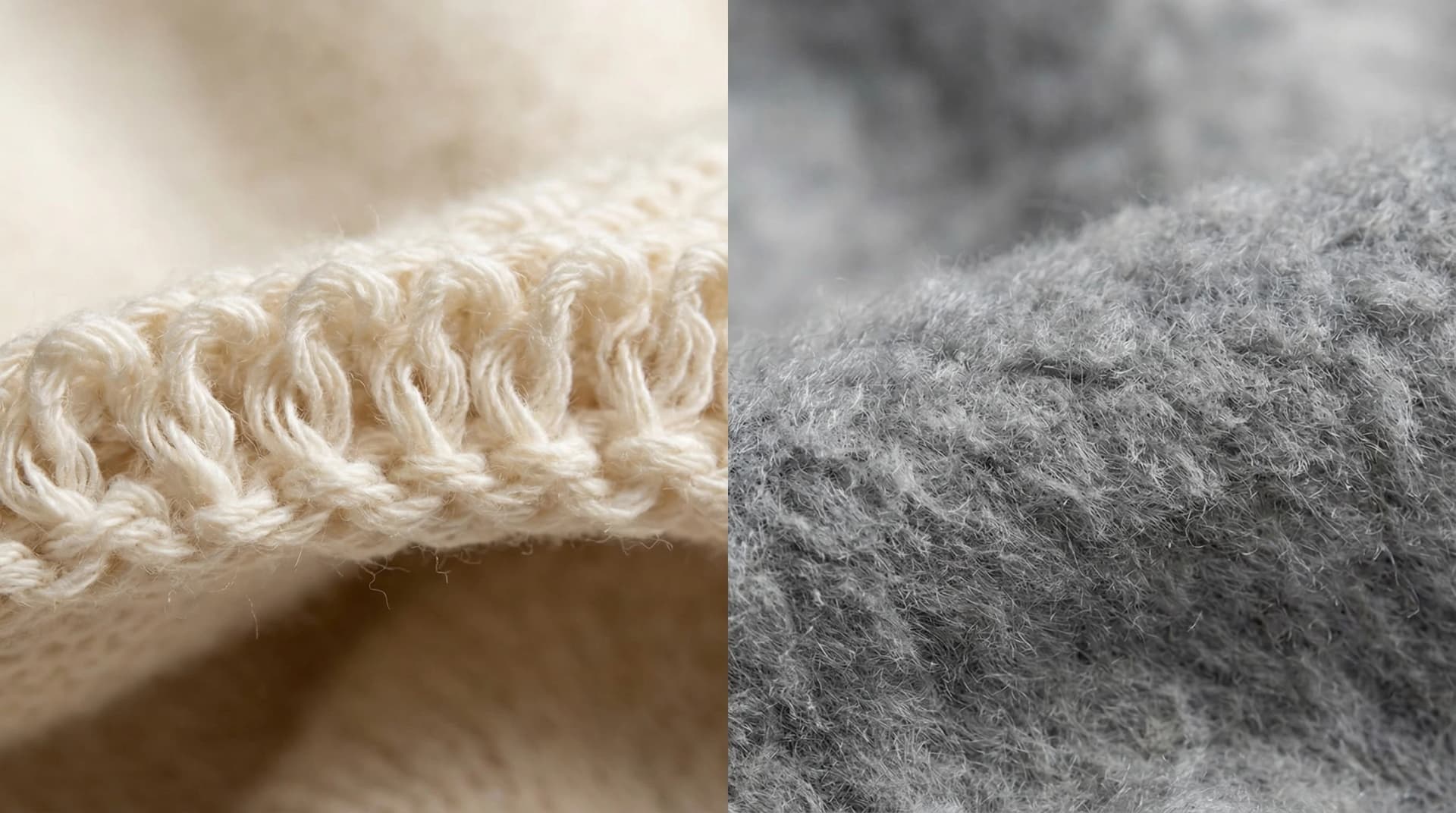
The Most Common Fabric Question We Get
"Should I use French Terry or fleece?"
We hear this from nearly every brand developing a hoodie or sweatshirt for the first time. It is the most consequential fabric decision for this category, and it is often misunderstood.
Both fabrics are knitted from cotton (or cotton blends). Both are used for hoodies, sweatshirts, joggers, and crewnecks. From the outside, they can look identical. The difference is on the inside — and that interior finish changes everything about how the garment feels, performs, and is perceived by the customer.
What Is French Terry?
French Terry is a knitted fabric with a smooth exterior and a looped interior. The interior loops are the defining characteristic — they create a textured, slightly terry-cloth-like surface that sits against the skin.
Key Characteristics
- —Interior: Looped (not brushed). The loops are visible and create a subtle texture
- —Exterior: Smooth, clean surface ideal for printing and embroidery
- —GSM range: 280–500 GSM (we work with this full range)
- —Feel: Lighter, more breathable than fleece at the same GSM. Comfortable in a wider temperature range
- —Stretch: Good natural stretch and recovery due to the knit construction
- —Seasonality: Year-round. Light enough for spring/autumn, warm enough for mild winters
When to Choose French Terry
- —Year-round collections (not exclusively winter)
- —Brands targeting warmer climates or transitional seasons
- —Garments where breathability matters (layering pieces, daily wear)
- —Print-heavy designs (smoother exterior produces better print results)
- —Lightweight to mid-weight products (280–400 GSM)
- —Active or athleisure-leaning styles
What Is Brushed Fleece?
Brushed Fleece (also called Felpa Italiana in the European textile industry) starts as a similar knitted construction to French Terry. The difference is in the finishing: the interior loops are mechanically brushed to create a soft, velvety pile.
Key Characteristics
- —Interior: Brushed pile. Soft, plush, almost velvety against the skin
- —Exterior: Smooth (similar to French Terry, though sometimes slightly fuzzier due to the brushing process)
- —GSM range: 260–580 GSM (our range; we also use 1100 GSM for our Double-Layered Hoodie)
- —Feel: Warmer, cosier, more substantial. The brushed interior traps more air, providing better insulation
- —Stretch: Similar to French Terry, though the brushing process can slightly reduce elasticity
- —Seasonality: Best for autumn/winter. Can feel too warm in spring/summer for most climates
When to Choose Brushed Fleece
- —Autumn/winter collections
- —Premium and luxury positioning (the brushed interior feels immediately expensive)
- —Heavyweight products (400+ GSM)
- —Cosy, comfort-focused branding
- —Cold-weather markets
- —Products where warmth is a selling point
Side-by-Side Comparison
| Factor | French Terry | Brushed Fleece |
|---|---|---|
| Interior finish | Looped | Brushed pile |
| Warmth | Moderate | High |
| Breathability | High | Moderate |
| GSM range | 280–500 | 260–580+ |
| Seasonality | Year-round | Autumn/winter |
| Print quality | Excellent | Good (exterior slightly fuzzier) |
| Embroidery | Excellent | Excellent |
| Shrinkage | 1–3% | 2–4% |
| Price | Mid-range | Mid to premium |
| Pilling tendency | Low | Moderate (interior can pill with wear) |
| Wash durability | Very good | Good (interior can lose softness over repeated washing) |
GSM: How Weight Changes Everything
The GSM you choose within each fabric type creates dramatically different products.
French Terry by GSM
- —280–320 GSM: Lightweight. Ideal for basic sweatshirts, year-round hoodies, layering. A 280 GSM French Terry hoodie feels like a substantial t-shirt with a hood — comfortable, not bulky
- —320–380 GSM: Mid-weight. The sweet spot for most brands. Enough body to feel premium, light enough for daily wear. This is what most of our clients choose for their core hoodie
- —380–450 GSM: Heavyweight. Structured, substantial. The hoodie stands on its own — good drape, real presence. Popular with streetwear brands
- —450–500 GSM: Ultra-heavyweight French Terry. Uncommon and distinctive. A statement piece
Brushed Fleece by GSM
- —260–320 GSM: Lightweight fleece. Softer and warmer than French Terry at the same weight, but still relatively light. Good for sweatshirts in moderate climates
- —320–400 GSM: Mid-weight. The most popular range for premium brushed hoodies and crewnecks
- —400–500 GSM: Heavyweight. Serious winter garment territory. The brushed interior is deeply plush at this weight
- —500–580 GSM: Ultra-heavyweight. Premium streetwear and luxury brands choose this for maximum presence and warmth
- —1100 GSM: Our Double-Layered Hoodie uses this extreme weight — a signature product that is essentially two garments in one
For more on how GSM affects garments across all categories, read our guide to fabric weights.
How They Perform in Production
Cutting
Both fabrics cut similarly, though heavier GSM fleece requires more blade maintenance. The key consideration is fabric direction — both are knitted fabrics with a grain, and cutting against the grain causes the garment to twist after washing.
Sewing
Brushed fleece generates more lint during sewing, which requires more frequent machine cleaning. The brushed fibres can also make it slightly harder to achieve crisp seam lines on the interior. Experienced operators adjust tension and speed accordingly.
French Terry sews cleanly with less lint and more predictable seam behaviour.
Printing
French Terry's smoother exterior produces better print results, particularly for:
- —DTG (Direct to Garment): Fine detail and colour accuracy are better on a smooth surface
- —Screen printing: Ink coverage is more even on the smoother French Terry exterior
- —DTF (Direct to Film): Good adhesion on both, though French Terry's smoother surface gives a cleaner edge
Brushed fleece is not bad for printing — but brands with print-heavy designs should lean towards French Terry.
Embroidery
Both fabrics accept embroidery equally well. The fabric weight provides excellent stability for the embroidery frame, and the results are virtually identical on both. This is one of the reasons embroidery is the most popular decoration method for hoodies and sweatshirts.
Washing and Finishing
Brushed fleece requires more careful washing to maintain the interior softness. Over-washing or high-temperature washing can flatten the pile. For garment-dyed products, French Terry is generally easier to work with because the looped interior handles the washing process more predictably.
Which Should You Choose?
Choose French Terry If:
- —You want a year-round product
- —Breathability is important (customers will layer or wear in varied temperatures)
- —Printing is a significant part of your design
- —You are targeting a mid-weight product (280–400 GSM)
- —You want lower production risk (easier to sew, more predictable behaviour)
Choose Brushed Fleece If:
- —You are producing a dedicated winter collection
- —Premium feel is critical to your brand positioning
- —You want the "wow factor" of a soft, plush interior that customers notice immediately
- —You are producing heavyweight products (400+ GSM)
- —Embroidery is your primary decoration method
Use Both
Many of our clients produce both: French Terry for their spring/summer line and core year-round pieces, and brushed fleece for their autumn/winter collection. The exterior appearance can be kept consistent while the interior finish changes with the season.
Fabric Options at White Cotton
We work with both French Terry and brushed fleece across our full product range:
- —French Terry: 280–500 GSM, 100% organic cotton (GOTS-certified options available)
- —Brushed Fleece (Felpa Italiana): 260–580 GSM, 100% organic cotton
- —Polycotton Fleece: 280–550 GSM (50/50 to 80/20 blends for cost-effective options)
All fabrics are OEKO-TEX Standard 100 certified. Custom fabric development is available for brands with specific weight, composition, or finish requirements, and every style ships from our low-MOQ production line in Portugal.
Browse our full fabric library or get in touch to request swatches. We always recommend feeling both fabrics before making a final decision — the difference is immediately apparent in hand. Also see: GSM fabric weight chart, guide to fabric weights, hoodie manufacturing guide, sweatshirt production guide.

Pedro Carreira
Founder of White Cotton, a textile manufacturer in Barcelos, Portugal. Producing custom clothing collections for brands across 15+ countries.
Frequently Asked Questions
Both are knitted from cotton or cotton blends and can look identical from the outside; the difference is the interior. French Terry has visible loops on the inside, giving a lighter, more breathable garment, while brushed fleece takes that same construction and mechanically brushes the loops into a soft pile that traps more air and feels warmer. That single finishing step is what changes the weight, the warmth and how the garment reads on a rail.
French Terry. Its smoother exterior gives better ink coverage and cleaner detail on DTG, screen printing and DTF, so print-heavy designs should lean that way. Brushed fleece is not a bad print surface, just a slightly fuzzier one. For embroidery the two perform equally well, which is why embroidery is the most common decoration on both.
For French Terry, 320–380 GSM is the sweet spot most of our clients pick for a core hoodie, with 380–450 GSM for a structured streetwear weight. For brushed fleece, 320–400 GSM is the most popular premium range and 500–580 GSM is genuine winter territory. We work with French Terry at 280–500 GSM and brushed fleece at 260–580 GSM, plus 1100 GSM on our double-layered hoodie.
French Terry shrinks about 1–3% against 2–4% for brushed fleece, and it pills less because there is no brushed pile to flatten. Fleece holds up well but the interior gradually loses some softness over repeated washing, particularly at high temperatures. If your customer washes hot and often, that difference will show up in reviews before it shows up in returns.
Many of our clients do exactly that: French Terry for spring, summer and year-round core pieces, brushed fleece for the autumn and winter drop. The exterior can stay visually consistent while only the interior finish changes with the season, so the range still reads as one family. We always suggest feeling both before deciding — the difference is obvious in hand and invisible in a photograph.
Continue Reading
Cotton vs Polyester — Which for Your Brand?
Garment Dyeing vs Piece Dyeing: Pros, Cons & When to Use Each
Sweatshirt Production: Fabrics, Construction & What to Ask Your Factory
Understanding Fabric Weights: A Complete Guide for Fashion Brands