Sweatshirt Production: Fabrics, Construction & What to Ask Your Factory
Everything you need to know about sweatshirt manufacturing — fabric choices, construction details, decoration options, and the right questions to ask before placing an order.
 Pedro Carreira··9 min read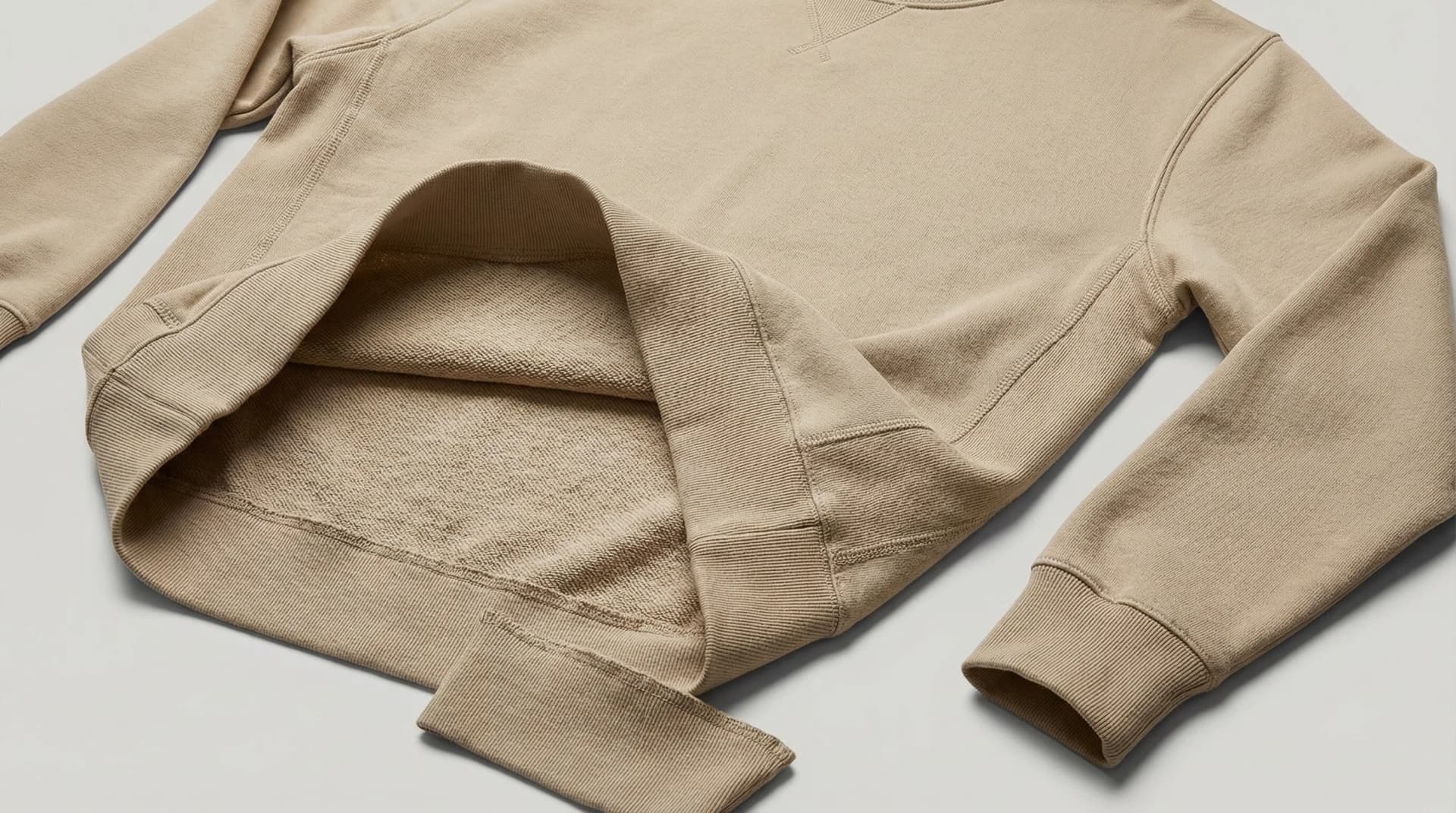
The Sweatshirt Is Harder Than It Looks
From the outside, a sweatshirt looks simple — a body, two sleeves, a ribbed collar, and a hem. But inside the factory, sweatshirts involve more decisions than most brands expect. The fabric, the weight, the interior finish, the ribbing tension, the sleeve construction, the neckline shape — every choice changes how the final garment looks, feels, and holds up over time.
We produce six distinct sweatshirt styles at White Cotton, ranging from 280 to 400 GSM, in organic cotton French Terry and brushed fleece. Every week we receive enquiries from brands that want "a crewneck sweatshirt" but have not yet considered the details that separate a forgettable garment from one their customers reach for every morning.
This guide covers those details.
Choosing the Right Fabric
The fabric is the foundation. For sweatshirts, there are two primary fabric families, and the choice between them defines the character of the garment.
French Terry
French Terry has a smooth exterior and a softly looped interior. It is the most versatile sweatshirt fabric — breathable enough for spring and autumn, warm enough for mild winters, and soft without being bulky.
- —GSM range: 280–500 GSM
- —Interior: Looped terry (not brushed)
- —Best for: Year-round crewnecks, lightweight pullovers, transitional pieces
- —Feel: Smooth outside, textured inside. Comfortable against the skin without overheating
- —Shrinkage: Minimal with pre-shrunk fabric (1–3%)
French Terry at 280–320 GSM is ideal for lighter, more contemporary sweatshirts. At 350–400 GSM, it produces a more substantial, structured garment. At 450–500 GSM, you are entering heavyweight territory — a statement piece with real presence.
For a detailed comparison, see our guide on fabric weights.
Brushed Fleece (Felpa Italiana)
Brushed Fleece starts as the same knitted construction as French Terry, but the interior loops are brushed to create a soft, velvety pile. The result is a warmer, cosier fabric with a distinctly premium feel.
- —GSM range: 260–580 GSM
- —Interior: Brushed pile (soft, plush)
- —Best for: Winter sweatshirts, heavyweight crewnecks, premium collections
- —Feel: Smooth exterior, ultra-soft brushed interior. Noticeably warmer than French Terry
- —Shrinkage: Slightly higher than French Terry (2–4%) — pre-shrinking is essential
Brushed fleece above 400 GSM is what streetwear and luxury brands choose when they want a sweatshirt that feels like a premium product the moment you put it on. The weight and softness are immediately apparent.
Polycotton Fleece
For brands producing at higher volumes or for promotional and corporate applications, Polycotton Fleece (typically 50/50 to 80/20 cotton-polyester) is a cost-effective option.
- —GSM range: 280–550 GSM
- —Pros: More durable, holds shape better, more affordable, less shrinkage
- —Cons: Less breathable, can pill over time, does not have the same hand feel as 100% cotton
- —Best for: Uniforms, promotional merchandise, corporate apparel, large volume orders
Construction Details
Sleeve Construction: Raglan vs Set-In
This is one of the first design decisions for any sweatshirt.
- —Set-in sleeve — The sleeve meets the body at the shoulder point, with a seam running along the top of the shoulder. Creates a more tailored, structured silhouette. This is the standard for most fashion sweatshirts
- —Raglan sleeve — The sleeve extends from the collar to the underarm in a diagonal seam. Creates a more relaxed, sporty look with greater range of motion. Classic for athletic and vintage-inspired sweatshirts
Both constructions require the same amount of sewing time, so the cost difference is negligible. The choice is purely about design intent.
Neckline Options
- —Standard crew neck — The classic. A ribbed collar sits flat against the neck. Rib width can vary from 2cm (minimal) to 5cm (vintage feel)
- —V-notch crew neck — A small V-shaped insert at the centre front of the collar. Originally functional (to absorb sweat), now a design detail that references heritage sportswear
- —Mock neck — A taller, standing collar (6–10cm). Popular in contemporary and minimalist fashion
- —Raw edge — The neckline is left unfinished with a clean-cut edge. Creates a deconstructed, modern look. Requires fabric that does not fray excessively
Ribbing
Ribbing is used at the collar, cuffs, and waistband. The specifications matter more than most brands realise.
- —Rib type — 1x1 rib (alternating knit and purl, more elastic) or 2x2 rib (two knit, two purl, more structured). 1x1 is the industry standard for sweatshirts
- —Rib weight — Should match or slightly exceed the body fabric weight. A 300 GSM sweatshirt with lightweight ribbing looks and feels wrong
- —Rib width — Cuffs typically 5–8cm, waistband 5–10cm. Wider ribbing creates a more vintage, relaxed look
- —Elasticity and recovery — Good ribbing bounces back after stretching. Cheap ribbing stays stretched. This is one of the details that separates quality from mediocrity
Interior Details
- —Neck tape — A strip of fabric sewn over the back neck seam. Covers the raw seam, provides a clean finish, and is a prime location for branding (woven label, printed label, or heat transfer)
- —Side seams — Overlocked and, in premium construction, flat-felled or cover-stitched for a cleaner interior appearance
- —Label placement — Main label at centre back neck, care label at side seam or inside hem. Read more about clothing labels and packaging
Decoration for Sweatshirts
Sweatshirts are one of the most versatile garments for decoration. The fabric weight and surface area invite a wide range of techniques.
Embroidery
Sweatshirts and embroidery are a natural pairing. The fabric weight provides stability, and the texture adds dimension to embroidered designs.
- —Flat embroidery — Clean, professional. Ideal for chest logos, small back-of-neck details
- —3D/Puff embroidery — Raised, dimensional effect using foam backing. Popular for streetwear and premium branding. If you are weighing it against a flat logo, our embroidery vs 3D puff comparison covers where each one wins
- —Chenille — Thick, textured patches reminiscent of varsity lettering. A high-impact design choice
- —Chain stitch — Vintage-inspired, slightly irregular stitch that creates a handcrafted feel
Screen Printing
Works well on sweatshirts, but the fabric texture can affect print quality.
- —Water-based inks absorb into the fabric loops and create a soft, integrated finish
- —Plastisol inks sit on top and provide more vibrant, opaque coverage — important on dark-coloured sweatshirts
- —For oversized prints (full chest, full back), screen printing on fleece requires careful pressure calibration to achieve even coverage
Digital Printing
DTG and DTF both work on sweatshirts, though the textured surface of fleece can affect fine detail resolution. French Terry, with its smoother exterior, generally produces better digital print results than brushed fleece.
What to Ask Your Factory Before Ordering
These are the questions we recommend every brand asks before committing to a sweatshirt production run.
About the Fabric
- 1.What is the exact composition? (100% organic cotton, or a blend?)
- 2.What GSM will the production fabric be? (Not the sample fabric — confirm they match)
- 3.Is the fabric pre-shrunk? If not, what is the expected shrinkage percentage?
- 4.Where is the fabric sourced from? Can you provide certification (GOTS, OEKO-TEX)?
- 5.Can I receive a fabric swatch before approving production?
About Construction
- 1.What seam construction is used on the side seams and shoulders?
- 2.What type of ribbing is used? What GSM? Is it the same composition as the body?
- 3.Is the neckline taped?
- 4.What stitch type is used for hems? (Coverstitch, double-needle, single-needle?)
- 5.Will you do a pre-production wash test to confirm shrinkage and colour fastness?
About Production
- 1.What is your MOQ per colour and fit?
- 2.What is the lead time from sample approval to delivery?
- 3.How many sample rounds are included in the quoted price?
- 4.What are your payment terms?
- 5.Can I visit the factory during production?
At White Cotton, we welcome these questions. In fact, we worry when brands do not ask them. A brand that understands construction details is a brand we can collaborate with effectively — and the final product is always better for it.
Common Mistakes to Avoid
After producing thousands of sweatshirts for brands at every stage, these are the mistakes we see most often.
- —Choosing GSM based on price, not purpose — A 280 GSM sweatshirt is not a cheaper version of a 400 GSM one. They are different products for different markets. Choose the weight that matches your brand positioning
- —Ignoring ribbing quality — Brands fixate on the body fabric and overlook the ribbing. Cheap ribbing ruins an otherwise excellent sweatshirt
- —Not doing a wash test — Colours can shift, fabrics can shrink, prints can crack. Always request a wash test before approving production
- —Too many colourways in the first order — Start with 2–3 core colours at decent volume rather than 8 colours at minimum quantities. You will get better pricing and learn which colours your customers actually buy
- —Skipping the tech pack — Even a basic tech pack with measurements, stitch details, and label placement saves rounds of sampling and miscommunication
Our Approach
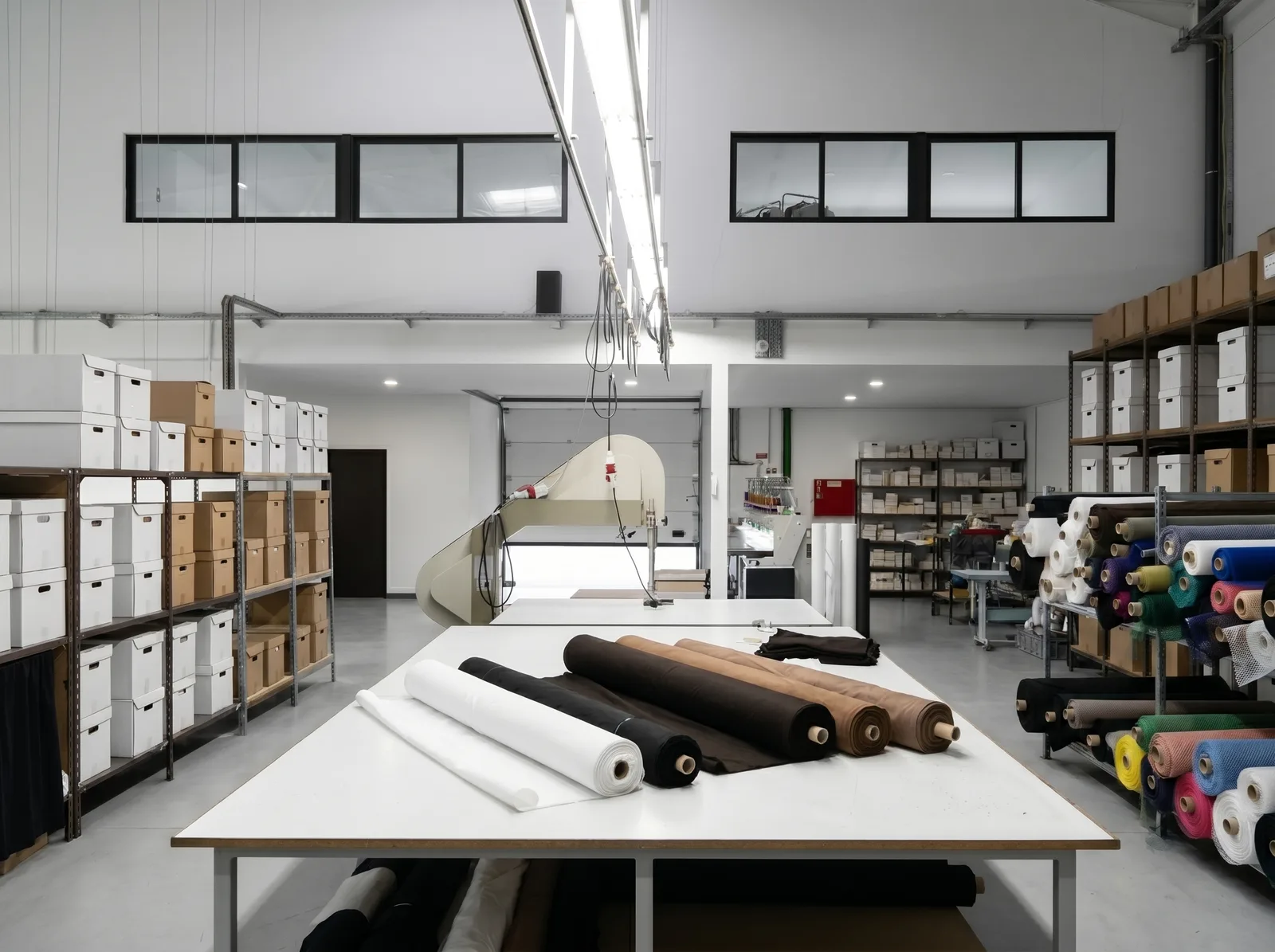
At White Cotton, we produce sweatshirts in our own factory in Barcelos, Portugal — no agent, no trading company in between. Cutting, sewing, finishing, quality control, and packing happen under our roof with our team; printing and washes go to partner shops nearby, checked by our own QC.
Our minimum order for sweatshirts is 100 pieces per colour and fit, dropping to 75 pieces if you order two or more colourways. Samples usually take 4 to 8 weeks from payment. Production usually runs 6 to 12 weeks from the deposit, depending on volume and complexity.
We work with brands from their first collection through to scaled production. If you are developing a sweatshirt line and want to talk through fabrics, construction, and pricing, get in touch or browse our fabric library. Related guides: hoodie manufacturing, t-shirt manufacturing Portugal, joggers manufacturing process.

Pedro Carreira
Founder of White Cotton, a textile manufacturer in Barcelos, Portugal. Producing custom clothing collections for brands across 15+ countries.
Continue Reading
Cotton vs Polyester — Which for Your Brand?
Garment Dyeing vs Piece Dyeing: Pros, Cons & When to Use Each
French Terry vs Fleece: Which Fabric for Your Hoodies & Sweatshirts?
Understanding Fabric Weights: A Complete Guide for Fashion Brands