Polo Shirt Manufacturing: Piqué, Jersey & Premium Construction
A deep dive into polo shirt manufacturing — fabric types, collar construction, placket details, embroidery placement, and how to choose between corporate and fashion polo styles.
 Pedro Carreira··12 min read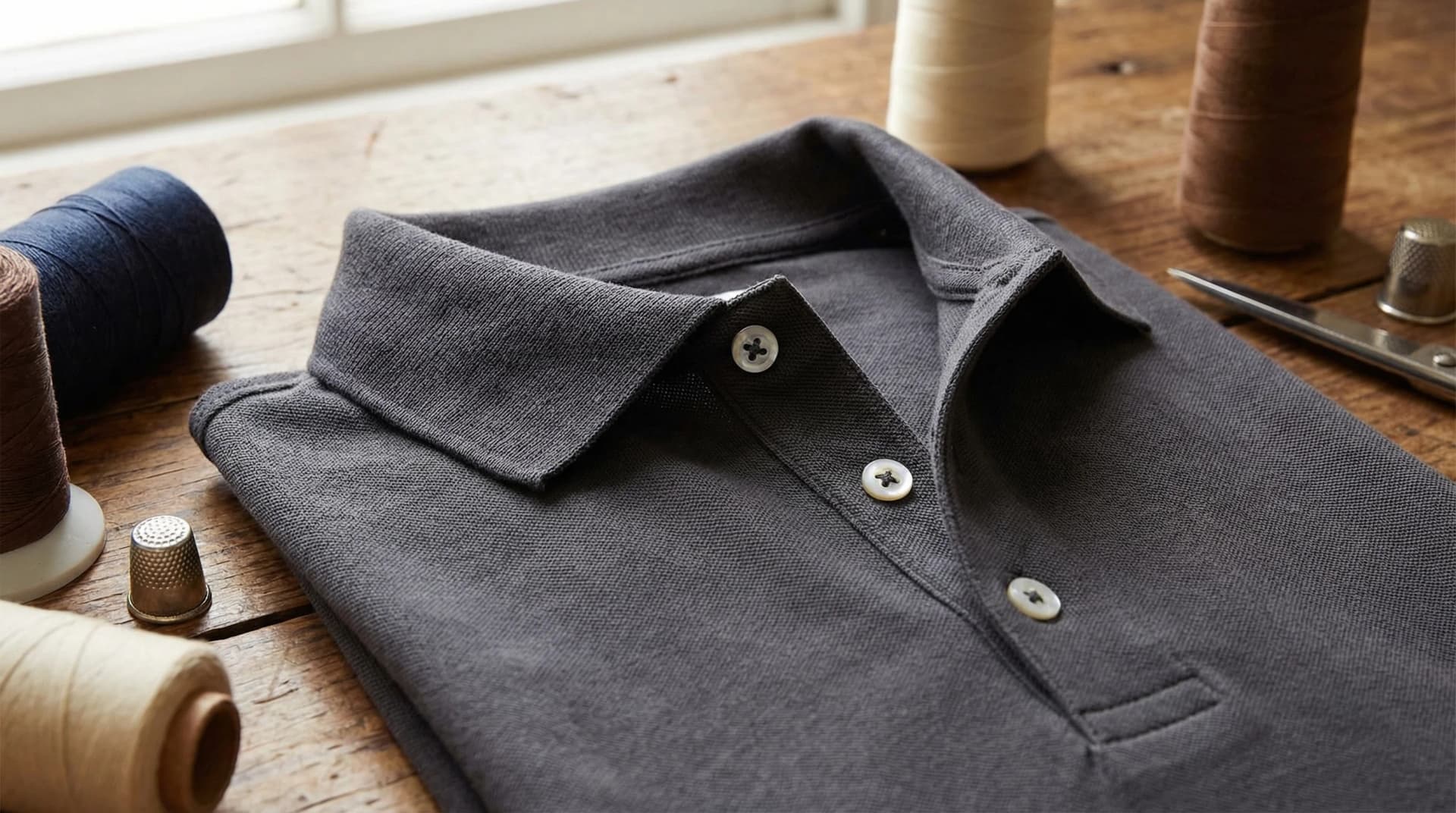
Why the Polo Shirt Deserves More Attention
The polo shirt is one of the most underestimated garments in clothing manufacturing. It occupies a unique position — more structured than a T-shirt, more relaxed than a dress shirt, versatile enough to work in corporate, sportswear, and fashion contexts. Yet many brands and buyers treat the polo as an afterthought, specifying little more than colour and size.
That is a mistake. A well-constructed polo shirt communicates quality through dozens of small details: the texture and density of the piqué, the firmness of the collar roll, the cleanness of the placket stitching, the weight of the rib on the cuffs. When any of these details are wrong, the entire garment looks cheap — regardless of what you paid for it.
At White Cotton, polos are one of our five shirt styles. We produce them in piqué, jersey, and Cotton Oxford, for corporate accounts, fashion brands, and sportswear clients. This guide covers everything you need to make the right decisions when manufacturing a polo shirt.
Fabric: The Foundation of the Polo
Piqué Cotton
The classic polo fabric. Piqué (also written piquet) is a woven or knit fabric with a raised, textured surface — the familiar waffle or bird's-eye pattern you associate with the traditional polo shirt. The texture is functional as well as aesthetic: it increases surface area, which improves breathability and moisture management compared to a plain jersey.
For polo shirts, we typically use cotton piqué in the 200–280 GSM range:
- —200–220 GSM: Lightweight. Good for hot climates, summer collections, and sportswear. The fabric drapes more softly and feels less substantial. Works well in slim or fitted cuts.
- —220–250 GSM: The sweet spot for most polo applications. Enough weight to hold its shape and create a clean collar roll, light enough for year-round comfort. The most popular weight for corporate and branded polos.
- —250–280 GSM: Heavier piqué. More structured, more substantial, better for premium positioning. The collar stands more firmly. Common in high-end sportswear and fashion polos.
Composition options:
- —100% cotton piqué: The traditional choice. Best hand feel, most breathable, most natural. Higher shrinkage (pre-washing is essential). The right choice for premium and GOTS-certified collections.
- —95/5 cotton-elastane piqué: Adds stretch for sportswear and fitted cuts. Slightly more wrinkle-resistant. Common in athletic and performance polos.
- —80/20 cotton-polyester piqué: Improved shape retention and reduced shrinkage. The standard for corporate and workwear polos where dimensional stability across many washes is essential.
- —100% recycled polyester piqué: For brands with sustainability targets. Moisture-wicking properties. Works well with sublimation printing.
Jersey Polo
A jersey polo uses the same single-knit structure as a T-shirt but is cut and constructed with a collar and placket. The result is softer, lighter, and more casual than piqué.
- —Weight range: 180–240 GSM
- —Best for: Casual and fashion polos, streetwear-adjacent styling, slim fits, brands that want the polo silhouette without the structured feel
- —Trade-offs: The collar is harder to make stand firmly in jersey without additional interfacing. The garment reads as more casual. For corporate or workwear, piqué is almost always the better choice.
Jersey polos work particularly well in garment-dyed productions, where the softer fabric takes the dye more evenly and develops a more worn, lived-in look. We offer garment dyeing as part of our washing and finishing services.
Cotton Oxford for Button-Down Polos
The Cotton Oxford polo — sometimes called a button-down polo or camp collar shirt — uses a woven cotton Oxford fabric rather than a knit. This creates a fundamentally different garment: structured, woven, closer to a casual shirt than a sportswear polo.
Our Cotton Oxford fabrics range from 130–160 GSM, which is lighter than most people expect. The structure comes from the weave, not the weight. The basket-weave pattern gives Cotton Oxford its characteristic texture and durability.
Oxford polos suit brands positioning in the premium casual or smart-casual segment — think weekend wear, coastal lifestyle, Ivy-influenced fashion.
Collar Construction
The collar is where polo shirts succeed or fail. A poorly constructed collar that curls, flops, or loses its shape after a few washes communicates poor quality immediately.
Knit Collar (Self-Fabric Rib)
The most common polo collar. The collar is knit in the same or similar fabric as the body, with a 1x1 or 2x2 rib structure that creates the familiar firm, rolled edge.
Key details that determine quality:
- —Collar height: Standard is 5–7cm. Taller collars (7–9cm) read as more formal or premium. Shorter collars (4–5cm) are more casual.
- —Interfacing: The inner layer of the collar should have a fusible interfacing applied. This prevents the collar from collapsing and helps it hold its roll through repeated washing. This is the most commonly cut corner in low-cost polo manufacturing — missing or inadequate interfacing is why cheap polos lose their collar shape.
- —Tip construction: The collar tips can be open (raw edge, finished with a small hem) or closed (fully sewn, creating a clean, sharp point). Closed tips indicate higher quality construction.
Woven Collar
A woven collar (cut from woven fabric rather than knit) gives the polo a more shirt-like, formal feel. Less stretch, firmer structure. Common in fashion polos and business-casual applications.
Knit vs. Woven: Which to Choose
| Knit Collar | Woven Collar | |
|---|---|---|
| Feel | Softer, slight stretch | Firmer, structured |
| Shape retention | Good with interfacing | Excellent |
| Application | Sportswear, casual, corporate | Fashion, premium, business |
| Cost | Standard | Slightly higher |
Placket Construction
The placket — the vertical button band at the centre front — is the second most important quality indicator in a polo shirt.
Standard Placket (3-button)
The most common construction. A three-button placket that sits flat against the body, typically 3–4cm wide and 18–22cm long. The buttons are typically 18L (approximately 11mm) or 20L (approximately 12.5mm) pearl effect or dyed-to-match.
Quality markers to specify:
- —Two-ply placket: The placket fabric is folded double, creating a clean finished edge on both sides. Essential — a single-ply placket warps and twists after washing.
- —Reinforced button attachment: Buttons should be sewn with a shank (the thread wrapped around the base to lift the button) and a back button on the inside to prevent fabric tearing over time.
- —Even stitch topstitching: The topstitch along the placket edges should be perfectly parallel, 1–2mm from the edge. This is a benchmark indicator of overall sewing quality.
2-Button Placket
Shorter and more casual. Works well in sportswear and casual polos. Common in fashion contexts where the polo is meant to be worn open or with a more relaxed feel.
Hidden Button Placket
Buttons concealed behind the placket, creating a completely smooth front. Uncommon but striking — used in premium fashion polos to create a cleaner aesthetic.
Knit Placket vs. Woven Placket
A knit placket (cut from rib or the same piqué as the body) gives a more casual, fluid look. A woven placket (often interlining-reinforced) gives more structure. For premium polos, a woven placket is generally preferable.
Cuffs: Ribbed vs. Open Hem
Ribbed Cuffs
The traditional polo cuff uses a rib knit (matching or contrasting) to finish the sleeve hem. The rib creates a slight grip around the wrist and adds structure to the sleeve end.
- —1x1 rib cuff: Standard, clean
- —2x2 rib cuff: More textured, slightly more casual
- —Self-fabric rib: The rib matches the body fabric exactly
- —Contrast rib: A colour accent — useful for branded or sporty polos
Cuff width is typically 3–5cm. Wider cuffs (5–7cm) read as more casual or sporty; narrower (2–3cm) as more refined.
Open Sleeve Hem
No ribbing — the sleeve ends with a clean hemmed edge. This is the standard construction for fashion polos and Oxford button-down polos. Creates a cleaner, more contemporary look. Often accompanied by a slight sleeve slit (a small vent, 3–4cm) for ease of movement.
Embroidery Placement for Polo Shirts
Embroidery is the decoration method of choice for polo shirts — it suits the fabric weight, reads as premium, and holds up to commercial washing. Here is how placement should be specified:
Standard Logo Positions
- —Left chest: The canonical polo logo position. Centre of the left chest, approximately 8–10cm from the placket edge, 6–8cm down from the shoulder seam. Logo size typically 4–7cm wide, depending on design complexity.
- —Right chest: Less common, but used in some corporate and sports applications. Avoid putting logos on both chests — it looks cluttered.
- —Centre chest: Bold, fashion-forward. Works in streetwear and lifestyle polos. Size can go to 10–14cm wide.
- —Collar: Small branding on the collar tip or at the collar back. Very premium feel. Common in heritage brands.
- —Sleeve: Band logos on the upper sleeve (4–6cm wide) are common in sportswear and team polos.
- —Back neck: A small branding hit below the collar, 2–4cm wide. Adds interior-label quality feel.
Embroidery Techniques for Polos
- —Flat embroidery: Standard, clean, works in all weights. The correct choice for most logos.
- —3D/puff embroidery: A foam underlayer creates a raised, textured effect. Dramatic impact — best kept to the left chest logo only on a polo. Works better on heavier piqué (250+ GSM) where the fabric can support the puff without distortion. Our flat embroidery vs 3D puff embroidery breakdown explains why fine lettering belongs in flat stitch rather than puff.
- —Chenille: The thick, velvety embroidery associated with varsity and heritage sportswear. Can work beautifully on a polo in the right brand context.
For embroidery, we charge a one-time digitisation fee and then a per-piece stitch cost. A standard 5,000-stitch left chest logo on a polo is a very manageable cost at volume. Read more in our guide to clothing production costs.
Corporate Polo vs. Fashion Polo
The decision between producing a corporate polo and a fashion polo affects almost every spec — here is a side-by-side comparison:
| Corporate / Workwear | Fashion / Lifestyle | |
|---|---|---|
| Fabric | 80/20 piqué, 220–250 GSM | 100% cotton piqué or jersey, 200–260 GSM |
| Collar | Firm knit with interfacing | Structured or soft, depending on aesthetic |
| Placket | 3-button woven, topstitched | 2 or 3 button, can be knit |
| Cuffs | Ribbed, colour matched | Open hem or contrast rib |
| Decoration | Left chest embroidery | Multiple positions, puff or flat embroidery |
| Colours | Classic: white, navy, black, grey | Broader palette, seasonal |
| MOQ priority | High volume, consistency | Smaller runs, seasonal variety |
| Key quality metric | Wash durability, shape retention | Hand feel, visual finish |
Corporate clients typically need guaranteed colour consistency across reorders, which means we recommend sticking to our standard colour palette or specifying Pantone references precisely. Fashion clients value uniqueness and often prefer garment dyeing or hand-dyed effects.
Size Grading for Polo Shirts
A standard polo shirt size chart (regular/slim fit, in cm, half-chest measurement):
- —XS: Chest 46, Length 67, Shoulder 42, Sleeve 23
- —S: Chest 48, Length 69, Shoulder 44, Sleeve 24
- —M: Chest 50, Length 71, Shoulder 46, Sleeve 25
- —L: Chest 52, Length 73, Shoulder 48, Sleeve 26
- —XL: Chest 54, Length 75, Shoulder 50, Sleeve 27
- —XXL: Chest 56, Length 77, Shoulder 52, Sleeve 28
These are half-chest measurements (total chest divided by 2). Confirm with your manufacturer whether they are working in half-chest or full-chest to avoid doubling errors.
For an oversized polo or a fashion polo with a boxier silhouette, add 4–6cm to the half-chest and drop the shoulder point 2–3cm.
Production Lead Times
For a polo shirt order at White Cotton:
- 1.Fabric confirmation and ordering: no extra wait for a standard fabric, 0–3 weeks for a custom one
- 2.Sample production: usually 4 to 8 weeks from payment, separate from the bulk timeline below
- 3.Sample approval and corrections: 3–7 days (your side)
- 4.Bulk cutting: 2–3 days
- 5.Sewing: 1–2 weeks
- 6.Embroidery or printing (if applicable): 3–5 days
- 7.Finishing, QC, packing: 2–3 days
Total bulk timeline: usually 6 to 12 weeks from the deposit, or 4 to 8 weeks when the fabric is already in stock. If you are sourcing a custom fabric weight or unusual composition, add roughly 3–4 weeks for fabric procurement.
Sampling is the step most brands underestimate. We strongly recommend two rounds: a first fit sample to confirm the pattern and silhouette, and a second production sample to confirm fabric, trims, and decoration. It adds time but eliminates expensive surprises in bulk.
Our Shirt Range
At White Cotton, we manufacture five shirt styles — including a classic piqué polo, a jersey polo, a Cotton Oxford button-down, a woven casual shirt, and a technical performance polo. All five are available with our full decoration services and in organic or conventional cotton.
Our MOQ for shirts is 150 units per style per colour, reducing to 100 units per colour when ordering two or more colourways of the same style — part of our broader low-MOQ production approach. Sampling starts at €90 per piece with a 7–10 day turnaround.
If you are building a corporate uniform programme, a premium basics collection, or a sportswear range that includes polo shirts, we would be glad to discuss the brief. Browse our products or start a conversation with our team.
For more on the manufacturing process, see our complete hoodie manufacturing guide and our guide to fabric weights.

Pedro Carreira
Founder of White Cotton, a textile manufacturer in Barcelos, Portugal. Producing custom clothing collections for brands across 15+ countries.
Continue Reading
What Is a Tech Pack for Clothing? A Real Example, Page by Page
Your First Clothing Sample: What to Expect, What It Costs & Timeline
Manufacturing Oversized Streetwear: Patterns, Fabrics & Production Tips
How Joggers Are Made: The Complete Manufacturing Process