Manufacturing Oversized Streetwear: Patterns, Fabrics & Production Tips
How oversized and streetwear garments differ from standard production — pattern grading, fabric weight selection, drop shoulder construction, and decoration techniques for heavyweight pieces.
 Pedro Carreira··13 min read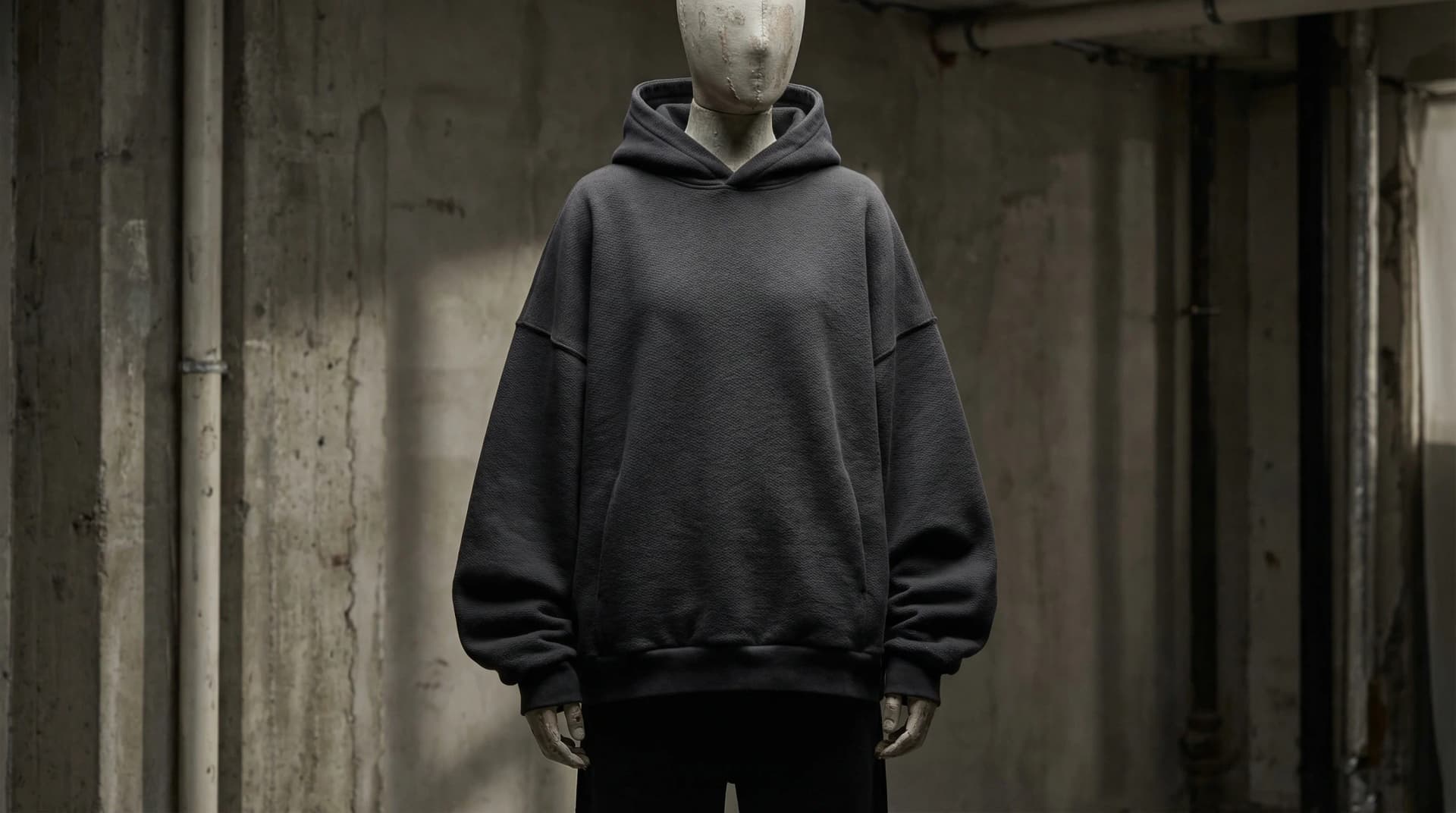
Why Oversized Is Not Just a Bigger Size
One of the most common misconceptions we encounter from new streetwear brands is that oversized garments are simply a larger version of a standard garment. In practice, designing and manufacturing a true oversized silhouette requires a completely different approach to pattern construction, grading, fabric selection, and quality control.
Get it right and the garment drapes beautifully — structured, substantial, intentional. Get it wrong and you end up with something that looks shapeless and unfinished, even if you paid a premium price. We have been manufacturing for streetwear brands long enough to have seen both outcomes, and the difference almost always comes down to the decisions made before a single stitch is sewn.
This guide covers everything you need to know to manufacture oversized streetwear correctly — from pattern brief to finished bulk.
The Anatomy of an Oversized Pattern
What "Oversized" Actually Means in a Pattern
A true oversized pattern is not constructed by simply scaling up a standard pattern. It is designed with a different set of proportional relationships:
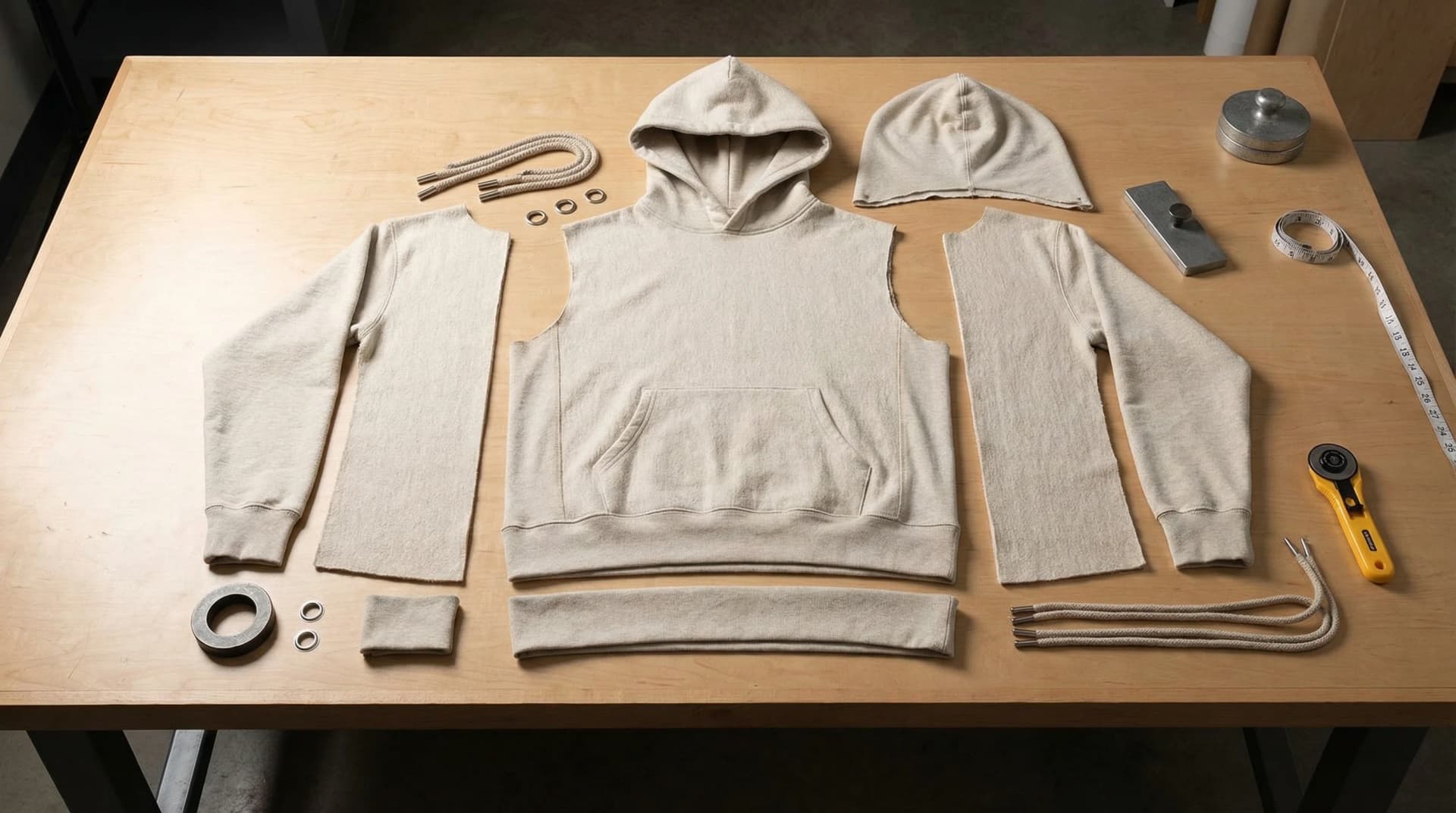
- —Drop shoulder: The sleeve joins the body below the natural shoulder point, typically 4–8cm lower. This creates the characteristic sloped shoulder line and changes how the sleeve hangs. In a standard set-in sleeve, the seam sits at the natural shoulder. In a drop shoulder, it falls across the upper arm — which is a structurally different construction requiring different sleeve head shaping.
- —Extended body length: An oversized hoodie or sweatshirt typically has 6–10cm more length than a comparable regular-fit garment. This is intentional — the weight of the fabric at a longer length contributes to the drape and perceived heaviness.
- —Wider sleeves: Sleeve width scales differently in oversized than in regular patterns. The sleeve is typically 3–6cm wider at both the bicep and the hem, which requires adjusted seam allowances and rib sizing.
- —Boxy body width: Chest width increases proportionally, but the relationship between chest and hip changes. An oversized garment often has a more rectangular silhouette — chest and hem width are similar, rather than the slight taper common in regular fits.
The Grading Problem
Grading is the process of scaling a base pattern up or down across a size run. For a standard regular-fit garment, grading follows predictable rules — incremental increases across chest, shoulder, sleeve, and length.
Oversized grading requires recalibrating those rules. If you apply standard grade increments to an oversized pattern, you will find that the larger sizes lose the oversized quality (they start to look like well-fitted garments on larger bodies) while the smaller sizes may look disproportionate.
The correct approach is to grade the oversized pattern on its own terms — starting from the oversized base and grading with smaller increments than you would use for a regular garment. The goal is to maintain the same oversized aesthetic at every size. A size S and a size XL should both look intentionally oversized, not just big.
This is one reason why tech packs for oversized garments need to be more detailed than for standard products. Every point-of-measure needs to be specified with the oversized proportions in mind, not derived from a standard template.
Fabric Weight: The Most Critical Decision
Why Heavier GSM Matters More for Oversized
Fabric weight affects every garment, but it is disproportionately important in oversized construction. Here is why:
A regular-fit garment is supported by the body wearing it — the fabric is close enough to the torso and arms that the body structure prevents collapse and drape issues. An oversized garment has a gap between the fabric and the body, which means the fabric must have enough weight and structure to hold its own shape and hang well under gravity.
A lightweight fabric in an oversized silhouette will:
- —Look limp and shapeless — the excess fabric collapses rather than drapes
- —Move awkwardly — fabric billowing and bunching rather than falling cleanly
- —Lose its silhouette after the first wash as the fabric relaxes further
- —Communicate low quality regardless of price point
A heavyweight fabric in the same oversized pattern will:
- —Hang with intention — the weight creates clean vertical lines and defined shape
- —Move as a single coherent mass rather than shifting and bunching
- —Maintain its structure through repeated washing and wearing
- —Photograph well — weight creates shadow and dimension that reads beautifully
Our general rule: for oversized garments, start at 300 GSM as your minimum. For premium and heavyweight streetwear, 380–500+ GSM is the target range.
Recommended Fabrics for Oversized Streetwear
Heavyweight French Terry (380–500 GSM)
French Terry at high weights is one of the best oversized fabrics we work with. The looped interior gives softness and texture, while the heavier weight provides the structure needed for the silhouette. French terry's natural drape makes it excellent for oversized garments — it falls cleanly without looking stiff.
At 400–500 GSM, a French Terry hoodie feels genuinely substantial. The fabric has enough body to hold the drop shoulder line cleanly and maintain the intended silhouette at the front and back hem.
We stock French Terry in 280–500 GSM range. For oversized applications, we recommend 380 GSM minimum, with 420–450 GSM being the sweet spot for most premium streetwear brands.
Brushed Fleece / Felpa Italiana (420–580 GSM)
Brushed fleece at high weights is the fabric most strongly associated with premium heavyweight streetwear. The brushed interior pile creates warmth and softness; the exterior can be either smooth or lightly brushed depending on the finish.
At 480–580 GSM, brushed fleece produces garments that feel genuinely premium — the weight is immediately noticeable when you hold the piece. This is the fabric range used by the heavyweight streetwear brands that have built their reputation on the quality of their basics.
Felpa Italiana — Italian loopback fleece — is the premium end of this category. Produced by specialist mills, it has a tighter, more controlled loop structure that creates a cleaner hand feel and a more even brushed surface. We source Felpa Italiana for clients who want to position explicitly at the top of the market.
Polycotton Fleece (420–550 GSM)
The addition of polyester to the blend improves shape retention and reduces the shrinkage risk that comes with high-weight 100% cotton fleece. At 420–550 GSM, polycotton fleece gives you the weight and structure of premium fleece with better dimensional stability after washing — important if your customers will be washing at higher temperatures.
Less natural-feeling than pure cotton fleece, but more consistent across washes. Often the right choice for brands selling at high volume where consistency matters more than absolute luxury.
Organic Cotton Options
For brands with sustainability positioning, all of the above are available in GOTS-certified organic cotton. Our fabrics carry OEKO-TEX Standard 100 and GOTS Organic certifications, as well as GRS certification for recycled content. The sustainable positioning of Portuguese-made organic streetwear is increasingly powerful in the current market — see our sustainable fashion manufacturing guide for more on this.
Construction Details for Oversized Streetwear
Drop Shoulder Construction
The drop shoulder is the defining structural element of the oversized silhouette. Getting it right requires attention at the pattern stage:
- —Shoulder drop depth: Typically 4–8cm below the natural shoulder point. 4–5cm gives a subtle drop-shoulder effect; 6–8cm is more extreme and deliberate. Specify this measurement precisely in your tech pack.
- —Sleeve head shaping: Because the seam is lower on the arm, the sleeve head (the curved top of the sleeve) needs to be shallower than on a set-in sleeve pattern. A set-in sleeve head adjusted for drop shoulder without re-shaping will cause bunching at the armscye.
- —Armhole width: The armhole needs to be wider to accommodate the lower seam point. This affects how the garment feels when worn — too narrow and the armhole will restrict movement despite the overall loose fit.
Seam Construction
For heavyweight streetwear, seam construction is a quality indicator:
- —Flatlock seams: A double-stitch flatlock creates a flat seam that lies flush against the fabric, visible on the outside as a decorative double stitch. Common in premium streetwear for its clean look and comfort.
- —Overlock + coverstitch: The standard construction for most sweatshirts and hoodies. Overlock closes the seam; coverstitch folds and secures the edge. Clean and durable.
- —Double-needle topstitch: Applied at the hem and cuffs, creates a more structured, visible finishing detail.
Ribbing for Oversized Garments
The proportional relationship between rib and body changes in oversized construction:
- —Cuff rib width: 6–9cm is standard for oversized. Narrower than the body, which creates a contrast that emphasises the oversized volume above. Very narrow ribbing (3–4cm) can look out of proportion.
- —Waistband rib: 8–12cm is common in oversized hoodies and sweatshirts. Some premium streetwear brands opt for a self-fabric hem instead (no ribbing) which maintains the rectangular silhouette all the way to the bottom hem.
- —Rib weight: The rib should be at least 400–500 GSM to hold its structure against a heavyweight body fabric. A lightweight rib on a heavyweight body will look and feel wrong — the rib will pull the hem up unevenly.
Hood Construction for Oversized
An oversized hoodie needs a proportionally scaled hood. A standard two-panel hood on a heavily oversized body can look small and slightly ridiculous. Options:
- —Three-panel hood: A centre strip with two side panels creates a more voluminous, rounded shape. Better for oversized bodies.
- —Double-layer hood: Two layers of fabric. Adds warmth and significant weight to the hood, which helps it hang correctly on a larger, heavier body. One of our double-layer hoodie constructions specifically addresses this proportional challenge.
- —Lined hood: Jersey lining inside the hood. Adds visual depth (contrasting or matching liner) and slightly more structure.
Decoration for Oversized Streetwear
The decoration techniques popular in streetwear work particularly well on heavyweight fabrics, but each has considerations specific to oversized construction.
Puff Print
Puff (raised) screen printing is one of the most popular decoration techniques in premium streetwear. The foam agent beneath the ink expands under heat, creating a three-dimensional surface.
On heavyweight fabrics (380+ GSM), puff prints sit beautifully — the fabric has enough structure to support the print without warping. On lighter fabrics, puff prints can cause the fabric to distort during curing.
Placement considerations for oversized:
- —Oversized back graphic: The most impactful streetwear decoration position. A full back print from shoulder to hem on a 500 GSM fleece is a statement. Allow 30–40cm width and 40–55cm height for a full back design.
- —Left chest logo: Still effective, but scale it slightly larger than you would on a regular-fit piece — a standard 6cm logo can look small on an oversized front.
- —Sleeve print: Running down the left or right sleeve, 4–8cm wide. Works extremely well on oversized pieces because the larger sleeve gives more canvas.
Chenille Embroidery
Chenille — the thick, velvety embroidery associated with varsity culture — has become one of the defining decoration techniques of premium streetwear. The contrast between the soft, looped chenille yarn and the heavy fleece body creates a textural richness that feels expensive.
Chenille works best as a large, simple graphic — varsity letters, bold logos, abstract shapes. Intricate detail is difficult in chenille because the yarn is thick. Typical placement is centre chest (15–25cm wide) or full back.
On heavyweight fabrics of 400+ GSM, chenille embroidery sits and stays exactly where it should — the fabric has enough body to support the weight of the embroidery without puckering.
Chain Stitch Embroidery
Chain stitch creates a distinctive, slightly raised loop that differs from standard flat embroidery. It is associated with vintage Americana and artisan workwear. Currently experiencing a significant streetwear revival.
Works well on heavyweight fleece in the same positions as flat embroidery, but with more visual texture and artisanal character. Our team offers chain stitch as part of our embroidery service.
Screen Printing on Heavyweight Fleece
Standard water-based and plastisol inks work well on heavy fleece. The key technical consideration is ink viscosity — heavier fabrics with a thicker pile surface require inks formulated to sit on top of the pile rather than bleeding into it. Discharge printing (which removes colour from the base fabric rather than sitting on top) requires cotton fabrics and careful testing.
For large back prints on heavy fleece, we recommend plastisol inks for their opacity and durability. Water-based inks are preferable from a sustainability standpoint and give a softer hand feel, but require more passes to achieve opacity on dark fabrics.
Sampling Oversized Correctly
Sampling is where many oversized projects go wrong. The mistakes we see most often:
Mistake 1: Sampling in a different fabric weight than bulk production. If you sample in a 300 GSM French Terry but plan to produce in a 420 GSM brushed fleece, the two fabrics will behave differently enough that your approved sample will not match your bulk production. Always sample in the exact fabric you plan to use for bulk.
Mistake 2: Only sampling one size. For oversized garments, we strongly recommend sampling two sizes — your base size (usually M or L) and your largest size (usually XL or XXL). The oversized effect should read the same at both ends of the size run. If it does not, the grading needs adjustment.
Mistake 3: Not testing for drape. A photo of a flat sample on a table tells you almost nothing about how an oversized garment will look when worn. Request a fit on a live model (or at minimum a dress form). The drape of the fabric — how it falls from the shoulder, how the hem hangs — only reveals itself on a body.
Mistake 4: Approving without washing. All samples should be washed at least twice before approval. Heavyweight fleece can shrink 3–5% on first wash. If you approve a dry sample and the bulk production is washed and dried, your measurements will be off.
At White Cotton, our sample turnaround for streetwear pieces is usually 4–8 weeks from payment. We produce samples in our standard fabrics from stock, or we can source a specific fabric for a custom sample — which adds lead time but ensures you are approving in the exact material.
Working with a Streetwear Manufacturer
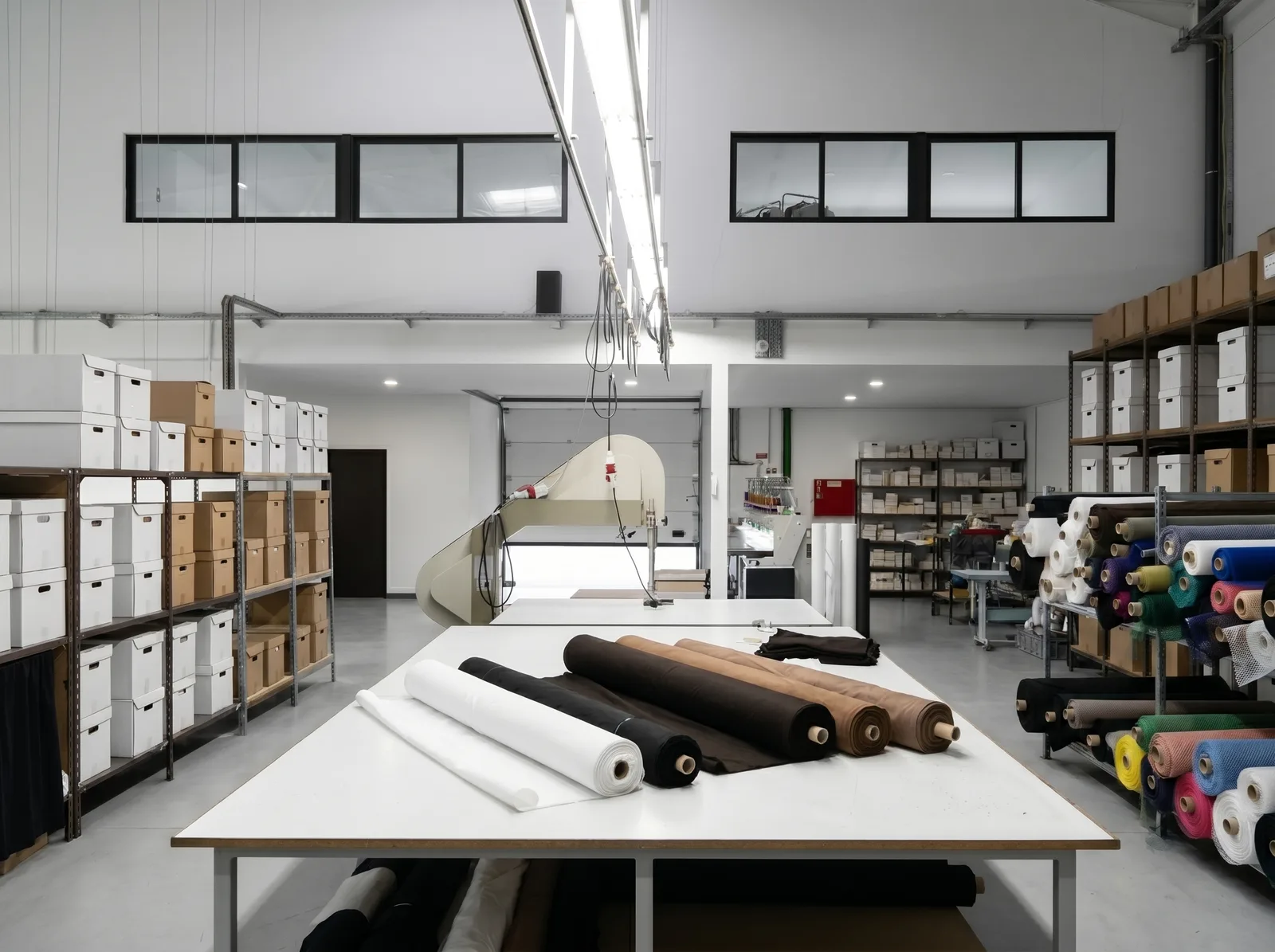
Not all manufacturers are set up for heavyweight streetwear. The equipment requirements differ: heavier fabrics need stronger cutting machines, more powerful industrial sewing equipment, and specialized pressing equipment for garments that weigh significantly more than standard knitwear.
We have invested in the machinery and the pattern expertise to manufacture correctly in the 380–580 GSM range. Our team has worked with streetwear brands from their first 100-piece order to established labels running 500–1,000 piece seasons.
Our MOQ for hoodies and sweatshirts is 100 units per style per colour, reducing to 75 units per colour when ordering two or more colourways. This is designed for brands building seasonal collections rather than single-style launches.
If you are developing an oversized collection and want to discuss fabrics, patterns, and construction, get in touch through our craft page. Our full product range shows the styles we currently offer — many of which are available as the foundation for your own oversized programmes.
For context on how fabric weight affects garment quality more broadly, read our guide to fabric weights and our hoodie manufacturing guide.

Pedro Carreira
Founder of White Cotton, a textile manufacturer in Barcelos, Portugal. Producing custom clothing collections for brands across 15+ countries.
Continue Reading
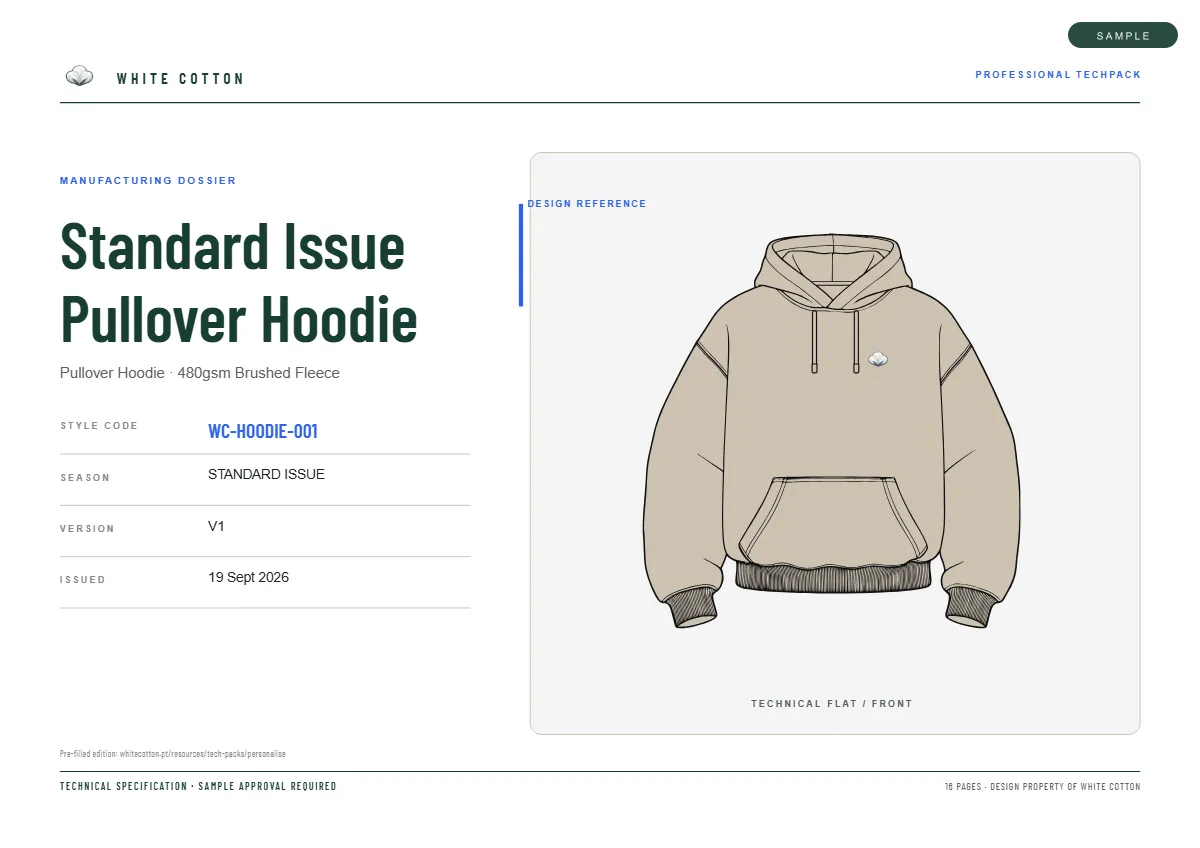
What Is a Tech Pack for Clothing? A Real Example, Page by Page
Your First Clothing Sample: What to Expect, What It Costs & Timeline
Polo Shirt Manufacturing: Piqué, Jersey & Premium Construction
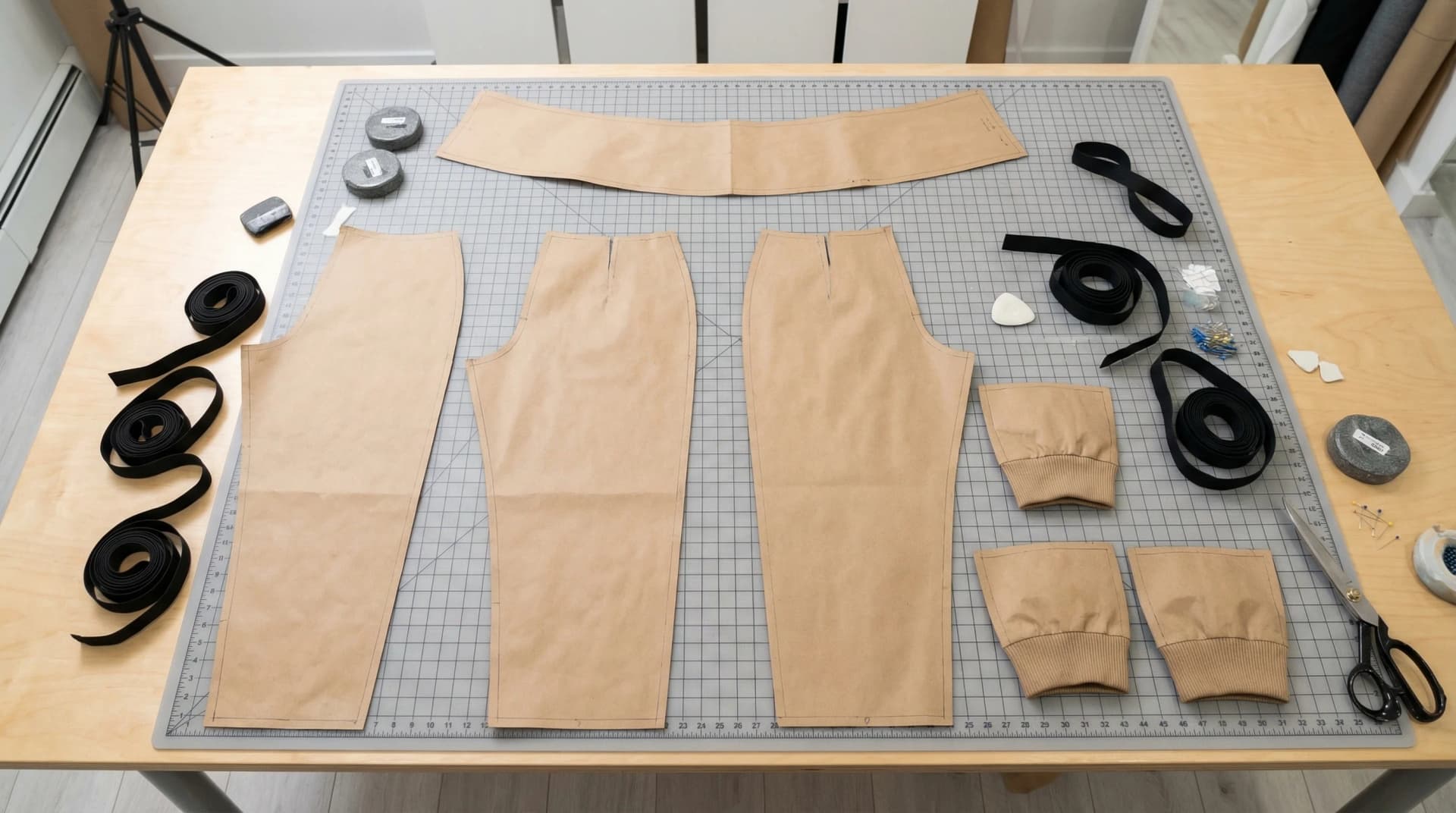
How Joggers Are Made: The Complete Manufacturing Process