27 Questions to Ask a Clothing Manufacturer Before Placing Your Order [2026]
27 questions to ask a clothing manufacturer before ordering — with red flags to watch for. From a factory owner who answers these daily.
 Pedro Carreira··13 min read
![27 Questions to Ask a Clothing Manufacturer Before Placing Your Order [2026]](/_next/image?url=%2Fimages%2Fgenerated%2Fblog%2Fquestions-to-ask-clothing-manufacturer.webp&w=1920&q=75)
Why This List Exists
We receive over 50 brand enquiries every month. The ones that end up with smooth production almost always asked the right questions before committing. The ones that end up frustrated usually skipped the due diligence.
After years of answering these from the factory side, I compiled the 27 questions to ask a clothing manufacturer that actually matter — the ones that separate informed brands from brands that get burned. This is the list I wish every brand would work through before placing their first order — with any factory, not just ours.
Questions to Ask When Qualifying a Manufacturer
Before you discuss pricing or timelines, establish whether you are talking to an actual factory or a middleman.
1. Are you a factory or an agent?
This is the single most important question. Many companies that present themselves as manufacturers are actually trading companies, agencies, or sourcing intermediaries who subcontract production to a factory you will never see.
Good answer: A specific factory address, photos of their production floor, names of key staff. They invite you to visit.
Red flag: Vague answers like "we work with multiple facilities" or "we manage production across several factories." That means they are an agent adding margin.
2. Can I visit the factory?
Any legitimate factory will welcome production clients for a visit. If they hesitate or make excuses, question why.
Good answer: "Yes — once your samples are approved, we arrange a factory tour. We are in Barcelos, 40 minutes from Porto airport."
Red flag: "Visits are not possible at this time" or "our facility is not set up for visitors." This usually means there is no factory to visit.
3. What garment types do you specialise in?
Factories that do everything well do not exist. A factory that specialises in knit casualwear (hoodies, t-shirts, sweatshirts) will not produce a tailored blazer to the same standard. Know what they are genuinely good at.
Good answer: A specific list — "we specialise in cut-and-sew knits: hoodies, sweatshirts, t-shirts, joggers, and outerwear."
Red flag: "We can make anything." No factory can. The ones that say they can are either lying or subcontracting the styles they cannot handle.
4. What is your minimum order quantity per style per colour?
MOQ tells you whether the factory is set up for your scale. A factory with a 1,000-unit minimum is not the right partner for a brand ordering 100 pieces.
Good answer: A specific number with context — "75 units per style per colour. First orders at this minimum, volume pricing kicks in above 200."
Red flag: An MOQ that changes depending on what you want to hear, or an MOQ that seems too low to be economically viable for the factory.
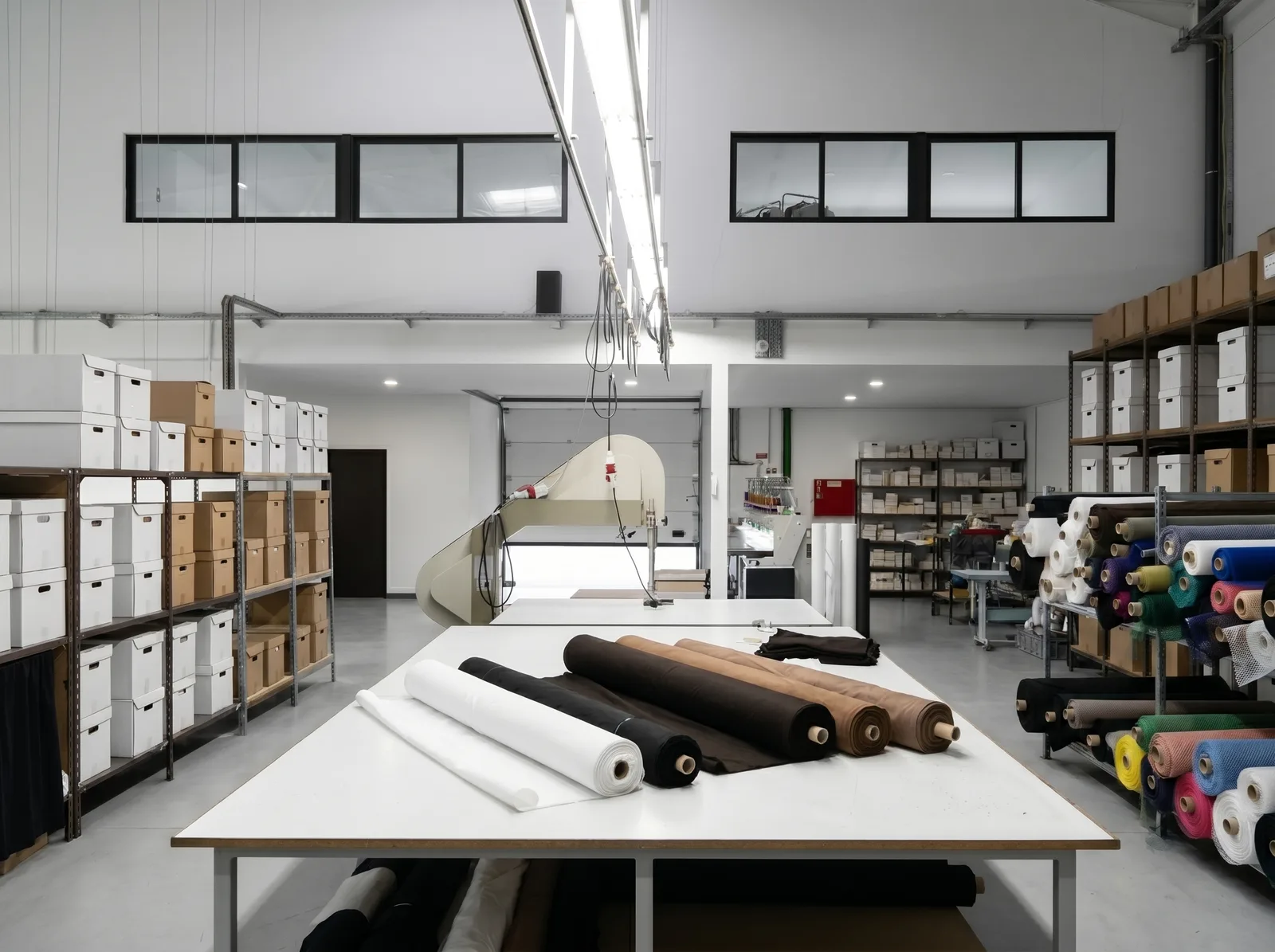
5. Can you share photos or video of your production floor?
Real factories are proud of their facilities. If they cannot or will not show you where your garments will be made, something is wrong.
Good answer: Photos or video showing cutting tables, sewing lines, finishing stations, quality control areas — with their branding visible.
Red flag: Stock photos, renders, or "we will send photos later." Later never comes.
Questions to Ask About Pricing and Costs
Once you have established that you are talking to a real factory, get clarity on what you will actually pay.
6. Can you provide a line-by-line cost breakdown?
You need to know what you are paying for — not just a single number. A transparent factory breaks down fabric, trims, CMT (cut, make, trim), decoration, finishing, and packaging separately.
Good answer: An itemised quote showing each cost component with unit prices.
Red flag: A single lump-sum quote with no breakdown. This makes it impossible to compare quotes fairly or identify where costs can be optimised. For reference on what a proper breakdown looks like, see our clothing production costs guide.
7. What is included in the quoted price?
Some factories include sampling and pattern making in the production quote. Others charge separately. Know what you are getting.
Good answer: "The quote covers fabric, trims, CMT, finishing, packaging, and quality control. Sampling is charged separately at €50–150 per style, deducted from the first bulk order."
Red flag: "Everything is included" with no specifics — hidden costs will appear later.
8. What are your payment terms?
Standard industry terms are 30–50% deposit on order confirmation, balance on completion before shipping. Anything dramatically different deserves scrutiny.
Good answer: "30% deposit, 70% on completion. We send photos of finished goods before you pay the balance."
Red flag: 100% upfront payment, especially on a first order. Also watch for factories that demand full payment before showing finished goods.
9. Are there volume discounts? At what quantities?
Understanding the pricing tiers helps you plan your growth and budget for reorders.
Good answer: "Per-unit cost drops approximately 10–15% at 200 units and another 10% at 500 units. We can provide a tiered pricing table."
Red flag: No discount structure at all, or discounts that only apply at unrealistically high volumes (10,000+ units).
10. How much do samples cost, and is the cost deducted from the first order?
Sampling is a real cost — pattern making, fabric sourcing, and production of a single garment. Expect to pay for it, but understand the terms.
Good answer: "Samples cost €50–150 depending on garment complexity. The sampling cost is deducted from your first bulk order above 100 units."
Red flag: "Free samples" — the cost is hidden in inflated production pricing. Or sample costs that seem excessive (€500+ for a basic garment).
Questions About Production and Quality
These questions determine whether your finished goods will match your expectations.
11. What is your production capacity per month?
This tells you whether the factory can handle your order within your timeline and whether they have room to grow with you.
Good answer: "We produce approximately 15,000–20,000 units per month across all styles. Your order of 500 units fits comfortably within our current capacity."
Red flag: Evasive answers, or a factory that claims unlimited capacity. Every factory has a ceiling.
12. What is your current lead time from sample approval to delivery?
Lead times vary by season, capacity, and fabric availability. Get a realistic number, not a sales pitch.
Good answer: "Standard production takes 6 to 12 weeks from the deposit, and our quotation states the date for your order. Rush production is possible for returning clients at an extra charge, when our plan can take it."
Red flag: "We can deliver in 1–2 weeks" for a first order. That is physically impossible for cut-and-sew production unless they are pulling from existing stock.
13. What is your quality control process?
Every factory should have a defined QC process. The specifics matter.
Good answer: "We inspect every garment at three stages — after cutting (pattern accuracy), during sewing (assembly quality), and after finishing (measurements, stitch count, overall appearance). Defective pieces are reworked or replaced before packing."
Red flag: "We check everything" with no process description. Or a factory that only inspects a sample percentage rather than every piece.
14. What happens if there are defects in the finished goods?
Defects happen in every production run. What matters is how the factory handles them.
Good answer: "Defective garments are reworked before shipping. If defects are found after delivery, we replace or credit affected units. Our typical defect rate is under 2%."
Red flag: "All sales are final" or no defect policy at all. Also watch for factories that refuse to share their defect rates.
15. Can you send a reference sample of similar work?
Seeing actual garments the factory has produced tells you more than any website or brochure.
Good answer: "Yes — we can send 2–3 reference samples of similar styles we have produced. Shipping cost is on us."
Red flag: Reluctance to send physical samples, or samples that arrive with quality issues.
Fabric and Materials
The fabric is 40–55% of your garment's cost and 90% of how it feels. Get this right.
16. Do you source fabric or should I supply it?
Most full-package manufacturers handle fabric sourcing. Some work with client-supplied fabric. Know which model applies.
Good answer: "We source from certified European mills — organic cotton, French terry, fleece, jersey, and more. We can also work with client-supplied fabric if you have a specific supplier."
Red flag: A factory that insists on sourcing all fabric but cannot tell you which mills they use or provide fabric certifications.
17. What certifications do your fabrics carry?
If sustainability or compliance matters to your brand, verify fabric certifications before committing.
Good answer: "We source OEKO-TEX Standard 100 certified fabrics as standard. GOTS organic cotton and BCI cotton are available on request. We provide transaction certificates from our mills."
Red flag: Claiming certifications without documentation, or factories that say "we are GOTS certified" when the certification applies to the fabric mill, not the factory itself.
18. Can you provide fabric swatches before sampling?
You should feel and see the fabric before a sample is produced. This prevents wasted time and money on samples in the wrong material.
Good answer: "Yes — we send a swatch card with our standard fabrics, or source specific swatches on request. Turnaround is 3–5 working days."
Red flag: Refusing to send swatches, or charging excessive fees for fabric samples.
19. What is your standard fabric testing process?
Dimensional stability (shrinkage), colour fastness, pilling resistance, and weight accuracy all affect the final product.
Good answer: "We test every fabric batch for shrinkage, colour fastness, and weight before cutting. Standard testing is included in the production cost."
Red flag: "We do not test fabric — our suppliers guarantee quality." Supplier guarantees do not prevent a batch of fabric from arriving 20 GSM lighter than specified.
Shipping and Logistics
Production is only half the job. Getting finished goods to your warehouse matters just as much.
20. How do you handle shipping?
Understand the shipping terms and who is responsible for what. Common terms: EXW (you handle everything from the factory gate), FOB (factory handles loading), DAP (factory delivers to your door, you handle import duties).
Good answer: one that names the Incoterm plainly and says exactly where responsibility changes hands. For example: "We work EXW — your own forwarder collects the goods at our factory, or we book the courier for you and handle export documentation and freight booking, invoicing the transport separately. You handle import clearance and duties on arrival either way." A factory that only offers DDP should explain how it is registered for VAT and import duty in your country — most are not.
Red flag: unclear or shifting shipping terms, no export documentation on offer, or collection from a warehouse address that isn't the factory you were shown.
21. What packaging options do you offer?
Packaging affects both your brand presentation and shipping costs.
Good answer: "Standard packaging is individual poly bags with size stickers. We also offer custom tissue paper, hang tags, branded boxes, and specific folding methods. Custom packaging is quoted separately."
Red flag: No packaging discussion at all — you receive garments loose in a carton.
22. Do you ship directly to multiple addresses?
If you sell wholesale and DTC, you may need split shipments.
Good answer: "Yes — we can split shipments to multiple addresses. Each additional delivery point has a small surcharge for separate documentation and labelling."
Red flag: "We only ship to one address per order" — this forces you to handle redistribution yourself.
Communication and Process
How a factory communicates before the order predicts how they will communicate during production.
23. Who will be my point of contact?
You need a named person who knows your order, not a rotating support desk.
Good answer: "Your account manager is [Name]. They handle your order from enquiry through delivery. You also have direct access to our production manager for technical questions."
Red flag: Generic email addresses, no named contact, or a different person answering every time.
24. How often will I receive production updates?
During bulk production, you should receive regular updates — ideally with photos.
Good answer: "We send photo updates at three milestones: fabric arrival, mid-production (sewing line), and pre-shipment (finished goods inspection). You can request additional updates at any time."
Red flag: "We will update you when it is ready." That means four weeks of silence followed by a surprise delivery.
25. What file format do you need for tech packs?
Factories work from tech packs — detailed specification documents for your garment. Knowing the preferred format prevents back-and-forth.
Good answer: "PDF or AI (Adobe Illustrator) files. Include flat sketches, measurements for each size, fabric specs, construction details, and any decoration placement. We have a tech pack template we can share if you need a starting point."
Red flag: "Just send us a photo" — this suggests the factory is not used to working from professional specifications.
26. What happens if I need to change something after production starts?
Design changes mid-production are sometimes necessary. Understand the implications.
Good answer: "Changes before cutting are usually possible with minimal delay. Once cutting has started, changes may affect timeline and cost — we discuss options before proceeding."
Red flag: "No changes after order confirmation." Reasonable for fabric already purchased, but complete inflexibility suggests poor communication.
27. Can you share references from other brands you work with?
Social proof from real clients is worth more than any sales pitch.
Good answer: Named brands or anonymised references ("a UK streetwear brand doing 500 units/month") with permission to contact them.
Red flag: No references available, or references that seem fabricated. A factory with genuine experience has clients willing to vouch for them.
How to Use This List
You do not need to ask all 27 questions in your first email. That would overwhelm any factory. Here is how to phase it:
First email (5 questions): Questions 1, 2, 4, 12, and 16 — these qualify whether the factory is real, at your scale, and within your timeline.
After receiving their response (8 questions): Questions 3, 6, 7, 8, 10, 13, 17, and 23 — these establish whether their pricing, quality, and communication meet your standards.
Before placing the order (remaining questions): Cover shipping, packaging, change policy, and references.
The goal is not to interrogate — it is to make an informed decision. A good factory will appreciate thorough questions because it signals a professional client who will be easy to work with.
If you are still searching for the right manufacturing partner, our guide to finding a clothing manufacturer in Portugal covers where to look and what to watch for. And if you want to see how we answer these questions ourselves, start here.

Pedro Carreira
Founder of White Cotton, a textile manufacturer in Barcelos, Portugal. Producing custom clothing collections for brands across 15+ countries.
Continue Reading

How Much Does It Cost to Start a Clothing Brand in 2026? Real Numbers
![Hoodie Manufacturing Costs: Real Prices from a Portuguese Factory [2026]](/_next/image?url=%2Fimages%2Fgenerated%2Fblog%2Fhoodie-manufacturing-costs-breakdown.webp&w=1920&q=75)
Hoodie Manufacturing Costs: Real Prices from a Portuguese Factory [2026]
![How to Find a Clothing Manufacturer in Portugal: A Factory Owner's Honest Guide [2026]](/_next/image?url=%2Fimages%2Fgenerated%2Fblog%2Fhow-to-find-clothing-manufacturer-portugal.webp&w=1920&q=75)
How to Find a Clothing Manufacturer in Portugal: A Factory Owner's Honest Guide [2026]
![How to Vet a Clothing Manufacturer: The Due Diligence Checklist [2026]](/_next/image?url=%2Fimages%2Fgenerated%2Fblog%2Fhow-to-vet-clothing-manufacturer.webp&w=1920&q=75)
How to Vet a Clothing Manufacturer: The Due Diligence Checklist [2026]
![12 Red Flags When Choosing a Clothing Manufacturer [2026]](/_next/image?url=%2Fimages%2Fgenerated%2Fblog%2Fred-flags-clothing-manufacturer.webp&w=1920&q=75)