How to Find a Clothing Manufacturer in Portugal: A Factory Owner's Honest Guide [2026]
Where to look, what to check, and how to spot agents posing as factories — from a clothing manufacturer in Portugal who gets 50+ enquiries a month.
 Pedro Carreira··15 min read
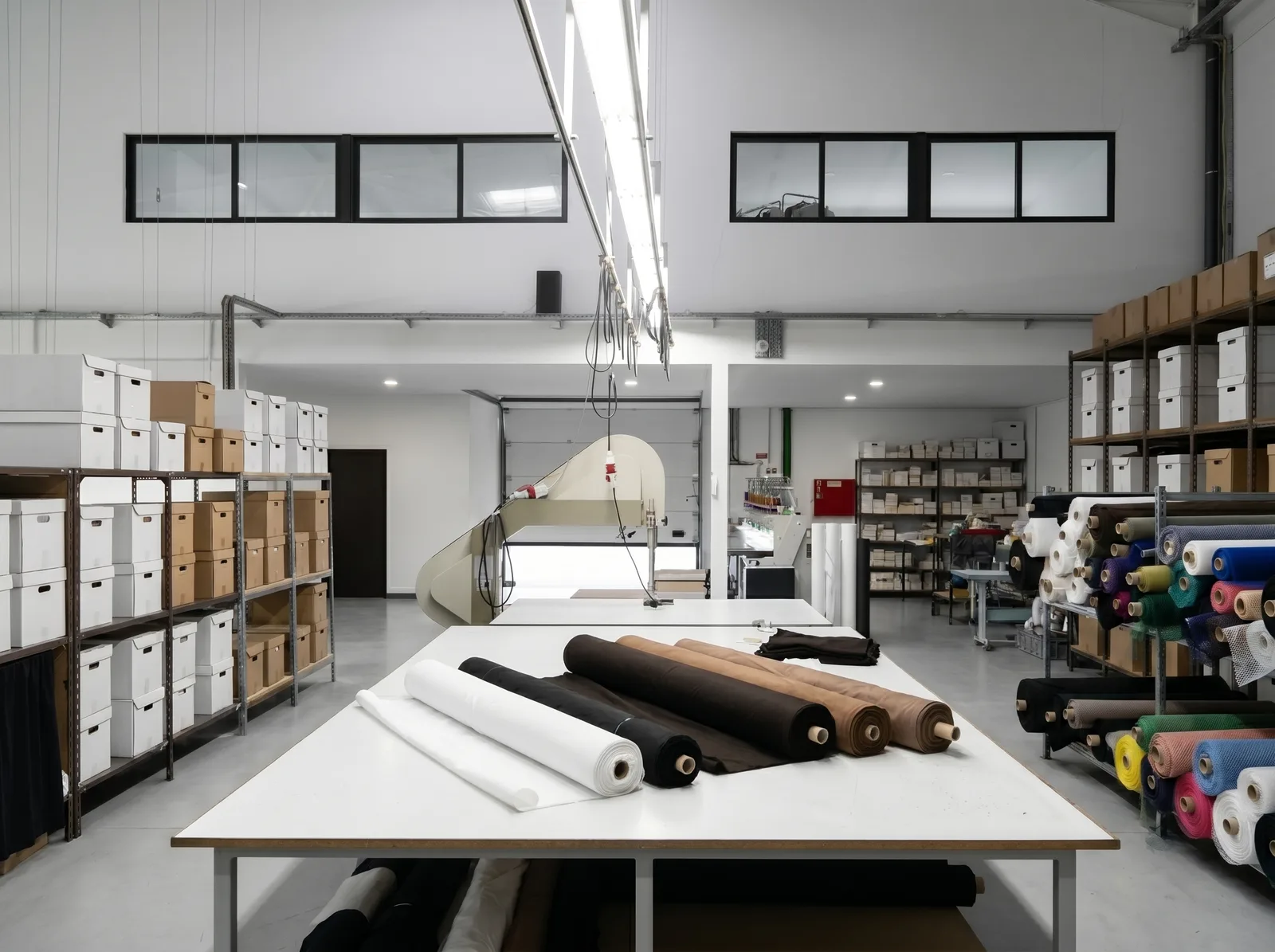
![How to Find a Clothing Manufacturer in Portugal: A Factory Owner's Honest Guide [2026]](/_next/image?url=%2Fimages%2Fgenerated%2Fblog%2Fhow-to-find-clothing-manufacturer-portugal.webp&w=1920&q=75)
What This Guide Is (and Is Not)
I run a cut-and-sew factory in Barcelos. We receive over 50 enquiries a month from brands looking for a clothing manufacturer in Portugal. Maybe 10 of those are ready to start. The rest need more preparation, more research, or both. This guide is what I wish every brand read before their first email to a Portuguese factory.
This is specifically about Portugal — the directories that work here, the trade shows that matter, how the Portuguese factory landscape is structured, and the particular traps that catch brands searching for a manufacturer in this country. If you want a broader overview of the global process, we have a general guide to finding a clothing manufacturer as well.
Why Portugal Specifically
Portugal is the third-largest textile exporter in Europe. The northern region between Porto and Braga is one of the densest textile clusters on the continent — spinning mills, knitting operations, dyehouses, cut-and-sew factories, and finishing plants all within a 50-kilometre radius.
The practical advantages for brands:
- —Proximity to Europe. Shipping to any EU country usually takes 5-7 working days by road. No customs delays or import duties within the EU.
- —Lower MOQs. Asian factories require 500-5,000 units per style. Portuguese factories start as low as 75 units per style per colour.
- —Shorter lead times. Production usually runs 6-12 weeks from the deposit versus several months from Asia.
- —EU compliance built in. Portuguese factories operate under EU labour laws, environmental regulations, and product safety standards by default.
- —"Made in Portugal" positioning. Quality craftsmanship reputation without the Italian price premium.
The honest tradeoff
Portugal is more expensive per unit than Asia. A hoodie that costs EUR 8 in Bangladesh runs EUR 21-29 here before decoration. A t-shirt at EUR 2-3 in China costs EUR 9-13 in Portugal. Read our full cost breakdown for exact figures.
But lower minimum orders, faster lead times, cheaper EU shipping, fewer quality issues, and zero intra-EU duties mean the total cost of ownership is closer than the per-unit price suggests. Portugal makes the most economic sense for brands producing under 5,000 units per style and selling primarily in Europe.
Where to Find a Clothing Manufacturer in Portugal
Industry directories
Europages is the largest B2B directory in Europe. Search "clothing manufacturer Portugal" and filter by region. Coverage is broad but uneven — some listings are agents rather than factories.
Kompass includes more verified company data (employee count, revenue range). Useful for filtering by factory size and specialisation.
ATP (Associacao Textil e Vestuario de Portugal) is the Portuguese textile association. Their member directory is one of the most reliable sources because membership requires being an actual Portuguese textile company. Members are listed by sub-sector — spinning, weaving, knitting, confection (cut-and-sew) — which helps you find the right type of factory.
Trade shows
Modtissimo in Porto is the most relevant trade show for finding Portuguese manufacturers. It runs twice yearly and is focused entirely on the Portuguese textile industry. If you are serious about manufacturing in Portugal, attending Modtissimo is the single most efficient way to meet multiple factories in two days.
Premiere Vision in Paris is the largest textile trade show in Europe. Portuguese manufacturers have a significant presence there. The advantage is you can compare Portugal with Italy, Turkey, and other origins side by side. The disadvantage is scale — it is enormous and overwhelming if you do not have a clear plan going in.
Texworld in Paris and New York covers fabric sourcing and manufacturing. Smaller Portuguese presence, but worth visiting if you are already attending for fabric.
At any trade show, follow up within one week. Factories meet hundreds of brands at these events — the ones who follow up quickly get attention.
Google (but smarter)
Most brands start with Google, and that is fine. But the obvious searches — "clothing manufacturer Portugal" — return a mix of factories, agents, directories, and blog posts. Go more specific:
- —Search by product type: "hoodie manufacturer Barcelos" or "knitwear factory Guimaraes"
- —Search by region: the main textile towns are Barcelos, Guimaraes, Braga, Vila Nova de Famalicao, Santo Tirso, and Vizela
- —Search in Portuguese: "fabrica de confeccao Porto" or "fabricante de roupa Barcelos" — some smaller factories only have Portuguese websites
- —Use Google Maps: search "fabrica textil" or "confeccao" in northern Portugal and you will find factories that do not appear in English search results
Search for production managers or export managers at Portuguese textile companies. A direct message to a "responsavel comercial" (commercial manager) or "export manager" at a Braga/Porto company gets further than a generic contact form.
Word of mouth
Other brand founders often share factory contacts. The Portuguese manufacturing community is small — a factory that does good work gets known through referrals.
How to Tell a Factory From an Agent
Portugal has a significant number of agents and intermediaries who present themselves as manufacturers but do not own a factory. They subcontract to a factory and add a margin. Agents are not inherently bad — some provide genuine value in project management and quality control. But you should know what you are paying for.
Website clues
- —No factory address. A real factory has a physical location with an industrial address, not a residential or co-working address.
- —Stock photography. If the website uses generic factory images that could be from anywhere, that is a flag. Real factories show their own facility.
- —"We work with a network of factories." This is agent language. A factory says "we manufacture" or "we produce." An agent says "we source" or "we work with partners."
- —No production detail. A factory can tell you what machines they run, how many sewing stations they have, what their daily output is. An agent speaks in generalities.
Questions that separate factories from agents
Ask directly:
- —"Can I visit your production facility?" A factory says yes and gives you an address. An agent hesitates or offers to "arrange a visit."
- —"Who cuts and sews my garments?" A factory says "we do, in our facility." An agent says "our production partners" or redirects.
- —"Can you send photos of your sewing floor?" A factory sends photos within hours — their own facility, their own machines, their own team. An agent sends curated photos or delays.
- —"How many sewing machines do you operate?" A factory gives a number. An agent cannot answer specifically.
None of this means you should never work with an agent. But if you are paying factory-direct prices, you should be working with a factory.
What to Have Ready Before You Reach Out
Factories evaluate incoming enquiries quickly. A well-prepared brand gets a response within 24-48 hours. A vague enquiry might not get a response at all.
The essentials
A tech pack is the blueprint your factory uses to produce your garment — flat sketches, measurements, fabric specs, trim details, colour references. If you do not have one, say so upfront. Many factories can help develop one. See our guide on how to create a tech pack.
Quantity per style per colour. Not "we need some hoodies." A factory needs to know: "200 hoodies in 3 colourways, size S-XL." This determines whether your order fits their capacity and MOQ.
Timeline. When do you need the finished goods? Be realistic. Sampling usually takes 4 to 8 weeks. Production usually takes 6 to 12 weeks from the deposit. Say your target date up front — the factory will tell you if it is possible, and a paid rush service is not something a serious factory offers.
Budget range. You do not need to name an exact figure, but indicating whether you are expecting EUR 8 or EUR 25 per hoodie helps the factory understand if there is a fit. Asking for premium organic fabric, custom hardware, and garment dyeing at EUR 6 per unit wastes everyone's time.
Your brand context. A sentence about who you are, what you sell, and where you sell it. This helps the factory understand the quality level and compliance requirements you need.
If you are just starting
Not every brand has all of this ready, and that is normal. If you are launching your first collection, say so. Many Portuguese factories — including smaller family operations — are experienced at working with new brands. Having a reference garment (a product you like from another brand that is close to what you want) plus clear notes on what you would change is enough to start a conversation.
Red Flags When Evaluating a Factory
No verifiable factory address. Every legitimate factory has a physical location. If the address leads to an office building rather than an industrial facility, investigate further.
Refuses to share production photos or allow visits. Portuguese factories are generally proud of their facilities. Reluctance is unusual and should concern you.
Quotes that are suspiciously low. If a Portuguese factory quotes significantly below the ranges in our cost breakdown, they are either an agent subcontracting to a cheaper country, cutting corners on fabric, or quoting low to win the order and raising the price later. Portuguese labour costs have a floor below which quality production is not possible.
Demands 100% payment upfront. Standard terms are 30-50% deposit on order confirmation, balance before or on shipment. Full payment upfront is a risk on a first order. Exception: very small orders under EUR 2,000.
No clear timeline. A professional factory gives you a production schedule at quoting stage. If "when will my order be ready?" gets a vague answer, their production management is likely vague too.
Communication goes dark after deposit. Legitimate factories stay in communication throughout production. Silence after payment is a serious warning sign.
Green Flags That Signal a Good Factory Partner
Transparent pricing. A factory that breaks down the cost — fabric, trims, CMT (cut-make-trim), decoration, finishing — is confident in their pricing. Opaque "all-in" pricing with no breakdown is less trustworthy.
Factory tour invitation. A factory that invites you to visit has nothing to hide. A flight to Porto from most European cities is short and cheap — seeing the factory in person tells you more than any email exchange.
Clear timeline with milestones. Specific dates for fabric arrival, cutting, sewing, finishing, QC, packing, and shipment. They communicate delays proactively when they happen.
References from other brands. Ask for 2-3 brand contacts. A factory willing to share references is confident in their output.
They push back on bad ideas. A good factory partner tells you when your fabric choice does not suit the construction, when your timeline is unrealistic, or when your size grading needs adjustment. A factory that says yes to everything is either inexperienced or planning to under-deliver.
The First Email: What a Good Enquiry Looks Like
Factories receive dozens of enquiries weekly. The ones that get fast, detailed responses are clear and specific. Here is a template:
Subject: Production enquiry — [product type] — [quantity] units
Hi,
My name is [name] and I run [brand name], a [brief description — e.g., "DTC streetwear brand based in Berlin"]. We are looking for a cut-and-sew manufacturer in Portugal for our [next collection / first production run / ongoing production].
What we need:
- —[Product types — e.g., heavyweight hoodies, joggers, t-shirts]
- —[Fabric — e.g., 350 GSM organic cotton fleece]
- —[Decoration — e.g., screen print on front, woven label]
Quantities: [e.g., 200 units per style, 3 colourways, S-XL]
Timeline: We would like to receive finished goods by [date].
Tech pack: [Attached / In development — we have reference garments and detailed notes]
Could you confirm whether this fits your capacity and MOQ? Happy to share more details or schedule a call.
Best regards,
[Name]
This gives the factory enough information to assess the enquiry quickly and shows you have done some preparation. Do not send "Hi, what are your prices?" with no context. You will not get a useful response.
The Evaluation Process: From First Email to First Order
Shortlist 5-8 factories. Contact all of them with the same enquiry so you can compare responses side by side.
Evaluate response quality. A factory that responds within 48 hours with specific questions is one that runs efficiently. A factory that takes two weeks to send a generic reply is showing you how production communication will go.
Request samples. Ask for existing product samples first (cheaper and faster), then proceed to a development sample of your specific garment. Sampling usually costs EUR 60-300 per style and takes 4-8 weeks in Portugal.
Visit the factory. If your order is above EUR 5,000, visit before committing. A 2-hour flight to Porto, then a 30-minute drive north, puts you in the heart of Portugal's textile region.
Place a trial order. Even if you plan to produce 1,000 units eventually, a first order of 100-200 units lets you evaluate quality, communication, and reliability with lower risk.
Shipping and Logistics
Portuguese factories usually quote one of two Incoterms: DAP (Delivered at Place), where the factory arranges transport to your address, or EXW (Ex Works), where you arrange freight from the factory gate instead. We work EXW Barcelos only: your own forwarder collects, or we book the courier for you and invoice the freight separately. Either way you handle import formalities at destination; within the EU there are no import duties. For non-EU destinations, expect full export documentation.
Typical shipping times: EU 5-7 working days by road, UK 4-7 days, US/Canada 7-14 days by sea, UAE 7-12 days by sea, Australia 14-21 days by sea.
Common Mistakes Brands Make
Contacting only one factory. Always get multiple quotes. Pricing, lead times, MOQs, and communication quality vary significantly.
Choosing on price alone. The cheapest quote is rarely the best value. A factory that charges EUR 2 more per unit but delivers on time, communicates well, and produces consistent quality will save you money in the long run.
Skipping the sample stage. Never go straight to bulk production without approving a sample. The EUR 100-200 you spend on sampling is the cheapest insurance in manufacturing.
Not having a tech pack. Even a basic one. Factories can help you develop it, but showing up with nothing signals that you are not serious — and it makes accurate quoting impossible.
Expecting Asian prices from European factories. Portuguese manufacturing costs are what they are. If your margins only work at Asian prices, Portugal is not the right fit for your brand right now.
Finding Your Clothing Manufacturer in Portugal: Next Steps
If you are looking for a clothing manufacturer in Portugal, you now have the tools to search effectively, evaluate honestly, and avoid the common traps.
For brands starting from scratch, our guide on how to start a clothing brand covers the full journey from concept to first delivery. If you want to understand what everything costs, the production costs breakdown gives real numbers by garment type. And if you are not ready for full custom production, private label manufacturing or our how to start page might be a better entry point.
We manufacture in Barcelos, Portugal — hoodies, t-shirts, joggers, sweatshirts, and more, with MOQs from 75 units. If you want to talk about your project, get in touch.

Pedro Carreira
Founder of White Cotton, a textile manufacturer in Barcelos, Portugal. Producing custom clothing collections for brands across 15+ countries.
Frequently Asked Questions
Start with the ATP (Portuguese Textile Association) member directory and Europages, then attend Modtissimo in Porto if you can. Search Google in Portuguese — "fabrica de confeccao" plus the textile towns (Barcelos, Guimaraes, Braga, Famalicao) — to find factories that do not appear in English results. Shortlist 5-8 factories and contact all of them with the same enquiry so you can compare responses.
Most Portuguese cut-and-sew factories start at 75-150 units per style per colour, depending on the product. Heavier garments like hoodies and joggers typically start at 100 units in one colourway, dropping to 75 per colourway on two or more. Lighter garments like t-shirts start at 150 units in one colourway, or 100 per colourway on two or more. Custom fabric dyeing or specialised trims can push the minimum higher. This is significantly lower than Asia, where 500-5,000 units per style is standard.
Ask three questions: "Can I visit your production facility?", "Who cuts and sews my garments?", and "How many sewing machines do you operate?" A real factory gives you an address, says "we do it in our facility," and gives you a specific machine count. An agent hesitates, says "our production partners," or cannot answer specifically. Also check for a real industrial address — not a residential or co-working space.
From first email to finished goods in hand, expect roughly 3 to 6 months. Sampling usually takes 4 to 8 weeks from payment (EUR 60-300 per style). Once you approve the sample, production usually runs 6 to 12 weeks from the deposit. Shipping within the EU adds 5-7 working days by road. The process moves faster if you have a tech pack and clear specifications from the start.
Portugal is more expensive per unit than Asia but lower than Italy. A hoodie runs EUR 21-29 before decoration, depending on fabric weight. A t-shirt costs EUR 9-13. The standard payment terms are 30-50% deposit on order confirmation, with the balance due before shipment. Lower MOQs, faster lead times, and zero intra-EU duties mean the total cost of ownership is closer to Asian pricing than the per-unit figure suggests.
Continue Reading

How Much Does It Cost to Start a Clothing Brand in 2026? Real Numbers
![Hoodie Manufacturing Costs: Real Prices from a Portuguese Factory [2026]](/_next/image?url=%2Fimages%2Fgenerated%2Fblog%2Fhoodie-manufacturing-costs-breakdown.webp&w=1920&q=75)
Hoodie Manufacturing Costs: Real Prices from a Portuguese Factory [2026]
![How to Vet a Clothing Manufacturer: The Due Diligence Checklist [2026]](/_next/image?url=%2Fimages%2Fgenerated%2Fblog%2Fhow-to-vet-clothing-manufacturer.webp&w=1920&q=75)
How to Vet a Clothing Manufacturer: The Due Diligence Checklist [2026]
![27 Questions to Ask a Clothing Manufacturer Before Placing Your Order [2026]](/_next/image?url=%2Fimages%2Fgenerated%2Fblog%2Fquestions-to-ask-clothing-manufacturer.webp&w=1920&q=75)
27 Questions to Ask a Clothing Manufacturer Before Placing Your Order [2026]
![12 Red Flags When Choosing a Clothing Manufacturer [2026]](/_next/image?url=%2Fimages%2Fgenerated%2Fblog%2Fred-flags-clothing-manufacturer.webp&w=1920&q=75)