Portugal vs Morocco for Clothing Manufacturing: A Factory Owner's Comparison [2026]
Portugal vs Morocco: t-shirts from €5 vs €7.40, hoodies from €13.50 vs €18.80. When Morocco wins on price and when Portugal wins on everything else.
 Pedro Carreira··10 min read
![Portugal vs Morocco for Clothing Manufacturing: A Factory Owner's Comparison [2026]](/_next/image?url=%2Fimages%2Fgenerated%2Fblog%2Fportugal-vs-morocco-manufacturing.webp&w=1920&q=75)
Two Nearshore Options, Very Different Models
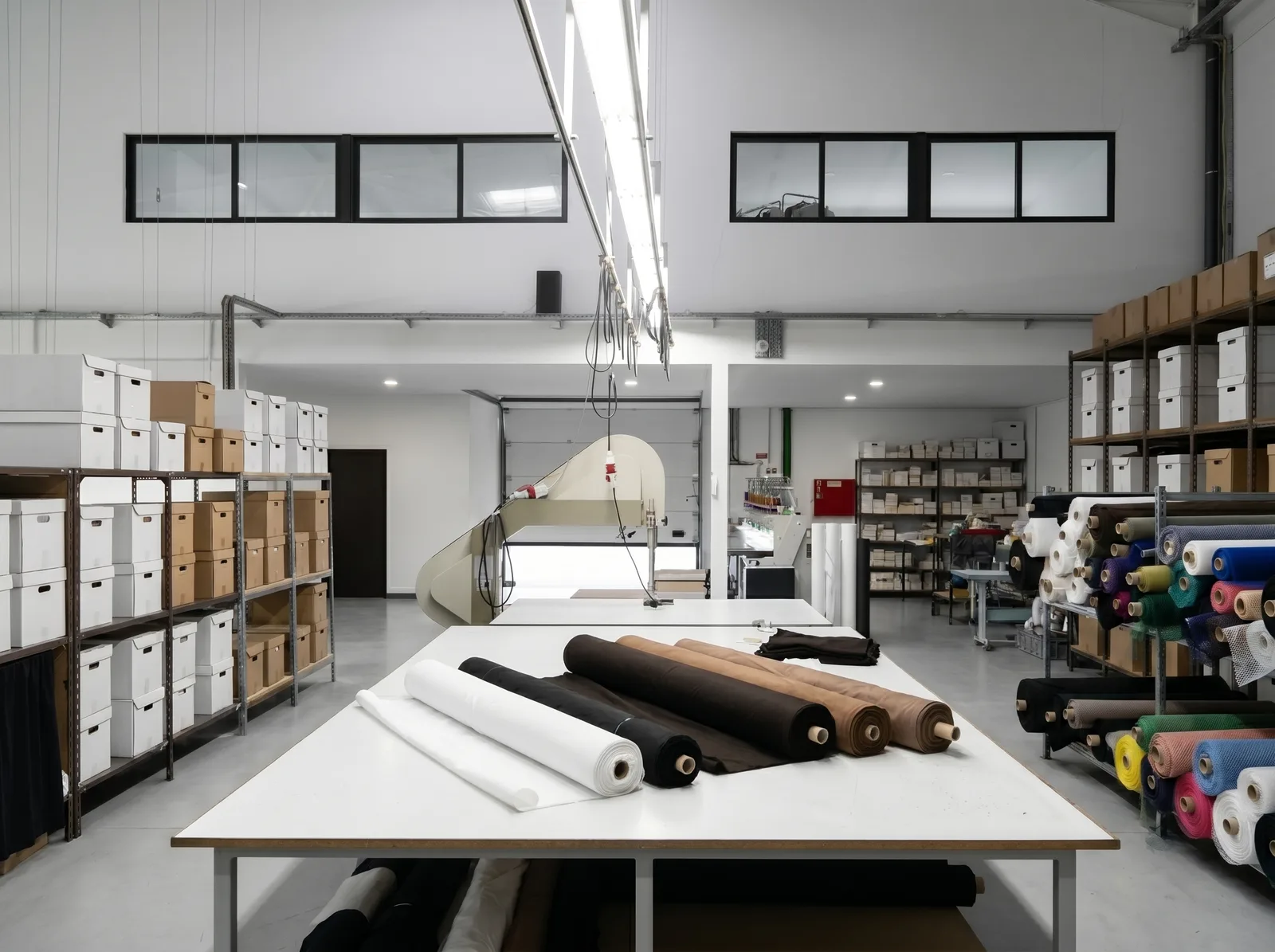
I run a factory in Barcelos, Portugal. We lose orders to Morocco when price is the deciding factor, and we win orders from brands moving away from Morocco when quality and flexibility matter more. Both outcomes make sense for the brands involved. This comparison is my honest attempt to explain when each country is the right choice.
Both countries are viable nearshore alternatives to Asia, but they serve different segments — the right choice depends on what you are making, how much, and at what quality tier.
Portugal vs Morocco: The Numbers Side by Side
Labour Costs
Morocco's primary advantage is cost. Manufacturing labour runs €3–6 per hour depending on region and factory tier. Portugal sits at €8–15 per hour including social charges. That difference flows directly into per-unit pricing, especially on labour-intensive garments.
For a basic t-shirt at 200 units, the difference is roughly €1.50–3 per unit. For a complex garment like a lined jacket, the gap widens because more sewing time magnifies the labour cost difference.
Minimum Order Quantities
Morocco's factories are generally set up for larger runs. Typical MOQs range from 300 to 1,000 units per style, though some factories that work with fast-fashion chains may push higher. Portuguese factories, including ours, typically start at 75–200 units per colourway — ours at 75 per colourway, or 100 in a single colourway.
If you are launching a new brand with a small first collection, Portugal is easier to enter. If you are reordering proven styles in volume, Morocco becomes more competitive.
Lead Times
Lead times to European destinations:
- —Morocco: 4–8 weeks from sample approval to delivery
- —Portugal: usually 6–12 weeks of production from the deposit (4–8 when the fabric is in stock), then about 5–7 working days by courier within the EU
Morocco's range is wider because it depends more on the factory tier. Top-tier Moroccan factories working with European fast-fashion brands can match Portuguese speed. Smaller operations may take longer.
Shipping to Europe
Both countries are genuinely nearshore:
- —Morocco to Southern Europe: 2–4 days by road/ferry or short sea freight
- —Morocco to Northern Europe: 4–7 days
- —Portugal to anywhere in the EU: about 5–7 working days by courier
Portugal has the advantage of being inside the EU single market — no customs clearance at the border. Morocco requires customs processing, though the EU-Morocco Association Agreement provides preferential tariff treatment for qualifying goods.
Trade and Duties
This is where the structures diverge significantly.
Portugal is an EU member state. Goods produced here move freely within the EU with zero tariffs, zero customs paperwork, and zero delays at borders. For EU-based brands, this is the simplest possible supply chain.
Morocco has an Association Agreement with the EU that provides preferential tariffs — but only for goods that meet rules-of-origin requirements. If the fabric is sourced from Morocco or the EU (under the Pan-Euro-Mediterranean cumulation zone), the finished garment enters the EU at reduced or zero duty. If the fabric comes from China or another non-qualifying country, standard tariffs apply.
In practice, this means Moroccan factories that source fabric locally or from EU mills can offer duty-free access. But if your fabric comes from Asia, you may pay 12% import duty on top of the quoted price — closing the cost gap with Portugal significantly. Always ask your Moroccan supplier about fabric origin and confirm duty treatment before comparing quotes.
Portugal vs Morocco: Where Each Country Excels
Morocco's Strengths
Volume basics. Morocco's manufacturing infrastructure is built for scale. The country produces enormous quantities of basic garments — t-shirts, polo shirts, underwear, simple knitwear — for European fast-fashion chains. Major European fast-fashion retailers all source from Morocco. If your product is a straightforward garment in high volume, Morocco offers strong value.
Denim. Morocco has a well-developed denim industry. Several large-scale denim mills and washing facilities operate in the Casablanca and Tangier regions. If denim is central to your collection, Morocco has deeper infrastructure than Portugal for this category.
Price-sensitive brands. If your business model depends on hitting a low retail price point and per-unit cost is the primary decision factor, Morocco will almost always undercut Portugal. The 30–40% labour cost advantage is real and significant at scale.
Fast-fashion speed. Top-tier Moroccan factories have been trained by fast-fashion clients to turn orders quickly. They are set up for rapid replenishment and large-volume production runs.
Portugal's Strengths
Premium quality. Portuguese factories generally produce at a higher quality tier. The country's manufacturing heritage is in premium casualwear, knitwear, and streetwear. Construction standards, fabric selection, and finishing tend to be more refined. If your brand positions itself as premium, Portugal aligns better with that promise.
Small batches. With MOQs starting at 75 units, Portugal is accessible for emerging brands, limited editions, and seasonal drops that do not justify 500-unit minimums. This flexibility is rare in Morocco's factory landscape.
Streetwear and casualwear. Portugal's factory cluster in the Braga/Porto region specialises in the garments that dominate contemporary fashion: heavyweight hoodies, sweatshirts, joggers, oversized t-shirts, and outerwear. If this is your product range, Portugal has deeper expertise. For a detailed breakdown of costs, see our clothing production costs guide.
English communication. Portuguese factories generally communicate in fluent English. Morocco's primary business language is French, with Arabic as the local language. If your team operates in English, Portugal removes a communication barrier that can cause friction during production.
EU compliance built in. Production in Portugal automatically meets EU environmental, labour, and product safety regulations. For brands that sell in the EU, this eliminates compliance risk. Moroccan factories may also meet these standards, but verification and documentation fall on you.
Fabric sourcing. Northern Portugal has a dense network of yarn spinners, knitting mills, and fabric finishers within a 50-kilometre radius. Fabric sourcing is local, fast, and well-integrated into the production process. Morocco imports most of its fabric, which adds lead time and supply chain complexity.
Portugal vs Morocco: Real Cost Comparison
Basic T-Shirt (160 GSM cotton jersey, 200 units, screen print)
| Component | Morocco | Portugal |
|---|---|---|
| Fabric | €1.80–2.50 | €2.20–3.00 |
| CMT (labour) | €1.20–2.00 | €2.50–4.00 |
| Trims | €0.40–0.60 | €0.40–0.60 |
| Screen print (1 colour) | €0.50–1.00 | €0.50–1.00 |
| Finishing + packaging | €0.30–0.50 | €0.30–0.50 |
| Overhead + margin | €0.80–1.50 | €1.50–2.50 |
| Total per unit | €5.00–8.10 | €7.40–11.60 |
Premium Hoodie (350 GSM brushed fleece, 200 units, embroidery)
| Component | Morocco | Portugal |
|---|---|---|
| Fabric | €5.50–7.00 | €6.00–8.50 |
| CMT (labour) | €3.00–5.00 | €6.00–9.00 |
| Trims | €1.00–1.50 | €1.00–1.50 |
| Embroidery | €1.50–3.00 | €1.50–3.00 |
| Finishing + packaging | €0.50–1.00 | €0.80–1.50 |
| Overhead + margin | €2.00–3.50 | €3.50–5.50 |
| Total per unit | €13.50–21.00 | €18.80–29.00 |
The gap is 30–40% on basics and narrows to 25–35% on premium garments where fabric becomes a larger proportion of total cost.
Note on ranges: These upper-bound figures (€11.60 for t-shirts, €29 for hoodies) include overhead and margin at 200-unit volumes. At higher volumes, Portugal's per-unit costs drop closer to €9 for t-shirts and €22 for hoodies — see our clothing production costs breakdown for detailed component analysis.
Important: If your Moroccan factory uses non-EU-origin fabric, add 12% import duty to the Morocco column. At €8 per t-shirt, that is an extra €0.96. At €20 per hoodie, it is €2.40. This alone can close half the gap with Portugal.
When to Choose Morocco
- —You are producing 500+ units per style and price is the primary factor
- —Your products are basic garments (t-shirts, polos, underwear, simple knitwear)
- —Your team speaks French or has experience managing production in French-speaking countries
- —Denim is a significant part of your collection
- —You have an established quality control process and can inspect production remotely or via third-party QC
- —You are comfortable managing customs documentation and rules-of-origin compliance
When to Choose Portugal
- —You need small batches (under 300 units per style)
- —Your brand is positioned as premium or streetwear
- —You want heavyweight hoodies, sweatshirts, or outerwear — Portugal's core speciality
- —You operate in English and want direct, clear communication with your factory
- —You value simplicity — EU production means no customs, no tariffs, no compliance risk
- —You want to visit the factory easily and maintain a close working relationship
- —You are launching a new brand and need a manufacturing partner, not just a supplier
Using Both
Some brands split production between both countries. The logic is straightforward:
- —Morocco for high-volume basics and denim — the styles where price sensitivity matters most and construction is simpler
- —Portugal for premium pieces, limited editions, and new-season development — the styles where quality, speed, and small-batch flexibility matter more
This hybrid approach gives you the best of both: Morocco's cost advantage on volume basics and Portugal's quality and flexibility on everything else. The additional complexity of managing two supply chains is the tradeoff.
The Bottom Line
Morocco and Portugal are not competitors in the way that Portugal and Turkey are. They serve adjacent but different segments. Morocco is the right choice when you need volume at a competitive price. Portugal is the right choice when you need quality, flexibility, and simplicity.
Neither country is universally "better." The right answer depends on your product, your volume, your positioning, and how much supply chain complexity you want to manage.
If you are exploring Portuguese manufacturing for your brand, start here or read our broader comparison of manufacturing countries. For brands already working with a Moroccan supplier and considering a Portuguese option for premium pieces, we are happy to discuss how that split works in practice — get in touch.

Pedro Carreira
Founder of White Cotton, a textile manufacturer in Barcelos, Portugal. Producing custom clothing collections for brands across 15+ countries.
Frequently Asked Questions
Yes, for most garment types. A basic t-shirt costs roughly €5-8 per unit in Morocco versus €7.40-11.60 in Portugal at 200-unit volumes. The gap is driven by labour costs: €3-6 per hour in Morocco versus €8-15 per hour in Portugal. However, if your Moroccan factory uses non-EU-origin fabric, a 12% import duty applies — which can close half the price difference.
Moroccan factories typically require 300-1,000 units per style, reflecting their setup for large-volume production. Portuguese factories start much lower, often at 75-200 units per style per colour. If you are launching a new brand with a small first collection, Portugal is significantly more accessible.
It depends on fabric origin. Under the EU-Morocco Association Agreement, garments made with fabric sourced from Morocco or the EU enter at reduced or zero duty. If the fabric comes from China or another non-qualifying country, standard tariffs of around 12% apply. Always confirm fabric origin with your Moroccan supplier before comparing quotes.
Portugal has deeper expertise in streetwear. The factory cluster in the Braga and Porto region specialises in heavyweight hoodies, oversized t-shirts, sweatshirts, joggers, and outerwear — the core of contemporary streetwear. Portuguese factories also accept smaller batches (75+ units), which suits the limited-edition drops common in streetwear. Morocco is stronger for high-volume basics and denim.
Continue Reading
![Portugal vs Bangladesh for Clothing Manufacturing: An Honest Comparison [2026]](/_next/image?url=%2Fimages%2Fgenerated%2Fblog%2Fportugal-vs-bangladesh-manufacturing.webp&w=1920&q=75)
Portugal vs Bangladesh for Clothing Manufacturing: An Honest Comparison [2026]
![Portugal vs India for Clothing Manufacturing: What the Numbers Say [2026]](/_next/image?url=%2Fimages%2Fgenerated%2Fblog%2Fportugal-vs-india-manufacturing.webp&w=1920&q=75)
Portugal vs India for Clothing Manufacturing: What the Numbers Say [2026]
How to Make a Tech Pack a Factory Can Cut From
What Is a Tech Pack for Clothing? A Real Example, Page by Page