Hoodie Manufacturing Costs: Real Prices from a Portuguese Factory [2026]
Hoodie manufacturing costs from a Portuguese factory: €14 blanks to €45 premium organic. Full breakdown at 75, 200, and 500+ units.
 Pedro Carreira··16 min read
![Hoodie Manufacturing Costs: Real Prices from a Portuguese Factory [2026]](/_next/image?url=%2Fimages%2Fgenerated%2Fblog%2Fhoodie-manufacturing-costs-breakdown.webp&w=1920&q=75)
The Actual Numbers
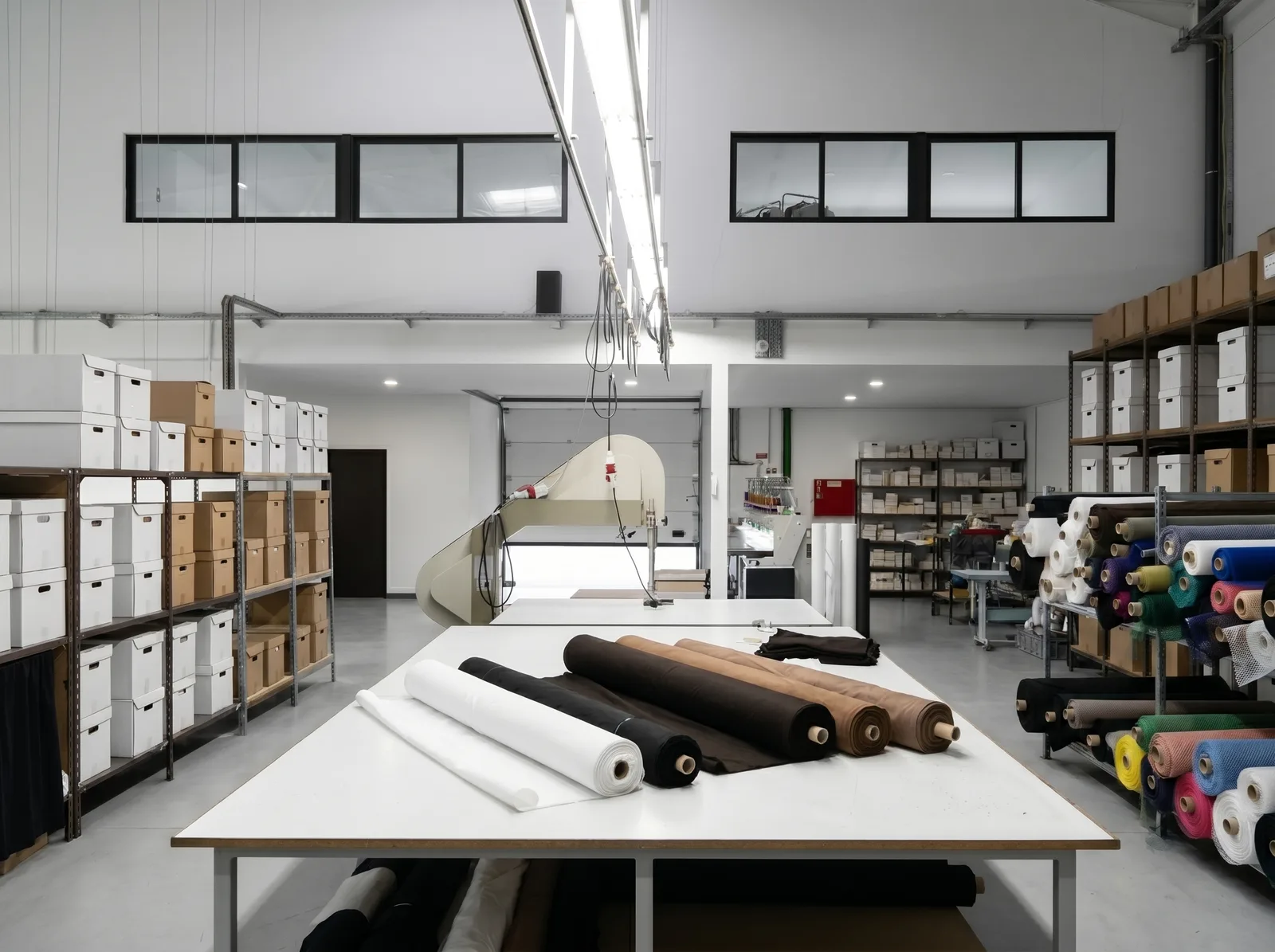
I run a hoodie manufacturing operation in Barcelos, Portugal. Every week, brands ask me the same question: how much does a custom hoodie cost to produce? So let me lay out real hoodie manufacturing costs — the numbers I actually quote, not the vague ranges you find elsewhere.
The honest answer is that it depends — on fabric weight, composition, decoration, volume, and a dozen other variables. But "it depends" is not useful when you are building a business plan and need real numbers to work with.
So here they are. Three tiers of hoodie, broken down to the euro, at volumes from 75 to 1,000 units. These are 2026 prices from an actual Portuguese factory, not estimates pulled from the internet.
For a broader look at garment pricing across product categories, see our full clothing production costs breakdown.
The Three Tiers
Before I get into the numbers, here is what defines each tier. The difference between a €14 hoodie and a €45 hoodie is not quality control or stitching — it is the specification you choose.
Tier 1 — Basic pullover hoodie. 280 GSM conventional cotton fleece, standard trims, single-colour screen print. This is the hoodie a new brand produces for its first drop or a company orders for event merchandise.
Tier 2 — Mid-range hoodie. 350 GSM conventional cotton brushed fleece, garment wash for a softer hand feel, better trims (woven labels, flat cotton drawcord, metal eyelets). The workhorse product for established brands.
Tier 3 — Premium hoodie. 450–500 GSM organic French terry, custom hardware (branded aglets, custom zip pulls), garment-dyed or enzyme-washed, double-layer hood. This is what streetwear and premium basics brands build reputations on.
Hoodie Manufacturing Costs: Component Breakdown
Every hoodie quote breaks down into the same components. The proportions shift depending on the tier, but the structure is the same.
Fabric (40–55% of total cost)
Fabric is the single largest cost driver. Two things determine fabric cost: weight and composition.
A 280 GSM conventional cotton fleece costs roughly €4.50–6.00 per metre. A 350 GSM brushed fleece runs €6.00–8.50 per metre. A 450–500 GSM organic French terry hits €9.00–13.00 per metre — the organic certification premium at the mill level adds 15–25% over conventional cotton at the same weight.
A standard hoodie pattern consumes approximately 1.5–1.8 metres of fabric depending on size ratio. Oversized fits push that to 1.8–2.2 metres. Add 5–10% for cutting waste — the fabric lost between pattern pieces that cannot be recovered.
| Tier | Fabric | Cost/Metre | Metres Used | Fabric Cost/Unit |
|---|---|---|---|---|
| Basic | 280 GSM conventional fleece | €4.50–6.00 | 1.5–1.7 | €7–10 |
| Mid-range | 350 GSM brushed fleece | €6.00–8.50 | 1.6–1.8 | €10–15 |
| Premium | 450–500 GSM organic French terry | €9.00–13.00 | 1.8–2.2 | €17–28 |
These numbers include cutting waste. For a deeper dive into fabric weights, our GSM guide explains how weight affects everything from drape to warmth.
CMT / Labour (25–35% of total cost)
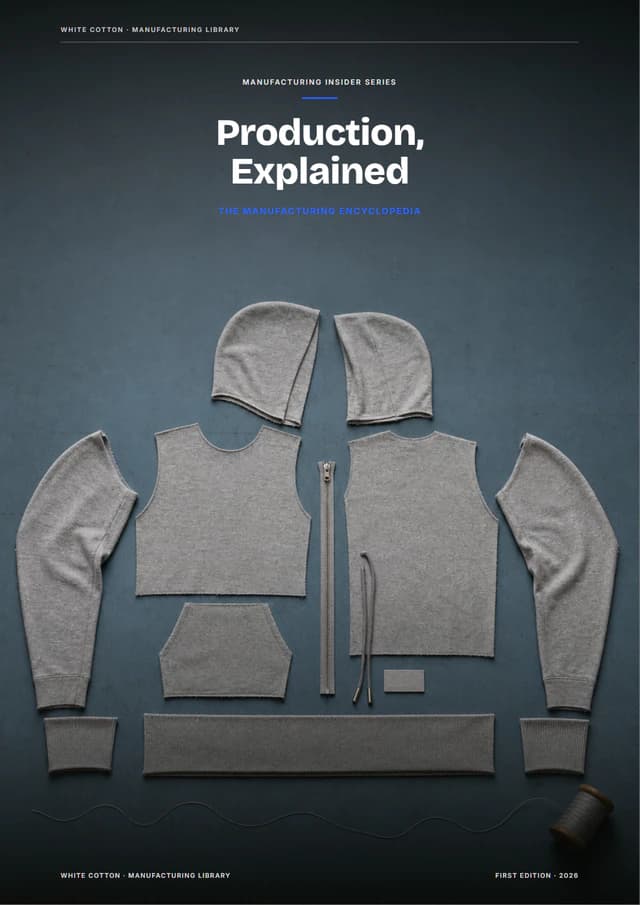
CMT — cut, make, trim — is the actual construction cost. A hoodie involves cutting the fabric, sewing 15–25 separate operations (body, sleeves, hood assembly, pocket, ribbing, drawcord channel), pressing, and quality inspection.
A basic pullover hoodie takes 35–50 minutes of operator time across the full line. A mid-range with garment wash adds handling and finishing time: 45–60 minutes. A premium hoodie with double-layer hood, custom hardware installation, and detailed finishing pushes to 60–80 minutes.
At Portuguese labour rates (€9–14/hour including social charges), that translates to:
| Tier | Operator Time | CMT Cost/Unit |
|---|---|---|
| Basic | 35–50 min | €4–7 |
| Mid-range | 45–60 min | €6–9 |
| Premium | 60–80 min | €8–12 |
Portuguese labour costs more than Turkey (€4–8/hour) or Bangladesh (€1–3/hour). That is real. I will address why brands still manufacture here later in this post.
Trims (5–10% of total cost)
Trims are everything that is not the main fabric body:
- —Labels (main, care, size): €0.10–0.50 per set for woven labels
- —Drawcord: €0.15–0.40 (flat cotton) or €0.30–0.80 (woven tape with branded tips)
- —Eyelets: €0.05–0.15 per pair
- —Ribbing (cuffs + waistband): often cut from the same fabric roll, but specialty ribs add €0.50–1.50
- —Thread: €0.05–0.15 per garment
- —Hang tags: €0.10–0.30
Custom trims change this significantly. Branded metal aglets run €0.30–0.60 per pair. Custom embossed drawcord tips, leather patch labels, or custom-moulded buttons can push trims to €3–5 per unit.
| Tier | Trims Cost/Unit |
|---|---|
| Basic | €0.80–1.50 |
| Mid-range | €1.50–2.50 |
| Premium | €3.00–5.00 |
Finishing and Washing (0–8% of total cost)
Post-construction treatments affect both cost and hand feel:
- —No special finish (basic tier): just pressing and steaming — €0.20–0.50
- —Enzyme wash (mid-range): softens the fabric, removes pilling — €0.80–1.50
- —Garment wash + softener (mid-range): fuller softening process — €1.00–2.00
- —Garment dye (premium): dyeing the constructed garment for a lived-in look — €1.50–3.00
Packaging (2–5% of total cost)
- —Poly bag only: €0.05–0.15
- —Poly bag + branded tissue + hang tag + sticker: €0.40–0.80
- —Custom box packaging: €1.00–3.50
Overhead and Margin
No factory quotes at cost. Rent, equipment depreciation, energy, quality control staff, administrative overhead — these add 15–25% on top of direct costs. This is built into every quote and is not a line item you can negotiate away.
Total Per-Unit Cost by Tier (at 200 Units)
Here is the full stack at 200 units — the volume where most established brands place their orders for a single colourway:
| Component | Basic (280 GSM) | Mid-Range (350 GSM) | Premium (450–500 GSM) |
|---|---|---|---|
| Fabric | €7–10 | €10–15 | €17–28 |
| CMT / Labour | €4–7 | €6–9 | €8–12 |
| Trims | €0.80–1.50 | €1.50–2.50 | €3.00–5.00 |
| Finishing | €0.20–0.50 | €1.00–2.00 | €1.50–3.00 |
| Packaging | €0.10–0.30 | €0.40–0.80 | €1.00–2.00 |
| Overhead + Margin | €2–3 | €3.50–5.00 | €5.50–8.00 |
| Total | €14–18 | €22–28 | €35–45 |
These are undecorated prices. Embroidery, printing, or other decoration adds on top.
How Volume Changes Hoodie Costs
Volume pricing is real and significant. Setup costs (pattern laying, machine calibration, wash testing) get spread across more units. Fabric purchasing power improves. The line runs more efficiently as operators build muscle memory on the style.
Here is how the three tiers scale across common order volumes:
| Volume | Basic (280 GSM) | Mid-Range (350 GSM) | Premium (450–500 GSM) |
|---|---|---|---|
| 75 units | €18–24 | €28–36 | €45–58 |
| 100 units | €16–21 | €25–32 | €40–50 |
| 200 units | €14–18 | €22–28 | €35–45 |
| 500 units | €12–16 | €19–24 | €30–38 |
| 1,000 units | €11–14 | €17–22 | €27–34 |
The steepest drop is from 75 to 200 units. After 500, the curve flattens — you are already getting most of the efficiency gains. Doubling from 500 to 1,000 saves roughly 10–15% per unit, not 30%.
At 75 units, you are paying a premium for short-run production. The factory still needs to set up the cutting table, calibrate the line, and run wash tests. Those fixed costs get divided by 75 instead of 500. It is not a penalty — it is arithmetic.
Zip-Up vs Pullover: The Cost Difference
A full-zip hoodie costs more than a pullover. The reasons are structural:
- —Zipper: A quality YKK zipper adds €0.80–2.00 depending on type (coil vs moulded, standard vs custom pull)
- —Extra panels: A zip-up is cut as two front panels instead of one, adding pattern complexity and cutting time
- —Sewing time: Setting a zipper cleanly takes 8–12 minutes of additional operator time (€1.50–2.50 in labour)
- —Zipper tape facing: Most quality zip-ups have a facing strip behind the zipper to prevent it touching skin — another cut piece and sewing operation
Total zip-up premium: €3–6 per unit over an equivalent pullover. On a mid-range hoodie at 200 units, expect €25–34 instead of €22–28.
Decoration Costs on Hoodies
Hoodies are thicker and less flat than t-shirts, which affects decoration differently depending on the method. For a full comparison of decoration techniques, see our screen printing vs DTG vs embroidery guide.
Screen Printing
The most cost-effective method at volume. Setup cost of about €20–35 per screen by print size (one screen per colour). Per-unit cost of €0.50–2.00 per position per colour.
On hoodies, the kangaroo pocket can affect front print registration. Chest prints (above the pocket) and back prints work cleanly. At 200 units with a two-colour chest print: roughly €1.50–2.50 per unit including amortised setup. See more on our screen printing page.
Embroidery
Embroidery is priced by stitch count and works exceptionally well on hoodies — the heavy fabric holds stitches cleanly and the texture adds a premium feel.
- —Small chest logo (under 5,000 stitches): €1.20–2.50 per unit
- —Medium placement (5,000–10,000 stitches): €2.50–4.50 per unit
- —Large back embroidery (10,000–20,000 stitches): €4.50–8.00 per unit
One-time digitisation fee of about €20–200 per design, depending on the size, the number of colours and above all the stitch count.
DTG (Direct to Garment)
No setup cost, which makes DTG competitive at small runs. Per-unit cost of €3–6 per print depending on coverage and colour count.
On hoodies, DTG works best on 100% cotton or high-cotton blends. Heavier fabrics may need pre-treatment and multiple passes, pushing cost toward the higher end. Dark garments require a white base layer, adding cost.
Puff Print
Puff printing uses a heat-expandable ink that creates a raised, three-dimensional texture. It is increasingly popular in streetwear and premium branding.
- —Per-unit cost: €1.50–3.50 per position (single colour)
- —Setup: same screen process as standard screen printing — about €20–35 per screen
- —Multi-colour puff: each colour needs its own screen and pass — €2.50–5.00 for two-colour puff
Puff works well on hoodies because the heavy fabric provides a stable base for the raised ink. The dimensional effect is more visible and tactile on a hoodie than on a lightweight tee.
The GSM Factor: Why Weight Changes Everything
Fabric weight (GSM) is the single biggest lever on your per-unit cost. Moving from 280 to 500 GSM does not just change the feel of your hoodie — it changes the cost structure at every stage.
More fabric per unit. A 500 GSM fabric costs roughly 80–100% more per metre than a 280 GSM in the same composition. Premium-weight hoodies also tend to be oversized fits, consuming 15–25% more fabric per garment.
Slower sewing. Heavier fabric requires more force from the needle, slower machine speed, and sometimes different presser feet. A 500 GSM double-layer hood is a completely different sewing challenge than a 280 GSM single-layer hood.
Shipping weight. A box of 75 hoodies in 500 GSM weighs significantly more than in 280 GSM. This affects freight costs, especially for air shipment.
The per-unit price is not the full picture. Several costs sit outside the production quote and catch first-time brands off guard.
Sampling (€50–150 per sample)
Before production, you need a physical sample. A first sample (proto) typically costs €50–100. If you need revisions — and most brands do — each revision sample adds another €50–100. A complex style might go through 2–3 samples before approval: €100–300 before a single production unit is cut.
Some factories absorb sampling costs into the production order if you proceed. We do this for orders above a certain threshold. But do not assume — ask.
Pattern Making and Grading
If you do not have a finalised pattern, the factory needs to create one from your tech pack or reference garment. Pattern making runs €50–150 per style. Grading (scaling the pattern across your size range — S through XXL) adds another €30–80 per style.
If you already have production-ready patterns with grading, this cost disappears. See our tech pack guide for what a complete brief looks like.
Shipping
Production costs are quoted per garment and exclude freight — we work EXW: whether your own forwarder collects or we book the courier for you, freight is a separate line. A 350 GSM hoodie weighs approximately 550–700g. At 200 units, your shipment is roughly 110–140 kg. Sea freight to Western Europe runs €300–500; air to the US, €900–1,500. If you are importing outside the EU, customs duty applies — hoodies (HS code 6110) attract approximately 16.5% in the US and 12% in the UK.
Why Portuguese Hoodies Cost More Than Asian Ones
I will be direct. A basic hoodie manufactured in Bangladesh or China can cost €5–8 per unit at 500 pieces. The same spec made in Portugal costs €12–16. That is a real difference, and for some brands, it is the wrong choice to manufacture in Europe.
But for many brands — particularly those selling at a mid-to-premium price point — the total cost equation favours Portugal:
Minimum order quantities. Our MOQ starts at 100 units per style in one colourway, or 75 per colourway across two or more colourways. Most Asian factories require 300–1,000 minimum. For a brand testing a new style or launching with limited capital, the MOQ difference means you can start without committing €15,000+ to a single product.
Lead times. Production in Portugal usually runs 6–12 weeks from the deposit. Asian production is 8–12 weeks, plus 4–6 weeks of sea freight. That is a real difference in your cash-to-product cycle.
Communication and iteration. Same time zone as most European brands. Sample revisions happen in days, not weeks. Problems get solved on a call, not through a chain of emails across a 7-hour gap.
Quality consistency. Portugal has decades of textile infrastructure. The skill base and quality culture are established. Asian factories can produce quality too — but the variance between factories is wider, and issues are harder to resolve at distance.
Smaller, more frequent orders. The Portugal model works for brands that order 200–500 units frequently rather than 5,000 once. If your model is rapid iteration, seasonal drops, or limited editions, the lower MOQ and faster turnaround often make European production cheaper on a total-cost basis.
For a detailed comparison, our Portugal vs China manufacturing guide covers the tradeoffs in full.
How to Get the Best Price Without Sacrificing Quality
After years of quoting hoodies, these are the levers that actually move the needle on cost:
Consolidate colourways. Three colourways at 100 units each costs less per unit than three separate orders. The setup is shared. Run your full colour range in one production batch.
Use standard trims where possible. Standard eyelets, stock drawcords, and stock ribbing save €1–3 per unit over custom hardware. Save bespoke trims for your hero product.
Simplify construction. Single-layer hood instead of double-layer. Side seam pockets instead of kangaroo. Each removed operation saves €1–2 per unit.
Order at the right volume. The biggest price drop happens between 75 and 200 units. If you are ordering 100 but could stretch to 200, the lower per-unit cost often justifies the extra investment.
Provide a complete tech pack. A clear brief reduces back-and-forth and results in a tighter quote. Ambiguity gets priced in as risk.
Match weight to use. A 450 GSM hoodie feels incredible, but if your customers are in a warm climate, 320–350 GSM costs 25–35% less per unit. Match the weight to how the product will actually be worn.
Hoodie Manufacturing Costs: The Bottom Line
A custom hoodie manufactured in Portugal costs between €11 and €58 per unit, depending on fabric, construction, volume, and decoration. The most common order we see — a mid-range 350 GSM brushed fleece pullover with embroidered chest logo at 200 units — lands around €24–32 per unit.
At €22–32 per unit for mid-range hoodies, most brands retail at €65–120, building a 3–4x markup that covers marketing, fulfilment, and returns. That margin is where the business model lives — and it is why getting your production cost right matters more than saving €1 per unit on a cheaper supplier.
That is the number to build your margins around.
If you want an itemised quote for your specific hoodie, send us your brief. We will break it down line by line — fabric, CMT, trims, decoration, finishing — so you know exactly what you are paying for and why. You can also explore our hoodie manufacturing page for more on construction options, or browse our full range of low-MOQ manufacturing services.

Pedro Carreira
Founder of White Cotton, a textile manufacturer in Barcelos, Portugal. Producing custom clothing collections for brands across 15+ countries.
Frequently Asked Questions
A custom hoodie manufactured in Portugal costs between €11 and €58 per unit depending on fabric weight, construction complexity, decoration, and order volume. The most common order — a mid-range 350 GSM brushed fleece pullover at 200 units with an embroidered chest logo — lands around €24–32 per unit.
Fabric weight and composition are the single biggest cost drivers, accounting for 40–55% of the total unit cost. Moving from a 280 GSM conventional cotton fleece to a 450–500 GSM organic French terry can more than double the fabric cost per unit. Order volume is the second major factor — the per-unit price drops 25–35% between 75 and 500 units.
On a per-unit basis, Asian factories are cheaper — a basic hoodie costs €5–8 in Bangladesh versus €12–16 in Portugal at 500 units. However, Portuguese factories offer MOQs starting at 75 units per colourway (100 in one colourway), production usually running 6–12 weeks from the deposit (versus several months including shipping from Asia), and faster iteration. For brands ordering 200–500 units frequently, the total cost including freight, cash cycle, and defect rates often favours Portugal.
Our minimum order is 100 pieces per style in one colourway, or 75 per colourway when you order two or more. Most Asian factories require 300–1,000 minimum. At 75 units, expect to pay a 25–40% premium over the 200-unit price due to fixed setup costs being spread across fewer garments.
A first sample (proto) typically costs €50–100. Most brands need 1–2 revision samples before approving, so budget €100–300 in sampling costs before production begins. Some factories absorb sampling costs into the production order if you proceed — we do this for orders above a certain threshold.
Continue Reading

How Much Does It Cost to Start a Clothing Brand in 2026? Real Numbers
![How to Find a Clothing Manufacturer in Portugal: A Factory Owner's Honest Guide [2026]](/_next/image?url=%2Fimages%2Fgenerated%2Fblog%2Fhow-to-find-clothing-manufacturer-portugal.webp&w=1920&q=75)
How to Find a Clothing Manufacturer in Portugal: A Factory Owner's Honest Guide [2026]
![How to Vet a Clothing Manufacturer: The Due Diligence Checklist [2026]](/_next/image?url=%2Fimages%2Fgenerated%2Fblog%2Fhow-to-vet-clothing-manufacturer.webp&w=1920&q=75)
How to Vet a Clothing Manufacturer: The Due Diligence Checklist [2026]
![27 Questions to Ask a Clothing Manufacturer Before Placing Your Order [2026]](/_next/image?url=%2Fimages%2Fgenerated%2Fblog%2Fquestions-to-ask-clothing-manufacturer.webp&w=1920&q=75)
27 Questions to Ask a Clothing Manufacturer Before Placing Your Order [2026]
![12 Red Flags When Choosing a Clothing Manufacturer [2026]](/_next/image?url=%2Fimages%2Fgenerated%2Fblog%2Fred-flags-clothing-manufacturer.webp&w=1920&q=75)