Shipping Clothing from Portugal to Dubai — Costs & Times
Air freight 4-5 days ($1,200-1,800/pallet), sea freight 18-22 days ($500-800). UAE customs 5%, full documentation guide. From factory to Dubai warehouse.
 Pedro Carreira··10 min read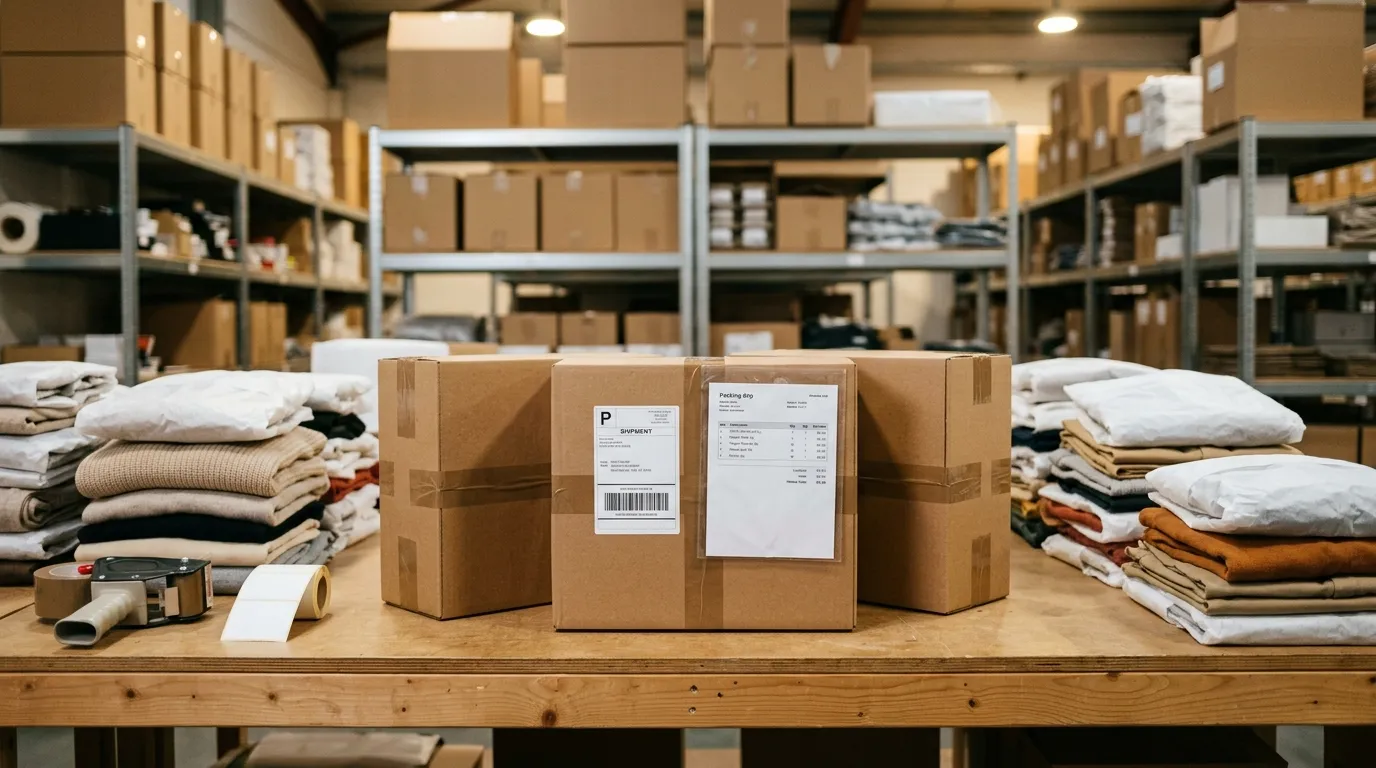
Shipping Garments from Portugal to Dubai Is Faster and Cheaper Than Most Brands Expect
A pallet of clothing air-freights from Porto to Dubai in 4–5 business days at a cost of $1,200–1,800. Sea freight takes 18–22 days at $500–800 per pallet. UAE customs duty on clothing is a flat 5% — one of the lowest import duties in the world. Combined with 4–6 week production lead times, a Portuguese-manufactured order can go from factory to Dubai warehouse in under 7 weeks.
This guide covers every logistics detail brands need to ship from Portugal to the UAE.
Air Freight: Porto to Dubai
Air freight is the standard choice for brands that need speed or are shipping smaller quantities (1–5 pallets).
| Detail | Specification |
|---|---|
| Transit time | 4–5 business days (door to door) |
| Cost per pallet | $1,200–1,800 |
| Cost per kg | $3.50–6.00 (decreasing with volume) |
| Typical pallet weight | 150–300 kg (200–500 garments depending on weight) |
| Departure airports | Porto (OPO), Lisbon (LIS) |
| Arrival airports | Dubai (DXB), Sharjah (SHJ), Abu Dhabi (AUH) |
| Carriers | Emirates SkyCargo, TAP Cargo, Turkish Airlines Cargo (via IST) |
When to use air freight: first production runs, time-sensitive launches, restock orders, lightweight garments where shipping cost per unit is low relative to garment value.
How much does air freight cost per unit?
A 200-piece order of premium hoodies (each weighing approximately 600g) would weigh roughly 120 kg plus packaging — comfortably within one pallet at a cost of $1,200–1,400. That is $6–7 per unit in shipping — acceptable for garments retailing at AED 300+. For lightweight tees at 200 GSM, a single pallet holds 400–500 units, bringing per-unit shipping down to $2.50–4.50.
Sea Freight: Leixoes to Jebel Ali
Sea freight is cost-effective for larger shipments where speed is not critical. The route goes from the port of Leixoes (Porto's commercial port, 30 minutes from our factory in Barcelos) through the Mediterranean, the Suez Canal, and into the Arabian Gulf to Jebel Ali — the largest port in the Middle East.
| Detail | Specification |
|---|---|
| Transit time | 18–22 days (port to port) |
| Cost per pallet (LCL) | $500–800 |
| Cost per 20ft container (FCL) | $2,500–4,000 |
| Cost per 40ft container (FCL) | $3,500–5,500 |
| Departure ports | Leixoes (Porto), Lisbon |
| Arrival port | Jebel Ali (Dubai) |
| Carriers | Maersk, MSC, CMA CGM, Hapag-Lloyd |
LCL (Less than Container Load) — your pallets share a container with other cargo. Cheaper per pallet but transit times are 2–5 days longer due to consolidation and deconsolidation at each end.
FCL (Full Container Load) — a 20ft container fits approximately 10–12 pallets (3,000–6,000 garments depending on weight). FCL is cost-effective for orders above 2,000 pieces.
When to use sea freight: bulk seasonal orders, heavyweight garments where air freight cost per unit is high, non-urgent restocks, large brand launches with planned inventory.
Courier for Samples: DHL, FedEx, UPS
For sample shipments and small parcels, international couriers are the fastest and simplest option.
| Detail | Specification |
|---|---|
| Transit time | 2–4 business days |
| Cost per package (1–5 kg) | $50–90 |
| Cost per package (5–15 kg) | $90–180 |
| Carriers | DHL Express, FedEx International Priority, UPS Express |
| Tracking | Full door-to-door tracking |
When to use couriers: sample shipments, prototype revisions, urgent single-piece replacements. Not cost-effective for production quantities.
At White Cotton, we ship samples via DHL Express as standard — typically 3 business days from our factory in Barcelos to Dubai. Sample shipping costs are included in our sample development pricing.
UAE Customs and Duties
How much duty do I pay on clothing imported to the UAE?
The UAE applies a 5% customs duty on the CIF value (Cost + Insurance + Freight) of imported clothing. This rate is uniform across all clothing categories under the GCC Common External Tariff.
Key details:
- —5% is the total import duty — there are no additional anti-dumping duties or surcharges on clothing from Portugal or the EU
- —No VAT on import — UAE VAT (5%) is charged at the point of domestic sale, not at customs
- —No preferential trade agreement currently exists between the EU and GCC that would reduce this 5% — but 5% is already among the lowest clothing import duties globally (compare: USA 12–32%, India 20–25%, Brazil 35%)
- —Free zone imports — goods imported into UAE free zones (JAFZA, DAFZA, DMCC) can be stored duty-free and only incur the 5% duty when released into the UAE domestic market
- —GCC-wide rate — the same 5% applies if you are re-exporting to Saudi Arabia, Kuwait, Qatar, Bahrain, or Oman
What documents do I need for UAE customs clearance?
- 1.Commercial Invoice — must include seller and buyer details, item descriptions, quantities, unit prices, total value, currency, incoterms, and country of origin
- 2.Packing List — weight, dimensions, and contents of each carton/pallet
- 3.Certificate of Origin — issued by the Portuguese Chamber of Commerce (Camara de Comercio), confirming goods were manufactured in Portugal. Required for "Made in Portugal" labelling to be valid at UAE customs
- 4.Bill of Lading (sea freight) or Air Waybill (air freight)
- 5.Insurance Certificate — if shipping CIF
- 6.HS Code Declaration — on the commercial invoice. Common codes: knitted t-shirts (6109), hoodies/sweatshirts (6110), woven shirts (6205/6206), knitted trousers/joggers (6103/6104)
Processing time at Dubai customs is typically 1–2 business days for standard shipments with complete documentation. Jebel Ali port and DXB air cargo terminal are among the fastest customs processing points in the world.
Incoterms: Who Pays What?
Which incoterms should I use when shipping from Portugal to Dubai?
The most common incoterms for Portugal-to-Dubai garment shipments:
FOB (Free on Board) — the manufacturer delivers goods to the departure port/airport in Portugal. The buyer arranges and pays for international freight, insurance, and customs clearance. Most common for brands with their own freight forwarder.
CIF (Cost, Insurance, Freight) — the manufacturer arranges and pays for freight and insurance to the destination port (Jebel Ali) or airport (DXB). The buyer handles customs clearance and local delivery. Good for brands that want the factory to manage international logistics.
DAP (Delivered At Place) — the manufacturer handles freight and delivery to the buyer's door in Dubai. The buyer handles import clearance and duty payment (5%). Many factories offer it; we don't — we work EXW Barcelos, as explained below. It gives door-to-door delivery without the manufacturer needing to register for UAE import duties.
EXW (Ex Works) — you arrange freight from the factory gate with your own carrier or forwarder. The factory prepares the export documentation and loads the shipment. Worth considering if you already have a freight account, since you control the real price on the Porto–Dubai leg.
Whichever term a factory quotes, the buyer handles UAE customs clearance (where they have local knowledge and a broker). With us the term is always EXW Barcelos: your forwarder collects, or we book the courier and invoice the transport separately.
White Cotton ships EXW Barcelos: your own forwarder collects, or we book the courier for you and invoice the freight separately. We handle all export documentation — commercial invoices, packing lists, certificates of origin — and work with freight forwarders who handle the Porto–Dubai route weekly. We do not offer DAP or DDP: the 5% duty and any VAT on arrival are always yours to settle.
Packaging Requirements
How should garments be packaged for shipping to Dubai?
Standard garment export packaging for the Portugal–Dubai route:
- —Individual polybags — each garment in a clear poly bag with size sticker. Biodegradable polybags available for sustainability-conscious brands
- —Carton boxes — double-wall corrugated cardboard, standard export grade. Each carton typically holds 20–50 garments depending on weight
- —Pallet wrapping — stretch-wrapped on EUR pallets (120 x 80 cm) or standard pallets (120 x 100 cm). Pallets must be heat-treated (ISPM 15 certified) for international shipping
- —Moisture protection — silica gel packets in each carton for sea freight (18–22 days in a container generates condensation risk). Not critical for air freight
- —Carton labelling — each carton marked with: style number, colour, size breakdown, quantity, gross/net weight, carton number (e.g., 1/15, 2/15)
Dubai's summer heat (40C+ from May to October) means goods in warehouse storage face temperature stress. Avoid wax-based packaging materials that can melt and transfer to garments. For sea freight during summer, request light-coloured containers when possible.
Practical Shipping Timeline
Here is a typical end-to-end timeline for a Portuguese-manufactured order destined for Dubai:
| Stage | Duration |
|---|---|
| Production | 6–12 weeks |
| Quality control and packing | 2–3 days |
| Factory to Porto airport/Leixoes port | 1 day |
| Air freight transit | 4–5 days |
| UAE customs clearance | 1–2 days |
| Last-mile to Dubai warehouse | 1 day |
| Total (air freight) | 7–13 weeks |
For sea freight, add 14–17 days to the transit portion, bringing the total to 9–15 weeks.
Compare this to Asian manufacturing: 8–12 weeks production + 25–35 days sea freight + customs = 14–20 weeks. Portuguese manufacturing cuts total time to market roughly in half.
Cost Summary Table
| Method | Cost | Transit | Best For |
|---|---|---|---|
| DHL/FedEx (samples) | $50–90 per package | 2–4 days | Samples, prototypes |
| Air freight (pallet) | $1,200–1,800 | 4–5 days | Production runs up to 5 pallets |
| Sea freight LCL (pallet) | $500–800 | 18–22 days | Mid-size orders, non-urgent |
| Sea freight FCL (20ft) | $2,500–4,000 | 18–22 days | Large orders (3,000+ pieces) |
All costs are approximate and fluctuate with fuel surcharges, carrier availability, and seasonal demand. Summer (June–August) and pre-Ramadan periods tend to be peak shipping seasons for the Gulf route.
Tips for GCC Brands Shipping from Portugal
Start with air freight. Your first 2–3 orders should go by air. The cost premium is worth the speed — it lets you test products in market and restock winners quickly before committing to larger sea freight orders.
Consolidate orders. If you are ordering tees, hoodies, and joggers, ship them together in one consignment. Splitting into multiple shipments multiplies documentation and handling fees.
Use a customs broker. UAE customs clearance is straightforward but not free. A broker in Dubai charges AED 300–800 per consignment and handles all paperwork. We can recommend brokers our clients use on the Portugal–Dubai route.
Plan for Ramadan and holidays. UAE customs processing slows during Eid holidays. Ship production orders at least 4 weeks before Ramadan to avoid delays.
Insure your shipments. Marine cargo insurance costs 0.3–0.5% of the shipment value. For a $10,000 shipment, that is $30–50. Always insure — a replacement production run usually takes 6–12 weeks.
For brands evaluating Portugal as a low-MOQ manufacturing base for the Gulf market, read our guides on starting a clothing brand in Dubai, the Saudi fashion market opportunity, our dedicated page for Dubai and GCC brands, and our clothing manufacturer Dubai landing page.

Pedro Carreira
Founder of White Cotton, a textile manufacturer in Barcelos, Portugal. Producing custom clothing collections for brands across 15+ countries.
Continue Reading

Dubai Fashion Market 2026 — Opportunities for Emerging Brands
![Why Dubai's Smartest Companies Are Switching to European-Made Team Wear [2026]](/_next/image?url=%2Fimages%2Fgenerated%2Fblog%2Fwhy-european-made-team-wear-dubai.webp&w=1920&q=75)
Why Dubai's Smartest Companies Are Switching to European-Made Team Wear [2026]
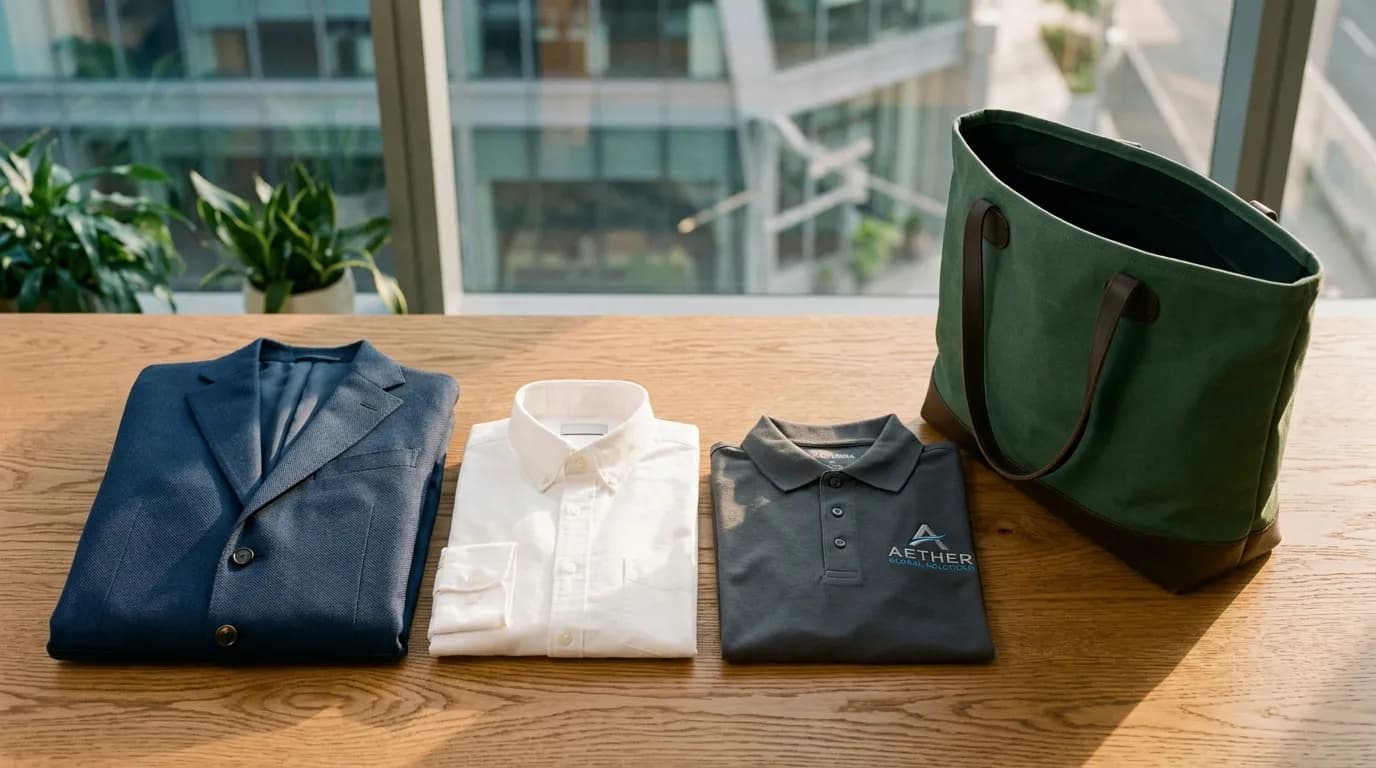
Corporate Clothing for Dubai Companies — Full Guide (2026)
![Corporate Gifting with Clothing — Why European-Made Stands Out in Dubai [2026]](/_next/image?url=%2Fimages%2Fgenerated%2Fblog%2Fcorporate-gifting-clothing-dubai.webp&w=1920&q=75)
Corporate Gifting with Clothing — Why European-Made Stands Out in Dubai [2026]