Why Dubai's Smartest Companies Are Switching to European-Made Team Wear [2026]
European-made corporate clothing vs Asian imports for Dubai companies. OEKO-TEX safety, durability analysis, brand perception, and cost comparison.
 Pedro Carreira··10 min read
![Why Dubai's Smartest Companies Are Switching to European-Made Team Wear [2026]](/_next/image?url=%2Fimages%2Fgenerated%2Fblog%2Fwhy-european-made-team-wear-dubai.webp&w=1920&q=75)
Over 60% of Corporate Clothing in the UAE Is Sourced From China — and It Shows
Most Dubai companies ordering "custom" uniforms are buying from trading companies that source blanks from China or Bangladesh, add a logo, and charge a 3–5x markup. The garments arrive looking fine. Six months later, the polo shirts are pilling, the embroidery is fraying, and the colours have faded from repeated washing in Dubai's hard water. Meanwhile, consumer safety testing has found banned azo dyes in school uniform samples sold in the region — the same chemical class linked to skin irritation and long-term health risks in clothing worn against skin for extended hours.
This is not a quality problem. It is a sourcing problem. And a growing number of Dubai companies — from tech firms to five-star hotel groups — are solving it by manufacturing corporate clothing in Europe.
The Safety Problem Nobody Talks About
Are corporate uniforms in Dubai tested for harmful substances?
In most cases, no. The UAE does not require textile imports to carry chemical safety certifications. That means the polo your sales team wears 10 hours a day in 40C heat — when pores are open and sweat is constant — may contain substances that would be illegal in European workplaces.
OEKO-TEX Standard 100, the most widely recognised textile safety certification globally, tests for over 1,000 harmful substances:
| Substance Category | What It Tests | Why It Matters |
|---|---|---|
| Azo dyes | Banned aromatic amines | Carcinogenic; absorbed through skin |
| Formaldehyde | Resin finishing agents | Skin irritation, respiratory issues |
| Heavy metals | Lead, cadmium, nickel, chromium | Toxic accumulation over time |
| pH levels | Fabric acidity/alkalinity | Skin reactions, especially in heat |
| Phthalates | Plasticisers in prints | Endocrine disruptors |
| Pesticide residues | Cotton growing chemicals | Skin sensitisation |
| Chlorinated phenols | Preservation agents | Toxic; banned in EU textiles |
| Organotin compounds | Stabilisers in synthetics | Neurotoxic at low concentrations |
European manufacturers that source OEKO-TEX certified fabrics deliver garments tested against all of these. For clothing worn in direct skin contact for 8–12 hours daily in a hot climate — where absorption rates increase with sweat and heat — this is not a luxury specification. It is a basic duty of care.
Brand Perception: What Your Staff Clothing Says About Your Company
Does the quality of corporate clothing affect employee satisfaction?
Research consistently shows it does. Industry research consistently shows that employees who receive company-provided clothing prefer higher-quality garments over more frequent replacements. Employees notice fabric weight, stitching quality, and fit — and they associate it with how much their employer values them.
But the perception gap extends beyond your team. Consider what your staff clothing communicates to clients:
A Dubai real estate agency outfitting its sales team in thin, loose-fitting polos with a heat-pressed logo that cracks after three washes sends a specific message about attention to detail. The same agency outfitting the team in dense 240gsm pique polos with embroidered branding, structured collars that hold their shape, and a "Made in Portugal" neck label sends a different message entirely.
In B2B environments — hospitality, professional services, corporate events — staff clothing is the most visible expression of brand standards. Clients may never see your office, but they interact with your team. The clothing is the first brand touchpoint.
Does "Made in Portugal" carry weight in the GCC market?
Portugal has become the premium manufacturing base for European fashion. Brands like Pangaia, Represent, Corteiz, and dozens of European luxury houses manufacture in Portugal specifically for the quality positioning. In the GCC, where consumers are brand-literate and associate European production with premium value, a "Made in Portugal" label on corporate clothing signals investment in quality.
Compare this to the alternative: a garment with no country-of-origin label (common in white-label imports) or a "Made in China" label on what is supposed to represent a premium brand. In a market like Dubai, where perception and presentation drive business decisions, the origin of your corporate clothing matters.
The Durability Economics: Cost Per Wear, Not Cost Per Unit
Is European-made corporate clothing actually more expensive?
On a per-unit basis, yes. On a per-wear basis, often no.
Here is the real comparison for a branded polo shirt — the most common corporate garment in Dubai:
| Factor | Asian-Sourced Polo | European-Made Polo |
|---|---|---|
| Unit cost | $6–10 | $12–18 |
| Fabric weight | 160–180gsm | 220–260gsm |
| Fabric certification | Typically none | OEKO-TEX Standard 100 |
| Colour fastness (washes) | 15–25 washes before visible fade | 50–80+ washes |
| Collar structure retention | Loses shape after 10–15 washes | Maintains structure 60+ washes |
| Embroidery durability | Thread pilling at 3–6 months | Clean at 12–18 months |
| Realistic lifespan | 6–8 months | 18–30 months |
| Annual replacement cost (per employee) | $12–20 (2 replacements) | $12–18 (0 replacements) |
| 2-year total cost per employee | $24–40 | $12–18 |
The maths is straightforward. A $15 polo that lasts 2 years costs $7.50 per year. A $8 polo that lasts 6 months costs $16 per year. European-made corporate clothing is often 50% cheaper over a 2-year cycle — before accounting for the administrative cost of reordering, redistributing, and disposing of worn-out garments twice a year.
For a company with 200 employees, switching to European-made polos saves approximately $2,000–4,000 per year in replacement costs alone.
The Comprehensive Comparison: European vs Asian-Sourced Corporate Clothing
| Factor | European-Made | Asian-Sourced |
|---|---|---|
| Fabric quality | 220–300gsm, pre-shrunk, certified | 160–200gsm, variable shrinkage |
| Chemical safety | OEKO-TEX / GOTS certified fabrics | Typically uncertified |
| Colour retention | 50–80+ wash cycles | 15–25 wash cycles |
| Minimum order | 75–100 pieces per style | 300–1,000+ pieces per style |
| Lead time (production + shipping) | usually 7–13 weeks including air freight | 10–16 weeks including sea freight |
| Customisation depth | Full pattern, fabric, colour, branding | Limited to available blanks + logo |
| Reorder flexibility | Same specs, any quantity from 75 | Must meet MOQ again |
| Country of origin label | "Made in Portugal" / "Made in EU" | "Made in China" / "Made in Bangladesh" |
The Dubai Gap: 200+ Uniform Suppliers, Zero European Manufacturing
Why don't Dubai uniform suppliers offer European-made options?
Search "corporate uniforms Dubai" and you will find hundreds of suppliers. Almost all follow the same model: import blanks from China or Bangladesh, apply branding locally (screen printing, embroidery, heat transfer), and sell to companies at retail markup.
This model works for disposable workwear — construction PPE, warehouse uniforms, basic hospitality aprons. It does not work for corporate environments where clothing represents the brand.
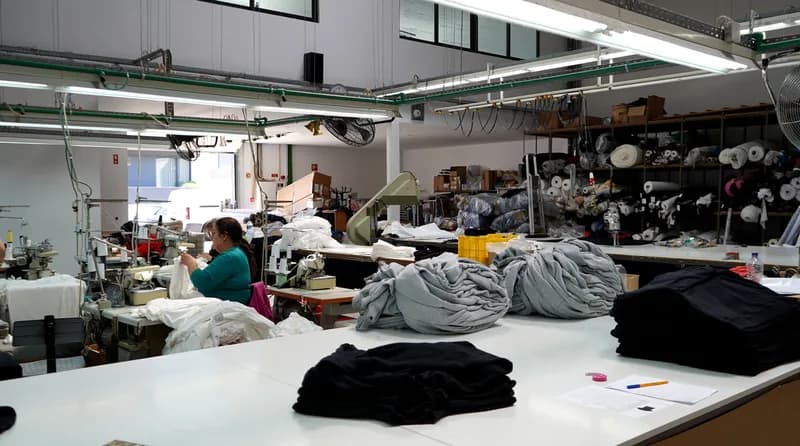
The gap exists because direct European manufacturing requires a different infrastructure: factory relationships, fabric sourcing knowledge, tech pack development, and production management. Dubai trading companies do not have this. They are logistics businesses, not manufacturing partners.
Companies that want European-quality corporate clothing need to work directly with a European manufacturer — bypassing the trading company entirely.
Who Is Already Doing This?
European hotel groups have specified Portuguese-manufactured uniforms for years. Major hotel properties across Europe source staff clothing from Portuguese factories — the same manufacturing base that supplies established European fashion brands. The reasoning: consistent quality, certified fabrics, and durability that matches the brand standard.
Dubai's five-star hotel properties — many operated by the same groups — still largely source from Asian suppliers for their UAE operations. The inconsistency is notable: the same brand that requires Portuguese-made uniforms in Lisbon accepts Chinese-made uniforms in Dubai.
Forward-thinking Dubai companies are closing this gap. Tech companies in DIFC and Dubai Internet City are ordering branded hoodies and tees from European manufacturers for employee onboarding kits. Corporate event organisers are sourcing crew clothing from Portugal for exhibitions like GITEX and Arabian Travel Market. These are early movers, but the trend is accelerating.
How It Works: Ordering European-Made Corporate Clothing
What is the process for ordering corporate clothing from Europe?
The timeline from brief to delivered goods in Dubai is 7–10 weeks:
Brief and Design
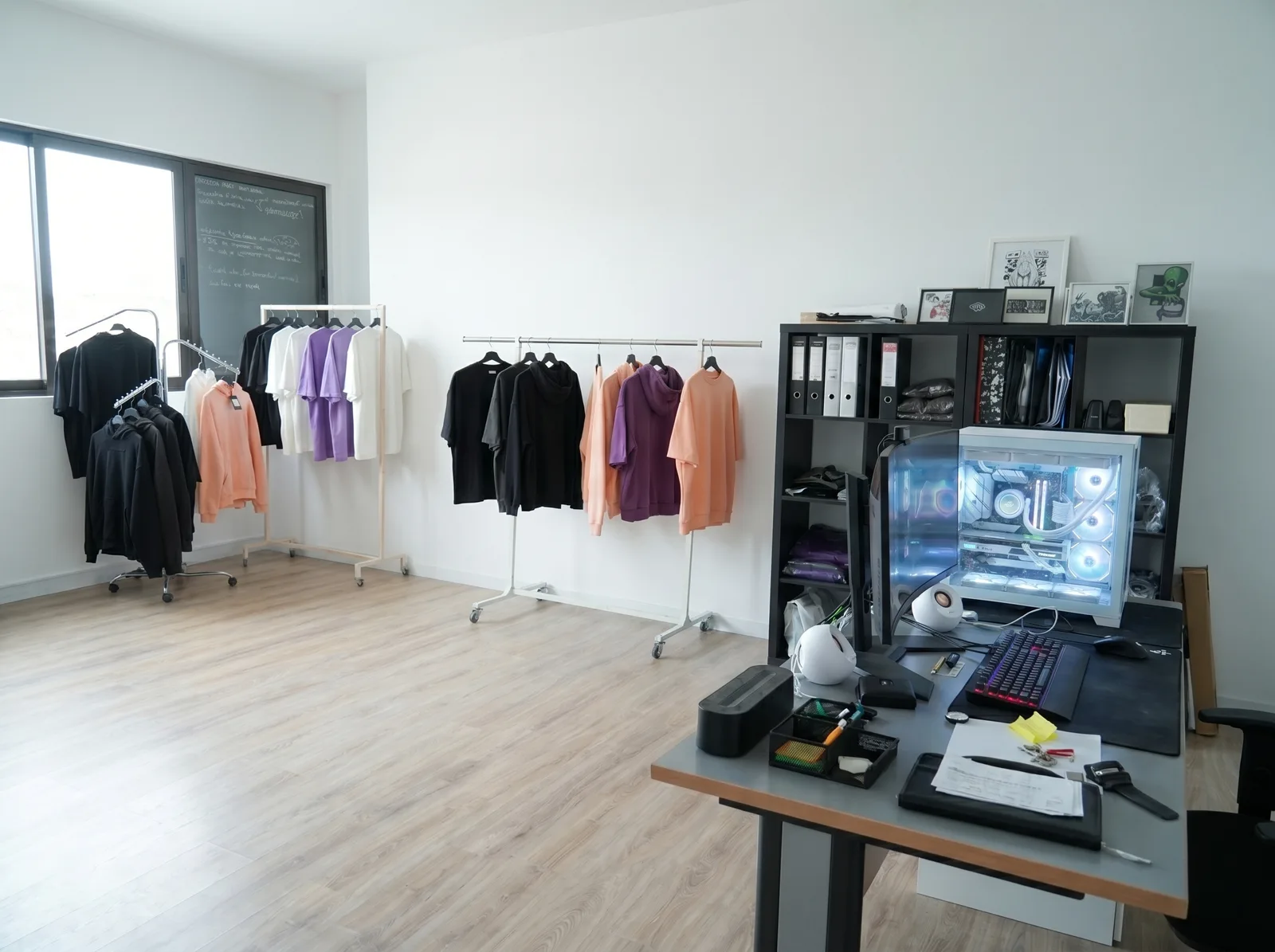
Submit your requirements — garment types, branding placement, colours, quantities. A manufacturer like White Cotton develops tech packs and fabric recommendations based on your use case. For Dubai-bound corporate clothing, this typically means lightweight cotton or cotton-blend fabrics (180–240gsm) with moisture management properties.
Sampling (usually 4 to 8 weeks from payment)
Physical samples produced in your exact specifications — fabric, colour, branding, sizing. Samples ship to Dubai via express courier in 3–4 days. You review, request adjustments, and approve.
Production (usually 6 to 12 weeks from the deposit)
All garments manufactured in Portugal using certified fabrics, with in-line quality control and final inspection before shipping. Rush production is possible — mainly for returning clients and subject to capacity — at an extra charge.
Delivery
Air freight from Portugal to Dubai takes 4–5 business days. Sea freight takes 18–22 days for larger shipments. Your corporate clothing arrives customs-cleared and ready for distribution.
Reorders
Once your specifications are on file, a reorder skips the sample step and reuses any custom labels left over, but it still restarts production at the same minimum per style and colour — usually 6 to 12 weeks from the deposit. No minimum order surprises. Need 30 extra polos for new hires? Same specs, same quality, same price per unit.
The Decision Framework
If your company fits any of these criteria, European-made corporate clothing is worth evaluating:
- —Client-facing teams where staff appearance represents the brand
- —Employees wearing company clothing daily (8+ hours of skin contact)
- —Premium brand positioning where "Made in China" labels conflict with the image
- —Sustainability commitments requiring certified supply chains
- —Frequent reorder needs where low MOQs (75+ pieces) matter
- —Multi-location teams needing consistent quality across offices
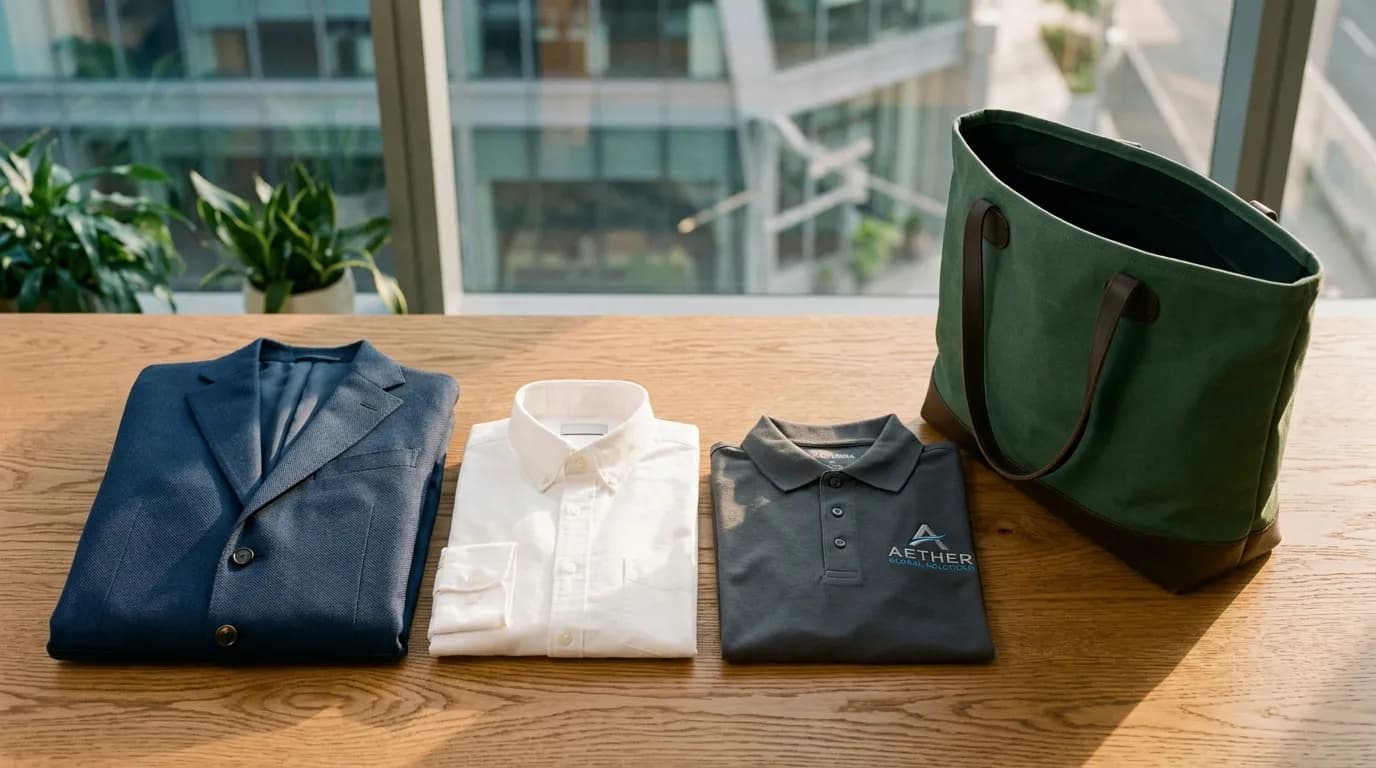
At White Cotton, we manufacture corporate clothing for companies across the GCC — polos, dress shirts, hoodies, branded casual wear, and event merchandise. Production starts from 75 pieces per colourway, all manufactured in Barcelos, Portugal using OEKO-TEX certified fabrics.
For pricing on your specific programme, request a quote with your garment types, quantities, and branding requirements.
How do I get started with European-made corporate clothing for my Dubai company?
The first step is a brief: what garments you need, how many employees, branding requirements, and timeline. From there, you will receive a quote within a few days, samples usually within 4 to 8 weeks of payment, and delivered goods usually within 3 to 6 months of your first email. Read our complete guide to corporate clothing for Dubai companies for detailed specifications, cost breakdowns, and industry-specific recommendations.

Pedro Carreira
Founder of White Cotton, a textile manufacturer in Barcelos, Portugal. Producing custom clothing collections for brands across 15+ countries.
Continue Reading
Corporate Clothing for Dubai Companies — Full Guide (2026)
![Corporate Gifting with Clothing — Why European-Made Stands Out in Dubai [2026]](/_next/image?url=%2Fimages%2Fgenerated%2Fblog%2Fcorporate-gifting-clothing-dubai.webp&w=1920&q=75)
Corporate Gifting with Clothing — Why European-Made Stands Out in Dubai [2026]
![Dubai's 13,000 Restaurants Need Staff Uniforms — Here's What the Best Ones Choose [2026]](/_next/image?url=%2Fimages%2Fgenerated%2Fblog%2Fdubai-restaurants-staff-uniforms.webp&w=1920&q=75)
Dubai's 13,000 Restaurants Need Staff Uniforms — Here's What the Best Ones Choose [2026]
![Hotel Uniform Manufacturing — European Quality for Dubai's Five-Star Properties [2026]](/_next/image?url=%2Fimages%2Fgenerated%2Fblog%2Fhotel-uniform-manufacturing-dubai.webp&w=1920&q=75)
Hotel Uniform Manufacturing — European Quality for Dubai's Five-Star Properties [2026]
![Branded Team Wear for Real Estate Companies in Dubai [2026]](/_next/image?url=%2Fimages%2Fgenerated%2Fblog%2Freal-estate-branded-clothing-dubai.webp&w=1920&q=75)