Corporate Clothing for Dubai Companies — Full Guide (2026)
Branded uniforms, team wear, onboarding kits and event merch for Dubai companies. Climate-appropriate fabrics, branding options and European vs local sourcing.
 Pedro Carreira··12 min read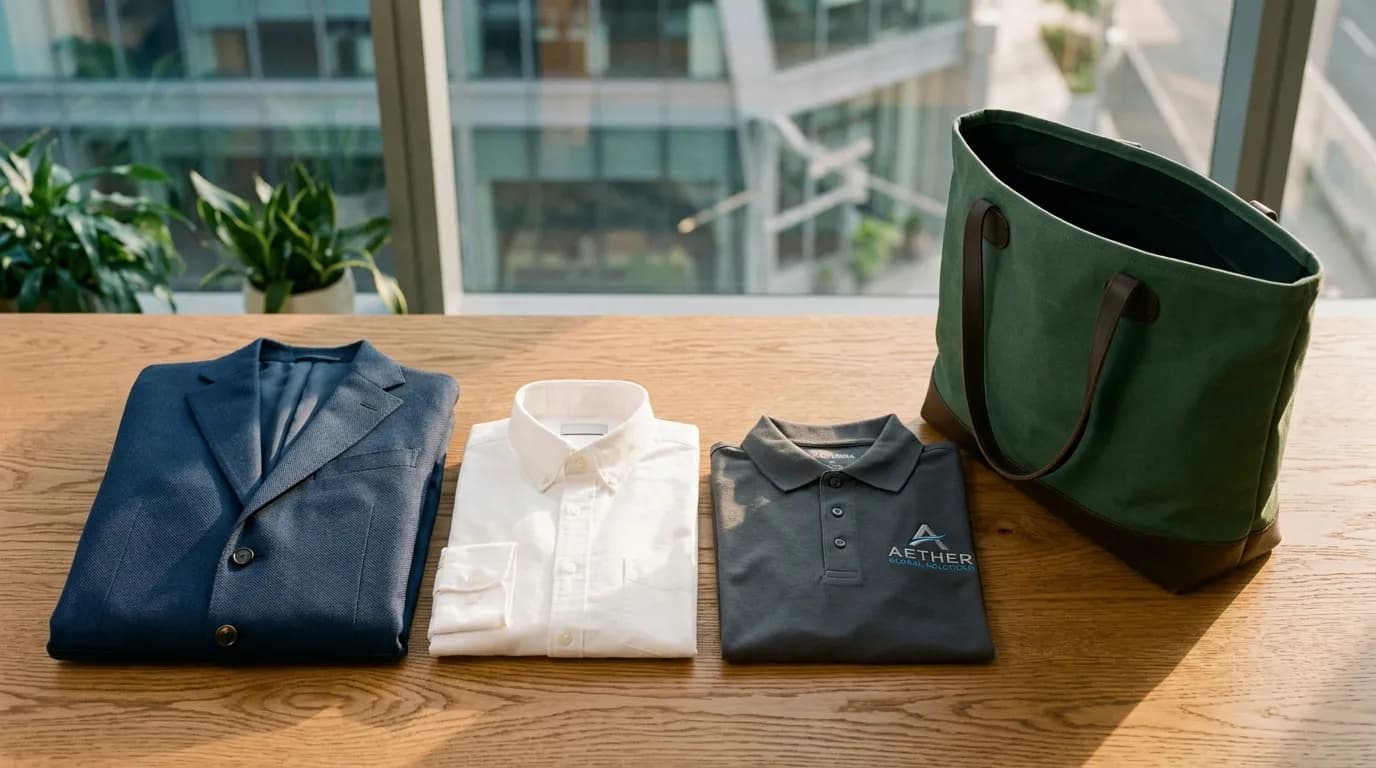
A Corporate Clothing Programme Is More Than Uniforms — It Is Brand Infrastructure
Corporate clothing covers every garment your company provides to employees, clients, or event attendees. For Dubai companies operating in a competitive talent market, a well-designed clothing programme is a retention tool, a brand asset, and a client-facing standard all at once. Employees consistently cite the quality of company-provided clothing as a factor in how valued they feel.
This guide covers what a complete programme includes, how to select fabrics for Dubai's climate, branding options and costs, industry-specific recommendations, and how to source from European manufacturers for quality that matches your brand.
What a Complete Corporate Clothing Programme Includes
What garments should a corporate clothing programme cover?
Most Dubai companies start with daily uniforms and expand from there. A comprehensive programme covers six categories:
Daily Uniforms — the core. Polos, dress shirts, blouses, or branded tees worn every working day. This is where fabric quality and durability matter most — these garments get washed 100+ times per year.
Branded Casual — hoodies, crew necks, joggers, and casual tees for dress-down days, team events, and internal culture. Tech companies and startups in Dubai Internet City and DIFC increasingly use branded casual wear as their primary uniform.
Onboarding Kits — a welcome package for new hires. Typically includes 2–3 garments (tee, hoodie, polo), a tote bag, and sometimes accessories. Companies like Careem, Noon, and regional tech firms use onboarding kits as employer branding tools.
Event-Specific Clothing — custom garments for trade shows (GITEX, Arabian Travel Market, Cityscape), corporate retreats, product launches, and sponsored events. Usually short runs of 75–200 pieces with event-specific branding.
Seasonal and Ramadan Collections — modest, breathable garments for Ramadan, lighter fabrics for summer months (April–October), and layering pieces for the brief winter season (December–February). Brands that acknowledge seasonal and cultural needs build stronger employee loyalty.
Client Gifts and Merch — premium branded pieces given to key clients, partners, or VIP customers. These are not bulk basics — they are 280gsm+ hoodies, embroidered caps, or custom-dyed pieces that recipients actually want to wear.
Industry-Specific Needs
What corporate clothing do tech companies in Dubai need?
Tech companies (DIFC, Dubai Internet City, Dubai Silicon Oasis) tend toward casual: branded hoodies, heavyweight tees (240–280gsm), joggers, and crew neck sweatshirts. The aesthetic is startup culture — comfortable, premium, identity-building. Embroidered logos on chest or sleeve are standard. Typical programme: 3–4 garment styles, 75–300 pieces per order, quarterly refreshes for new hires.
Hospitality (hotels, restaurants, F&B groups) needs formal uniforms that withstand daily industrial washing: polo shirts (220–260gsm pique), dress shirts, aprons, and outerwear for valet and concierge staff. Fabric must be wrinkle-resistant and colour-fast after 80+ washes. Branding is typically embroidered on chest and collar. Five-star properties increasingly specify European-manufactured uniforms to match brand standards — read our analysis of European vs Asian-sourced team wear for the quality and cost comparison.
Real Estate (sales teams, property management) requires a professional but approachable look: fitted polos, Oxford shirts, lightweight blazers or vests with subtle branding. Sizing consistency matters — sales teams are client-facing daily. European manufacturers offer more consistent sizing across production runs than most Asian suppliers.
Events and Exhibitions (booth crews, brand activators, event staff) need high-impact, short-lifespan garments: bold colours, all-over prints, prominent branding. Sublimation and DTG printing work well here. Typical order: 75–200 pieces with tight timelines (6–8 weeks from brief to delivery).
Fitness and Wellness (gyms, studios, corporate wellness) needs performance fabrics: moisture-wicking polyester blends, four-way stretch, flatlock seams. Branding via sublimation or heat transfer for full-colour prints on technical fabrics.
Fabric Selection for Dubai's Climate
What fabrics work best for corporate clothing in Dubai?
Dubai is 35–45C for eight months of the year with humidity reaching 90% in summer. Fabric choice is not a secondary decision — it determines whether employees actually wear the clothing or leave it in a drawer.
| Fabric | Weight Range | Best For | Dubai Suitability |
|---|---|---|---|
| Cotton jersey | 160–200gsm | Tees, casual wear | Good breathability, wrinkles easily |
| Cotton pique | 220–260gsm | Polos | Excellent structure, breathable, durable |
| Cotton-polyester blend (60/40) | 180–240gsm | Polos, tees | Wrinkle-resistant, faster drying, retains shape |
| Linen blend | 150–200gsm | Dress shirts, blazers | Superior breathability, natural cooling |
| French terry | 240–300gsm | Hoodies, sweatshirts | Winter/indoor only (Dec–Feb, office AC) |
| Performance polyester | 130–180gsm | Activewear, outdoor events | Moisture-wicking, UV protection, lightweight |
| Oxford cotton | 140–170gsm | Dress shirts | Professional, breathable, holds press well |
For daily wear in Dubai, cotton-polyester blends (60/40 or 70/30) in the 180–220gsm range offer the best balance: breathable enough for outdoor moments, wrinkle-resistant for all-day wear, and durable enough for frequent washing. Pure cotton garments breathe better but wrinkle more — acceptable for casual programmes, problematic for client-facing roles.
All fabrics should be sourced with OEKO-TEX Standard 100 certification — this guarantees testing for 1,000+ harmful substances including formaldehyde, banned azo dyes, and heavy metals. For clothing worn against skin in high-heat conditions where absorption rates increase, certified fabrics are a health and safety standard, not a marketing feature.
Branding Options and Costs
What are the best branding methods for corporate clothing?
Five main methods, each suited to different garment types and budgets:
Embroidery — the gold standard for corporate clothing. Thread-based, permanently bonded to the fabric, survives industrial washing indefinitely. Best for logos, monograms, and text on polos, shirts, and outerwear. Most durable option by far. Cost: €0.50–3.00 per placement depending on stitch count and size.
Screen Printing — cost-effective for large, solid-colour designs. Works well on tees and hoodies. Vibrant colours, good washability (40–60 washes before visible wear). Not suitable for photographic or gradient designs. Cost: €1.00–2.50 per placement (setup costs amortised over quantity).
DTG (Direct to Garment) — full-colour, photographic-quality prints directly onto fabric. Best for complex designs, small runs, and garments where colour variety is needed. No setup costs, but higher per-unit cost. Cost: €2.50–5.00 per placement.
Sublimation — dye infused into polyester fabric for all-over, edge-to-edge prints. Colours become part of the fabric — zero texture, zero peeling. Best for activewear, event clothing, and bold designs. Only works on polyester or poly-blend fabrics. Cost: €3.00–6.00 per garment.
Heat Transfer — vinyl or printed film applied with heat and pressure. Best for metallic, reflective, or special-effect finishes. Cost-effective for small runs. Less durable than embroidery or screen printing (20–30 washes). Cost: €1.50–3.50 per placement.
For most Dubai corporate programmes, embroidery is the default for polos, shirts, and outerwear (durability is paramount for daily-wear items), and screen printing or DTG for tees, hoodies, and event merchandise where larger, more expressive designs are needed.
Sizing Programmes
How do I handle sizing for a corporate clothing programme?
Standard production runs cover XS through 3XL — this accommodates 95%+ of employees. For companies with specific fit requirements:
- —Custom size charts based on your employee demographic (e.g., extended sizing to 5XL, tall fits, petite fits)
- —Sample fitting before bulk — order one size set for employees to try on, then submit the final size breakdown with your production order
- —Size exchange buffer — order 5–10% extra in M/L/XL sizes for exchanges and new hires
European manufacturers offer more consistent sizing than Asian suppliers because European sizing standards (EN 13402) are stricter and quality control is tighter. A "Medium" from a Portuguese factory will match the same measurements across every reorder — critical for companies reordering quarterly.
Cost Breakdown
How much does corporate clothing cost per unit?
Realistic per-unit costs for European-manufactured corporate garments, including fabric, production, and basic branding (single-position embroidery):
| Garment | Unit Cost (EUR) | Includes |
|---|---|---|
| Polo shirt (220gsm pique) | €10–16 | OEKO-TEX fabric, embroidered chest logo |
| T-shirt (180–200gsm jersey) | €7–12 | Certified fabric, screen-printed or embroidered logo |
| Hoodie (280–320gsm french terry) | €20–35 | Certified fabric, embroidered logo, custom drawcords |
| Crew neck sweatshirt | €16–28 | Certified fabric, embroidered or printed branding |
| Joggers | €15–25 | Certified fabric, embroidered logo, custom drawcords |
| Oxford dress shirt | €14–22 | Certified fabric, embroidered cuff or chest logo |
| Lightweight jacket | €25–40 | Certified fabric, multiple branding positions |
| Tote bag (heavy canvas) | €4–8 | Screen-printed or embroidered logo |
Additional branding costs (per garment):
- —Second embroidery position: +€0.50–1.50
- —Back print (screen or DTG): +€1.50–3.50
- —Custom woven neck label: +€0.30–0.60
- —Custom hang tags: +€0.20–0.40
- —Individual polybag packaging: +€0.15–0.30
Shipping to Dubai:
- —Air freight: €4–7 per kg (4–5 business days from Portugal). A 200-piece polo order weighs approximately 60kg — shipping cost roughly €300–400
- —Sea freight: €1.50–3 per kg (18–22 days). Same order — roughly €100–180
- —Express courier (samples): €50–90 per package via DHL/FedEx (3–4 days)
For a 200-person company ordering polos + hoodies + tees — a typical three-garment programme — expect €3,500–7,000 per order cycle including shipping.
Timeline: Brief to Delivered
How long does it take to get corporate clothing delivered to Dubai?
| Phase | Duration |
|---|---|
| Brief and quote | Within a few days |
| Design and tech pack development | 1–2 weeks |
| Sampling and approval | Usually 4–8 weeks |
| Production | Usually 6–12 weeks from the deposit |
| Shipping (air freight) | 4–5 days |
| Total (first order) | Roughly 3–6 months |
| Reorder (specs on file) | 4–6 weeks |
First orders take longer because sampling and approval require back-and-forth. Reorders skip most of this — your specs, colours, and branding are already on file. Need 150 polos for Q3 new hires? Four to five weeks, door to door.
Recurring Programmes: Quarterly Orders and New Hire Provisioning
How do recurring corporate clothing programmes work?
Most Dubai companies that invest in European-made corporate clothing set up recurring orders:
Quarterly replenishment — submit a size breakdown each quarter for new hires and replacements. Same specs every time, consistent quality, no resampling needed. White Cotton holds your specs on file so reorders are a single email with quantities and sizes.
Seasonal updates — lighter fabrics for summer (April), layering pieces for winter (November). Same branding, adjusted fabric weights and garment types.
New hire kits — trigger-based ordering. When your HR team onboards a batch of new hires, submit the size list. With production starting from 75 pieces per colourway, you do not need to order thousands to justify a run.
Annual programme review — once per year, evaluate garment performance (wear patterns, employee feedback, replacement rates), update specs if needed, and plan the following year's ordering calendar.
European Sourcing vs Dubai Trading Companies
Should I order corporate clothing from a Dubai supplier or a European manufacturer?
| Factor | Dubai Trading Company | European Manufacturer |
|---|---|---|
| What you get | Imported blanks + local branding | Fully custom garments made to your specs |
| Fabric origin | China / Bangladesh (typically uncertified) | European mills, OEKO-TEX certified |
| Customisation | Logo placement on existing styles | Full pattern, fabric, colour, construction |
| Minimum order | Often 100–500 pieces | 75–150 pieces per style |
| Unit cost | Lower ($5–10 per polo) | Higher (€10–16 per polo) |
| 2-year total cost | Higher (replacements every 6 months) | Lower (garments last 18–30 months) |
| Country of origin | "Made in China" or unlabelled | "Made in Portugal" |
| Lead time | 1–3 weeks (stock items + local branding) | Roughly 3–6 months for a first order (fully custom production) |
| Reorder consistency | Variable (depends on available stock) | Identical specs every time |
Dubai trading companies are faster for first orders — they hold stock and add branding locally. But the garments are generic, the quality is inconsistent between orders, and the total cost over two years is typically higher due to replacement cycles. For companies that view corporate clothing as brand infrastructure rather than disposable workwear, direct European manufacturing is the more cost-effective and brand-consistent option.
For a deep dive into the quality, safety, and durability comparison, read our European-made vs Asian-sourced team wear analysis.
How to Start a Corporate Clothing Programme
What are the steps to set up corporate clothing for my Dubai company?
Step 1: Define your needs. List garment types (polos, tees, hoodies, shirts), estimated quantities, branding requirements, and colours. Identify which teams need what — your sales team may need different garments than your warehouse team.
Step 2: Set your budget. Use the cost breakdown above to estimate per-unit and total programme costs. Factor in shipping and a 5–10% size exchange buffer.
Step 3: Choose your sourcing model. Dubai trading company for speed and simplicity. European manufacturer for quality, customisation, and long-term cost efficiency.
Step 4: Request a quote. Submit your brief with garment types, quantities, branding details, and timeline. At White Cotton, quotes are returned within a few days with per-unit pricing, fabric recommendations, and a production timeline.
Step 5: Approve samples. Receive physical samples in Dubai (3–4 days via express courier), evaluate fit, fabric, and branding quality. Request adjustments if needed.
Step 6: Submit your size breakdown. Collect sizes from employees and submit the final quantity-by-size breakdown with your production order.
Step 7: Receive and distribute. Garments arrive in Dubai via air freight (4–5 days) or sea freight (18–22 days). Individually polybag-packaged garments can be distributed directly to employees on arrival.
Step 8: Set up your recurring programme. Establish a quarterly or seasonal reorder cycle. Your specs stay on file — future orders require only a size breakdown and quantity.
For companies evaluating Portugal as a low-MOQ manufacturing base for their corporate clothing, see our dedicated page for Dubai and GCC brands or explore our pricing structure for volume-based rates.

Pedro Carreira
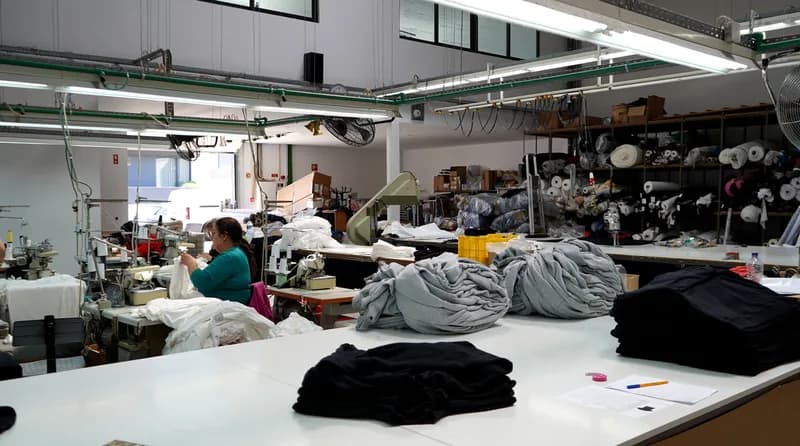
Founder of White Cotton, a textile manufacturer in Barcelos, Portugal. Producing custom clothing collections for brands across 15+ countries.
Continue Reading
![Why Dubai's Smartest Companies Are Switching to European-Made Team Wear [2026]](/_next/image?url=%2Fimages%2Fgenerated%2Fblog%2Fwhy-european-made-team-wear-dubai.webp&w=1920&q=75)
Why Dubai's Smartest Companies Are Switching to European-Made Team Wear [2026]
![Corporate Gifting with Clothing — Why European-Made Stands Out in Dubai [2026]](/_next/image?url=%2Fimages%2Fgenerated%2Fblog%2Fcorporate-gifting-clothing-dubai.webp&w=1920&q=75)
Corporate Gifting with Clothing — Why European-Made Stands Out in Dubai [2026]
![Dubai's 13,000 Restaurants Need Staff Uniforms — Here's What the Best Ones Choose [2026]](/_next/image?url=%2Fimages%2Fgenerated%2Fblog%2Fdubai-restaurants-staff-uniforms.webp&w=1920&q=75)
Dubai's 13,000 Restaurants Need Staff Uniforms — Here's What the Best Ones Choose [2026]
![Hotel Uniform Manufacturing — European Quality for Dubai's Five-Star Properties [2026]](/_next/image?url=%2Fimages%2Fgenerated%2Fblog%2Fhotel-uniform-manufacturing-dubai.webp&w=1920&q=75)
Hotel Uniform Manufacturing — European Quality for Dubai's Five-Star Properties [2026]
![Branded Team Wear for Real Estate Companies in Dubai [2026]](/_next/image?url=%2Fimages%2Fgenerated%2Fblog%2Freal-estate-branded-clothing-dubai.webp&w=1920&q=75)