How to Start a Clothing Brand in Dubai (2026 Step-by-Step)
Licensing, free zones, costs, manufacturing, shipping and timeline — everything you need to launch a fashion brand in Dubai from idea to first drop.
 Pedro Carreira··9 min read
Dubai Is One of the Best Cities in the World to Launch a Fashion Brand
The UAE has zero personal income tax, a young population obsessed with fashion, and a retail infrastructure that attracts 20+ million tourists per year. Dubai specifically offers multiple business setup paths, direct access to the GCC market of 60 million consumers, and a government that actively incentivises creative industries through initiatives like Dubai Design District (d3) and Dubai Future Foundation.
This guide covers everything you need to go from idea to first collection — licensing, costs, manufacturing, logistics, and timeline. If you already know you want to manufacture in Europe, see our clothing manufacturing for Dubai brands page for pricing and lead times.
Business Setup: Mainland vs Free Zone vs Offshore
Which license type should I choose for a clothing brand?
The three main options each serve different business models:
Mainland (DED License)
- —Issued by Dubai Department of Economy and Tourism
- —Allows you to sell directly to UAE consumers (retail, e-commerce, wholesale)
- —Requires a physical office or Flexi Desk
- —No restrictions on trading within the UAE
- —Cost: AED 15,000–30,000/year (approximately $4,000–8,000) including license, visa, and office
- —Best for: brands planning physical retail or local wholesale
Free Zone
- —Each zone has its own authority and benefits
- —100% foreign ownership (also available on mainland since 2021, but simpler in free zones)
- —Cannot sell directly to UAE consumers without a mainland distributor or e-commerce exemption
- —Popular zones for fashion: Dubai Design District (d3), IFZA, DMCC, DAFZA
- —Cost: AED 10,000–25,000/year depending on zone
- —Best for: brands focused on e-commerce, international sales, or B2B
Offshore
- —Lowest cost (AED 5,000–10,000/year)
- —Cannot operate within the UAE — no office, no visa, no local sales
- —Useful only as a holding company or for international invoicing
- —Not practical for an active clothing brand
For most fashion startups, a free zone license is the best starting point. It is cheaper, faster to set up (5–10 business days), and sufficient if you are selling online or exporting.
What is the best free zone for a fashion brand?
Dubai Design District (d3) is purpose-built for fashion and creative businesses. Tenants include regional offices of Dior, Burberry, and local brands like Amato Couture. d3 offers networking events, showroom spaces, and industry credibility. The downside: it is more expensive (AED 20,000–40,000/year) and has a selective application process.
IFZA (International Free Zone Authority) is the budget-friendly option — licenses from AED 10,500/year with minimal paperwork. It lacks the fashion-specific ecosystem of d3 but is perfectly functional for e-commerce brands.
DMCC (Dubai Multi Commodities Centre) is the largest free zone with 25,000+ companies. Strong for trading-focused brands importing and re-exporting goods across the GCC.
DAFZA (Dubai Airport Free Zone Authority) offers proximity to logistics infrastructure and competitive licensing packages for import/export businesses.
Licensing and Legal Requirements
What licenses do I need to sell clothing in Dubai?
- 1.Trade License — your core business license (mainland DED or free zone authority)
- 2.E-commerce Permit — required if selling online, issued alongside your trade license
- 3.Trademark Registration — register your brand name and logo with the UAE Ministry of Economy (AED 6,000–10,000, valid 10 years). Do this early — trademark disputes in the GCC are slow to resolve
- 4.Textile Labelling Compliance — UAE requires garment labels showing fibre composition, country of origin, and care instructions in English and Arabic
- 5.Emirates Conformity Assessment Scheme (ECAS) — certain textile products require ECAS certification for safety standards
No special permits are needed for importing clothing into the UAE, but you will need an Import Code linked to your trade license.
Costs: What Does It Actually Take?
How much does it cost to start a clothing brand in Dubai?
A realistic breakdown for a Dubai-based clothing brand launching with one collection. For the manufacturing line specifically — per-unit costs, duties, freight and what actually lands in Dubai — we break it down properly in the cost of manufacturing for Dubai brands.
| Item | Cost Range (USD) |
|---|---|
| Free zone license + visa (year 1) | $3,000–7,000 |
| Trademark registration | $1,600–2,700 |
| Brand identity (logo, lookbook) | $2,000–5,000 |
| Sample development (10–15 styles) | $1,500–3,000 |
| First production run (300–500 pieces) | $5,000–12,000 |
| Shipping to Dubai (air freight) | $1,200–1,800 |
| E-commerce website (Shopify) | $500–2,000 |
| Photography and content | $2,000–4,000 |
| Marketing budget (3 months) | $3,000–6,000 |
| Total estimated | $20,000–42,000 |
The wide range reflects quality and ambition. A streetwear brand doing screen-printed tees can launch at the lower end. A premium modest fashion line with embroidery and custom fabric development will be closer to the top.
Finding a Manufacturer
Should I manufacture locally or overseas?
Dubai has very limited garment manufacturing capacity. Most UAE-based "manufacturers" are actually trading companies that outsource to factories in China, Bangladesh, or Turkey. For real production control, you need a direct factory relationship.
The main manufacturing regions used by Dubai-based brands:
- —China/Bangladesh — lowest cost, highest MOQs (500–1,000+ pieces), longest lead times (8–12 weeks + 25–35 day sea freight)
- —Turkey — mid-range cost, strong in denim and woven garments, MOQs typically 200–500 pieces, 7–10 day shipping to Dubai
- —Portugal — premium positioning, strong in knitwear and heavyweight garments, MOQs as low as 75 pieces, air freight to Dubai in 4–5 days
For brands positioning at mid-to-premium price points (AED 150–500+ per piece), European manufacturing makes commercial sense. The "Made in Portugal" label supports the price point, and low MOQs let you test the market without committing to thousands of units.
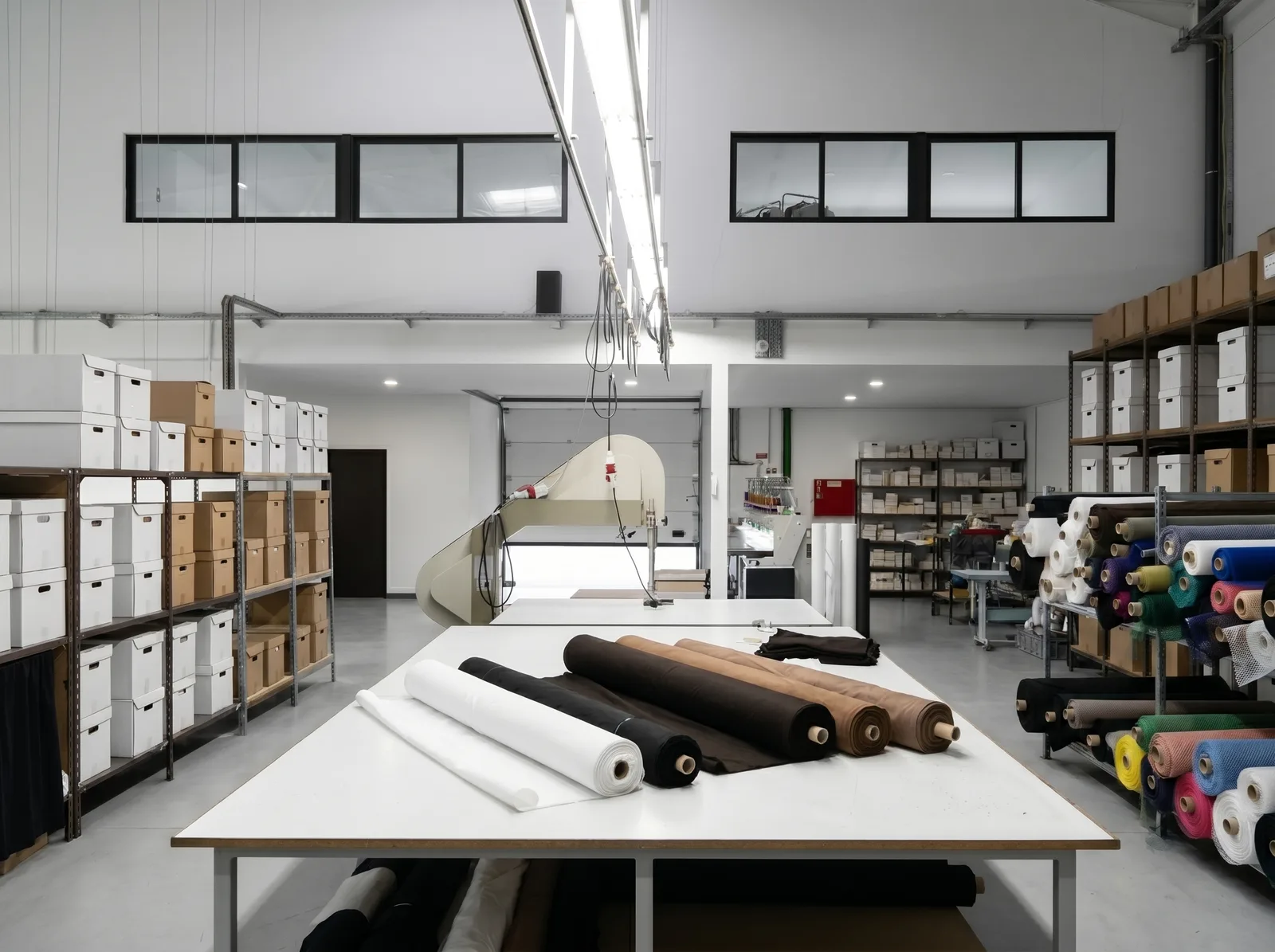
At White Cotton, we work with several Dubai-based brands producing premium cut-and-sew jersey and fleece garments — hoodies, sweatshirts, joggers, and heavyweight tees — with MOQs from 75 pieces per colourway. For brands entering the Dubai market with a premium positioning, European manufacturing is worth the cost premium over Asian alternatives.
Shipping and Customs
How does importing clothing into the UAE work?
The UAE applies a flat 5% customs duty on imported clothing — one of the lowest rates globally. There is no additional VAT on imports (UAE VAT of 5% applies only at point of domestic sale).
Documentation you will need:
- —Commercial invoice
- —Packing list
- —Certificate of origin
- —Bill of lading (sea) or airway bill (air)
Shipping from Europe to Dubai is straightforward. Air freight from Portugal takes 4–5 business days; sea freight takes 18–22 days. For sample shipments, DHL and FedEx deliver in 3–4 days at $50–90 per package.
For a detailed breakdown of shipping costs and logistics, read our shipping from Portugal to Dubai guide.
Timeline: Idea to First Drop
How long does it take to launch a clothing brand in Dubai?
A realistic timeline for a Dubai-based brand starting from scratch:
| Phase | Duration |
|---|---|
| Business setup and licensing | 2–4 weeks |
| Brand development (identity, tech packs) | 3–6 weeks |
| Sample development | Usually 4–8 weeks |
| Sample approval and revisions | 1–3 weeks |
| Production | Usually 6–12 weeks from the deposit |
| Shipping to Dubai | 1–3 weeks |
| Photography and launch prep | 2–3 weeks |
| Total | 19–39 weeks |
Budget 5–9 months from serious commitment to first sale. Brands that have their designs and tech packs ready before approaching a manufacturer can shave 4–6 weeks off this timeline.
Selling in Dubai: Channels That Work
Where should I sell my clothing brand in Dubai?
E-commerce is the fastest route. Shopify is dominant in the GCC, with local payment gateways (Tabby for buy-now-pay-later, Network International for card processing). Instagram and TikTok are the primary discovery channels — Dubai consumers are among the most social-media-active in the world.
Retail pop-ups at locations like Dubai Mall, City Walk, JBR, and d3 offer brand exposure without long-term lease commitments. Pop-up costs range from AED 15,000–60,000 for 1–4 weeks depending on location and footfall.
Multi-brand retailers like The Giving Movement, Namshi, and Ounass can provide distribution, but margins are tight (typically 50–60% wholesale discount) and onboarding is competitive.
Marketplaces — Noon.com is the regional Amazon equivalent. Lower margins but access to the full GCC market.
Key Considerations for Dubai Fashion Brands
What makes a clothing brand succeed in Dubai?
- 1.Climate-appropriate product — Dubai is 35–45C for 8 months of the year. Lightweight fabrics (linen, cotton poplin, fine jersey) should be your core. Heavyweight pieces work for travel capsules and the brief winter (December–February)
- 2.Modest fashion is a $300B global market — the GCC is its epicentre. Brands that offer longer silhouettes, looser fits, and full-coverage options without sacrificing design aesthetic tap into enormous demand
- 3.Premium positioning works — Dubai consumers are aspirational shoppers. A well-designed AED 300 hoodie with a "Made in Portugal" label outsells a generic AED 100 hoodie in this market
- 4.Arabic-English bilingual branding — not mandatory, but brands that localise their packaging and website see meaningfully higher conversion in Saudi Arabia and Kuwait
- 5.Sustainability sells to Gen Z — 70% of UAE residents are under 35. Younger consumers increasingly check for certifications and sustainable practices
Next Steps
If you are serious about launching a clothing brand in Dubai, here is the action sequence:
- 1.Decide on business structure (free zone is the default for most startups)
- 2.Register your trademark before announcing anything publicly
- 3.Develop your first collection (10–15 styles, tech packs ready)
- 4.Find a manufacturer aligned with your price point and MOQ needs
- 5.Order samples, iterate, approve
- 6.Place your first production order
- 7.Set up Shopify, plan your content, and launch
For an overview of how clothing production costs work, read our cost breakdown guide. If you are evaluating Portugal as a low-MOQ manufacturing base for your Dubai brand, see our dedicated page for Dubai and GCC brands or request a quote.

Pedro Carreira
Founder of White Cotton, a textile manufacturer in Barcelos, Portugal. Producing custom clothing collections for brands across 15+ countries.
Continue Reading

Dubai Fashion Market 2026 — Opportunities for Emerging Brands
![Why Dubai's Smartest Companies Are Switching to European-Made Team Wear [2026]](/_next/image?url=%2Fimages%2Fgenerated%2Fblog%2Fwhy-european-made-team-wear-dubai.webp&w=1920&q=75)
Why Dubai's Smartest Companies Are Switching to European-Made Team Wear [2026]
Corporate Clothing for Dubai Companies — Full Guide (2026)
![Corporate Gifting with Clothing — Why European-Made Stands Out in Dubai [2026]](/_next/image?url=%2Fimages%2Fgenerated%2Fblog%2Fcorporate-gifting-clothing-dubai.webp&w=1920&q=75)
Corporate Gifting with Clothing — Why European-Made Stands Out in Dubai [2026]