Case Study: Exhibition Company Orders European Booth Wear for 3 Dubai Trade Shows
How a Dubai exhibition company consolidated branded team wear across GITEX, ADIPEC, and Arab Health — one European manufacturer, consistent quality, 3 events.
 Pedro Carreira··8 min read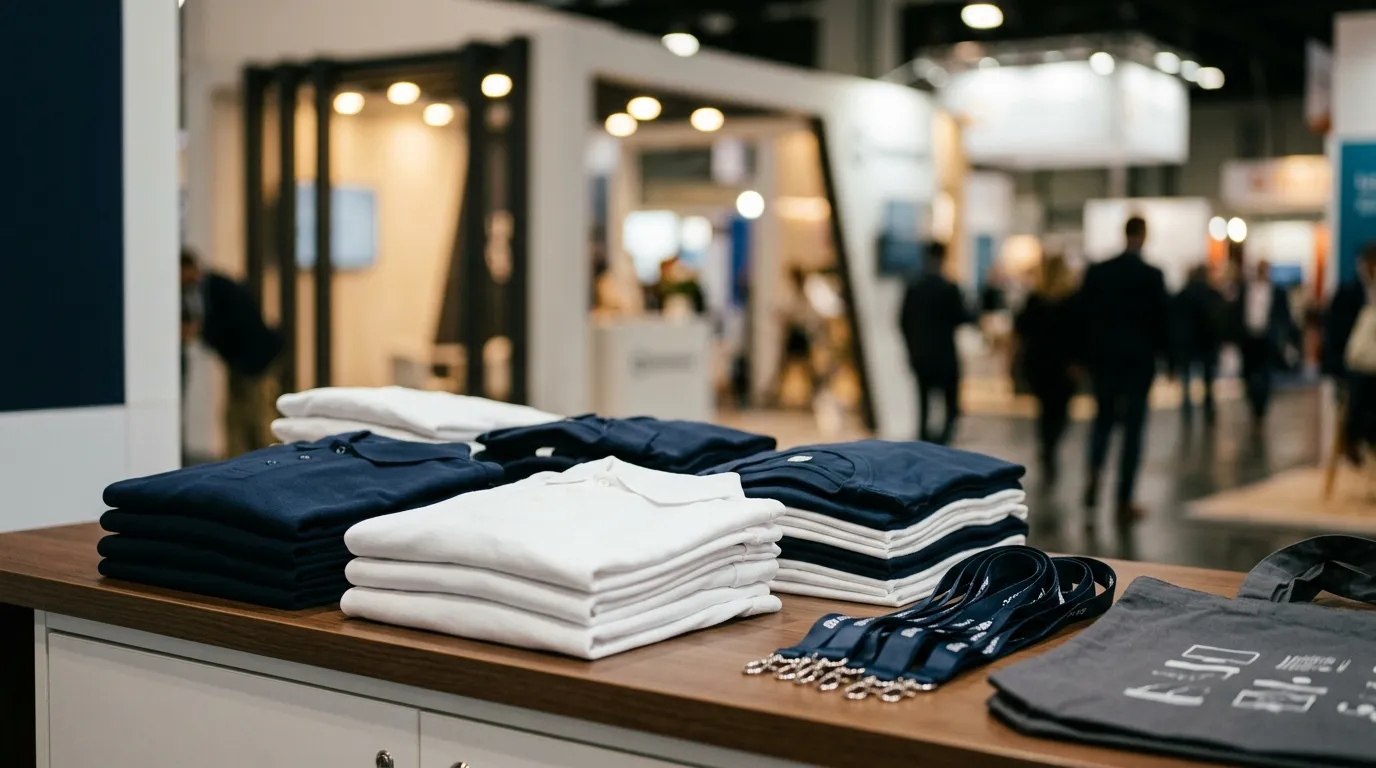
This is an illustrative case study based on composite scenarios from our experience manufacturing event merchandise for Dubai exhibition companies. Company details and specific metrics are representative examples, not a single client engagement.
A Dubai Exhibition Company Used a Different Supplier for Every Trade Show. Quality Was Inconsistent, Costs Were Uncontrolled, and Their Team Looked Different at Every Event.
The company — a mid-size exhibition management firm based in Dubai Silicon Oasis — manages booth presence for 12 trade shows per year across the GCC. Their three largest events: GITEX Global (October), ADIPEC (November), and Arab Health (January). Combined, these three events require 400+ branded garments for a team of 35 staff who rotate across events.
For four years, the company used a different supplier for each event. A local Dubai print shop for GITEX. A Turkish manufacturer for ADIPEC. A second local supplier for Arab Health. The logic was simple: whoever could deliver fastest for the next deadline got the order.
The result was predictable.
What was the problem with multiple suppliers?
Inconsistent quality across events. The GITEX polos were 180gsm poly-cotton — thin, wrinkled by midday, logos applied with heat-transfer vinyl that cracked after the third event-day wash. The ADIPEC polos were 240gsm cotton pique — noticeably better fabric, but the Turkish manufacturer used a different navy blue than the brand's Pantone spec. The Arab Health tees were decent quality but ran a full size larger than the GITEX tees in the same labelled size.
A client visiting the company's booth at GITEX and then at ADIPEC would see the same logo on visibly different quality garments. The brand identity was fractured across its own events calendar.
Cost chaos. Without a consolidated supplier, there was no volume leverage. Each order was priced independently: 80 polos here, 60 tees there, 40 hoodies from a third source. The company was paying retail-adjacent pricing for what should have been wholesale volumes. Total annual spend across the three major events: AED 68,000. Per-garment average: AED 170 — inflated by rush fees, minimum order surcharges on small runs, and international shipping on the Turkish orders.
Last-minute scrambles every event. The operations manager spent 3–4 weeks before each major event sourcing, quoting, approving samples, and chasing delivery timelines. For GITEX 2025, the local supplier delivered 48 hours before the event. Ten polos were the wrong size. There was no time to reorder. Staff wore mismatched sizes on the exhibition floor.
Logo application failures. The heat-transfer vinyl used by the local Dubai print shop peeled visibly under DWTC's exhibition hall lighting. At ADIPEC — held in the Abu Dhabi National Exhibition Centre — the overhead spotlights made the cracked logos even more visible. The company's Managing Director received a message from a VIP client after GITEX: "Your team looked great but the logo on one of your guy's shirts was peeling off. Thought you should know."
What changed?
After the GITEX 2025 logo incident, the operations manager was tasked with finding a single supplier for all events. The requirements: consistent quality across all garments, reliable sizing, durable branding that survives multiple events, and the ability to produce 400+ pieces across polos, tees, and hoodies for annual delivery.
They found White Cotton through the GITEX team wear guide and requested samples of three garment types.
The consolidated order for the 2026 event season:
| Event | Garments | Specification |
|---|---|---|
| GITEX Global (Dec) | 70 polos + 30 hoodies + 50 tees | Staff uniforms + VIP gifts + giveaways |
| ADIPEC (Nov) | 70 polos + 20 hoodies + 30 tees | Staff uniforms + VIP gifts |
| Arab Health (Jan) | 60 polos + 30 hoodies + 40 tees | Staff uniforms + VIP gifts + giveaways |
| Total | 200 polos + 80 hoodies + 120 tees | 400 pieces, 3 styles |
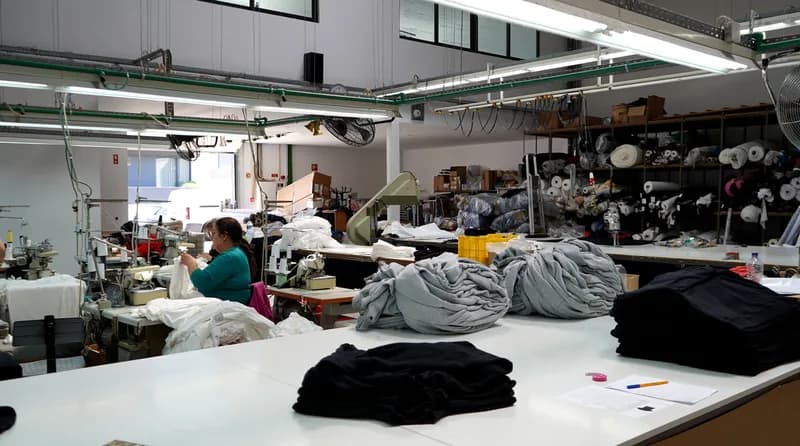
All garments: same fabric quality (240gsm cotton pique polos, 380gsm French terry hoodies, 200gsm ring-spun cotton tees), same Pantone-matched brand colours, same embroidered logos across every piece. Produced in a single production run at the Barcelos factory, using OEKO-TEX certified fabrics.
Delivery: entire 400-piece order shipped to Dubai in September 2026, stored at the company's warehouse, and distributed per event.
How did the costs compare?
| Metric | 3 Separate Suppliers (2025) | 1 Consolidated Supplier (2026) |
|---|---|---|
| Total garments | ~400 | 400 |
| Total cost | AED 68,000 | AED 41,000 |
| Per-garment average | AED 170 | AED 102 |
| Rush fees | AED 8,500 (3 events) | AED 0 |
| Shipping costs | AED 6,200 (3 separate shipments) | AED 1,800 (1 shipment) |
| Operations manager time | 9–12 weeks/year | 3 weeks/year |
40% cost reduction. The bulk of the saving came from three factors: volume pricing on a 400-piece consolidated order (vs. three separate 80–150 piece orders), elimination of rush fees through advance planning, and a single shipping cost instead of three.
The operations manager's time saving was not quantified in the budget but was arguably the highest-value change. Instead of running three separate procurement cycles — each with its own sample approval, payment processing, and delivery tracking — there was one cycle in July/August for the entire event season.
What changed at the events?
Consistent brand presence across all three shows. For the first time, the company's team looked identical at GITEX, ADIPEC, and Arab Health. Same fabric, same colour, same logo quality, same fit. Staff who worked all three events wore the same garments — and those garments held up across 15+ event days spread over four months.
Zero last-minute issues. All 400 garments were in the Dubai warehouse by late September. Size distribution happened once. Any sizing issues were resolved weeks before the first event, not 48 hours before.
VIP clients noticed. The Managing Director reported that three VIP clients independently commented on the team's appearance at ADIPEC and Arab Health — specifically noting the improvement from previous years. One client said: "You guys look like you actually invested in your brand this year." That comment came from a prospect who signed a six-figure exhibition management contract the following month.
Staff morale improved. The team of 35 event staff — who rotate across shows — previously complained about inconsistent sizing and uncomfortable fabrics. After the switch, the operations manager received zero complaints across the entire 2026 event season. Staff requested permission to keep their hoodies after events, which the company now allows as a retention perk.
What are they doing now?
The company expanded the consolidated order model to cover all 12 annual events — not just the three flagship shows. The 2027 order (placed in June for the October–March event season):
- —500 polos (staff uniforms across all events)
- —150 hoodies (VIP gifts + cold-venue events)
- —300 tees (giveaways + casual event wear)
- —75 lightweight jackets (outdoor events + travel days)
Total: 1,025 pieces. Single production run. Single shipment. The per-garment cost dropped further with the increased volume.
They also standardised a "team wear playbook" for new event staff: each person receives 3 polos, 1 hoodie, and 2 tees at onboarding, refreshed annually. The garments are now part of the company's brand identity, not a last-minute logistics problem.
What does this mean for your events company?
If your company manages exhibition presence across multiple GCC trade shows, the single-supplier consolidation model eliminates three problems simultaneously: quality inconsistency, cost inflation from fragmented orders, and operational burden of multiple procurement cycles.
The math is simple: take your total annual garment spend across all events, compare it against a single consolidated order at volume pricing, and factor in the rush fees and duplicate shipping costs you currently pay. Most companies find 30–50% savings before counting the operational time freed up.
At White Cotton, we are a trusted clothing manufacturer for Dubai brands, producing exhibition and event team wear for companies across the GCC. Polos, tees, hoodies, jackets — all produced in Barcelos, Portugal from OEKO-TEX certified fabrics, with embroidery applied at the factory and print branding done by partner print shops close by, checked by our own quality control, using our low-MOQ production model. Minimum 75 pieces per colourway (100 pieces in a single colourway). For 2026 event season orders, request a quote at least 3 to 6 months ahead to guarantee production slots for the autumn event calendar. Include your event list, team size, garment types, and branding files — quote returned within a few days.

Pedro Carreira
Founder of White Cotton, a textile manufacturer in Barcelos, Portugal. Producing custom clothing collections for brands across 15+ countries.
Continue Reading
![GITEX 2026: How to Order Branded Team Wear for Your Exhibition Booth [2026]](/_next/image?url=%2Fimages%2Fgenerated%2Fblog%2Fgitex-branded-team-wear.webp&w=1920&q=75)
GITEX 2026: How to Order Branded Team Wear for Your Exhibition Booth [2026]
Case Study: Five-Star Dubai Hotel Switches to Portuguese-Manufactured Staff Uniforms

Case Study: Dubai Tech Company Replaces Chinese Merch with European-Made Onboarding Kits
![The Problem with Cheap Uniforms: Why Dubai Companies Are Going European [2026]](/_next/image?url=%2Fimages%2Fgenerated%2Fblog%2Fcheap-uniforms-problem-dubai.webp&w=1920&q=75)
The Problem with Cheap Uniforms: Why Dubai Companies Are Going European [2026]
![Why Dubai's Smartest Companies Are Switching to European-Made Team Wear [2026]](/_next/image?url=%2Fimages%2Fgenerated%2Fblog%2Fwhy-european-made-team-wear-dubai.webp&w=1920&q=75)