Case Study: Five-Star Dubai Hotel Switches to Portuguese-Manufactured Staff Uniforms
How a Dubai five-star hotel replaced Asian-sourced staff uniforms with European-made OEKO-TEX certified alternatives — guest perception, durability, and cost analysis.
 Pedro Carreira··7 min read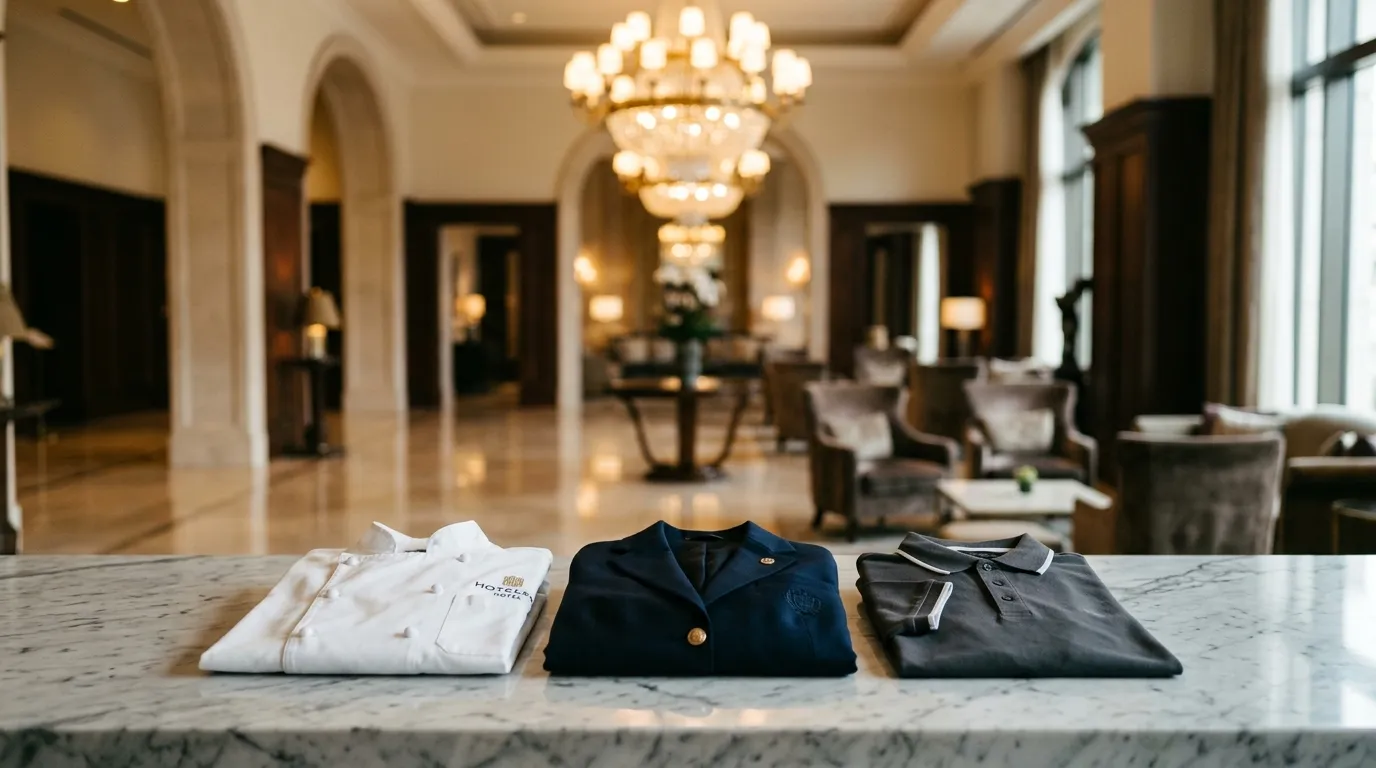
This is an illustrative case study based on composite scenarios from our experience manufacturing hotel uniforms for properties in the Gulf region. Company details and specific metrics are representative examples, not a single client engagement.
A Five-Star Hotel in Dubai Marina Was Replacing Staff Uniforms Every Six Months. The Fabric Could Not Handle Gulf Heat. Here Is How They Fixed It.
The hotel — a 450-room five-star property on the Dubai Marina waterfront — operates 14 food and beverage outlets, a spa, three pools, and a conference centre. Total uniformed staff: 380 employees across front desk, housekeeping, F&B, concierge, and management.
For seven years, uniforms came from a Bangkok-based manufacturer through a regional hospitality procurement group. The pricing was competitive: AED 45–70 per garment depending on the role. The quality was not.
What was failing with the existing uniforms?
Front desk polo shirts fading after 30 washes. The reception team launders uniforms daily — Gulf humidity and Dubai's summer temperatures mean staff perspire even in air-conditioned lobbies during guest interactions. The dyed poly-cotton polos lost colour intensity within two months. By month four, a team of six front desk agents wore six visibly different shades of what was supposed to be the same navy blue.
Housekeeping tunics uncomfortable in heat. Housekeeping staff work in corridors and rooms where temperatures fluctuate between aggressive air conditioning and ambient Gulf heat when balcony doors are left open. The synthetic-blend tunics trapped moisture, caused skin irritation, and were a recurring item in staff welfare complaints. The hotel's HR team logged 23 uniform-related comfort complaints in a single quarter.
F&B uniforms deteriorating under commercial laundry. Restaurant and bar staff uniforms went through industrial washing cycles with higher temperatures and harsher detergents than domestic laundry. The Asian-sourced shirts and aprons shrank, warped at the seams, and developed a permanent "worn" texture after three months. The executive chef refused to allow his team to appear in front-of-house service with degraded uniforms.
Replacement cycle: every six months. The procurement team was ordering full uniform replacements twice a year. At 380 staff members with an average of 3 uniform pieces each, that was 2,280 garments per year — 1,140 per cycle. Annual uniform budget: AED 125,000.
What did they change?
The hotel's Director of Operations attended a hospitality procurement event in Abu Dhabi where a competing property mentioned switching to European-manufactured uniforms. After requesting samples from three manufacturers — two Turkish, one Portuguese — they selected White Cotton based on fabric quality, certification credentials, and the ability to handle multi-role uniform programmes with different fabrics per department.
The new uniform programme:
| Department | Garment | Fabric | Branding |
|---|---|---|---|
| Front Desk | Fitted polo, structured collar | 220gsm cotton pique, pre-shrunk | Embroidered hotel crest + name badge placement |
| Housekeeping | Tunic with side stretch panels | 180gsm organic cotton jersey with 5% elastane | Embroidered logo, Arabic + English |
| F&B (formal) | Oxford shirt, mandarin collar option | 140gsm cotton poplin, wrinkle-resistant finish | Tone-on-tone embroidered crest |
| F&B (casual outlets) | Premium tee + apron | 200gsm organic cotton jersey + 280gsm canvas apron | Screen-printed outlet branding |
| Concierge/Management | Blazer-style jacket | 260gsm structured cotton twill | Embroidered crest on chest pocket |
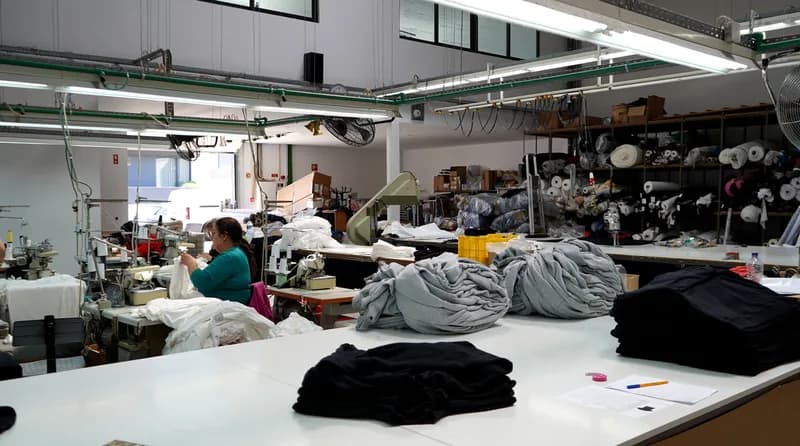
First order: 1,520 garments across all departments. Produced in Barcelos, Portugal. All fabrics sourced with OEKO-TEX Standard 100 certification — a requirement the hotel's sustainability committee added after their 2025 ESG audit flagged the absence of textile certifications in their supply chain. Shipped via air freight to Dubai.
How did the numbers change?
The per-garment cost increased. The total annual cost decreased. This is how:
| Metric | Asian Supplier | European Supplier |
|---|---|---|
| Average per-garment cost | AED 58 | AED 82 |
| Replacement cycle | Every 6 months | Every 18+ months |
| Annual garments ordered | 2,280 | 760 |
| Annual uniform budget | AED 125,000 | AED 87,500 |
| Annual saving | — | AED 37,500 (30%) |
The 18-month lifespan is conservative. After 12 months of use, the hotel's procurement team inspected a random sample of 50 garments across departments. Results: front desk polos retained colour at 95% of original intensity (vs. 60% at the same point with the old supplier), housekeeping tunics showed no seam warping, F&B shirts survived 200+ industrial wash cycles without shrinkage beyond the pre-shrunk tolerance of 2%.
The hotel now replaces uniforms once per year as a brand refresh, not because the garments have failed.
What changed for guests?
Staff presentation scores increased. The hotel uses a third-party guest satisfaction platform that tracks 30+ service dimensions. "Staff appearance and presentation" scores rose from 8.2/10 to 9.1/10 in the two quarters following the uniform switch. Guest comments specifically mentioned "well-dressed staff" and "uniforms that look tailored" — language that never appeared in previous reviews.
Bilingual branding noticed by GCC guests. The Arabic + English embroidered branding on housekeeping and concierge uniforms was a deliberate choice. Gulf-based guests — particularly Emirati, Saudi, and Kuwaiti nationals — noticed and commented positively on the dual-language presentation. For a hotel where 40% of guests are GCC nationals, this was a meaningful brand signal.
Sustainability credentials became a selling point. The hotel's sales team began including OEKO-TEX fabric certification in corporate booking proposals and event pitches. Two multinational clients specifically cited the hotel's sustainable uniform programme as a factor in selecting the venue for regional conferences.
What changed for staff?
Comfort complaints dropped to zero. The housekeeping team — which had logged 23 complaints in the quarter before the switch — logged zero uniform-related complaints in the first six months after. The organic cotton jersey with elastane stretch panels allowed full range of motion without trapping moisture.
Staff retention correlation. The hotel's HR team does not attribute retention directly to uniforms, but notes that "workplace environment" satisfaction scores — which include uniform comfort — increased by 15% in the annual staff survey. In a market where hotel staff turnover in Dubai averages 30% annually, any improvement in staff satisfaction has direct financial impact on recruitment costs.
Staff pride became visible. The F&B team in the hotel's signature restaurant requested permission to wear their uniforms during commute — something that never happened with the previous supplier. When staff choose to be seen in their uniform outside the property, the hotel gains brand exposure across Dubai Metro, malls, and residential areas.
What does this mean for your hotel?
The hospitality uniform market in Dubai is dominated by high-volume Asian suppliers competing on price per unit. For budget hotels and mid-range properties, this model works. For four-star and five-star properties where guest perception of staff presentation directly impacts ADR (average daily rate) and repeat bookings, optimizing for the cheapest garment is a false economy.
The calculation for any hotel procurement team:
- 1.Count your annual garment orders (not just the per-order quantity, but total across all replacement cycles)
- 2.Divide total annual spend by total garments to find your true annual cost per uniform
- 3.Compare against a higher-quality supplier with longer garment lifespan
- 4.Factor in guest satisfaction impact and sustainability certification value
In this case study, a 41% increase in per-garment cost produced a 30% decrease in annual uniform budget — plus measurable improvements in guest scores, staff satisfaction, and sustainability credentials.
At White Cotton, we manufacture clothing for Dubai brands including staff uniforms for hotels, resorts, and hospitality groups across the GCC. All production in Barcelos, Portugal. We source OEKO-TEX and GOTS certified fabrics. Multi-department programmes with different fabrics per role, built around our low-MOQ production model. Minimum 75 pieces per colourway (100 pieces in a single colourway). Request a quote with your property details, staff count by department, and branding specifications — quote returned within a few days.

Pedro Carreira
Founder of White Cotton, a textile manufacturer in Barcelos, Portugal. Producing custom clothing collections for brands across 15+ countries.
Continue Reading
Case Study: Dubai Tech Company Replaces Chinese Merch with European-Made Onboarding Kits
![The Problem with Cheap Uniforms: Why Dubai Companies Are Going European [2026]](/_next/image?url=%2Fimages%2Fgenerated%2Fblog%2Fcheap-uniforms-problem-dubai.webp&w=1920&q=75)
The Problem with Cheap Uniforms: Why Dubai Companies Are Going European [2026]
![Why Dubai's Smartest Companies Are Switching to European-Made Team Wear [2026]](/_next/image?url=%2Fimages%2Fgenerated%2Fblog%2Fwhy-european-made-team-wear-dubai.webp&w=1920&q=75)
Why Dubai's Smartest Companies Are Switching to European-Made Team Wear [2026]
Case Study: Exhibition Company Orders European Booth Wear for 3 Dubai Trade Shows