Portugal vs Bangladesh for Clothing Manufacturing: An Honest Comparison [2026]
Portugal vs Bangladesh for clothing: costs, MOQs, lead times, and quality compared honestly by a Portuguese factory owner. Real numbers included.
 Pedro Carreira··15 min read
![Portugal vs Bangladesh for Clothing Manufacturing: An Honest Comparison [2026]](/_next/image?url=%2Fimages%2Fgenerated%2Fblog%2Fportugal-vs-bangladesh-manufacturing.webp&w=1920&q=75)
Why This Comparison Matters
I run a factory in Barcelos, Portugal. The Portugal vs Bangladesh question lands on my desk every week. Brands come to us after producing there, and sometimes brands leave us to produce there. Both directions make sense depending on the brand.
This is not a hit piece on Bangladesh. It is an honest breakdown of when each country wins, written by someone with skin in the game on one side. I will be upfront about that bias and do my best to be fair despite it.
For a broader view across six countries, see our guide to choosing a manufacturing country.
Cost Per Unit: Bangladesh vs Portugal
Bangladesh wins this category. There is no honest way to frame it otherwise.
The Numbers
| Cost Component | Bangladesh | Portugal |
|---|---|---|
| Fabric per garment (hoodie) | €3–6 | €5–8 |
| Labour per garment (hoodie) | €1–3 | €5–10 |
| Trims and finishing | €0.50–1.50 | €1–3 |
| Production cost (hoodie) | €4.50–10.50 | €12–22 |
| Production cost (basic tee) | €1.50–3.50 | €9–13 |
The labour gap drives most of the difference. Minimum wage in Bangladesh's garment sector is roughly €75–95 per month (following the 2023 wage increase to 12,500 taka). In Portugal, the minimum wage is €920 per month before employer social charges push the effective cost to €1,200+. That is a 10–12x difference in labour cost.
For a detailed breakdown of how production costs are calculated, including fabric, trims, CMT, and decoration, read our clothing production costs breakdown.
Where the Gap Narrows
The per-unit gap shrinks when you factor in total landed cost — shipping, duties, defect rates, and the hidden costs of managing long-distance production. But it does not close. Bangladesh is cheaper to produce in, full stop.
Minimum Order Quantities: Bangladesh vs Portugal
This is where Portugal's advantage is stark.
| Bangladesh | Portugal | |
|---|---|---|
| Typical factory MOQ | 1,000–3,000 per style per colour | 75–200 per style per colour |
| Large mill MOQ | 5,000–10,000+ | 300–500 |
| Practical minimum for new brands | 1,000 units | 75 units |
Bangladesh factories are optimised for scale. Some advertise lower MOQs, but the pricing at 500 units often does not make sense once you factor in fabric minimums from mills.
In Portugal, a run of 75 hoodies is a normal order — not a favour, but how the industry operates. If you need 100 units of five styles, Portugal handles that comfortably. In Bangladesh, you are looking at 5,000 units minimum across those five styles.
Lead Times: Bangladesh vs Portugal
Production Timeline
| Stage | Bangladesh | Portugal |
|---|---|---|
| Sampling | 2–4 weeks | Usually 4–8 weeks from payment |
| Sample shipping | 2–3 weeks (air) | 2–5 days (road/courier within EU) |
| Production | 6–10 weeks | Usually 6–12 weeks from the deposit |
| Shipping to EU | 4–6 weeks (sea freight) | 5–7 working days (road freight) |
| Total | 14–23 weeks | Roughly 11–21 weeks |
Sea freight from Chittagong to a European port takes 30–45 days. Road freight from Barcelos to anywhere in the EU: 5–7 working days.
The Reorder Factor
Where lead times really compound is on reorders. A bestselling hoodie that sells out in November:
- —Bangladesh reorder: New production + sea freight = 14–16 weeks. Product arrives in March. The season is over.
- —Portugal reorder: A reorder skips the sample if the design is unchanged, but still restarts production at the same minimum — usually 6 to 12 weeks from the deposit, plus road freight. Still sellable well inside the season.
Quality Control
Both countries have good factories and bad factories. The question is how easily you can verify which one you are working with.
Proximity and Access
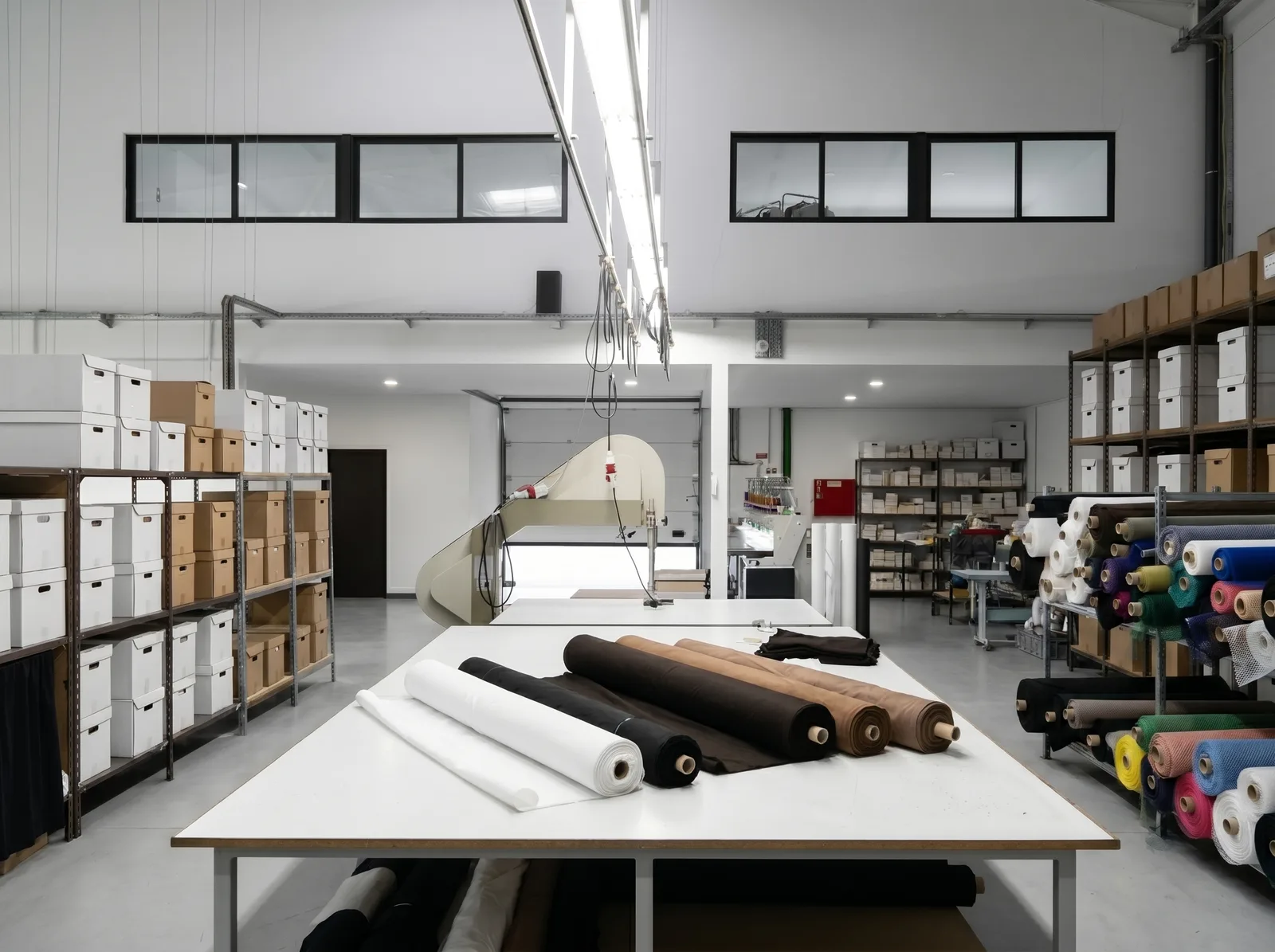
Factory visits are available for production clients — once samples are approved and bulk production is underway. But the proximity means a trip from London to Barcelos is a 2-hour flight, not a transcontinental journey. Fly to Porto, drive 30 minutes to the factory, and you are back home the same day.
Visiting Bangladesh requires flights, visas, local transport, and typically 3–5 days minimum. Most brands rely on third-party QC inspectors instead (€200–500 per inspection), which works but adds cost and a layer of separation.
Communication
| Factor | Bangladesh | Portugal |
|---|---|---|
| Time zone vs Central Europe | +4–5 hours | Same (or +1 hour) |
| Working language | English (variable fluency) | English, French, Spanish widely spoken |
| Typical response time | 12–24 hours | Same day, often within hours |
| Cultural business style | Formal, relationship-based | Direct, relationship-based |
When a problem appears mid-production, the speed of communication determines whether it gets fixed before 2,000 units are sewn wrong. Same-timezone communication is not a soft benefit. It prevents expensive mistakes.
Shipping to Europe
Cost and Speed
| Bangladesh | Portugal | |
|---|---|---|
| Method | Sea freight (FCL or LCL) | Road freight (truck/van) |
| Transit time | 30–45 days | 2–5 days |
| Cost per unit (hoodie) | €1.50–4 (depending on volume) | €0.30–1.50 |
| Risk of delay | Moderate (port congestion, weather, route disruptions) | Low |
| Minimum shipment | Usually full cartons, often full containers | Single pallet or less |
Sea freight also carries disruption risk. The Red Sea route disruptions in 2024–2025 added weeks and significant cost to shipments rerouted around the Cape. These events are unpredictable but recurring.
For more on Portugal's shipping advantage, see our nearshoring guide.
Import Duties and Compliance
This is where many comparisons get the facts wrong, so let me be precise.
Bangladesh's EU Trade Access (Current)
Bangladesh currently benefits from the EU's Everything But Arms (EBA) scheme, which grants duty-free, quota-free access for products from Least Developed Countries. This means garments made in Bangladesh enter the EU at 0% duty — the same as garments made in Portugal.
This is a critical point that many "Portugal vs Asia" comparisons gloss over. Unlike China (which faces 12% EU import duty on garments), Bangladesh currently has no tariff disadvantage when selling into Europe.
What Is Changing
Bangladesh is scheduled to graduate from LDC status in November 2026. After graduation, the EU has agreed to extend duty-free access through a transition period until approximately 2029. After that, Bangladesh will need to qualify for the EU's GSP+ scheme to maintain preferential access, or face standard tariffs of 9–12% on garments.
This means the cost equation between Bangladesh and Portugal may shift meaningfully by 2029–2030. Brands planning long-term production strategies should factor this in.
Portugal's Position
As an EU member state, Portuguese-made garments circulate freely within the EU with zero duties and zero customs paperwork. For EU-based brands, this simplifies logistics, cash flow (no duty payments to reclaim), and compliance reporting.
Compliance
EU regulations increasingly require supply chain transparency. Documenting compliance is simpler with a Portuguese factory — EU labour law and environmental standards apply by default. With Bangladesh, brands need to actively audit and document compliance, which is achievable but requires more effort and cost.
Sustainability and Ethics
I will not pretend this section is simple.
Bangladesh
Bangladesh's garment industry employs roughly 4 million workers, predominantly women, and has been a major driver of poverty reduction and women's economic participation. That is a genuine positive impact that deserves acknowledgement.
The industry has also faced serious safety and labour challenges. The Rana Plaza collapse in 2013 killed 1,134 workers and exposed systemic failures in building safety. Since then, the Bangladesh Accord (now the International Accord for Health and Safety in the Textile and Garment Industry) has driven significant improvements — over 1,600 factories have been inspected and remediated under the programme.
Progress is real. But wages remain among the lowest in the world, and not all factories operate under the Accord's framework. Due diligence matters.
Portugal
Portuguese factories operate under EU labour law — baseline standards for working hours, wages, safety, and environmental compliance are enforced by regulation, not by voluntary participation.
The honest difference: in Portugal, compliance is the regulatory default. In Bangladesh, compliance depends on the specific factory and whether it participates in international monitoring programmes. Both can deliver ethical production — Portugal just requires less verification effort from the brand.
Sampling Speed
| Bangladesh | Portugal | |
|---|---|---|
| First sample | 2–4 weeks production + 2–3 weeks shipping | Usually 4–8 weeks from payment, including shipping |
| Sample revision | 1–3 weeks + shipping | Roughly half the first sample's time, plus shipping |
| Total for 2 rounds | 8–14 weeks | Usually 6–12 weeks |
For brands iterating on a new design, this difference compounds. Three rounds of sampling with a Bangladesh factory can take 12–18 weeks. With a Portuguese factory, expect it to still run several weeks shorter, without the ocean-freight round trip on every revision.
If you are developing your first collection or working through a new tech pack, faster sampling means faster learning and fewer expensive mistakes at production stage.
Flexibility for Design Changes
Mid-Production Changes
In Bangladesh, mid-production changes are difficult. Fabric is ordered months ahead, production is scheduled in sequence, and interrupting the flow has cascading effects. Changes typically require a new order cycle.
In Portugal, the shorter supply chain makes adjustments feasible. Fabric is bought to order for each project rather than held in stock, but a construction or artwork change can be communicated quickly and picked up in the next sample round. Not unlimited flexibility — but the window for changes is significantly wider.
Small-Batch Experimentation
Portugal's low MOQs enable a test-and-iterate approach. Produce 75 units, sell them, gather feedback, adjust, produce the next batch. Bangladesh's MOQ structure means committing to large quantities before you have market feedback. That works for proven styles. It is risky for new products.
A Real Cost Comparison
Let us put concrete numbers to two common products.
Basic T-Shirt (180 GSM cotton, screen print, 1 colour)
| Bangladesh (1,000 units) | Portugal (200 units) | |
|---|---|---|
| Production cost | €1.80–3.00 | €5.50–8.00 |
| Shipping to EU | €0.80–1.50 | €0.20–0.60 |
| Import duty (current) | 0% (EBA) | 0% (EU) |
| QC inspection | €0.20–0.50 | Included |
| Landed cost | €2.80–5.00 | €5.70–8.60 |
| Capital committed | €2,800–5,000 | €1,140–1,720 |
Premium Hoodie (350 GSM organic French terry, embroidered logo)
| Bangladesh (1,000 units) | Portugal (200 units) | |
|---|---|---|
| Production cost | €5.50–9.00 | €18–28 |
| Shipping to EU | €1.50–3.00 | €0.30–1.00 |
| Import duty (current) | 0% (EBA) | 0% (EU) |
| QC inspection | €0.30–0.60 | Included |
| Landed cost | €7.30–12.60 | €18.30–29.00 |
| Capital committed | €7,300–12,600 | €3,660–5,800 |
The per-unit cost difference is clear. But look at capital committed — the Portugal column requires roughly half the upfront investment because of lower MOQs. For a startup or small brand, cash flow matters as much as unit economics.
When to Choose Bangladesh
Be honest with yourself about your needs. Bangladesh is the right choice when:
- —You need 1,000+ units per style per colour. Bangladesh's cost advantage is real and significant at volume.
- —Your product is a proven basic. T-shirts, polos, basic hoodies with established specs and predictable demand — Bangladesh excels at these.
- —Price is your primary competitive advantage. If your retail price point demands sub-€5 production costs, Bangladesh is likely your only option.
- —You have established QC processes. Brands with experience managing Asian production, third-party inspectors, and long-distance supply chains can extract excellent value from Bangladesh.
- —Your timeline allows 14–20 weeks. If you plan collections 5–6 months ahead and your demand is predictable, the longer lead time is manageable.
- —You are scaling a proven product line. Moving from 200 to 2,000 units of a product you have already refined? Bangladesh can dramatically reduce your unit costs.
When to Choose Portugal
Portugal makes more sense when:
- —You need fewer than 1,000 units. Below this threshold, Bangladesh's MOQ structure either locks you out or forces you to over-order.
- —Speed to market matters. 6–8 weeks vs 14–20 weeks is the difference between catching a trend and missing it.
- —You are launching new products. Untested designs need small batches, fast iterations, and the ability to adjust — all Portugal strengths.
- —Your brand is premium or mid-market. If your hoodies retail at €80–200, Portuguese production costs are sustainable and "Made in Portugal" adds to your story.
- —You are an EU-based brand. Zero duties, zero customs paperwork, same-timezone communication, and factory visits once you are in production.
- —You need frequent design changes. Seasonal collections, capsule drops, collaborations — anything that requires agility.
- —Sustainability is part of your brand story. EU regulatory compliance, short supply chains, and verifiable working conditions.
For more on what Portuguese manufacturing looks like in practice, visit our craft page or read about clothing manufacturing in Portugal.
The Hybrid Approach
Increasingly, the smartest brands do not choose one or the other. They use both.
How It Works
- —Core basics (high volume, stable demand) — Produce in Bangladesh. T-shirts, standard hoodies, and evergreen styles where the specs do not change and volumes justify the MOQ.
- —Premium and limited lines — Produce in Portugal. Capsule collections, seasonal pieces, premium fabrics, and anything requiring fast turnaround or frequent iteration.
- —New product development — Sample and test in Portugal (fast, low MOQ), then shift proven winners to Bangladesh for scale production.
Why It Works
This hybrid model captures Bangladesh's cost advantage where it matters most (proven, high-volume basics) and Portugal's flexibility where that matters most (new products, premium positioning, speed). It also provides supply chain diversification.
The trade-off is complexity. Managing two supply chains requires operational maturity. It is not a strategy for first-time brands, but for brands scaling from €500K+ in annual production spend, it is worth considering.
What This Comes Down To
If I am being fully honest: if you are producing 5,000 basic t-shirts at a €15 retail price, you should be in Bangladesh. I cannot compete on that, and I would not try to convince you otherwise.
If you are producing 200 premium hoodies for a European market at €120 retail and you need them in six weeks, Portugal is where that happens.
Most real decisions fall somewhere in between. The questions that clarify the choice: How much capital can you commit upfront? How fast do you need to iterate? How much control do you need over quality? And what story does your brand tell about where its clothes are made?
If you want to explore what production in Portugal looks like for your specific product, start with a quote request. We will give you honest pricing and tell you if Bangladesh might actually be a better fit. That has happened, and we would rather earn trust than win an order that does not make sense.
For a comparison with another major manufacturing hub, see our Portugal vs China analysis.

Pedro Carreira
Founder of White Cotton, a textile manufacturer in Barcelos, Portugal. Producing custom clothing collections for brands across 15+ countries.
Frequently Asked Questions
Bangladesh is cheaper on a per-unit basis. A basic t-shirt costs roughly €1.50–3.50 to produce in Bangladesh versus €9–13 in Portugal before decoration. The difference is driven primarily by labour costs — minimum wage in Bangladesh's garment sector is around €75–95 per month compared to €920+ in Portugal. However, total landed cost narrows the gap once you factor in shipping, QC inspections, and defect rates.
Most Bangladesh factories require 1,000–3,000 units per style per colour as a practical minimum, with large mills often requiring 5,000–10,000+. In Portugal, a standard order starts at 75–200 units per style per colour. If you need fewer than 1,000 units total across your collection, Portugal is usually the only viable option.
Sea freight from Bangladesh to a European port takes 30–45 days, and that is just transit time — total lead time including production and sampling runs 14–23 weeks. From Portugal, road freight reaches anywhere in the EU in 5–7 working days, and with sampling usually 4 to 8 weeks and production usually 6 to 12 weeks, total lead time runs roughly 11 to 21 weeks — still notably shorter, especially for reorders of bestselling products.
Technically yes, but the economics often do not work below 1,000 units. Bangladesh factories are optimised for scale, and fabric mills have their own minimums that push the practical floor higher. Some agents and trading companies offer lower MOQs, but the per-unit pricing at those volumes may not be competitive once you add shipping, third-party QC (€200–500 per inspection), and the cost of managing a long-distance supply chain. Most small brands producing under 500 units find Portugal or Turkey more practical.
Continue Reading
![Portugal vs India for Clothing Manufacturing: What the Numbers Say [2026]](/_next/image?url=%2Fimages%2Fgenerated%2Fblog%2Fportugal-vs-india-manufacturing.webp&w=1920&q=75)
Portugal vs India for Clothing Manufacturing: What the Numbers Say [2026]
![Portugal vs Morocco for Clothing Manufacturing: A Factory Owner's Comparison [2026]](/_next/image?url=%2Fimages%2Fgenerated%2Fblog%2Fportugal-vs-morocco-manufacturing.webp&w=1920&q=75)
Portugal vs Morocco for Clothing Manufacturing: A Factory Owner's Comparison [2026]
How to Make a Tech Pack a Factory Can Cut From
What Is a Tech Pack for Clothing? A Real Example, Page by Page