Factory-Direct T-Shirt Production
T-Shirt Manufacturer in Portugal
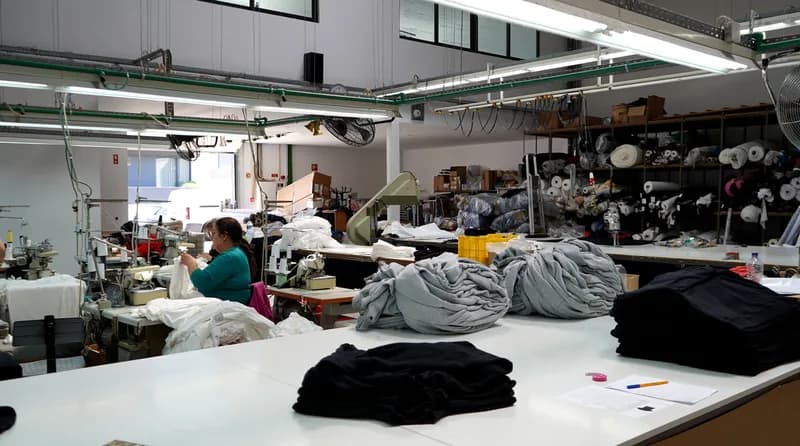
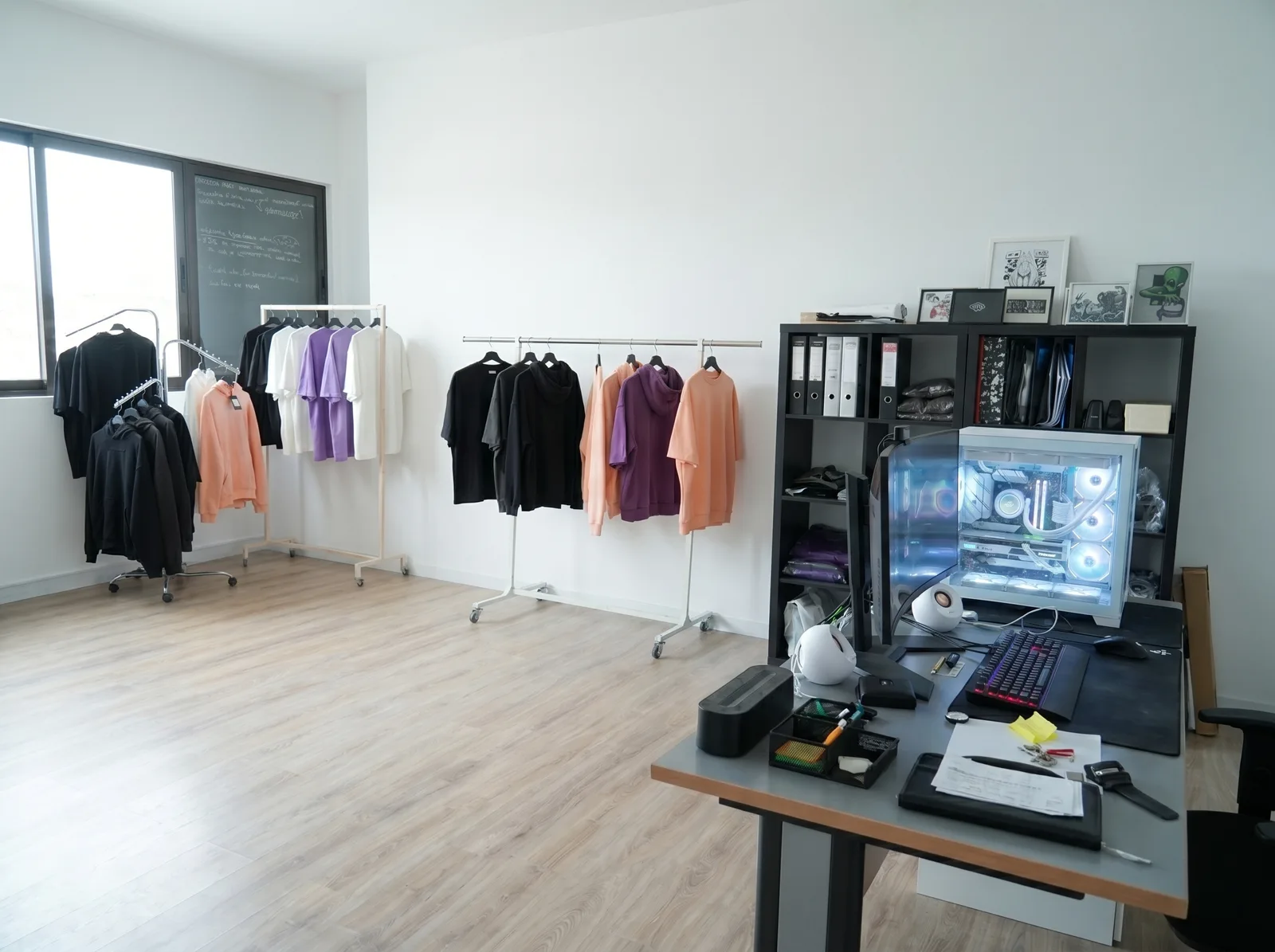
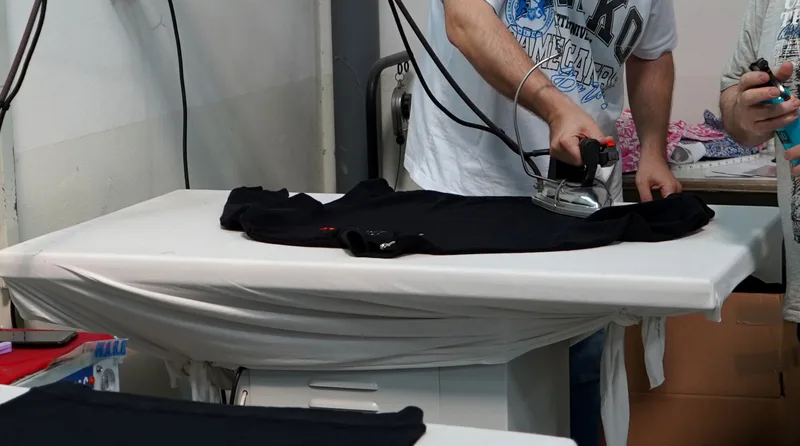
White Cotton is a custom t-shirt manufacturing factory in Barcelos, Portugal, producing premium t-shirts for brands worldwide. We specialise in organic cotton jersey from 140 to 300 GSM, with full-package production covering pattern making, sampling, cut-and-sew, screen printing, DTG, embroidery, labelling, and packaging — all from a single facility with a minimum order of just 100 units per style.
6+ T-Shirt Styles
Product catalog
MOQ from 100 Units
Per colourway · 150 in one colour
140–300 GSM
Weight range
GOTS Certified
Organic cotton
Location Advantages
Why Manufacture T-Shirts in Portugal?
Portugal is one of Europe's most established centres for t-shirt manufacturing. The northern textile corridor — stretching from Porto through Barcelos and Guimarães — is home to hundreds of cut-and-sew factories with decades of experience producing jersey knits. When you manufacture t-shirts in Portugal, you tap into a workforce that understands cotton jersey at a molecular level: how different GSM weights behave on the cutting table, how needle gauge affects seam quality on lightweight knits, and how to achieve consistent colour across thousands of units.
For t-shirt production specifically, Portugal offers a unique advantage: access to premium European-milled organic cotton jersey that meets GOTS and OEKO-TEX standards. Unlike Asian suppliers where fabric traceability can be opaque, every roll of jersey we use comes with full certification documentation. This matters for brands selling into EU and UK markets where consumers increasingly demand proof of ethical sourcing and environmental compliance.
Proximity matters even more for t-shirts than for heavier garments. T-shirts are typically reordered more frequently and in shorter cycles — a bestselling design might need restocking every 6 to 8 weeks. With a Portuguese factory, you can go from reorder to delivery in 3 to 4 weeks instead of the 8 to 12 weeks required when shipping from Asia. There are no customs delays within the EU, no import duties, and if a colour or fit issue arises, you can be at our factory in Barcelos within a few hours of landing at Porto airport.
Pricing for Portuguese-made t-shirts is competitive when you factor in the total cost of ownership. Our prices are 20 to 40 percent lower than manufacturing in France, Italy, or the UK. When you add shipping costs, customs duties, quality rejection rates, and the cost of slow communication with distant factories, Portuguese manufacturing often works out more economical than it appears on a simple per-unit comparison with Asia.
Our team is fully English-speaking. Every quotation, production update, and quality discussion happens in English. We provide detailed line-item breakdowns on every quote, send production photos at each stage, and offer full transparency into our process. You always know exactly where your t-shirt order stands — from fabric sourcing through to final shipment.
Our T-Shirt Range
T-Shirt Styles We Manufacture
Custom T-Shirts
6 styles
Heavyweight Tees
220–300 GSM
Oversized & Boxy
Drop-shoulder cuts
Regular Fit
Classic silhouette
Long Sleeve Tees
Year-round basics
Crop & Boxy Crop
Womenswear cuts
T-Shirt Fabrics
Fabrics for T-Shirt Production
Organic Cotton Jersey (140–300 GSM) is our most popular t-shirt fabric — GOTS-certified, naturally soft, breathable, and available across the full weight range from lightweight summer tees to heavyweight streetwear blanks.
Recycled Jersey (160–260 GSM) is made from post-consumer cotton waste and recycled PET, offering a similar hand-feel with stronger sustainability credentials for eco-conscious brands and B-Corps.
Waffle Knit (180–360 GSM) features a distinctive 3D honeycomb texture that adds visual interest to t-shirts without any print — ideal for minimalist and elevated streetwear collections seeking textural basics.
Factory-Floor Detail
T-Shirt Construction: Tubular vs Side-Seam
Tubular Construction
Knitted as a continuous tube with no side seams. Lower fabric waste and faster to produce, but the fabric can twist slightly over time (torque) and fit precision is lower. Fine for casual, lightweight tees.
Side-Seam Construction
Front and back panels cut separately and sewn at the sides. More structured shape, better fit precision, no torque, and the tee holds its shape through washing better than tubular equivalents. This is our standard.
Beyond body construction, a few assembly details separate a quality t-shirt from a commodity one: the neck rib is cut on the bias and joined with a taped seam to prevent stretching; the shoulder seam gets a reinforced tape to stop it stretching out over time; the hem is double-needle stitched (two rows) rather than single-needle, which looks more finished and resists rolling; and the sleeve set is tensioned evenly around the armhole — uneven tension is the most common QC failure point on a t-shirt.
T-Shirt Decoration
Printing & Decoration Techniques for T-Shirts
Screen Printing
Screen Printing
DTG (Direct-to-Garment) Printing
Digital Printing
Embroidery
Embroidery
DTF (Direct-to-Film) Printing
Digital Printing
Screen Printing is the workhorse for t-shirt decoration — bold colours, excellent wash durability, and the lowest per-unit cost above 100 units. We offer water-based (soft hand-feel), plastisol (maximum opacity), and discharge printing inks — discharge strips the dye out of a dark tee instead of printing over it, so the graphic cannot be felt at all.
DTG Printing sprays ink directly onto the fabric for photo-quality, unlimited-colour prints. Ideal for small runs, complex artwork, and limited-edition drops where every tee can be unique.
Embroidery adds a premium tactile finish to t-shirt logos — chest hits, sleeve details, and back-neck branding. Our multi-head Tajima machines support up to 15 colours per design.
DTF Printing transfers full-colour designs onto any fabric colour without pre-treatment. The most versatile option for t-shirts in mixed colourways where consistency across light and dark garments matters.
Full-Package Solutions
Our T-Shirt Manufacturing Services
Private Label Manufacturing
Private label manufacturing is the process of producing garments exclusively to a client's specifications, bearing their brand name and labe...
White Label Manufacturing
White label manufacturing lets you start from one of our base fits — a standard pattern for the garment — and add your own branding: labels,...
Custom Clothing Manufacturing
Custom clothing manufacturing is a full-package production service covering every stage from pattern creation to finished, packed garments. ...
Collection Development
Collection development is an end-to-end service that takes your brand from concept to production-ready patterns at no extra design charge. W...
From Idea to Delivery
How It Works
Send Your Design
Share your tech pack, sketches, or reference images. Tell us about your brand, target market, desired fit, fabric weight, and quantities. We accept designs at any stage — from a napkin sketch to a full specification sheet with grading.
Receive Quotation
You receive a detailed quotation covering fabric, trims, decoration, and production. No hidden costs. We break down every line item — fabric per unit, printing cost, labelling, and packaging — so you know exactly what you are paying for.
Approve Sample
We produce a physical t-shirt sample for your approval. You review fit, fabric hand-feel, GSM, colour accuracy, and decoration quality. Adjustments are included — we iterate until the sample matches your vision perfectly.
Full Production
Once you approve the sample, production begins. We handle fabric sourcing, cutting, sewing, decoration, quality control, labelling, and packaging. You receive updates throughout the process and your finished t-shirts are shipped directly to your warehouse.
Do not have a tech pack for step one? Our free t-shirt tech pack is a factory-drawn specification — collar rib height, neck width, sleeve opening and every point of measure graded XS–XXL with tolerances — that you can put your brand on and send us as your design.
Common Questions
Frequently Asked Questions
What is the best GSM for streetwear t-shirts?
For streetwear, 220–300 GSM is the sweet spot. A 220 GSM tee feels substantial and holds its shape without being stiff — ideal for boxy and oversized cuts. At 260–300 GSM you enter heavyweight territory: the fabric drapes differently, resists wrinkling, and delivers the premium, structured feel that made heavyweight tees a streetwear staple. We produce t-shirts across the full 140–300 GSM range so you can choose the exact weight for your brand's positioning.
What is the difference between organic and recycled jersey for t-shirts?
Organic cotton jersey (GOTS-certified) is grown without synthetic pesticides or fertilizers and feels slightly softer with a natural lustre. Recycled jersey is made from post-consumer cotton waste and recycled PET bottles — it has a similar hand-feel but a slightly drier texture due to the polyester content. Organic is the best choice for premium basics and eco-luxury brands. Recycled is ideal for B-Corps, merch programmes, and sustainability-first positioning where circularity messaging matters.
What t-shirt printing options do you offer?
We offer screen printing (water-based, plastisol, discharge, puff ink), DTG (direct-to-garment) for photo-quality prints, DTF (direct-to-film) for versatile full-colour transfers, and embroidery for premium logo placement. Screen printing is most cost-effective above 100 units. DTG excels for small runs and complex artwork. DTF works on any fabric colour. Embroidery adds a tactile, premium finish for chest logos and sleeve details.
What is the difference between heavyweight and lightweight t-shirts?
Lightweight t-shirts (140–180 GSM) are soft, breathable, and ideal for summer basics, promotional merch, and layering pieces. They drape close to the body and are the most affordable to produce. Heavyweight t-shirts (220–300 GSM) are thicker, more structured, and hold oversized silhouettes. They feel premium in hand, photograph better, and command higher retail prices. Most streetwear and DTC brands now produce in the 200–260 GSM range as a balance of quality and cost.
What is the minimum order quantity for custom t-shirts?
Our minimum order quantity is 150 units per style in one colourway, or 100 per colourway across two or more colourways. This applies to all t-shirt types — crew neck, oversized, boxy, long sleeve, and heavyweight. For first orders, we recommend starting with one or two styles to test fit and quality before scaling. Volume discounts apply above 200 units per style.
How do you handle t-shirt shrinkage?
All our t-shirt fabrics are pre-shrunk during finishing — we apply compaction and sanforisation treatments that reduce residual shrinkage to under 3% in both length and width. We also recommend a pre-wash test on the first sample batch so you can verify measurements after washing. Our grading accounts for this residual shrinkage, so the finished garment fits true to your size spec after the first customer wash.
Can you produce custom t-shirt labels and packaging?
Yes. We offer full custom labelling: woven main labels (care + brand), woven or printed neck labels, hang tags, and custom packaging (poly bags, tissue paper, branded boxes). Custom labels have a one-time setup cost and a minimum of 500 pieces per design. We can also remove the existing neck label and replace it with a printed neck tag (tagless printing) for a cleaner finish.
What t-shirt fits and silhouettes do you produce?
We produce regular fit, relaxed fit, oversized, boxy crop, drop-shoulder, and longline silhouettes. Each fit is available in crew neck, mock neck, or V-neck. We can also produce raglan sleeves, extended sleeves, and raw-edge hems. If you have a specific fit reference (another brand's tee you want to match), send us the garment or detailed measurements and we will replicate it in sampling.
Ready to Manufacture T-Shirts in Portugal?
Request a free quotation. No commitment required.