Portugal vs Turkey Manufacturing
The key difference between Portugal and Turkey manufacturing is the positioning: Portugal is Europe's premium manufacturing hub known for quality knitwear, sustainability certifications, and the 'Made in Portugal' brand cachet, while Turkey offers a broader range of capabilities at 15–25% lower costs with strong denim, woven, and leather expertise.
Head-to-Head
Portugal Manufacturing
Strengths
- Strongest 'Made in Europe' brand value — associated with quality and craftsmanship
- Knitwear expertise — world-class jersey, fleece, and cut-and-sew capabilities
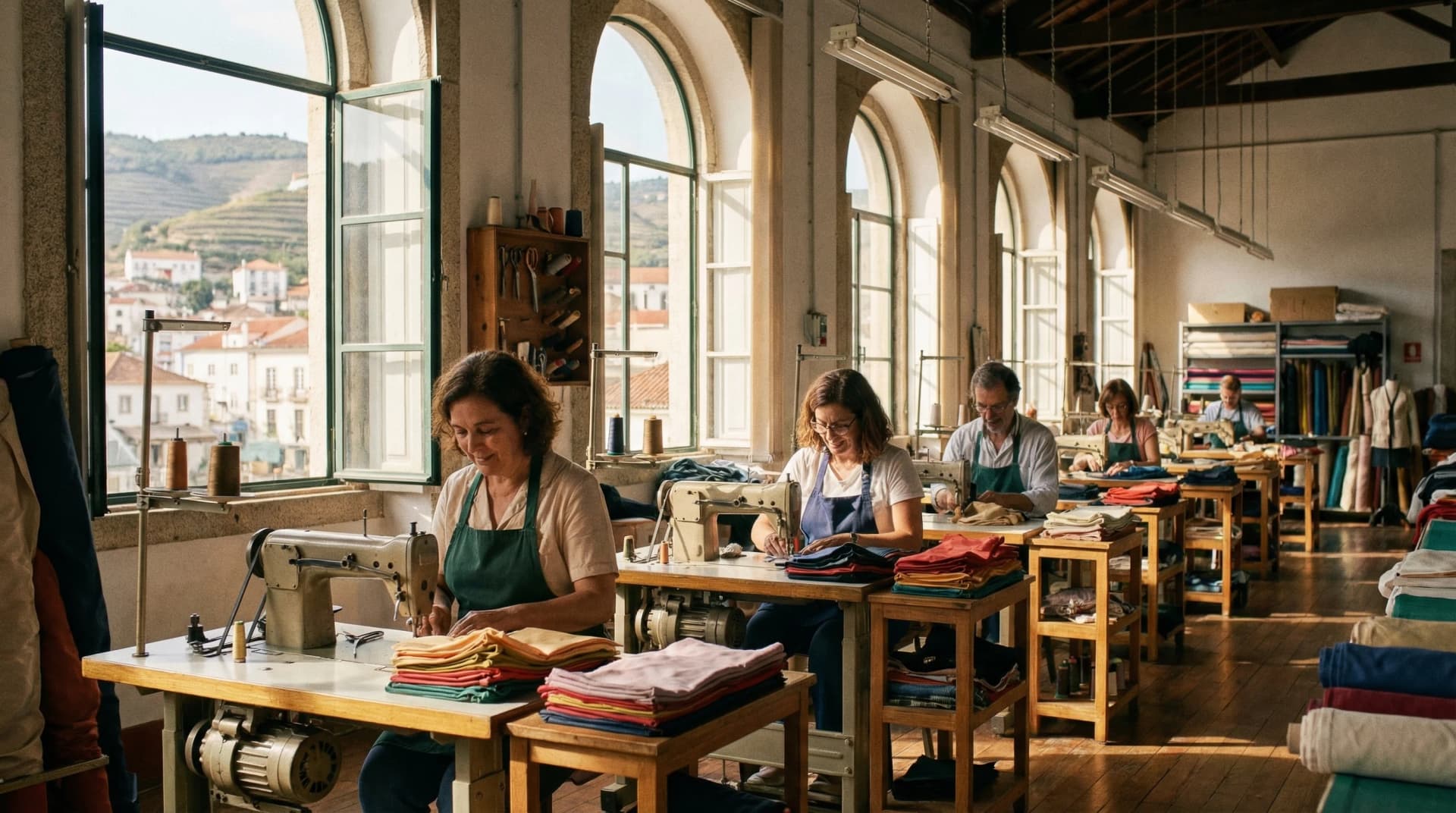
- Consistent, reliable quality — Portuguese factories have multi-generational expertise
- EU member — zero duties, simplified logistics, GDPR compliance
- Excellent sustainability infrastructure — GOTS and OEKO-TEX are standard
Best For
Turkey Manufacturing
Strengths
- 15–25% lower production costs than Portugal across most categories
- Superior denim and woven fabric capabilities — Turkey is a global denim hub
- Larger factory capacity — able to handle bigger volumes per production run
- Strong leather and accessories manufacturing alongside garments
- EU customs union membership — reduced (not zero) trade barriers
Best For
Detailed Comparison
| Criteria | Portugal Manufacturing | Turkey Manufacturing |
|---|---|---|
| Cost per Unit (T-shirt) | €5–10 | €4–7 |
| Minimum Order | 200–500 units/style | 300–800 units/style |
| Lead Time | 4–8 weeks | 5–10 weeks |
| Shipping to EU | 3–5 days (road, duty-free) | 5–10 days (road, customs) |
| Knitwear Expertise | World-class | Good |
| Denim Expertise | Limited | World-class |
| Brand Cachet | Very high ('Made in Portugal') | Moderate ('Made in Turkey') |
| Currency Stability | Euro (stable) | Turkish Lira (volatile) |
Verdict
Our Recommendation
Choose Portugal for premium knitwear (hoodies, sweats, t-shirts), sustainability-certified collections, and when 'Made in Portugal' adds tangible brand value. Choose Turkey for denim, woven garments, leather goods, and when 15–25% cost savings matter more than origin branding. Many brands use both — Portugal for hero knit pieces, Turkey for woven separates.
Common Questions
Frequently Asked
Is 'Made in Turkey' a disadvantage for branding?
It depends on your market. In the UK and Europe, 'Made in Portugal' carries more premium associations than 'Made in Turkey'. However, Turkey has strong recognition in denim (where Istanbul is a global hub) and in the Middle East/North Africa markets. For DTC brands, the end customer often cares more about quality and sustainability story than origin alone.
How does currency volatility affect Turkey pricing?
The Turkish Lira has depreciated significantly, which can make Turkey cheaper for foreign brands — but it also causes instability. Factories may quote in EUR or USD to hedge, or adjust prices frequently. Portugal's Euro pricing is stable and predictable, which simplifies budgeting for EU brands.
Can I visit both countries' factories easily?
Yes. Lisbon/Porto have direct flights to Istanbul, and both manufacturing regions are accessible. Portugal's factories are concentrated around Porto/Barcelos (30 min from Porto airport). Turkey's garment factories are split between Istanbul and Izmir. You can visit 3–5 factories per day in either region.
Related Reading
→ Free tech packs — 13 garments, graded specs, ready to send
Need Help Choosing?