Hotel Uniform Manufacturing — European Quality for Dubai's Five-Star Properties [2026]
Five-star hotel uniform manufacturing: fabric performance in Gulf heat, OEKO-TEX for guest-facing staff, department-specific clothing, and cost analysis.
 Pedro Carreira··10 min read
![Hotel Uniform Manufacturing — European Quality for Dubai's Five-Star Properties [2026]](/_next/image?url=%2Fimages%2Fgenerated%2Fblog%2Fhotel-uniform-manufacturing-dubai.webp&w=1920&q=75)
Dubai Has 820+ Hotels. Most Dress Their Staff in the Same Mass-Market Uniforms.
Dubai's hotel industry is one of the most competitive on earth — 820+ hotels, 152 of which are five-star properties, all fighting for the same high-spending guests. Hotels invest millions in interior design, F&B concepts, and guest experience. Then they dress their staff in uniforms sourced from the same two or three Asian suppliers that outfit every other hotel in the city.
The result: a five-star lobby experience where staff clothing looks and feels indistinguishable from a three-star property down the road. Guests notice. In a 2024 J.D. Power hotel satisfaction survey, "staff appearance and presentation" ranked as the fourth most influential factor in overall guest perception — ahead of room amenities and Wi-Fi quality.
European hotel groups figured this out years ago. Hilton, Marriott, and Four Seasons properties in Europe specify Portuguese-manufactured uniforms for the quality, durability, and fabric safety that match their brand standard. Dubai's five-star properties — many operated by the same groups — still largely source from Asian suppliers. The inconsistency is starting to close.
The Department Breakdown: What Each Team Needs
What uniform requirements differ across hotel departments?
A five-star hotel has 6–8 distinct uniform programmes running simultaneously. Each department has different fabric requirements, durability demands, and brand visibility levels.
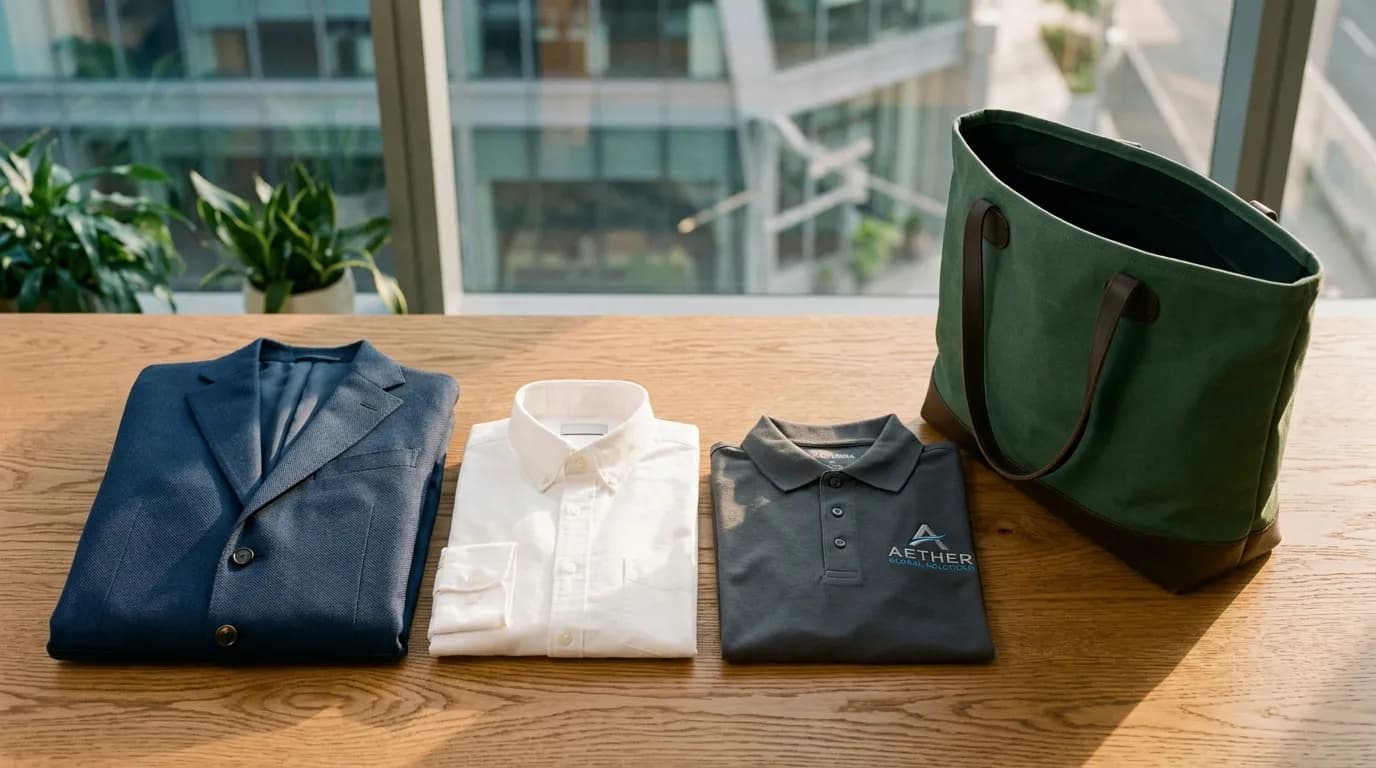
Front Desk & Guest Relations — The most visible staff in the hotel. Guests interact with them face-to-face for check-in, concierge, and problem resolution. Requirements: premium fabric weight (220–260gsm), structured silhouettes, wrinkle-resistant finishes, colour that holds after daily washing. Typical garments: tailored polo shirts, dress shirts, blazers, and branded scarves.
Food & Beverage (Restaurants, Bars, Lounges) — Staff working 8–12 hour shifts in warm environments, carrying plates and glasses. Requirements: moisture-wicking, stain-resistant or stain-concealing fabrics, reinforced seams at stress points (shoulders, underarms). Typical garments: branded tees, aprons, mandarin-collar shirts, chef coats.
Housekeeping — The hardest-working uniform in the hotel. Washed daily at 60–90°C, exposed to cleaning chemicals, subjected to constant bending and stretching. Requirements: industrial-grade fabric durability, colour fastness that survives 200+ hot washes, stretch panels for mobility. Typical garments: tunics, trousers, functional polo shirts.
Spa & Wellness — Direct skin-contact garments for staff performing massage, facial, and body treatments. The staff-guest proximity makes fabric safety critical. Requirements: soft hand-feel, OEKO-TEX certification (non-negotiable for skin-contact roles), breathable natural fibres. Typical garments: wrap tops, loose-fit trousers, tunic dresses.
Pool & Beach — Outdoor roles in direct Gulf sun, temperatures reaching 48°C in summer months. Requirements: UV-protective fabrics, quick-dry materials, extreme breathability, salt-water resistance for beach properties. Typical garments: performance polos, shorts, branded rash guards.
Kitchen (Back of House) — Not guest-facing but subject to extreme conditions: heat from cooking equipment, steam, grease splatter, sharp objects. Requirements: flame-retardant or flame-resistant fabrics, heavy-duty cotton or cotton-polyester blends (260–300gsm), reinforced closures. Typical garments: chef jackets, kitchen trousers, aprons.
| Department | Key Fabric Need | Wash Temp | Annual Washes | Guest-Facing |
|---|---|---|---|---|
| Front Desk | Premium weight, wrinkle-free | 40–60°C | 200+ | Yes — primary |
| F&B | Moisture-wicking, stain-resistant | 60°C | 250+ | Yes |
| Housekeeping | Industrial durability | 60–90°C | 300+ | Moderate |
| Spa | Soft, OEKO-TEX certified | 40°C | 200+ | Yes — skin contact |
| Pool/Beach | UV-protective, quick-dry | 40–60°C | 250+ | Yes |
| Kitchen | Flame-resistant, heavy-duty | 90°C | 300+ | No |
Fabric Performance in Gulf Heat
What fabrics work best for hotel uniforms in Dubai's climate?
Dubai's climate creates unique demands that standard uniform fabrics were not designed for. From May to October, outdoor temperatures exceed 40°C with humidity above 60%. Even indoor staff work in environments where the transition between 22°C air-conditioned lobbies and 45°C outdoor areas happens multiple times per shift.
Cotton (200–260gsm): Best for front desk, spa, and guest relations roles. Natural breathability, soft hand-feel, absorbs moisture. The trade-off: slower drying time and potential for wrinkles. Look for combed ring-spun cotton with mercerised or wrinkle-resistant finishes.
Cotton-Polyester Blends (65/35 or 60/40): The workhorse for F&B and housekeeping. Combines cotton's breathability with polyester's durability and wrinkle resistance. Survives high-temperature washing without significant shrinkage or colour loss.
Performance Polyester (moisture-wicking): Best for pool, outdoor, and active roles. Quick-dry, UV-resistant, holds colour indefinitely. The limitation: synthetic fabrics trap odour faster and feel less premium against skin. Use for functional roles, not guest-facing.
The critical specification: fabric weight. Most Asian-sourced hotel uniforms use 160–180gsm fabric to reduce cost. At that weight, the garment is semi-transparent, loses shape within weeks, and pills visibly after 20 washes. European-manufactured uniforms typically start at 220gsm — a tangible difference in look, feel, and lifespan that guests perceive immediately.
The OEKO-TEX Question: Staff Safety in 8+ Hour Shifts
Why does OEKO-TEX certification matter for hotel uniforms?
Hotel staff wear uniforms for 8–12 hours per shift, often in high-heat environments where perspiration is constant. Sweat opens pores and increases the rate of chemical absorption through skin — a phenomenon well-documented in occupational health research.
Most hotel uniforms sourced from Asian suppliers carry no chemical safety certification. Consumer safety testing has found banned azo dyes in textile samples sold in the region — carcinogenic substances that are illegal in European workplaces but remain common in uncertified imports.
OEKO-TEX Standard 100 tests for over 1,000 harmful substances including azo dyes, formaldehyde, heavy metals, pesticide residues, and pH levels. For hotel staff in the Gulf — wearing uniforms in extended skin contact, in heat, while sweating — this certification is not a marketing claim. It is an occupational health measure.
European manufacturers that source OEKO-TEX certified fabrics provide documentation that hotels can use for:
- —Staff health and safety compliance
- —ESG and sustainability reporting
- —Group-wide procurement standards
- —Guest-facing transparency (some luxury properties now communicate uniform sourcing as part of their sustainability story)
How many wash cycles should a hotel uniform survive?
This is the metric that separates cost-effective uniforms from cheap uniforms. A front-desk polo washed 5 times per week for 50 weeks per year undergoes 250 wash cycles annually. A housekeeping uniform washed daily at 60–90°C may see 300+ cycles.
| Metric | Asian-Sourced Uniform | European-Made Uniform |
|---|---|---|
| Fabric weight | 160–180gsm | 220–260gsm |
| Colour fastness | 20–40 washes before visible fade | 80–120+ washes |
| Collar/cuff structure | Loses shape at 15–25 washes | Maintains structure 80+ washes |
| Pilling | Visible at 10–20 washes | Minimal at 60+ washes |
| Seam integrity | Stress failures at 6–12 months | Intact at 18–24 months |
| Realistic lifespan | 6–8 months | 18–30 months |
| Replacements per year | 1.5–2x | 0–0.5x |
For a 500-room five-star hotel with approximately 800 staff, uniforms are replaced on rolling cycles. If Asian-sourced uniforms require replacement every 6–8 months, and European-made uniforms last 18–30 months, the total cost of ownership difference is significant — even though the per-unit cost is higher.
Cost Analysis: The Full Picture
How much do European-made hotel uniforms cost compared to Asian suppliers?
The per-unit comparison for a branded polo shirt — the single most common hotel uniform garment:
| Cost Factor | Asian-Sourced | European-Made |
|---|---|---|
| Unit cost | $6–10 | $14–20 |
| Annual replacement rate | 1.5–2x per employee | 0.5x per employee |
| Annual cost per employee | $12–20 | $7–10 |
| 3-year cost per employee | $36–60 | $21–30 |
| Fabric certification | None | OEKO-TEX Standard 100 |
| Staff satisfaction | Functional | Pride in wearing premium |
The numbers scale dramatically. For 800 staff members, the 3-year saving of switching to European-made uniforms is approximately $12,000–24,000 — while simultaneously upgrading guest perception, staff satisfaction, and chemical safety compliance.
The current market default — FSL Hospitality, Chef Works, and similar mass-market suppliers — sits between these two points: better than commodity Asian imports but still mass-produced with standard fabrics. Custom European manufacturing offers what these cannot: garments designed specifically for your property, in your exact brand colours, with your fabric specifications, at quantities that match your actual needs.
The European Hotel Standard — Already in Your Group's Playbook
Which hotel groups already use European-manufactured uniforms?
Major European hotel groups specify Portuguese and Italian-manufactured uniforms for their European properties. The same manufacturing base that supplies established European fashion brands and luxury houses also supplies the hospitality sector with staff clothing engineered for commercial laundry durability.
The disconnect: these same hotel groups source from Asian suppliers for their GCC operations, creating an inconsistency in the brand standard. A Four Seasons property in Lisbon has Portuguese-made staff uniforms. A Four Seasons property in Dubai does not. The guest paying $800+ per night at both properties experiences a measurably different staff presentation.
Independent luxury hotels and boutique properties in Dubai are leading the shift. Without group-level procurement constraints, they can source directly from European manufacturers and specify exact fabrics, fits, and branding that match their unique identity — something mass-market uniform suppliers cannot offer.
How It Works: Manufacturing Hotel Uniforms in Portugal
What is the process for a hotel uniform programme with a European manufacturer?
The timeline from initial brief to uniforms deployed across your property is 10–14 weeks:
Weeks 1–2: Consultation & Design
Submit your department requirements — garment types per team, branding placement, colour specifications, size distribution. A manufacturer like White Cotton develops tech packs for each garment with fabric recommendations matched to department needs.
Weeks 3–5: Sampling
Physical samples produced per department — different fabrics, weights, and constructions for front desk vs housekeeping vs F&B. Samples shipped to Dubai for fit testing with actual staff.
Weeks 6–10: Production
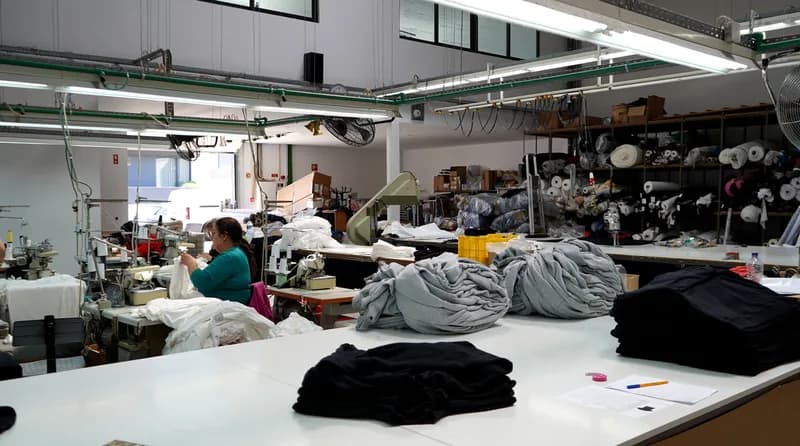
Bulk production across all departments. OEKO-TEX certified fabrics sourced, cut, sewn, and quality-controlled in Barcelos, Portugal. Each department's order runs in parallel.
Weeks 10–14: Delivery & Distribution
Air freight to Dubai in 4–5 business days for urgent timelines. Sea freight in 18–22 days for cost-optimised delivery. Garments arrive size-sorted and department-labeled, ready for distribution.
Ongoing: Rolling Reorders
New hires, replacements, and seasonal adjustments. Once specifications are on file, reorders run 4–5 weeks. Minimum 75 pieces per colourway (100 pieces in a single colourway) — no need to meet large MOQs for a single department's reorder.
The Decision: When European Manufacturing Makes Sense
European-manufactured hotel uniforms are the right choice for properties where:
- —Guest perception is a competitive differentiator — luxury and upper-upscale segments
- —Staff wear uniforms 8–12 hours daily — chemical safety certification is a duty of care
- —Commercial laundry cycles exceed 200 per year — durability determines real cost
- —Brand identity requires custom design — not available from catalogue uniform suppliers
- —Sustainability commitments require certified supply chains — OEKO-TEX/GOTS documentation for ESG reporting
- —The property brand extends to staff presentation — "Made in Portugal" as a quality signal
At White Cotton, a clothing manufacturer serving Dubai, we produce hotel and hospitality uniforms for properties across the Gulf — from front-desk polos to housekeeping tunics to F&B aprons. All produced in Portugal using certified fabrics, engineered for commercial laundry durability, at low MOQs from 75 pieces per colourway. Factory visits are available for production clients — once samples are approved and bulk production is underway.
For pricing on your property's uniform programme, request a quote with your department breakdown, quantities, and timeline.

Pedro Carreira
Founder of White Cotton, a textile manufacturer in Barcelos, Portugal. Producing custom clothing collections for brands across 15+ countries.
Continue Reading
![Why Dubai's Smartest Companies Are Switching to European-Made Team Wear [2026]](/_next/image?url=%2Fimages%2Fgenerated%2Fblog%2Fwhy-european-made-team-wear-dubai.webp&w=1920&q=75)
Why Dubai's Smartest Companies Are Switching to European-Made Team Wear [2026]
Corporate Clothing for Dubai Companies — Full Guide (2026)
![Corporate Gifting with Clothing — Why European-Made Stands Out in Dubai [2026]](/_next/image?url=%2Fimages%2Fgenerated%2Fblog%2Fcorporate-gifting-clothing-dubai.webp&w=1920&q=75)
Corporate Gifting with Clothing — Why European-Made Stands Out in Dubai [2026]
![Dubai's 13,000 Restaurants Need Staff Uniforms — Here's What the Best Ones Choose [2026]](/_next/image?url=%2Fimages%2Fgenerated%2Fblog%2Fdubai-restaurants-staff-uniforms.webp&w=1920&q=75)
Dubai's 13,000 Restaurants Need Staff Uniforms — Here's What the Best Ones Choose [2026]
![Branded Team Wear for Real Estate Companies in Dubai [2026]](/_next/image?url=%2Fimages%2Fgenerated%2Fblog%2Freal-estate-branded-clothing-dubai.webp&w=1920&q=75)