Creator Merch in Dubai: How UAE Influencers Are Building Clothing Lines [2026]
22,600 UAE influencers building merch lines. How creators manufacture premium clothing: European quality vs print-on-demand, 75-unit drops, unboxing-ready packaging.
 Pedro Carreira··11 min read
![Creator Merch in Dubai: How UAE Influencers Are Building Clothing Lines [2026]](/_next/image?url=%2Fimages%2Fgenerated%2Fblog%2Finfluencer-merch-dubai-creators.webp&w=1920&q=75)
22,600 UAE Influencers. Most Are Still Selling Print-on-Demand Merch That Embarrasses Their Brand.
The UAE has 22,600 tracked influencers across Instagram, TikTok, YouTube, and Snapchat. The country's influencer advertising market is worth $97 million. Dubai's Creators HQ initiative — launched as part of the Dubai Creators Economy strategy — has attracted 2,415 creators from 147 countries, making the city the gravitational centre of Middle Eastern creator culture.
Every creator with 50,000+ followers eventually thinks about merch. Most take the path of least resistance: Printful, Printify, or a similar print-on-demand service. Upload a logo. Pick a blank. Set a price. Let the platform handle everything.
The result: a $45 hoodie that arrives in a plastic mailer bag, made from 180gsm blended fabric that pills after three washes, printed with a DTG design that cracks by wash five. The creator promotes it. Fans buy it. Fans wear it once, realise it's thin and cheap, and never order again. Worse — they post about the quality, and the creator's brand takes a hit that no sponsored post can repair.
The creators building real clothing businesses — not just merch side-hustles — have moved to a different model. They manufacture premium garments in small batches, sell them as limited drops, and treat every order as an unboxing experience. Here's how the model works.
Why does merch beat sponsorships for creator revenue?
Sponsorships are rented income. A brand pays for a post, the post goes up, the cheque clears. Next month, a different brand, a different cheque. The creator never owns anything — they're a media channel that someone else rents.
Merch is owned revenue. The creator designs it, manufactures it, sells it, and keeps the margin. There is no intermediary. There is no brand approval process. The revenue is not dependent on algorithmic reach or platform changes. If Instagram changes its algorithm tomorrow and a creator's reach drops 40%, their sponsorship income drops proportionally. Their merch revenue — sold through their own link, to their own audience — does not.
The margin comparison:
- —Sponsorship: Creator receives $5,000–50,000 per post (varies wildly), but creates nothing permanent. Revenue stops when posting stops.
- —Print-on-demand merch: Creator earns $5–12 profit per item. Low effort, but low margins, no brand equity, no repeat customers.
- —Premium manufactured merch: Creator earns $25–60 profit per item. Higher effort, but 3–4x margins, brand equity, and customers who return for every drop.
A creator selling 500 premium hoodies at $80 with a $35 margin generates $17,500 per drop. Four drops per year: $70,000 in owned revenue — with zero platform dependency and a growing brand asset.
What's wrong with print-on-demand for serious creators?
Print-on-demand solved a real problem: it eliminated inventory risk. A creator doesn't need to order 500 hoodies upfront and hope they sell. The platform prints each order individually and ships it directly to the buyer.
But the trade-offs are severe for any creator who cares about brand quality:
Thin fabric: Most POD platforms use 180–200gsm blanks — the cheapest available. A premium hoodie starts at 350gsm. The difference is immediately obvious to anyone who's worn both. Fans paying $45–65 for creator merch expect the quality they get from a decent high-street retailer at similar prices — not a garment that feels like a promotional giveaway.
Limited branding: POD offers DTG printing on standard blank garments. No custom labels, no woven tags, no branded drawstrings, no custom packaging. The garment arrives with the POD platform's generic tag and the creator's print on front. It screams "drop-shipped" to anyone who looks at the label.
Slow shipping to the Gulf: Most POD fulfilment centres are in the US or Europe. Shipping to UAE buyers takes 10–21 days. In the Gulf, where same-day and next-day delivery is standard for e-commerce, three weeks is an eternity. Creators lose sales to abandoned carts and customer complaints.
No brand control: The creator doesn't choose the fabric, doesn't control the dye process, doesn't inspect quality, doesn't design the packaging, and doesn't decide the shipping experience. They're a logo applied to someone else's product.
Low margins: After the blank cost, printing cost, and platform fee, creators earn $5–12 per item. On a $45 hoodie, the margin is 11–27%. On a premium manufactured hoodie sold at $80, with a production cost of $20–25, the margin is 68–75%.
How does premium European manufacturing work for creators?
The model is straightforward: instead of printing on commodity blanks one at a time, the creator manufactures a batch of custom garments from scratch and sells them as a limited drop.
What "custom" means: The creator chooses the fabric weight (350–400gsm for a premium hoodie), the fabric composition (100% organic cotton, French terry, fleece), the colour (custom Pantone, not limited to 12 catalogue options), the branding method (embroidery, puff print, chenille patch, woven label), and the packaging (custom box, tissue paper, branded stickers, thank-you card).
Minimum quantities: Minimum order quantities vary by garment — 75 per colourway for hoodies, 100 per colourway for tees. A creator launching a drop with 2 styles (hoodie + tee) in 3 colours needs 525 pieces minimum (225 hoodies at 75 per colourway, 300 tees at 100 per colourway). Total production cost: €3,000–6,000 depending on complexity. That's the inventory investment — and at premium retail prices ($60–120 per item), the drop generates €12,000–36,000 in revenue.
Timeline: usually 6–12 weeks of production from the deposit (4–8 when the fabric is in stock), plus shipping. The creator announces the drop 2–3 weeks before delivery, takes pre-orders or builds hype, and ships immediately when stock arrives. Total cycle from concept to money-in-hand: roughly 3–6 months.
What do creators actually order?
The most successful creator merch lines in the Gulf follow a consistent pattern:
Limited hoodies (350–400gsm): The anchor product. Heavy-weight French terry or fleece, oversized or boxy fit, premium embroidery or puff print. Retail price: $70–120. This is the hero item that fans photograph, unbox on TikTok, and wear daily. It must feel expensive because it is expensive — and the quality justifies the price.
Graphic tees (200–220gsm): The volume product. Heavyweight cotton with oversized graphic print — not a small logo on chest, but a full design that makes a statement. Retail: $35–55. Lower margin per unit but higher volume — fans who can't afford the hoodie buy the tee.
Matching sets (hoodie + joggers): The premium play. A coordinated set in matching fabric and colour with consistent branding. Retail: $120–180 for the set. Higher average order value, stronger brand impression, more dramatic unboxing content.
Accessories: Branded caps, beanies, tote bags, socks. These are add-on items that increase cart value by $15–30 and cost €3–8 to produce. They also serve as entry-point products for fans who want to support the creator at a lower price.
How does the drop model work?
The drop model — announce, produce, ship — is how the biggest names in streetwear built billion-dollar businesses. It works even better for creators because they already have the audience.
Week 1–2: Creator teases the drop on Stories and TikTok. Behind-the-scenes content: fabric selection, sample review, colour approvals. This content performs well because it's authentic — the audience sees the product being created.
Week 3–4: Official announcement. Product photos, try-on video, sizing guide. Pre-orders open (or launch date announced with "limited stock" messaging). The creator's audience — already warmed by 2 weeks of teaser content — converts at 2–5x the rate of a cold merch link in bio.
Week 5: Drop goes live. For pre-order models, production is already complete and shipping begins within 48 hours. For stock models, items ship same-day. The creator posts unboxing content, fan reactions, and "last chance" urgency. A 500-piece drop typically sells out in 24–72 hours for creators with 100K+ engaged followers.
Total cycle: 7 weeks from production completion to sold out. Compare to print-on-demand, where items sit in a permanent link-in-bio store with no urgency, no scarcity, and no event — resulting in sporadic sales at low margins.
Why does packaging matter for creator merch?
Every creator merch order is a potential piece of content. The buyer unboxes it on camera — or at minimum, posts it to Stories. This is the highest-value touchpoint in the entire transaction because it's organic, authentic, and reaches the buyer's network.
Premium packaging for unboxing content:
- —Custom rigid box with the creator's brand printed on lid (not a brown mailer bag)
- —Branded tissue paper wrap
- —Branded sticker sealing the tissue
- —Thank-you card with handwritten-feel message (printed, but personalised with the creator's voice)
- —Product wrapped in branded garment bag inside the box
Cost: €3–6 per order for full custom packaging. On an $80 hoodie, that's 5–8% of the retail price — generating free UGC content worth multiples of that cost.
The Dubai angle: UAE consumers are accustomed to premium unboxing experiences from luxury e-commerce (Ounass, Farfetch, NET-A-PORTER deliver in presentation boxes). A creator's merch arriving in a plastic mailer bag with a packing slip feels incongruent with the premium image the creator projects on content. The packaging must match the brand.
What about UAE advertising permit requirements?
From February 2026, all UAE influencers and content creators must hold an Advertiser Permit from the National Media Council to publish paid promotional content. This includes sponsored posts, brand partnerships, and — critically — promoting your own merch line if it's a commercial product.
This regulation changes the merch landscape in two ways:
- 1.Professionalization: Creators who invest in proper Advertiser Permits and manufacture quality products will differentiate from casual merch sellers. The permit signals legitimacy to both fans and potential wholesale partners.
- 1.Content labelling: Merch promotion must be labelled as commercial content. Creators who treat merch as a real product line — with premium quality, proper packaging, and transparent manufacturing — benefit from the trust that labelling creates. Fans know it's commercial, and they buy because the product justifies the price.
For creators importing manufactured goods from Europe, standard UAE customs duties apply (5% on textiles). Shipping from Portugal to Dubai runs 4–5 days by air freight — fast enough to support drop launches with tight timelines.
The economics: print-on-demand vs. premium manufacturing
| Factor | Print-on-Demand | Premium Manufacturing |
|---|---|---|
| Unit cost (hoodie) | $22–30 | $18–25 |
| Retail price | $40–55 | $70–120 |
| Margin per unit | $10–25 (25–45%) | $45–95 (64–79%) |
| Revenue per 500-unit drop | $5,000–12,500 | $22,500–47,500 |
| Fabric weight | 180–200gsm | 350–400gsm |
| Custom labels/tags | No | Yes |
| Custom packaging | No | Yes (€3–6/order) |
| Shipping to UAE | 10–21 days | 4–5 days (air) |
| Brand perception | "Merch" | "Clothing line" |
| Content value | Low (generic unboxing) | High (premium unboxing) |
The premium model requires €3,000–6,000 upfront inventory investment. For a creator with 50K+ engaged followers, a 500-unit drop at $80 average price returns €20,000–40,000 in revenue. The inventory risk is real but manageable — creators with engaged audiences routinely sell out limited drops in 48–72 hours.
From merch to clothing brand
The most successful creator merch programmes evolve into standalone clothing brands. The creator's audience provides the initial customer base, but the product quality generates word-of-mouth that expands beyond the creator's followers.
This transition requires one thing above all: the product must be good enough that someone who has never heard of the creator would still buy it. That only happens with premium fabrics, quality construction, considered design, and certifications that back up the quality claim.
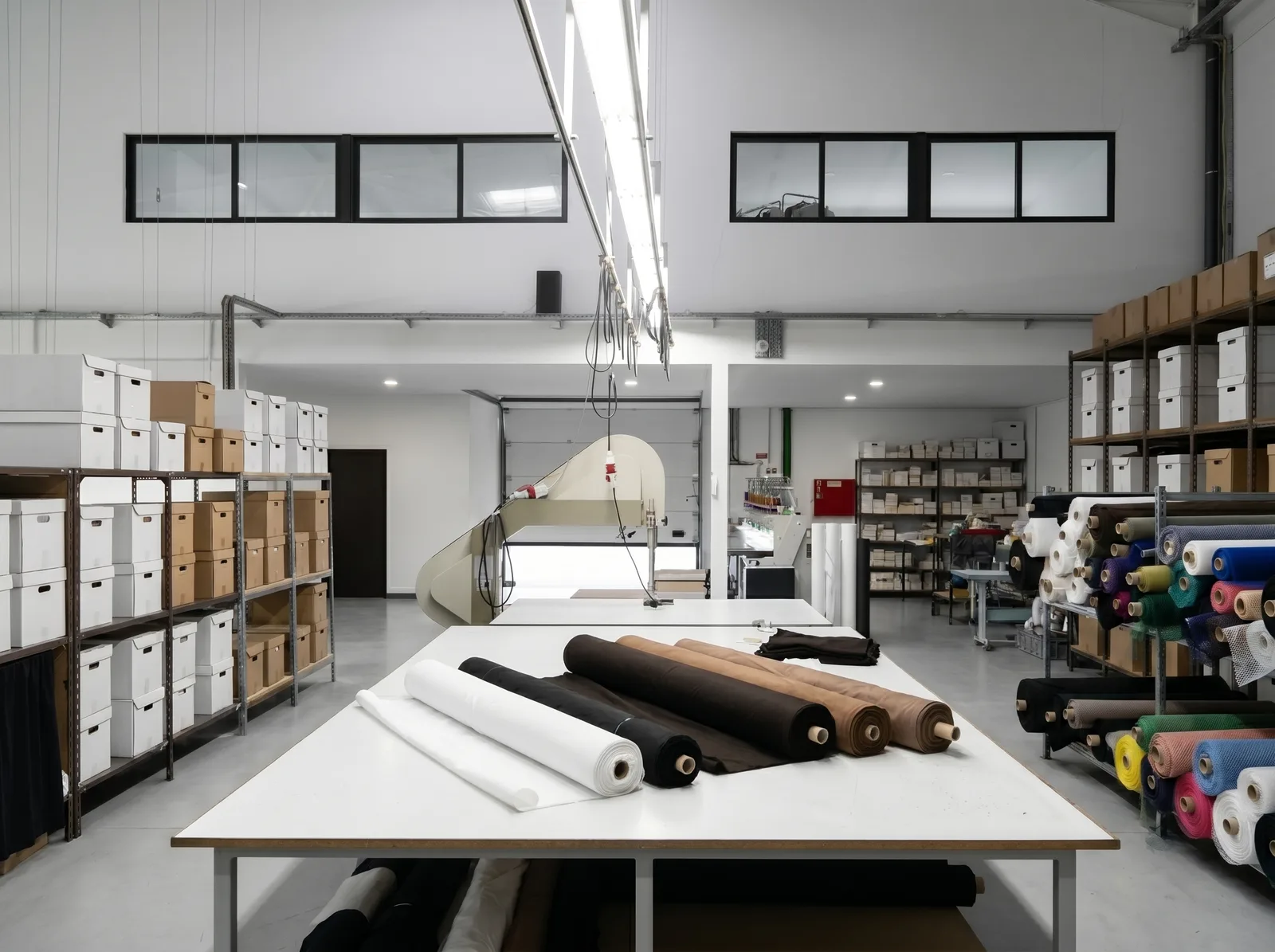
At White Cotton, we manufacture creator merch and clothing lines in Barcelos, Portugal — from 75-unit limited drops to scaled seasonal collections. All garments use fabrics sourced from OEKO-TEX and GOTS certified mills, with custom labels, packaging, and branding built into every order.
Factory visits are available for production clients — once samples are approved and bulk production is underway. To start your first drop, request a quote with your garment ideas, quantities, and timeline.

Pedro Carreira
Founder of White Cotton, a textile manufacturer in Barcelos, Portugal. Producing custom clothing collections for brands across 15+ countries.
Continue Reading

Dubai Fashion Market 2026 — Opportunities for Emerging Brands
![Why Dubai's Smartest Companies Are Switching to European-Made Team Wear [2026]](/_next/image?url=%2Fimages%2Fgenerated%2Fblog%2Fwhy-european-made-team-wear-dubai.webp&w=1920&q=75)
Why Dubai's Smartest Companies Are Switching to European-Made Team Wear [2026]
Corporate Clothing for Dubai Companies — Full Guide (2026)
![Corporate Gifting with Clothing — Why European-Made Stands Out in Dubai [2026]](/_next/image?url=%2Fimages%2Fgenerated%2Fblog%2Fcorporate-gifting-clothing-dubai.webp&w=1920&q=75)
Corporate Gifting with Clothing — Why European-Made Stands Out in Dubai [2026]