Portugal vs Turkey for GCC Brands — Costs & Quality Compared
Portugal vs Turkey for GCC brands: per-unit costs, MOQ, shipping to Dubai, certifications and fabric quality compared side by side with real data.
 Pedro Carreira··10 min read
Two European Manufacturing Options for Gulf Brands
When GCC-based fashion brands move production out of Asia — or launch their first brand with European manufacturing — Portugal and Turkey are the two countries that dominate the shortlist. Both are established textile hubs. Both offer European-adjacent or European-standard quality. Both ship to the Gulf in under three weeks.
But they are different factories for different brands. This comparison is written from the Portuguese side — we are transparent about that — but it is based on real experience working alongside Turkish-produced garments in the GCC market. We will tell you where Turkey wins. For full details on our manufacturing service for Dubai and UAE brands, see the dedicated page.
Cost Comparison
How do manufacturing costs compare for GCC brands?
For a benchmark product — a 350 GSM French terry hoodie with embroidered chest logo, 300 pieces:
| Factor | Portugal | Turkey |
|---|---|---|
| Unit cost | $15–22 | $12–18 |
| Fabric quality | Premium ring-spun, certified options | Good quality, variable by factory |
| Shipping to Dubai (air) | $6–9/unit (4–5 days) | $4–6/unit (2–3 days) |
| Shipping to Dubai (sea) | $2.50–4/unit (18–22 days) | $1.50–3/unit (10–14 days) |
| UAE customs duty | 5% | 5% |
| Currency | EUR (stable) | TRY (volatile) |
| Landed cost per unit | $20–30 | $15–24 |
Turkey is cheaper on a per-unit basis. That is the honest starting point. The cost gap is typically 15–25% on comparable products, driven by lower labour costs and domestic cotton production. If you want the full landed picture for a GCC brand rather than the head-to-head, the cost of manufacturing for Dubai brands walks through duties, freight and the hidden lines.
However, three factors complicate the raw comparison:
- 1.Turkish lira volatility — the TRY has depreciated significantly against the USD and EUR over the past five years. Prices quoted in TRY can shift between quotation and delivery. Some Turkish factories quote in EUR/USD to mitigate this, but the underlying cost instability remains
- 2.Fabric quality variance — Turkey has excellent mills, but also a wide quality spectrum. Premium Turkish fabric costs approach Portuguese pricing. The headline cost advantage often comes from mid-grade fabric
- 3.Hidden costs — Turkish factories at lower price points may have less consistent quality control, requiring more inspection costs and higher rejection rates
Is Portugal worth the premium for GCC brands?
For brands selling at AED 100–200 (mass to mid-market), Turkey is usually the better value. For brands selling at AED 250–600+ (contemporary to premium), Portuguese manufacturing costs are absorbed by the retail price — and the "Made in Portugal" label actively supports the price point in Gulf retail.
Minimum Order Quantities
This is where Portugal has a decisive advantage for startups and emerging brands.
| Portugal | Turkey | |
|---|---|---|
| Typical MOQ (quality factories) | 75–100 per style per colour | 200–500 per style per colour |
| First order total investment | $750–1,500 per style | $3,000–10,000 per style |
| Sample minimums | 1 piece per style | 1–3 pieces per style |
| Fabric MOQ | 50m–100m (or from stock) | 200m–500m (or from stock) |
| Low-MOQ surcharge | Rarely applied | Common under 200 pieces |
Why does MOQ matter so much for GCC brands?
For a Dubai or Saudi brand launching with a 10-style collection at 75 pieces per colourway, Portugal requires 750 total units. Turkey would require 2,000–5,000 units for comparable quality. That is a $30,000–50,000 difference in first-order capital.
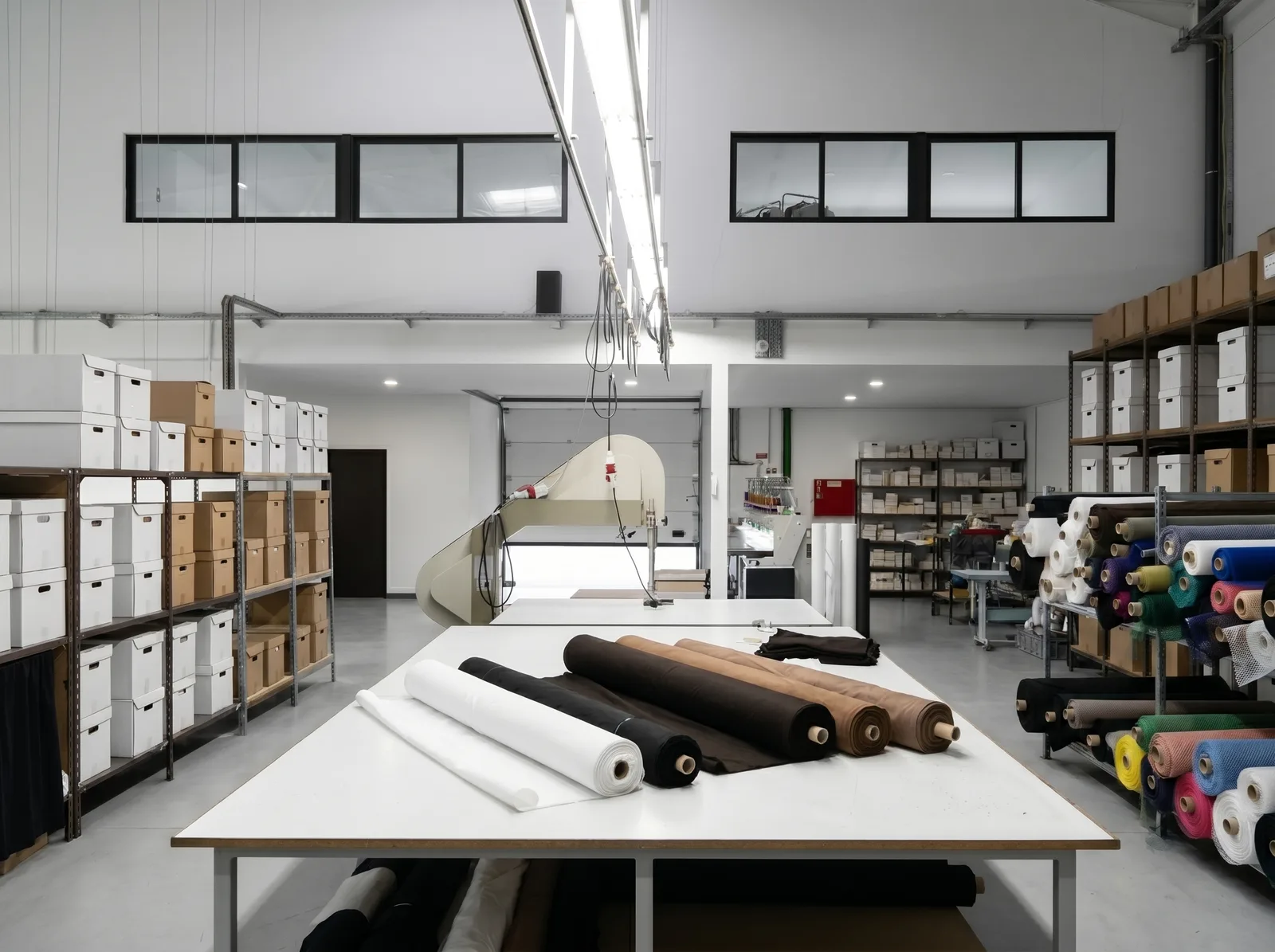
Portuguese factories are smaller — often family-run operations with 20–80 employees — which makes low MOQs operationally feasible. Turkish export factories tend to be larger and optimised for higher-volume production runs where the economics work at scale.
For more on how MOQs work, read our MOQ guide.
Shipping Times to the GCC
Turkey wins on geography. Istanbul to Dubai is a 4.5-hour direct flight. Porto to Dubai is approximately 7 hours with a connection.
| Method | Portugal to Dubai | Turkey to Dubai |
|---|---|---|
| Air freight | 4–5 days | 2–3 days |
| Sea freight | 18–22 days | 10–14 days |
| Courier (samples) | 3–4 days | 2–3 days |
| Production lead time | 6–12 weeks | 4–6 weeks |
| Total (air, from order) | roughly 3 to 6 months | 5–8 weeks |
Turkey's geographic advantage shows up more in sample and reorder speed than in first-order total time, since Portuguese production still runs a full 6 to 12 week cycle from the deposit.
For a detailed breakdown of Portugal-to-Dubai costs and logistics, read our shipping guide.
Fabric Strengths
What is each country best at producing?
This is the most important factor for many brands, and it is where the two countries diverge most clearly.
Turkey excels at:
- —Denim — Turkey is one of the world's top three denim producers. Major mills like Isko, Bossa, and Orta produce world-class selvedge and stretch denim. If your brand is denim-focused, Turkey is likely the better choice
- —Woven fabrics — cotton poplin, chambray, Oxford cloth, linen blends. Turkey's weaving infrastructure is extensive and cost-competitive
- —Shirts and outerwear — button-down shirts, jackets, coats. Turkey's cut-and-sew capacity for woven garments is strong
- —Technical fabrics — Turkey has growing capacity in performance and technical textiles for activewear
Portugal excels at:
- —Premium knits — jersey, French terry, fleece, loopback, waffle knit. Portugal's northern textile corridor (Barcelos, Guimaraes, Braga) has specialised in knitwear for generations
- —Heavyweight garments — Portuguese mills and factories routinely work with fabrics from 280 GSM up to 1100 GSM. This heavyweight capability is rare globally and particularly relevant for the premium streetwear market driving GCC fashion
- —Fleece and brushed fabrics — heavyweight hoodies, sweatshirts, and joggers are Portugal's signature product category. The brushing and finishing quality is difficult to replicate elsewhere
- —Fine jersey — lightweight 140–200 GSM organic cotton tees and basics for hot climates
What does this mean for GCC brands?
If your collection is primarily hoodies, sweatshirts, joggers, premium tees, and heavyweight streetwear — Portugal is the stronger manufacturer. These categories dominate what GCC streetwear and contemporary brands are producing.
If your collection is primarily denim, woven shirts, or structured outerwear — Turkey will likely deliver a better product at a better price.
Many GCC brands split production: knitwear from Portugal, wovens from Turkey. This is a practical approach that plays to each country's strengths.
Certifications and Sustainability
Which country offers stronger sustainability credentials?
Portugal has a structural advantage because it operates within the EU regulatory framework.
| Certification/Standard | Portugal | Turkey |
|---|---|---|
| GOTS (organic cotton) | Widely available, mill and factory level | Available but less widespread |
| OEKO-TEX Standard 100 | Standard across major mills | Available at export-oriented mills |
| GRS (Global Recycled Standard) | Growing adoption | Growing adoption |
| EU environmental regulation | Mandatory compliance | Not applicable |
| EU labour law | Mandatory compliance | Turkish labour law (less stringent) |
| BCI (Better Cotton) | Available | Available |
| REACH compliance | Mandatory (EU law) | Voluntary (export requirement only) |
For GCC brands targeting sustainability-conscious consumers — and that segment is growing fast among Saudi and UAE Gen Z — Portuguese manufacturing provides verifiable EU-standard credentials. "Made in Portugal" combined with OEKO-TEX or GOTS certification is a powerful label combination in Gulf retail.
Important note: at White Cotton, we source OEKO-TEX and GOTS certified fabrics from certified mills. We do not hold factory-level GOTS certification ourselves. When evaluating any manufacturer — Portuguese or Turkish — ask specifically whether the certification is at the fabric/mill level or the factory level. Read our certifications guide for a full breakdown.
The "Made in" Label in the GCC Market
Does country of origin matter to Gulf consumers?
Yes, significantly. GCC consumers — particularly in the UAE and Saudi Arabia — are brand-conscious and origin-conscious.
"Made in Portugal" carries European prestige. It sits alongside Italy, France, and Spain as a "Made in Europe" origin that signals premium quality. Portuguese manufacturing is associated with luxury brands (many European designer labels produce in Portugal) and premium streetwear. Gulf consumers at the AED 300+ price point respond positively to the label.
"Made in Turkey" is respected but perceived differently. Turkey is associated with good-quality commercial production rather than luxury. For mid-market brands (AED 100–250), "Made in Turkey" is perfectly acceptable. For premium brands (AED 300+), it can work against the brand positioning in Gulf retail environments.
Currency and Payment Terms
How do payment and currency risks compare?
Portugal (EUR): The euro is stable and predictable. A quote in euros today will be close to the exchange rate when you pay. AED is pegged to USD, and EUR/USD fluctuations are typically under 5% over a production cycle. Payment terms for new clients: 50% deposit, 50% before shipping.
Turkey (TRY): The Turkish lira has depreciated dramatically over the past five years. While this makes Turkey cheaper in the short term, it creates uncertainty. Turkish factories often quote in USD or EUR to hedge their own risk, which negates the lira advantage. Mid-production cost increases are more common when suppliers face lira-driven margin pressure.
For GCC brands managing cash flow in AED/USD, euro-denominated production costs from Portugal are more predictable over multiple production cycles.
Communication and Language
Both countries have English-speaking textile industries experienced with international clients. Portuguese factories tend to be smaller with direct owner/manager communication. Turkish export factories may have dedicated account managers — professional but adding a layer between you and production.
Time zone differences to the Gulf are minor: Portugal is 2–3 hours behind GCC, Turkey is 1 hour behind GCC. Both work well for same-day communication.
When to Choose Portugal for Your GCC Brand
- —Your brand positions at premium (AED 250+) and the "Made in Europe" label supports your pricing
- —You are producing knitwear: hoodies, sweatshirts, joggers, heavyweight tees
- —You need low MOQs (under 200 pieces per style) for market testing or exclusive drops
- —You need heavyweight fabrics (400–1100 GSM) for premium streetwear
- —Sustainability credentials and certified fabrics matter to your customers
- —You want direct factory relationships without intermediaries
- —You value currency stability and predictable costs
When to Choose Turkey for Your GCC Brand
- —Your brand is mid-market (AED 100–250) and cost efficiency is the priority
- —You are producing denim, woven shirts, or structured outerwear
- —Your volumes are 500+ pieces per style and you benefit from Turkey's production scale
- —Faster sea freight (10–14 days vs 18–22 days from Portugal) matters for your restocking cycle
- —Denim or technical fabrics are central to your collection
- —Geographic proximity for factory visits is important (3–4 hour flight from GCC)
Our Perspective
We are a Portuguese factory in Barcelos, and our strength is premium cut-and-sew jersey and fleece garments — hoodies, sweatshirts, joggers, and heavyweight garments up to 1100 GSM. For GCC brands in the streetwear and contemporary fashion space, we believe Portugal offers a strong combination of quality, flexibility, and brand positioning.
That said, if you are building a denim brand, we would honestly recommend looking at Turkey first. A good Turkish denim factory will serve you better than we can for that product category.
Many of our GCC clients split production: jersey and fleece basics from Portugal, wovens from Turkey. That combination plays to each country's strengths and is a practical approach for brands with diverse collections.
If you are launching premium knitwear for the Gulf market, we would be glad to talk. For more context, read our broader Portugal vs Turkey manufacturing comparison, the shipping logistics guide for Dubai, or explore our page for Dubai and GCC brands.

Pedro Carreira
Founder of White Cotton, a textile manufacturer in Barcelos, Portugal. Producing custom clothing collections for brands across 15+ countries.
Continue Reading
![Modest Fashion Manufacturing Guide — Fabrics, Fits & Production [2026]](/_next/image?url=%2Fimages%2Fgenerated%2Fblog%2Fmodest-fashion-manufacturing-guide.webp&w=1920&q=75)
Modest Fashion Manufacturing Guide — Fabrics, Fits & Production [2026]
What Is a Tech Pack for Clothing? A Real Example, Page by Page

How Much Does It Cost to Start a Clothing Brand in 2026? Real Numbers
![Hoodie Manufacturing Costs: Real Prices from a Portuguese Factory [2026]](/_next/image?url=%2Fimages%2Fgenerated%2Fblog%2Fhoodie-manufacturing-costs-breakdown.webp&w=1920&q=75)
Hoodie Manufacturing Costs: Real Prices from a Portuguese Factory [2026]
![How to Find a Clothing Manufacturer in Portugal: A Factory Owner's Honest Guide [2026]](/_next/image?url=%2Fimages%2Fgenerated%2Fblog%2Fhow-to-find-clothing-manufacturer-portugal.webp&w=1920&q=75)