250,000 New UAE Companies in 2025 — Every One Needs Branded Clothing [2026]
250K new UAE companies registered in 2025. What branded clothing they need: team hoodies, corporate polos, event tees, onboarding kits. European manufacturing from 75 units.
 Pedro Carreira··9 min read
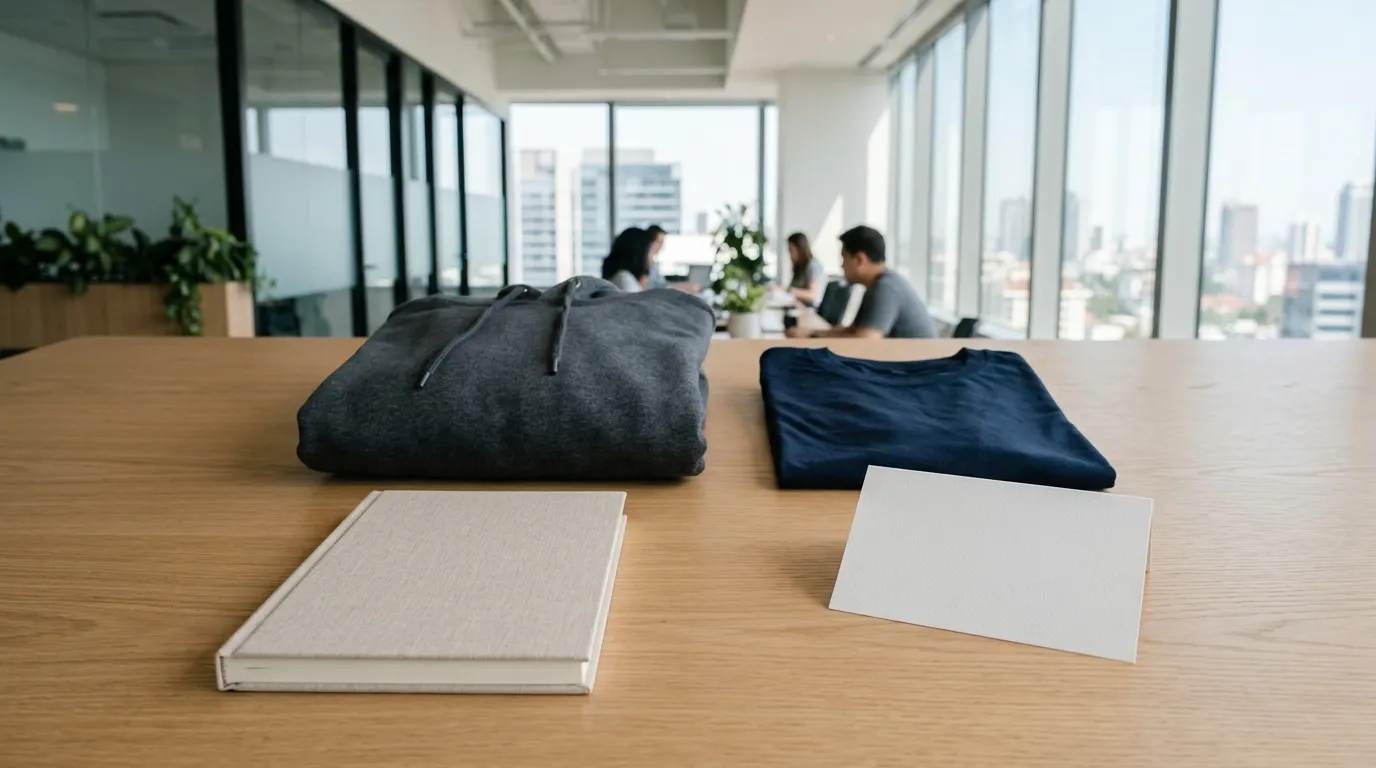
![250,000 New UAE Companies in 2025 — Every One Needs Branded Clothing [2026]](/_next/image?url=%2Fimages%2Fgenerated%2Fblog%2Fnew-uae-companies-branded-clothing.webp&w=1920&q=75)
250,000 Companies Registered in the UAE in 2025. Every Single One Needs Branded Clothing.
The UAE registered over 250,000 new companies in 2025. Dubai alone processed 70,000+ new business licences in the first half of the year. DMCC — the world's largest free zone — has 26,000+ active member companies and adds hundreds per month. DIFC, ADGM, Jebel Ali, Dubai South, and Sharjah's free zones are all growing at record pace.
Every one of these companies will, at some point in their first 12 months, need branded clothing. A team hoodie for the founding team. Polo shirts for a trade show booth. T-shirts for a product launch event. An onboarding kit for the first batch of hires. Corporate gifts for a client dinner.
Most default to the fastest option: a local print shop in Al Quoz that screen-prints logos on generic blanks for AED 20–30 per piece. The result is thin fabric (150–160gsm), cracked prints within 5 washes, and a brand impression that says "we didn't think about this." For a company raising Series A funding or pitching enterprise clients, that's an expensive signal to send.
Here's how companies that take brand seriously approach it — from 75-unit first orders to scaled corporate programmes.
What do new companies order first?
The pattern is remarkably consistent across industries — tech startups, consultancies, e-commerce brands, F&B concepts, real estate agencies. The first branded clothing order follows a predictable playbook:
Stage 1 — Founding team identity (Month 1–3): 75–100 pieces. Usually branded hoodies or sweatshirts for the core team. This is tribal clothing — it creates internal identity before the company has external recognition. The founding team wears these to co-working spaces, investor meetings, and late-night work sessions. In Dubai's startup ecosystem (Station F outpost, Hub71, Area 2071), your hoodie is your business card.
Stage 2 — Events and visibility (Month 3–8): 75–150 pieces. The company attends GITEX, Expand North Star, Arab Health, or a vertical-specific conference. Suddenly they need matching team wear for a booth — branded tees, polos, or lightweight jackets. This is the order where quality starts to matter visibly: the team is photographed, filmed, and compared to neighbouring booths.
Stage 3 — Corporate programme (Month 8–18): 100–500+ pieces. The company has hired 20–50 people. They need onboarding kits (hoodie + tee + cap), corporate polos for client-facing staff, and seasonal items for team events. This is where a relationship with a manufacturer replaces ad-hoc print shop orders.
What's the startup merch playbook?
The companies that build the strongest brand through clothing follow a simple framework: start small, test quality, then scale.
Start with 100 units. Minimum order quantities at a quality manufacturer begin at 100 pieces per style in one colourway, or 75 per colourway across two or more. For a 10-person startup, that's 100 hoodies — 10 per team member. Cost: €500–1,000 depending on fabric weight and branding method. This is not a significant budget item for a company spending AED 50,000+/month on rent alone.
Test one garment type. Don't order hoodies, tees, polos, and caps simultaneously on the first run. Pick the garment that will get the most daily wear — usually a heavyweight hoodie (350–400gsm) or a premium crew-neck sweatshirt. Get the quality right on one item before expanding.
Use the sample to fundraise. This is the part most startups miss. A premium branded hoodie sitting on the desk during an investor call, or worn by the founding team in a pitch video, signals operational maturity. Investors in the Gulf ecosystem — where presentation weight is higher than in Silicon Valley — notice these details. A YC-style plain tee works in San Francisco. In Dubai, it reads as underfunded.
Scale to a catalogue. Once the first garment proves the quality, expand: summer tees (180–200gsm organic cotton), winter joggers, event-specific limited editions, client gift sets with premium packaging.
Why are free zones creating a permanent demand cycle?
Dubai's free zone model creates a structural demand for branded clothing that doesn't exist in traditional business ecosystems. Here's why:
High company density, high visibility. DMCC's 26,000+ companies share a physical cluster in JLT. DIFC's 4,900+ firms occupy a walkable district. Hub71 in Abu Dhabi houses 400+ startups in shared facilities. When companies operate in dense, visible clusters, branded clothing becomes ambient advertising. Your team walks to lunch in DMCC and passes 50 other company teams. The ones in branded gear are remembered.
Networking as a business model. Free zones run 200+ events per year — mixers, demo days, trade delegations, regulatory workshops. Every event is a room full of companies wearing their brand. The companies in custom-manufactured premium hoodies stand out from the ones in Vistaprint tees.
Multinational teams. The average UAE startup has employees from 5–10 nationalities. Branded clothing is one of the few cultural unifiers that works across all backgrounds — it creates team identity without requiring language or cultural alignment.
Rapid scaling. A company that enters DMCC with 3 people may have 30 within 18 months. Each new hire needs branded clothing. A relationship with a manufacturer that holds your tech pack on file and can deliver 75-piece reorders in 4–5 weeks solves this permanently.
How does branded clothing turn employees into brand ambassadors?
In Dubai, people don't change at the office and change back for personal time. They wear their work gear to Dubai Mall, to brunch, to the gym, to the airport. A premium branded hoodie worn by a company's engineer on a Friday afternoon at Kite Beach is a brand impression — for free.
This only works if the garment is good enough to wear voluntarily. The test is simple: would an employee wear this on a weekend? If the answer is no — because the fabric is thin, the print is cracking, or the fit is boxy — the clothing stays in a desk drawer and generates zero brand impressions.
The companies that get this right treat branded clothing as a product, not a commodity. They choose premium fabric weights (300gsm+ for hoodies, 200gsm+ for tees), invest in quality embroidery or DTG printing, and design garments people are proud to wear. The per-unit cost is €15–30 instead of €5–8 — but the brand ROI from voluntary daily wear is incomparably higher.
What does it cost to launch a branded clothing programme?
For a new company starting from zero:
| Programme | Pieces | Garment Types | Est. Cost (EUR) | Timeline |
|---|---|---|---|---|
| Founding team kit | 100 | 1 style (hoodie or sweatshirt) | €500–1,000 | 6–8 weeks |
| Event/conference run | 100 | 1–2 styles (tee + polo) | €800–1,500 | 6–8 weeks |
| Onboarding programme | 200 | 3 styles (hoodie + tee + cap) | €2,000–3,500 | 8–10 weeks |
| Full corporate catalogue | 500+ | 5+ styles | €5,000–10,000 | 10–12 weeks |
These costs compare to: office furniture (AED 50,000+), company formation fees (AED 15,000–50,000), annual free zone licence (AED 20,000–50,000). A branded clothing programme at €1,000–3,500 is one of the highest-ROI brand investments a new company can make.
Why choose European-made from day one?
The default for new UAE companies is local print shops or Chinese bulk imports via Alibaba. Both serve a purpose for disposable promotional items. Neither serves the purpose of building a brand.
Quality differential: European-manufactured garments use 200–300gsm certified fabrics vs. 150–170gsm commodity blanks from local suppliers. The difference is visible and tactile — guests, investors, and clients feel it when they receive a corporate gift.
Certification: OEKO-TEX Standard 100 ensures fabrics are tested for harmful substances — relevant for companies with ESG commitments or sustainability positioning. "Made in Portugal, OEKO-TEX certified" on a garment label is a brand statement that resonates with European, North American, and increasingly Gulf-based clients.
Durability as brand protection: A cheap hoodie that pills and fades after 2 months is a walking anti-advertisement. A European-made hoodie that looks premium after 12 months of daily wear is a walking billboard. The difference in lifespan — 3–6 months vs. 18–30 months — means the European option is often cheaper per impression.
Scalability: A manufacturer that holds your tech pack, Pantone colours, and embroidery files on file can fulfil reorders in 4–5 weeks with zero re-setup. As your team grows from 10 to 100, the uniform programme scales without renegotiating with print shops every time.
What about onboarding kits as a retention tool?
Dubai's job market is one of the most competitive on earth. Tech companies, consultancies, and financial services firms compete fiercely for talent. Employee turnover in the UAE averages 15–20% annually, with some sectors exceeding 30%.
Onboarding kits — a premium hoodie, branded tee, and packaged gift set delivered on the first day — have a measurable impact on early-stage employee engagement. Companies like Careem, Noon, and Kitopi popularised this approach in the Gulf. New hires post their kits on LinkedIn, generating organic employer brand content that recruitment advertising cannot buy.
The kit itself is not complex: 3 garments per employee, custom packaging (branded box, tissue paper, welcome card), total cost €30–50 per kit. For a company spending AED 25,000+/month per employee in total compensation, a €40 onboarding kit that boosts retention and generates free LinkedIn content is a no-brainer investment.
How to start: the 75-unit first order
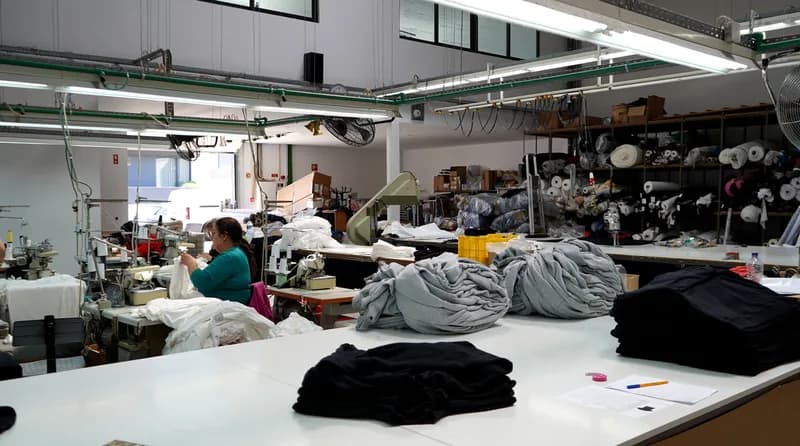
At White Cotton, we manufacture corporate branded clothing for companies across the Gulf — from startup founding-team hoodies to 500-person corporate programmes. Minimum order is 100 pieces per style in one colourway, or 75 per colourway across two or more. All garments are produced in Barcelos, Portugal using fabrics sourced from OEKO-TEX and GOTS certified mills.
The process: submit your logo and garment preferences via our quote form. We develop a tech pack, produce physical samples (usually 4 to 8 weeks from payment), and move to production once approved (usually 6 to 12 weeks from the deposit). Shipping to Dubai takes 4–5 days by air.
Factory visits are available for production clients — once samples are approved and bulk production is underway. For companies building their first branded clothing programme, request a quote to get started.

Pedro Carreira
Founder of White Cotton, a textile manufacturer in Barcelos, Portugal. Producing custom clothing collections for brands across 15+ countries.
Continue Reading
![The Problem with Cheap Uniforms: Why Dubai Companies Are Going European [2026]](/_next/image?url=%2Fimages%2Fgenerated%2Fblog%2Fcheap-uniforms-problem-dubai.webp&w=1920&q=75)
The Problem with Cheap Uniforms: Why Dubai Companies Are Going European [2026]
Dubai Fashion Market 2026 — Opportunities for Emerging Brands
![Why Dubai's Smartest Companies Are Switching to European-Made Team Wear [2026]](/_next/image?url=%2Fimages%2Fgenerated%2Fblog%2Fwhy-european-made-team-wear-dubai.webp&w=1920&q=75)
Why Dubai's Smartest Companies Are Switching to European-Made Team Wear [2026]
Case Study: Five-Star Dubai Hotel Switches to Portuguese-Manufactured Staff Uniforms