Modest Fashion Manufacturing Guide — Fabrics, Fits & Production [2026]
How to manufacture modest fashion: fabric selection for coverage and climate, pattern grading for longer silhouettes, decoration, MOQs, and production timelines.
 Pedro Carreira··9 min read
![Modest Fashion Manufacturing Guide — Fabrics, Fits & Production [2026]](/_next/image?url=%2Fimages%2Fgenerated%2Fblog%2Fmodest-fashion-manufacturing-guide.webp&w=1920&q=75)
What Makes Modest Fashion Manufacturing Different
Modest fashion is not simply longer versions of existing garments. It is a distinct design discipline with specific pattern-making requirements, fabric performance demands, and cultural considerations that most general-purpose factories are not equipped to handle well. The global modest fashion market is valued at approximately $300 billion in 2026, with the GCC, Southeast Asia, and European diaspora communities driving the fastest growth.
The manufacturing differences are structural: longer silhouettes change how fabric drapes and moves, coverage requirements affect seam placement and construction, and layering demands mean every piece must work as part of a system rather than in isolation. Getting these details right at the production stage is the difference between a modest garment that looks intentionally designed and one that looks like a conventional garment that was simply made longer.
Fabric Selection: Coverage Meets Climate
Fabric choice in modest fashion carries more weight than in conventional garments. The fabric must provide adequate coverage (opacity, structure), perform in the climate where it will be worn, and maintain its drape across longer yardages.
Which fabrics work best for modest fashion?
For warm-climate modest fashion — the majority of the market — the priority is opacity without heat. The best fabrics are:
- —Linen (140–200 GSM): Naturally breathable, temperature-regulating, and opaque enough for single-layer wear. Ideal for abayas, wide-leg trousers, oversized shirts, and layering pieces. Wrinkles are part of the aesthetic — modern modest brands lean into this. €6–10/metre.
- —Cotton poplin (100–140 GSM): Crisp, structured, and lightweight. Excellent for tunics, shirt dresses, and structured modest blouses. Holds its shape well across the longer body lengths that modest cuts require. €4–7/metre.
- —Organic cotton jersey (180–220 GSM): Soft hand-feel for everyday basics — long-sleeve tees, underdresses, and layering pieces. GOTS-certified options are available for brands with sustainability positioning. At 180 GSM+, single-layer opacity is achievable without lining. €5–9/metre.
- —Viscose/rayon blends: Fluid drape that works beautifully for maxi dresses, wide-cut trousers, and overlay pieces. Lightweight enough for 40°C+ climates. €5–8/metre.
- —Modal jersey: Softer and more breathable than standard cotton jersey, with excellent drape for longer silhouettes. Resists pilling across the higher surface area of modest pieces. €7–11/metre.
Fabrics to avoid for warm-climate modest fashion: polyester (heat traps), stiff denim at heavier weights (restricts movement in longer cuts), and anything below 160 GSM in single-layer construction (insufficient opacity).
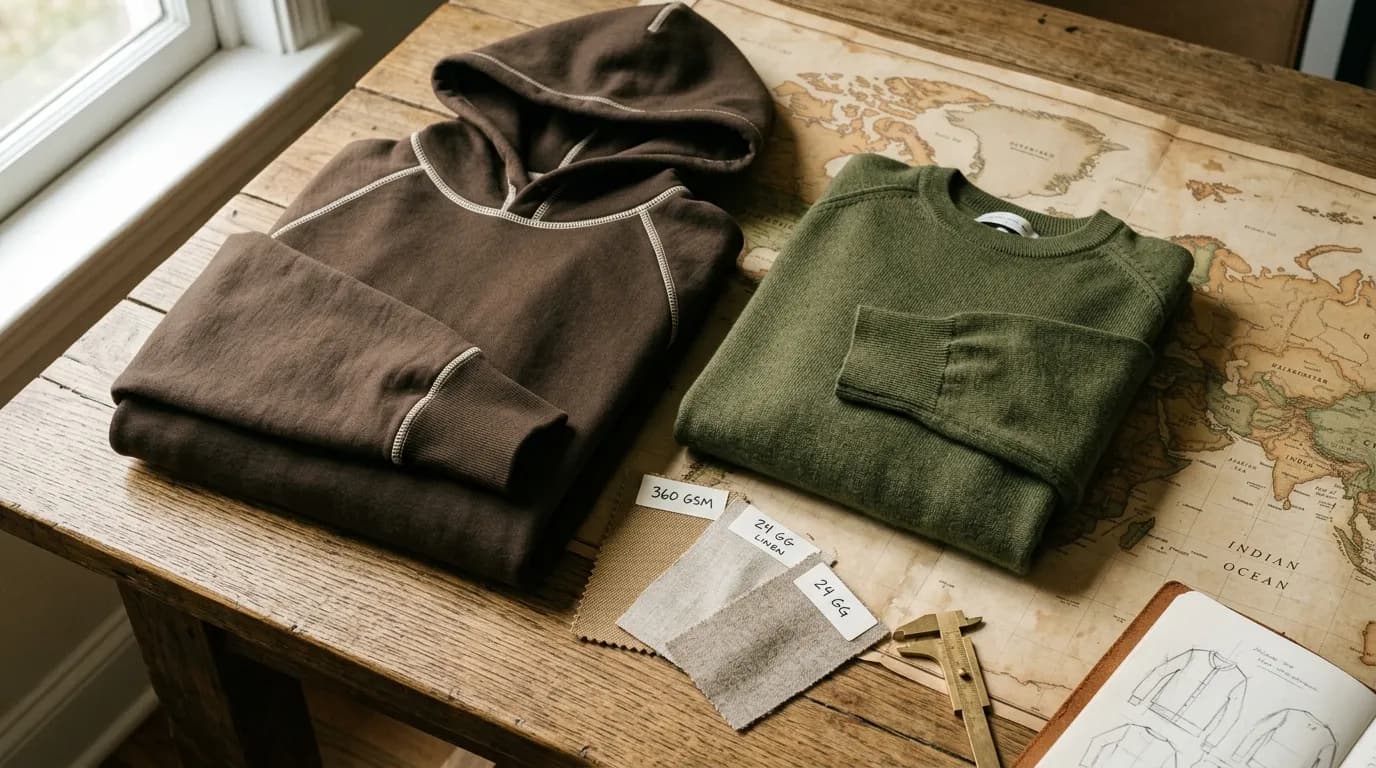
For cooler-climate modest fashion (European diaspora, North America), French terry (280–350 GSM) and brushed fleece work well for heavyweight modest pieces — oversized hoodies with extended length, high-neck sweatshirts, and modest athleisure.
Pattern Making for Modest Cuts
Standard pattern blocks do not translate to modest fashion by simply adding length. The proportions, ease allowances, and construction details all shift.
How are modest fashion patterns different from standard patterns?
Key pattern-making adjustments for modest garments:
Extended lengths: Modest tops typically fall at mid-thigh to knee length. Dresses and abayas run to ankle. This changes the fabric consumption calculation significantly — a modest tunic uses 40–60% more fabric than a standard-length top in the same size.
Wider sleeves: Full-length sleeves with additional ease are standard. Dropped shoulders and dolman sleeves are popular because they provide coverage without restricting arm movement. Sleeve openings need to be wide enough that the fabric does not ride up.
Higher necklines: Crew necks, mock necks, and mandarin collars are the default. V-necks and scoop necks are typically avoided. Pattern makers need to ensure neckline depth stays consistent across the size range — a neckline that works on a size S may drop too low on a size XL without adjustment.
Movement ease: Because modest garments tend to be longer and more coverage-oriented, movement ease becomes critical. Side slits in tunics, inverted pleats in skirts, and gusseted sleeves prevent the garment from restricting the wearer. These details must be engineered at the pattern stage, not added as afterthoughts.
Layering compatibility: Many modest outfits involve 2–3 layers. Each piece must be graded with enough ease to wear comfortably over or under other garments. An inner dress that fits perfectly alone but is too tight under an open abaya has failed its purpose.
At White Cotton, our pattern-making team works through these requirements during the sampling process. We flag fit issues at the first sample stage — before fabric is committed to bulk cutting.
Sizing: Standard vs Custom Grading
Modest fashion brands face a sizing decision that conventional brands often do not. Western standard sizing (XS–XL or UK 6–18) is designed around a fit model and proportional grading that assumes standard-length garments. When you extend a garment to mid-thigh or ankle, the grading rules change.
Width-to-length ratios need adjustment. A standard size chart might add 2 cm to the bust and 1.5 cm to the length per size. For a modest maxi dress, the length grading may need to increase to 2–2.5 cm per size to maintain visual proportions.
Regional sizing is also a factor. GCC consumers generally require different size distributions than European or US markets. Brands selling into Dubai and Saudi Arabia often see peak demand at M and L rather than the S/M split that dominates European retail.
Most brands start with 5 sizes (XS–XL) and adjust after the first season based on sales data. Custom size charts with modest-specific grading cost no more than standard grading — the work is in the initial setup, not per-unit production.
Decoration for Modest Fashion
Decoration in modest fashion has cultural and aesthetic dimensions that differ from mainstream fashion.
What decoration techniques work for modest fashion brands?
Embroidery is the dominant decoration method for premium modest fashion. Arabic calligraphy, geometric patterns, and floral motifs are the most requested designs. Key considerations:
- —Flat embroidery for calligraphy (clean, legible at smaller sizes)
- —Placement on chest panels, cuffs, and back yoke (avoiding areas where embroidery would cause discomfort under layers)
- —Thread colours: gold, silver, and tone-on-tone white are perennial sellers for the GCC market
- —Cost: €0.80–4.00 per piece depending on stitch count and placement
Screen printing works for contemporary modest streetwear — oversized tees with mid-thigh length, printed jogger sets, and statement pieces. Water-based inks are preferred for lightweight fabrics. €1–3 per colour per piece.
Tone-on-tone detailing — matching thread embroidery on matching fabric — is a growing trend in premium modest fashion. It communicates luxury through texture rather than contrast. More expensive to produce (requires precision) but commands higher retail prices.
Sublimation is effective for all-over printed modest pieces — headscarves, wide-leg trousers, and tunic dresses with repeating geometric patterns. Works best on polyester or poly-blend fabrics.
White Cotton offers all major decoration methods — embroidery in-house, printing through partner print shops close by — with quality control on every piece before it ships.
Certifications and Compliance
Modest fashion consumers — particularly in the GCC and among Western Muslim communities — are increasingly sustainability-conscious. Certifications serve both a compliance and marketing function.
OEKO-TEX Standard 100: Certifies that fabrics are tested for harmful substances. Essential for garments worn close to skin in hot climates. White Cotton sources OEKO-TEX certified fabrics across all our fabric families.
GOTS (Global Organic Textile Standard): Required if you market any garment as "organic." Covers the full supply chain from fibre to finished product.
BCI (Better Cotton Initiative): Relevant for brands positioning on responsible sourcing.
Important distinction: White Cotton sources certified fabrics from verified suppliers. We do not hold factory-level GOTS certification ourselves — we source GOTS-certified materials for brands that require them. This is a meaningful difference and one you should verify with any manufacturer.
Production Timeline for Modest Fashion
A typical modest fashion production timeline from initial enquiry to delivery:
| Stage | Timeline |
|---|---|
| Initial quote | Within a few days |
| First sample | Usually 4–8 weeks from payment |
| Sample revisions (if needed) | Depends on the changes |
| Bulk production | Usually 6–12 weeks from the deposit (4–8 with fabric in stock) |
| Quality control and packing | Part of the production time |
| Shipping (air to GCC) | 4–5 days |
| Total (first order) | Roughly 3–6 months |
Reorders are faster — 4–6 weeks from order to delivery — because patterns and specifications are already finalised.
For Ramadan collections, which represent the single largest seasonal opportunity in modest fashion, plan production to start at least 4 months before Ramadan begins. See our Ramadan planning guide.
MOQ Considerations
Modest fashion brands typically launch with smaller, focused collections — 3–5 styles rather than the 8–12 that conventional fashion brands attempt. This makes low MOQs critical.
White Cotton makes the cut-and-sew pieces of a modest collection — long-line tees, oversized tops, wide-leg joggers, co-ord sets and outerwear in cotton jersey and fleece, and woven poplin or oxford shirts. We don't make dresses or abayas.
At White Cotton, MOQs for modest fashion are the same as our standard minimums:
- —Lightweight pieces (tees, tunics): 100 pieces per colour (75 if ordering 2+ colourways)
- —Heavyweight pieces (hoodies, sweatshirts): 75 pieces per colour (50 if ordering 2+ colourways)
These quantities let you test a modest collection with a realistic investment — typically €3,000–8,000 for a 3-style capsule — before committing to larger volumes.
Getting Started
If you are developing a modest fashion collection, request a quote with your design references and target market. Include fabric preferences, decoration details, and expected quantities. We will return a full cost breakdown within a few days.
For brands targeting the GCC market specifically, see our Dubai brand guide, Saudi market analysis, and shipping guide. Essential reading: fabric sourcing guide, clothing production costs breakdown, how to create a tech pack.

Pedro Carreira
Founder of White Cotton, a textile manufacturer in Barcelos, Portugal. Producing custom clothing collections for brands across 15+ countries.
Continue Reading
Portugal vs Turkey for GCC Brands — Costs & Quality Compared
What Is a Tech Pack for Clothing? A Real Example, Page by Page

How Much Does It Cost to Start a Clothing Brand in 2026? Real Numbers
![Hoodie Manufacturing Costs: Real Prices from a Portuguese Factory [2026]](/_next/image?url=%2Fimages%2Fgenerated%2Fblog%2Fhoodie-manufacturing-costs-breakdown.webp&w=1920&q=75)
Hoodie Manufacturing Costs: Real Prices from a Portuguese Factory [2026]
![How to Find a Clothing Manufacturer in Portugal: A Factory Owner's Honest Guide [2026]](/_next/image?url=%2Fimages%2Fgenerated%2Fblog%2Fhow-to-find-clothing-manufacturer-portugal.webp&w=1920&q=75)