Minho Textile Corridor, Northern Portugal
Portugal Clothing Factory
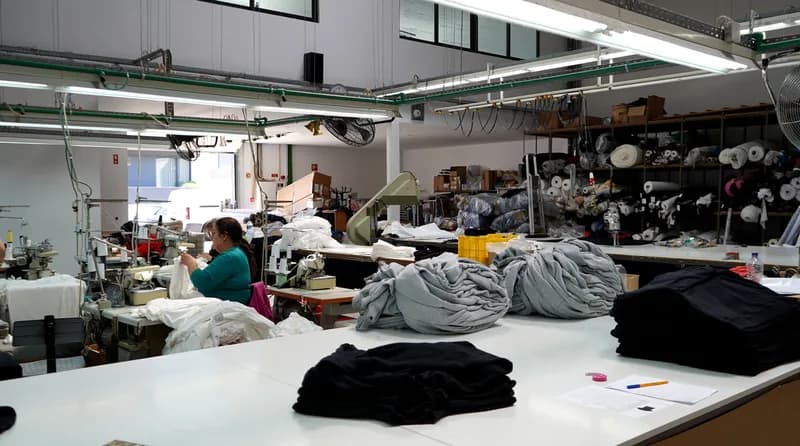
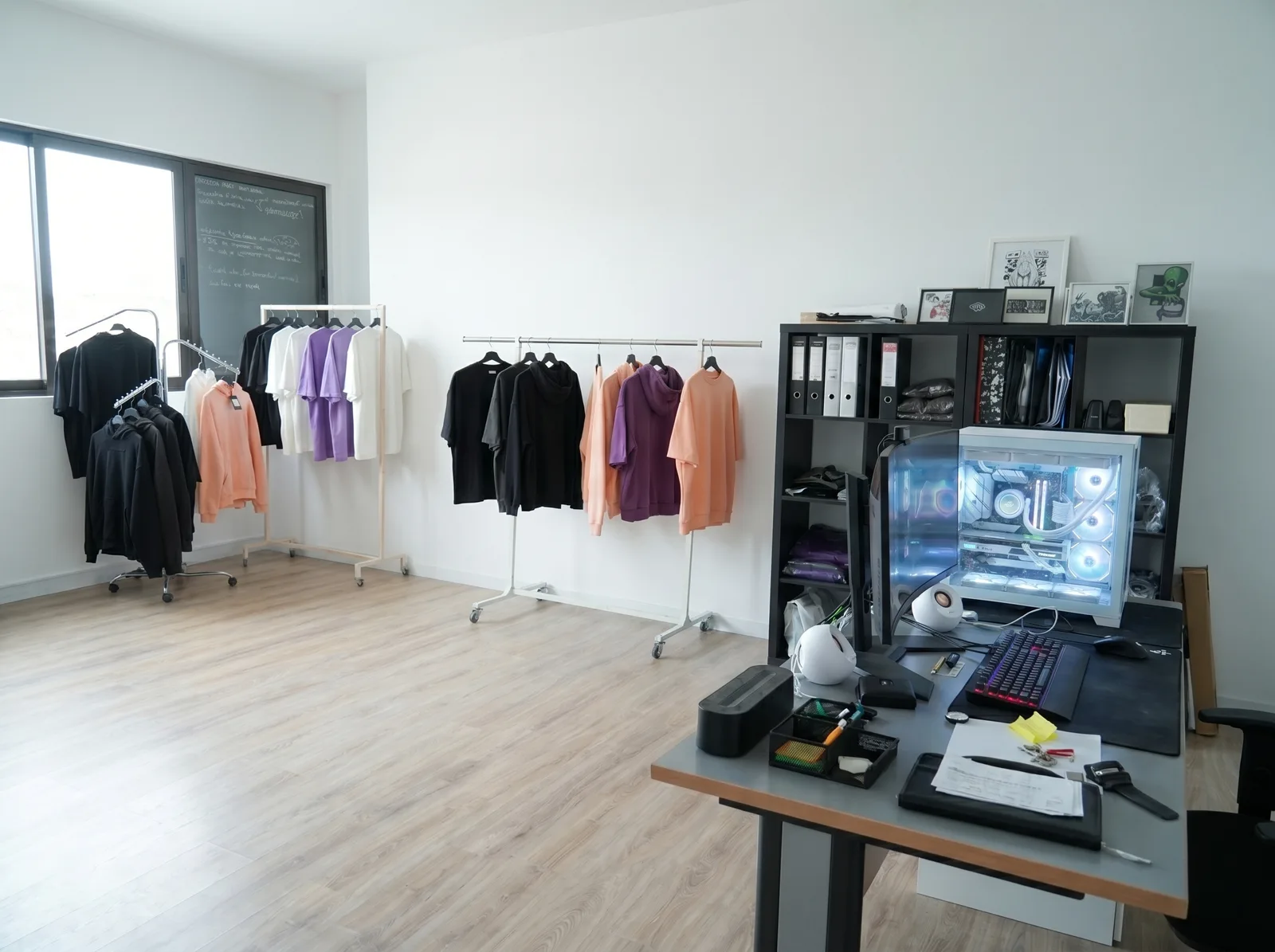
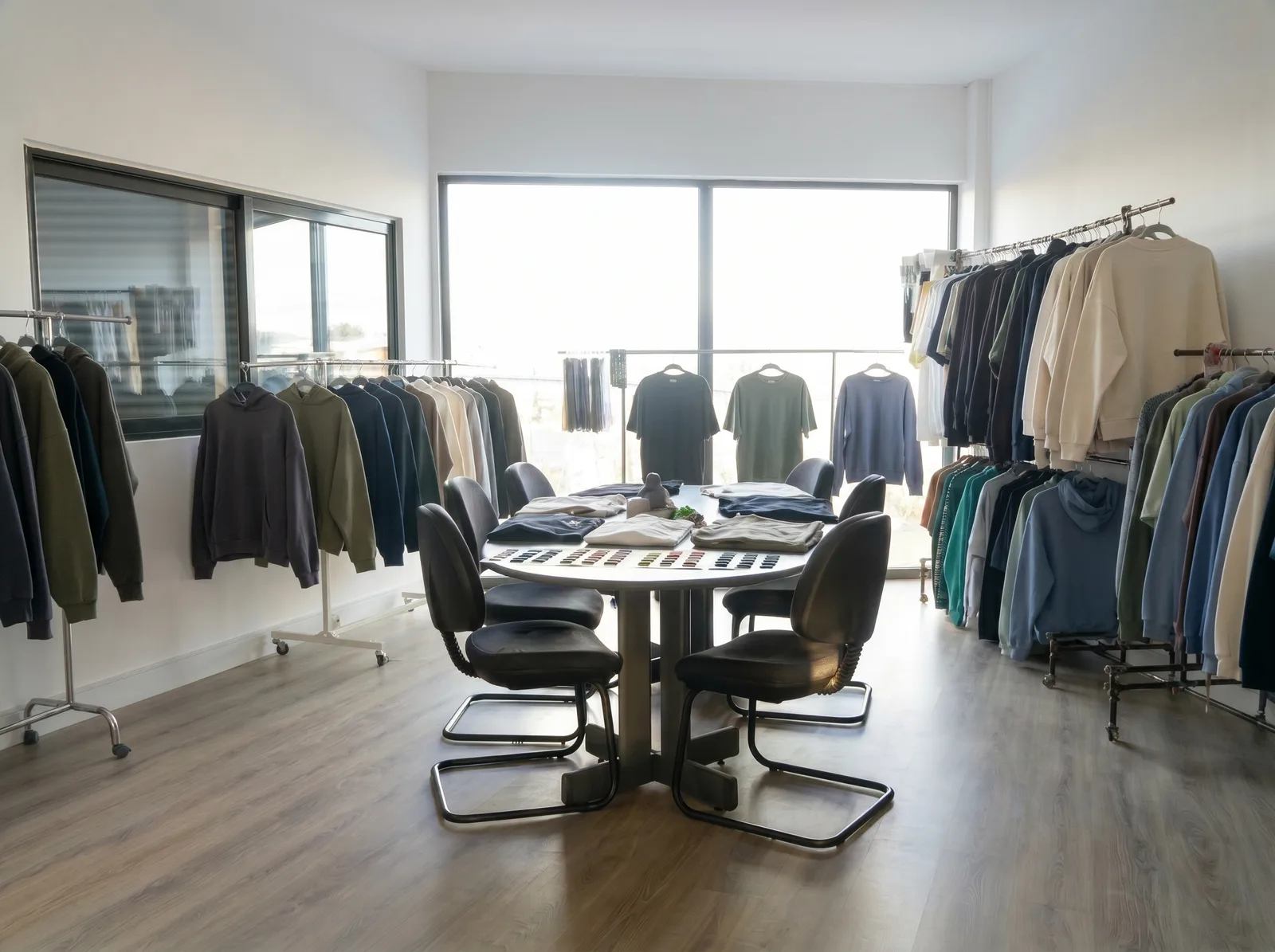
Portugal has been manufacturing textiles for centuries, and the northern Minho region is where that tradition runs deepest. White Cotton is based in Barcelos — a municipality at the centre of one of Europe's most concentrated garment production clusters. When brands choose to produce in Portugal, they get EU-grade quality, ethical working conditions, short lead times, and direct factory access without the complexity of offshore supply chains. Our factory handles everything from pattern making to packed shipment, all within a single facility 45 minutes north of Porto.
Barcelos
Textile Capital
OEKO-TEX
Certified Production
MOQ from 75 Units
Per colourway · 100 in one colour
6–12 Weeks
Standard lead time
The Case for Portuguese Manufacturing
Why Brands Manufacture Clothing in Portugal
Portugal is not a newcomer to garment manufacturing — it is a country that built its modern economy partly on textile exports. The north of Portugal, particularly the triangle formed by Barcelos, Braga, and Guimaraes, has been the epicentre of this industry for generations. Today, Portugal ranks as one of the top garment exporters in the European Union, competing not on cheapness but on craftsmanship, reliability, and speed.
For brands choosing where to produce, Portugal offers a combination that is hard to replicate elsewhere. Production happens inside the EU single market — no import duties for European customers, full REACH chemical compliance, and adherence to European labour and environmental regulations. Lead times are measured in weeks rather than months. Minimum orders start at 75 units, not 500 or 1,000. And the factory is a short flight away from London, Paris, Berlin, or Amsterdam — close enough for a same-day visit.
The practical result is that brands get the quality and ethical standards of European manufacturing without the price tag of Italy or France, and without the distance, communication barriers, and lead time uncertainty of Asian production. This is why Portugal has become the default nearshoring destination for emerging and established fashion brands across Europe, the UK, and increasingly the United States and Australia.
Barcelos & the Minho Region
The Textile Cluster Behind Your Garments
200+ Years of Textile Tradition
The Minho region has produced textiles since the early 19th century. Linen and cotton weaving mills established the foundation, evolving into modern garment factories that supply brands across Europe. This heritage means the workforce is not improvised — cutting, sewing, and finishing skills are passed down through families and reinforced by local technical schools.
Cluster Effect — Everything Within Reach
Fabric mills, dyeing houses, embroidery specialists, label manufacturers, and packaging suppliers all operate within the Barcelos–Braga–Guimaraes triangle. A garment factory here does not wait weeks for materials to arrive from distant suppliers. Thread, zippers, elastic, interlinings, and trims are sourced locally, often with same-day or next-day delivery. This proximity compresses lead times and reduces logistics costs.
EU Single Market Advantage
Production in Portugal means production inside the European Union. For EU-based brands, there are zero import duties, no customs delays, and full regulatory alignment — REACH compliance, CE marking where applicable, and EU labour law protections. For UK and non-EU clients, Portugal still offers preferential trade terms and dramatically shorter shipping times compared to Asian alternatives.
Nearshoring Hub for European Brands
Portugal has become the go-to nearshoring destination for brands moving production out of Asia. The reasons are practical: shorter shipping times instead of weeks by sea, MOQs starting at 75 units instead of 500–1,000, easier communication without 8-hour time zone gaps, and the ability to fly in for a factory visit and return the same day from most European capitals.
Skilled Workforce, Fair Wages
Northern Portugal's garment workers are among the most experienced in Europe. Many of our team members have 10–20+ years of industry experience. Portugal enforces EU workplace standards — fair wages, regulated working hours, social security, and safe working conditions. Brands that manufacture here can confidently communicate ethical production to their customers without the reputational risks associated with low-cost manufacturing regions.
Made in Portugal
Garment Categories We Produce
From Concept to Shipment
How Production Works at Our Portugal Factory
Every order follows the same structured path through our facility. It starts with your design brief — tech packs, sketches, reference images, or even just a concept. Our team reviews the brief, selects appropriate fabrics and trims, and builds a detailed quotation with per-unit pricing, lead times, and decoration specifications. Once approved, we produce a pre-production sample for your sign-off before any bulk cutting begins.
After sample approval, production moves through our departments sequentially: fabric sourcing and inspection, marker layout and cutting, sewing assembly, embroidery, finishing and pressing, quality control inspection, and finally packing and dispatch. Printing, when your design needs it, is done by partner shops close to us and checked by our own QC. Each stage has a dedicated team and equipment set. A production manager tracks every order and provides updates by email at key milestones.
The entire cycle from approved sample to shipped goods usually takes 6 to 12 weeks from the deposit, depending on order volume and garment complexity. Because cutting, sewing and finishing all happen within one building in Barcelos, there are no transit delays between vendors for those steps, and no surprises about who is actually making your clothing. This is the operational advantage of manufacturing at our own factory in Portugal's textile heartland.
Portuguese-Sourced & International
Fabrics Available at Our Factory
All In-House
Decoration Techniques Available
Embroidery
Embroidery
3D Puff Embroidery
Embroidery
Screen Printing
Screen Printing
Discharge Printing
Screen Printing
DTG (Direct-to-Garment) Printing
Digital Printing
DTF (Direct-to-Film) Printing
Digital Printing
Sublimation Printing
Digital Printing
Heat Transfer & Vinyl
Digital Printing
Specialty Finishes & Effects
Specialty
End-to-End Production
Services at Our Portugal Factory
Private Label Manufacturing
Private label manufacturing is the process of producing garments exclusively to a client's specifications, bearing their brand name and labe...
White Label Manufacturing
White label manufacturing lets you start from one of our base fits — a standard pattern for the garment — and add your own branding: labels,...
Custom Clothing Manufacturing
Custom clothing manufacturing is a full-package production service covering every stage from pattern creation to finished, packed garments. ...
Collection Development
Collection development is an end-to-end service that takes your brand from concept to production-ready patterns at no extra design charge. W...
Getting to the Factory
Location & Travel Access
Our factory is in Barcelos, a municipality in the Braga district of northern Portugal. The area is well-connected by motorway — the A11 links Barcelos to Braga (30 minutes east), and the A3 connects directly to Porto (45 minutes south). Porto airport (OPO) receives flights from all major European cities, making the factory accessible for day trips from the UK, France, Germany, the Netherlands, and Scandinavia. Lisbon is 3.5 hours south by car or a 50-minute domestic flight to Porto.
Barcelos itself is a working town, not a tourist hub — but it sits within easy reach of Braga (one of Portugal's largest cities), Guimaraes (UNESCO World Heritage site and birthplace of Portugal), and the Minho wine region. Production clients visiting the factory often combine their trip with a broader tour of the region.
Factory Address
Rua Industrial do Corujo 10, 4750-784 Lijo, Barcelos, Portugal
Porto Airport (OPO): 45 min · Braga: 30 min · Guimaraes: 40 min
Common Questions
Frequently Asked Questions
Why is Barcelos considered Portugal's textile capital?
Barcelos sits at the centre of the Minho textile corridor — a stretch of northern Portugal between Braga and Guimaraes that has been weaving, dyeing, and sewing textiles for over 200 years. The municipality alone hosts dozens of garment factories, fabric mills, dyeing houses, and embroidery workshops. This concentration creates a self-reinforcing ecosystem: skilled labour stays local, raw material suppliers are minutes away, and specialist finishing services (washing, dyeing, printing) are available without long-distance logistics. For brands, this density means faster turnarounds and lower costs compared to regions where each production step requires a different city or country.
How do I get to the factory from Porto airport?
Porto Francisco Sa Carneiro Airport (OPO) is the closest international airport. From OPO, the factory is approximately 45 minutes by car heading north on the A3 motorway toward Braga, then exiting toward Barcelos via the A11. There are also direct bus services from Porto to Barcelos (Rede Expressos, roughly 1 hour). If you are arriving from Lisbon, domestic flights to Porto take about 50 minutes, or the drive is 3.5 hours on the A1. For production clients visiting the factory, we can recommend hotels in Barcelos or Braga and assist with transport logistics.
How many textile factories are in the Barcelos region?
The Barcelos–Braga–Guimaraes triangle is one of the densest garment manufacturing clusters in Western Europe. The broader Minho region has several hundred textile and clothing companies — from small family-run ateliers to industrial-scale operations. Barcelos municipality itself has dozens of active factories. This cluster effect means that ancillary services — fabric suppliers, thread manufacturers, label producers, washing and dyeing facilities, packaging companies — are all within a short drive, making the region extremely efficient for full-package garment production.
What makes northern Portugal different from other manufacturing regions?
Northern Portugal combines European quality standards and labour regulations with production costs significantly lower than Western European neighbours like France, Germany, or Italy. The workforce has deep generational expertise — many seamstresses and technicians have been in the industry for decades. Portugal is also inside the EU single market, which means no import duties for European clients, simplified customs, and full compliance with REACH chemical regulations and EU workplace directives. Compared to Asian manufacturing, Portugal offers shorter shipping times, smaller minimum orders, easier communication across time zones, and the ability to visit the factory within a short flight from most European cities.
Is the Barcelos area known internationally for textiles?
Yes. Portugal is the third-largest garment exporter in the European Union, and the Minho region — where Barcelos is located — accounts for a significant share of that output. Major European fashion brands source production from this corridor. The region is regularly featured in trade publications as a nearshoring alternative to Asia. Portugal's textile and clothing industry employs over 120,000 people nationally, with the highest concentration in the north. International trade shows like Modtissimo (Porto) showcase the region's capabilities to buyers worldwide.
What is the minimum order to produce at your Portugal factory?
Our minimum order quantity is 100 units per style in one colourway, or 75 per colourway when you order two or more. This makes us accessible to emerging brands, small labels, and startups that need production-grade quality without committing to thousands of pieces. First orders typically start with one or two styles to validate fit, fabric, and decoration quality. Once approved, clients scale up to larger runs — we handle orders from 75 units up to 5,000+ units per drop with the same attention to detail.
Can I combine multiple decoration techniques on a single garment?
Absolutely. Because cutting, sewing, embroidery, screen printing, digital printing (DTG/DTF), and heat transfer all happen in our factory, combining techniques on one garment is routine. A hoodie with chest embroidery, back screen print, and a woven label on the sleeve — that is a single production run for us, not three separate vendors. Multi-technique orders do not require longer lead times since everything is sequenced internally without shipping between facilities.
Do you ship internationally from Portugal?
Yes. We ship finished orders worldwide. Within the EU, deliveries typically arrive in 2–5 business days via road freight or express courier — no customs clearance required. For the UK, standard delivery is 4–7 business days with customs documentation handled on our side. International shipments to the US, Australia, and other markets go via DHL, FedEx, or sea freight depending on volume and urgency. All orders include detailed packing lists, commercial invoices, and tracking numbers. We can also deliver to third-party warehouses or fulfilment centres if your brand uses a 3PL.
Produce Your Clothing in Portugal
Share your design brief and get a factory-direct quotation. No middlemen.