Dubai's 13,000 Restaurants Need Staff Uniforms — Here's What the Best Ones Choose [2026]
Restaurant uniform guide for Dubai: 13,000+ restaurants, 4 new per day. Fabric for kitchen heat, front-of-house premium, OEKO-TEX for food-safe environments.
 Pedro Carreira··8 min read
![Dubai's 13,000 Restaurants Need Staff Uniforms — Here's What the Best Ones Choose [2026]](/_next/image?url=%2Fimages%2Fgenerated%2Fblog%2Fdubai-restaurants-staff-uniforms.webp&w=1920&q=75)
Dubai Opens 4 New Restaurants Per Day. Staff Uniforms Are an Afterthought — Until They're Not.
Dubai has over 13,000 restaurants. Four new ones open every day. The UAE food service sector is valued at $23.2 billion and projected to reach $52.7 billion by 2030. From DIFC fine-dining concepts backed by Michelin-starred chefs to JBR casual chains scaling across the emirate, every restaurant needs staff in uniform from opening night.
Most source the cheapest option they can find. Local uniform suppliers deliver polyester polos in 7 days for AED 25 per piece. The fabric pills after 15 washes, holds kitchen odours permanently, and looks visibly worn within three months. For a casual chain doing AED 2 million per year, that uniform reflects the brand just as much as the menu design and interior fit-out.
The restaurants that win — the ones charging AED 400+ per cover — treat staff clothing as part of the guest experience. Their front-of-house team wears premium-weight cotton with custom embroidery. Their kitchen staff wears heat-resistant fabrics rated for 8-hour shifts next to open flames. Their brand identity extends from the menu typography to the thread colour on a server's apron.
Here's what the department breakdown actually looks like — and why fabric choice in Gulf kitchen heat is a health and safety decision, not just an aesthetic one.
What does front-of-house staff need in a Dubai restaurant?
Front-of-house is the revenue floor. Hosts, servers, sommeliers, and restaurant managers are in continuous guest contact for 6–10 hour shifts. In Dubai's restaurant scene — where Instagram drives 40%+ of discovery — staff presentation is part of the content.
Fabric requirements: 220–260gsm cotton or cotton-blend, wrinkle-resistant finish, colour fastness rated for 200+ washes at 40–60°C. The weight matters — anything under 200gsm reads as cheap under restaurant lighting and loses shape within weeks.
Typical garments: branded polo shirts for casual dining, mandarin-collar shirts for Asian concepts, tailored shirts with embroidered logo for fine dining, custom aprons with brand-specific detailing (leather straps, contrast stitching, printed lining).
The premium play: restaurants like Zuma, COYA, and Nobu don't use catalogue uniforms. Their staff wear custom-manufactured pieces that match the restaurant's design language — specific Pantone colours, specific collar shapes, specific fabric hand-feel. This is what separates a AED 150 cover from a AED 500 cover in the guest's subconscious.
What fabric survives Gulf kitchen heat?
Kitchen uniforms are an occupational safety item, not a branding exercise. Dubai kitchens run at 35–45°C ambient temperature (before accounting for grill stations, tandoor ovens, and fryers). Staff wear chef jackets for 8–12 hour shifts in these conditions.
Cotton poplin (260–300gsm): The standard for professional kitchens. Breathable, absorbs sweat, does not melt or fuse to skin when exposed to splatter or open flame. Cotton is the only responsible choice near direct heat sources — polyester melts at 260°C and can cause severe burns when it adheres to skin.
What to avoid: Pure polyester or low-GSM poly-cotton blends near any cooking station. This is not a quality preference — it is a workplace safety issue. UAE Labour Law requires employers to provide appropriate protective clothing for hazardous environments. A kitchen operating fryers and open grills qualifies.
Chef jackets: Double-breasted (reversible to hide stains mid-service), knotted fabric buttons (no plastic that cracks in industrial laundry), reinforced bar-tack stitching at stress points. Expect 300+ wash cycles per year at 90°C — only heavy-weight cotton survives that regime.
Why does OEKO-TEX matter for restaurant uniforms?
Restaurant staff handle food. They plate dishes, garnish cocktails, carry bread baskets with bare hands, and lean over tables during service. If their uniform sheds chemical residue — formaldehyde from finishing treatments, banned azo dyes from cheap dyeing processes, heavy metals from unregulated printing inks — those substances transfer to food-contact surfaces.
OEKO-TEX Standard 100 tests for over 1,000 harmful substances. For restaurant environments, the relevant protections include:
- —Formaldehyde limits (below 75 mg/kg for skin-contact garments) — common wrinkle-resistant finishes on cheap imports exceed this
- —Banned azo dyes (zero tolerance) — carcinogenic compounds still found in uncertified textiles imported to the UAE
- —pH levels (4.0–7.5 range) — extreme pH from dyeing causes skin irritation during long shifts in hot environments
- —Heavy metals (lead, cadmium, chromium limits) — present in low-cost screen printing inks
European manufacturers that source OEKO-TEX certified fabrics provide batch-level documentation. For restaurant groups managing HACCP and food safety audits, this documentation covers the textile hygiene component that auditors increasingly check.
How does embroidery build restaurant branding?
In a city with 13,000 restaurants, brand recognition is survival. Embroidery is the most durable branding method for restaurant uniforms — it survives 500+ washes without fading, cracking, or peeling. DTG printing degrades at 50–80 washes. Screen printing cracks at 100–150.
What premium restaurants embroider: logo on chest (left or centre), restaurant name on apron bib, chef name on jacket sleeve, social media handle on the back of a cap (guests photograph staff — this is free content marketing).
Thread count and complexity: A single-colour logo under 10,000 stitches costs €1.50–2.50 per garment. Multi-colour crests or detailed artwork at 20,000+ stitches run €3–5 per piece. For a 40-staff restaurant ordering 3 garments per employee, embroidery adds €180–600 to the total order — negligible against a AED 2M+ annual revenue restaurant.
What does it cost per staff member per year?
The real comparison is not unit price — it's annual cost of ownership including replacements.
| Metric | Local Supplier (UAE) | European-Made |
|---|---|---|
| Polo/shirt unit cost | AED 25–40 ($7–11) | AED 55–75 ($15–20) |
| Apron unit cost | AED 15–25 ($4–7) | AED 35–55 ($10–15) |
| Realistic lifespan | 3–5 months | 14–24 months |
| Replacements per year | 2–3x | 0.5x |
| Annual cost per employee (2 shirts + 1 apron) | AED 130–195 ($35–53) | AED 90–130 ($25–35) |
| OEKO-TEX certified | No | Yes |
| Custom embroidery quality | Basic — thread breaks early | Premium — survives garment lifespan |
For a 40-person restaurant, the annual saving from European-made uniforms is approximately $400–720 — while upgrading the brand presentation guests see every visit.
How do repeat order programmes work for restaurant groups?
Dubai restaurant groups — Sunset Hospitality (40+ venues), Gates Hospitality, Solutions Leisure — manage uniform programmes across multiple concepts. Each concept has different branding, different garment types, and different staff counts that fluctuate with seasonal hiring.
A structured repeat programme works like this:
- 1.Initial setup: Tech packs created per concept — garment specifications, brand colours, embroidery files, size distributions
- 2.First production run: Full uniform set per concept. Minimum 75 pieces per colourway (100 pieces in a single colourway) — a 30-seat restaurant typically needs 60–80 garments across all roles
- 3.Quarterly reorders: New hires, replacements, seasonal additions (Ramadan menus, rooftop season, holiday concepts). Once specs are on file, reorders ship in 4–5 weeks
- 4.Menu launch tie-ins: Limited-edition aprons, branded chef jackets for pop-up collaborations, seasonal colour updates. These build staff pride and generate social content
- 5.Packaging for gifting: Some groups give branded uniforms as part of employee onboarding kits — a retention tool in Dubai's high-turnover F&B market
Why does "Made in Europe" matter for restaurants charging premium prices?
A restaurant charging AED 400–800 per cover is selling an experience. Every touchpoint reinforces (or undermines) the price. The chairs are Italian. The glassware is Austrian. The menu is letter-pressed. Then the server arrives in a polyester polo that cost $7 and was manufactured in a facility with no chemical safety certification.
European-manufactured uniforms — produced in Portugal using OEKO-TEX certified fabrics, with custom embroidery and heavy-weight cotton — align staff presentation with the rest of the experience. The guests paying AED 500 for dinner may not consciously register the fabric quality of the server's shirt. But they register the overall feeling. Staff who look premium make the price feel justified.
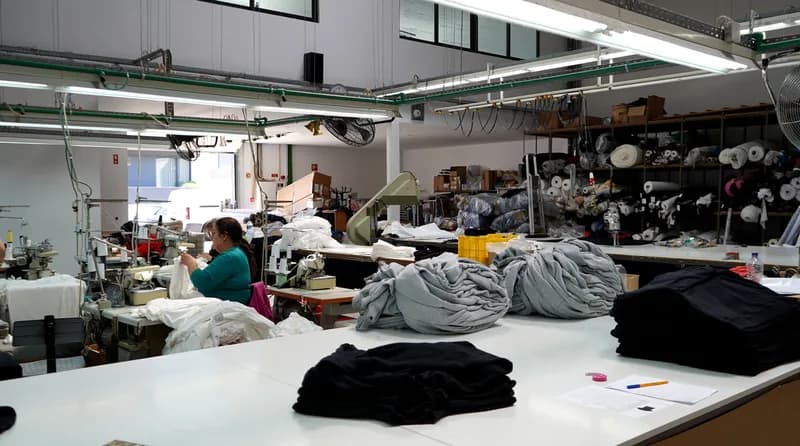
At White Cotton, we manufacture restaurant and hospitality uniforms in Barcelos, Portugal — from chef jackets to branded aprons to front-of-house shirts. All garments use fabrics sourced from OEKO-TEX and GOTS certified mills, engineered for commercial laundry durability in Gulf conditions. We run small-batch production in Portugal starting from 75 pieces per colourway. Shipping to Dubai runs 4–5 days by air, 18–22 days by sea.
Factory visits are available for production clients — once samples are approved and bulk production is underway. For pricing on your restaurant's uniform programme, request a quote with your venue count, staff numbers, and garment types.

Pedro Carreira
Founder of White Cotton, a textile manufacturer in Barcelos, Portugal. Producing custom clothing collections for brands across 15+ countries.
Continue Reading
![Why Dubai's Smartest Companies Are Switching to European-Made Team Wear [2026]](/_next/image?url=%2Fimages%2Fgenerated%2Fblog%2Fwhy-european-made-team-wear-dubai.webp&w=1920&q=75)
Why Dubai's Smartest Companies Are Switching to European-Made Team Wear [2026]
Corporate Clothing for Dubai Companies — Full Guide (2026)
![Corporate Gifting with Clothing — Why European-Made Stands Out in Dubai [2026]](/_next/image?url=%2Fimages%2Fgenerated%2Fblog%2Fcorporate-gifting-clothing-dubai.webp&w=1920&q=75)
Corporate Gifting with Clothing — Why European-Made Stands Out in Dubai [2026]
![Hotel Uniform Manufacturing — European Quality for Dubai's Five-Star Properties [2026]](/_next/image?url=%2Fimages%2Fgenerated%2Fblog%2Fhotel-uniform-manufacturing-dubai.webp&w=1920&q=75)
Hotel Uniform Manufacturing — European Quality for Dubai's Five-Star Properties [2026]
![Branded Team Wear for Real Estate Companies in Dubai [2026]](/_next/image?url=%2Fimages%2Fgenerated%2Fblog%2Freal-estate-branded-clothing-dubai.webp&w=1920&q=75)