ELITE BRAND BUILDER PROGRAM
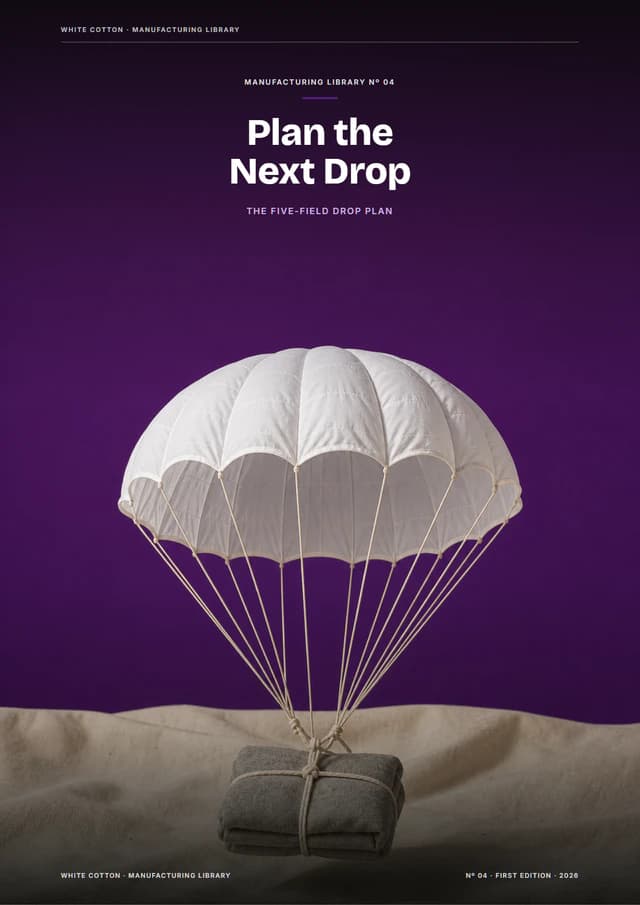
Plan the Next Drop — The Five-Field Drop Plan.
You made the garments. This is the page you fill before the money leaves — five fields, five gates, and a signature you only give when all five read TRUE.
All playbooksELITE BRAND BUILDER PROGRAM
86 pages, 9 chapters.
Most drops don't fail on launch day. They fail weeks earlier, in the plan — a lineup chosen by excitement, a count chosen by hope, a date announced before anything was true. By the time the launch goes quiet, the mistake is already paid for. Plan the Next Drop is the page you fill before the money leaves.
Five fields, one decision each, one chapter each. THE PIECE — one hero, and everything else has to argue for its seat in a single sentence, because five ideas in one drop is five half-tests. THE COUNT — sized to evidence you can point at, with the evidence line written underneath it, since too many pieces is cash asleep in cardboard and too few is the cheaper failure. THE BILL — four pockets (product, pictures, launch, cushion), every unknown written as UNKNOWN rather than guessed at zero, then run against the worst plausible week. THE DATE — set last, never first, built backward only from facts other people gave you in writing. THE GATES — five true/false statements between the finished sheet and your bank account, each NO carrying its repair chapter with it.
90 pages, Elite Brand Builder Program. Two constructed brands fill the same sheet through the whole book — Rua planning a first drop of one crewneck at €48 with little evidence, and Fenn planning drop three at 120 pieces and €88 with a waitlist that showed up twice. Chapters 8 and 9 cover the weeks after you order and the rules you write before the drop opens, so the next lap is planned by a rule instead of by whichever way the launch went.
“Most drops don't fail on launch day. They fail weeks earlier, in the plan — a lineup chosen by excitement, a count chosen by hope, a date announced before anything was true.”
Digital edition · instant delivery
Everything between “I want to release something” and the moment money leaves your account: five fields, five gates, one signature. Choosing WHERE you sell belongs to First 100 Sales; the launch itself to Organic Growth: Every Channel; unit economics to From Sample to Scale.
Digital delivery by email. No refunds—check “Who it’s for” below.
Part of a set
Start Your Brand — 4 books for €34 €66, saving €32.
Or the whole library — 15 books for €97 €244.
Browse all 15 playbooksWhat’s inside
- fill-in worksheets3
- checklists2
- decision tools1
Table of contents
What's inside.
The Drop Sheet
A drop is planned on one page or it isn't planned. Five fields, one decision each, one chapter each.
- · The five fields: THE PIECE · THE COUNT · THE BILL · THE DATE · THE GATES
- · The cycle — plan, order, land, launch, read, plan again
- · Two constructed brands fill the same sheet all book: Rua and Fenn
What a Drop Promises
A drop is a promise with a date on it — three promises, actually. If you can't keep all three, the drop model is just an unreliable shop.
- · The one-line promise: the piece, the count, the date shape
- · The honest fit verdict — whether your brand can keep that sentence
The Piece
Five ideas in one drop isn't five chances to win — it's five half-tests, and half-tests all return the same answer.
- · One hero; everything else argues for its seat in one sentence
- · The Lineup Card — and the midnight rule for a new idea mid-plan
The Count
The count is the drop's most expensive sentence, and most founders write it with the wrong pen: hope.
- · Size the run to evidence you can point at, then write the evidence line under it
- · Too many is cash asleep in cardboard; too few is the cheaper failure
The Bill
A drop never costs what the garments cost — and the money leaves weeks before any of it comes back.
- · Four pockets: PRODUCT · PICTURES · LAUNCH · CUSHION
- · Every UNKNOWN is a task with an owner, never a zero
- · The worst-plausible-week test — does life continue if it half-fails?
The Date
The date is the first thing founders decide and the last thing they should.
- · The Backward Calendar, built only from facts other people gave you in writing
- · No written fact, no calendar cell
The Gates
Five true/false statements between the finished sheet and your bank account. A NO, honestly reached, is the plan working.
- · PROOF · PIECE · COUNT · MONEY · DATE — sign only on five TRUEs
- · Every NO comes with its repair chapter attached
After You Order
The weeks between the signature and the boxes are not static. The papers arrive in an order.
- · One dated folder before the first paper arrives
- · The After-Order Paper Card — what lands, and roughly when
The Next Drop
The most dangerous week isn't launch week. It's the week after, when a sell-out and a slow drop both whisper the wrong advice.
- · Write both next-count rules before this drop opens
- · The Next-Drop Sheet — the lap that gets faster every cycle
Preview
See the pages, before you buy.
Real pages from the shipped PDF, not marketing mockups.
Who it's for
Built for these founders.
- Founders about to commit real money to a run of garments and wanting the plan on one page first
- Brands whose last drop sold out or stalled, and who don't want the next count decided by that feeling
- Anyone who has picked a launch date before the maker, courier or photographer confirmed anything
- Founders who want a written stop-rule between the plan and the payment
Not for
- Brands still deciding WHERE they sell — routes, wholesale and marketplaces belong to First 100 Sales
- Anyone looking for the launch itself — the runway, the posts and the messages are Organic Growth: Every Channel, which picks up exactly where this book signs off
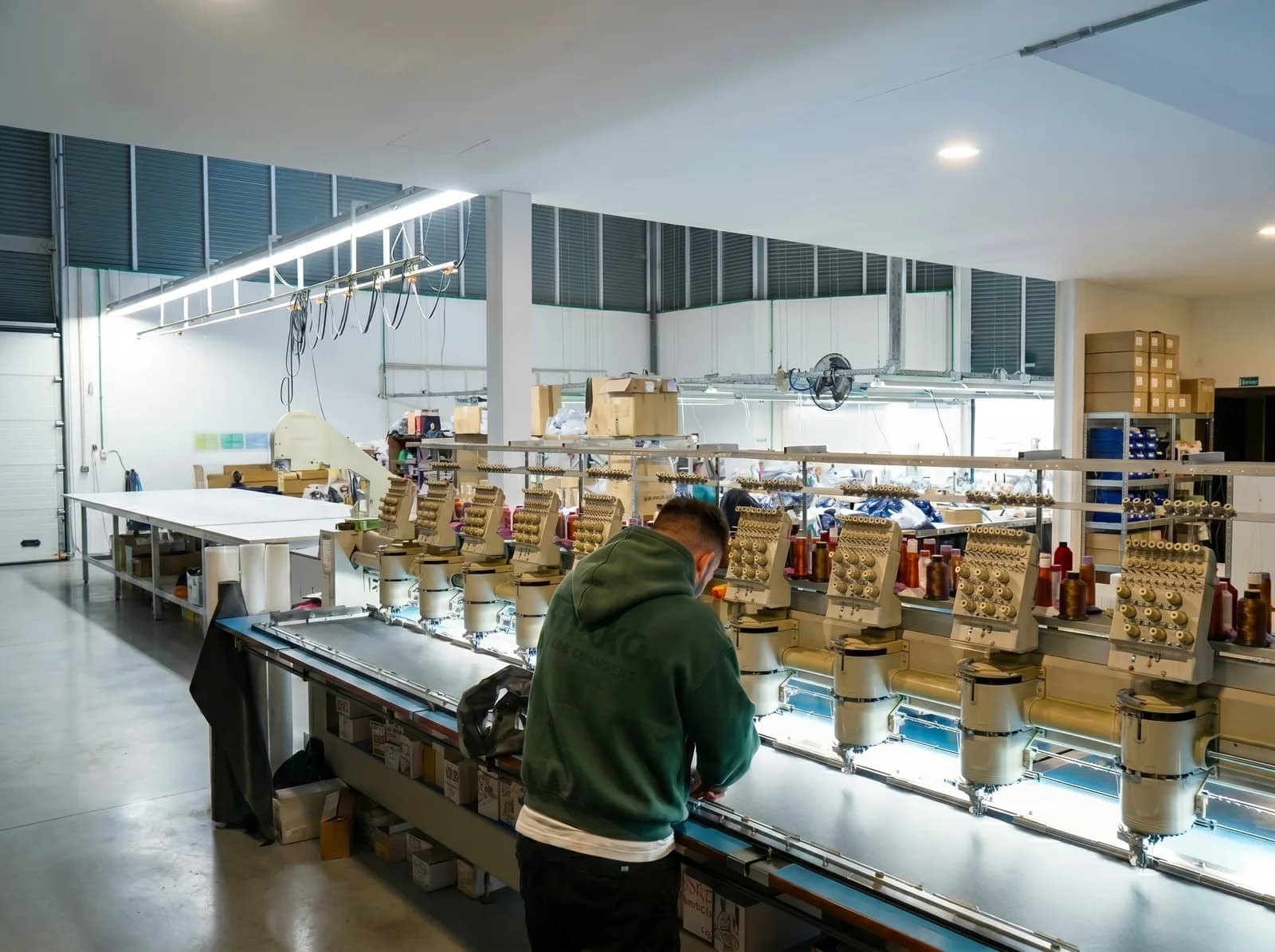
Straight from the factory
“Most drops don't fail on launch day. They fail weeks earlier, in the plan — a lineup chosen by excitement, a count chosen by hope, a date announced before anything was true.”
5
Fields on the drop sheet — piece to gates
5
Gates between the sheet and the payment
4
Pockets in the bill: product, pictures, launch, cushion
The Library
Every playbook, one shelf.
14 more guides from the same factory floor — Manufacturing Insider Series and Elite Brand Builder Program, from your first tech pack to scaling past your first million.
Why Nobody's Buying
€20
From Sample to Scale
€13
Organic Growth: Every Channel
€20
Factory Red Flags
€13
The Tech Pack, Page by Page
€13
How to Price a Garment
€13
Production, Explained
€13
Choosing Your Factory
€13
The Law and the Fines
€20
First 100 Sales
€20
The Founder's Brain
€20
Ads That Don't Look Like Ads
€20
Everything About Fabric
€13
What Your Factory Won't Tell You
€20
Common questions
Quick answers.
Still have a question about Plan the Next Drop? We answer every email personally — usually the same day.
office@genuineblanks.comWhat are the five fields of a drop plan?
The Piece, The Count, The Bill, The Date and The Gates — one page, one decision per field, one chapter per decision. The book's position is that a drop is planned on one page or it isn't planned, because a plan you can hold in one look is a plan you can be honest about.
What are the five gates?
Proof, Piece, Count, Money and Date — five true/false statements you grade in writing, dated, before paying. You sign only on five TRUEs, and the order matters: proof before piece before count before money before date. A NO, honestly reached, is the plan working rather than failing.
How is it delivered?
Digital PDF — instant download after checkout, watermarked and EU IP protected.
Does it cover what happens after I place the order?
Yes. Chapter 8 walks the weeks between the signature and the boxes — which papers arrive, roughly in what order, and the one dated folder to open before the first one lands so a week-six question takes a minute instead of three inboxes.
Are the example brands real clients?
No, and the book says so on its own edition page: Rua and Fenn are constructed composites — pattern-true, not records. Their numbers are teaching inputs, not benchmarks, and your own evidence replaces every one of them before money moves.
One book. Nine more.
Your brand, our library.
18 playbooks, one factory — from your first tech pack to scaling past your first million.