How to Market a Clothing Brand Without Ads: The Organic Routes
How to market a clothing brand without ads: four routes attention arrives by, a two-hour weekly rhythm, and the asset test. From a factory floor.
 Pedro Carreira··14 min read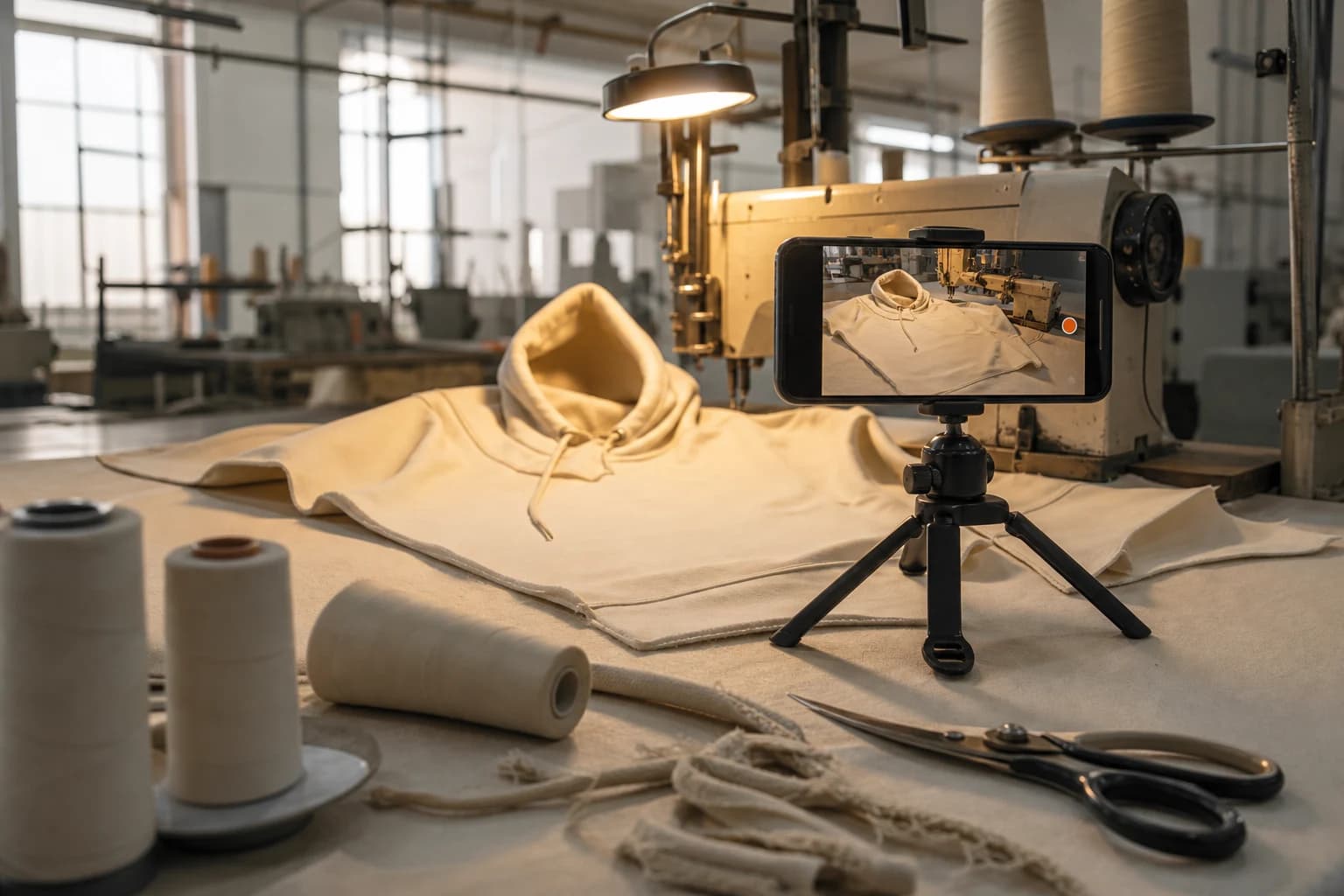
The Brands That Grew Fastest Through Our Factory Never Ran Ads
That is not a slogan, it is a bookkeeping observation. The clearest growth curves I have watched from the production side — 100 units, then 150, then 400, then a standing slot in our calendar — belonged to founders who were not buying traffic. So at some point I started asking them what they were doing instead, and writing it down.
The answers were less romantic than you would hope. Nobody said "we went viral." They described a routine. That is the honest version of how to market a clothing brand without ads: not free traffic, but traffic you pay for in hours instead of euros, spent on the same few things every week for longer than feels reasonable.
I run a factory in Barcelos, Portugal. I am not a growth marketer and this is not that kind of guide. But I am the person these brands talk to for months before and after a launch, and there is a pattern in it worth writing down.
The Only Test That Matters: Does This Hour Leave an Asset?
Before any tactic, one filter. At the end of an hour of work, ask whether it left an asset or just an impression.
An impression is gone by the weekend. A story that got 400 views, a post that got likes, a comment thread that felt warm on Tuesday. An asset keeps working after you stop: a page that answers a question people search for, an email list that still opens, a creator relationship that survives the drop, a photograph you will use in six different places.
Almost every founder I have watched burn out on organic did it by running an impression treadmill for four months. The output looked like effort. It compounded to nothing, because nothing was left standing on Monday.
Judge every idea below by that test. Some of what follows is deliberately slow.
How to Market a Clothing Brand Without Ads: The Four Routes
There are only four, and knowing which one you are working on stops the flailing.
| Route | What it is | Speed | What it leaves behind |
|---|---|---|---|
| Performed | You post; a feed distributes it | Fast, decays fast | Reusable footage, a body of proof |
| Found | Someone searches; your page answers | Slow to start, compounds | A page that earns visits for years |
| Vouched | Someone else says your name | Unpredictable | A relationship, and borrowed trust |
| Invited | You own the channel — email, SMS | Immediate once built | A list that is yours, not rented |
The feed pays rent daily. Search pays a pension. Most founders spend everything on the first row and wonder why month four looks like month one.
The practical order for a small clothing brand: start with Performed because it produces the raw material for everything else, build Invited from day one because it is the only channel a platform cannot take from you, add Found once you have three things worth writing a page about, and treat Vouched as something you earn rather than something you schedule.
The Ten Things Worth Posting About a Garment
The reason founders run out of ideas is that they are trying to be interesting. Answer buyer questions instead. Each of these answers one, and each leaves footage you can cut three ways.
- 1.The origin. Why this specific garment exists. Not the brand story — the garment's.
- 2.The proof drop. One checkable fact shown, not claimed. The fabric weight on a scale. The seam, close.
- 3.The price, opened. What the garment cost to make, honestly, and what the number beside it is doing.
- 4.The enemy. The thing you refuse to do. Thin fabric, vanity sizing, a print that cracks by wash four.
- 5.The making. Cutting, sewing, pressing. This is the one founders cannot fake and the one that travels furthest.
- 6.The honest fail. The sample that came back wrong and why. Trust is bought with this, not with wins.
- 7.The order packed. Real, dull, effective. It answers "is anyone actually buying this."
- 8.The comparison. Yours next to the obvious alternative, on one visible difference.
- 9.The search answer. A question people type, answered properly. This one is also a page.
- 10.The co-build. Show two options and let people choose. The choosing is the marketing.
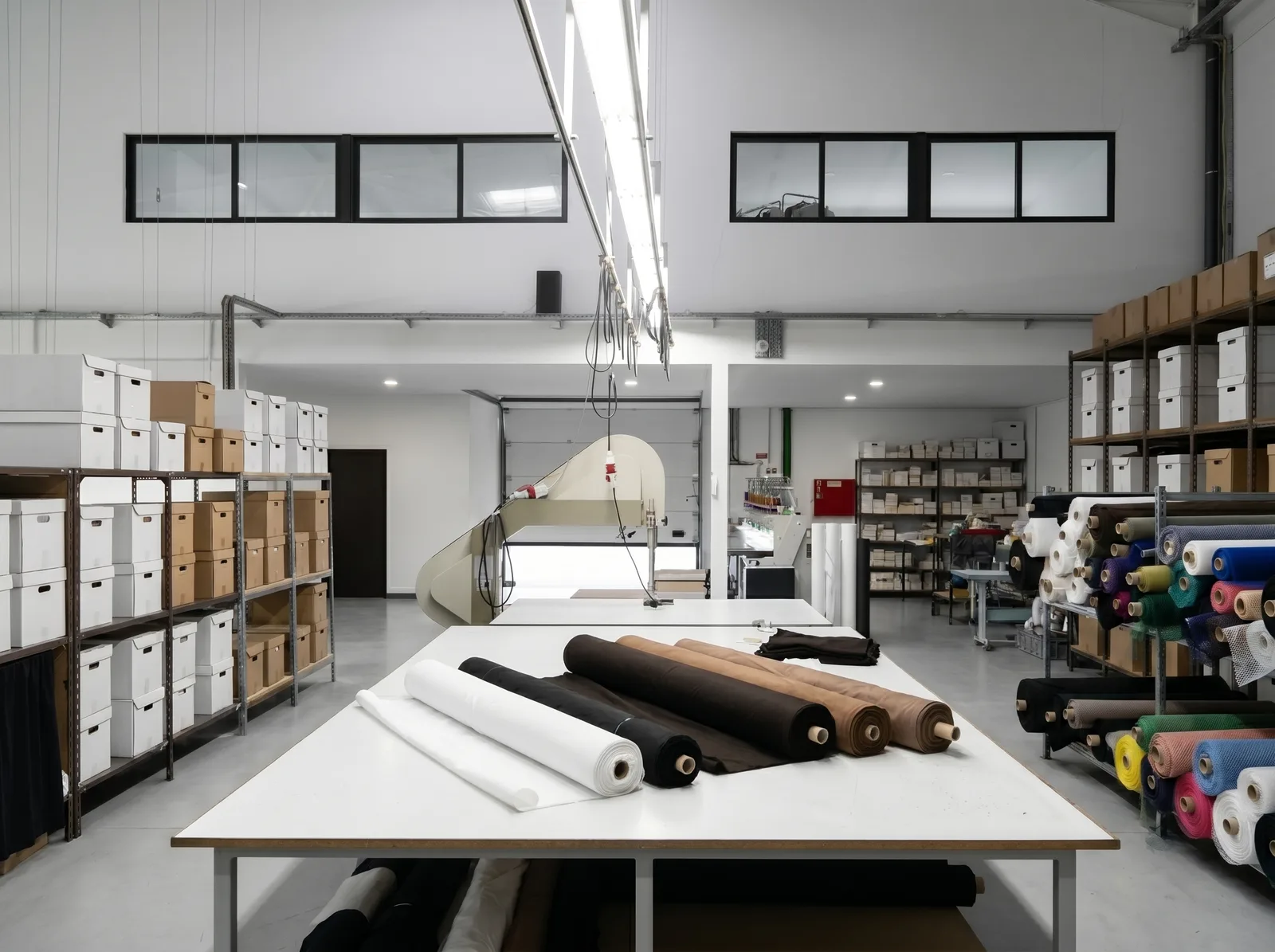
Five of those need the factory floor, which is where a lot of small brands quietly have an advantage they never use. If you manufacture in a real facility rather than through a print-on-demand catalogue, you can film things nobody else in your feed can film. Ask your factory. We have brands come to Barcelos and leave with a phone full of footage that carries them for a quarter — factory visits are available for production clients, once samples are approved and bulk production is underway.
The Two-Hour Week That Does Not Eat You
A rhythm you can hold in month four beats a sprint you abandon in week three. Here is the smallest version I have seen actually work, from founders who were also doing everything else in the business.
| Block | Time | What happens |
|---|---|---|
| Observe | 20 min | Read your own comments, DMs and any community you are in. Collect real questions. |
| Write | 25 min | Turn three of those questions into three post plans. Words first, not camera first. |
| Film | 45 min, batched | One session, one setup, everything for the week. |
| Finish | 25 min | Cut, caption, schedule. |
| Publish and reply | 5 min/day | Post, then answer every reply that is a question. |
Be honest about the batch block. A three-hour session that shoots twelve clips typically finishes with eight or nine after cuts, retakes and a second look. Plan for the attrition and you will not end the month short.
The replies matter more than the posts and almost everyone skips them. A buyer question answered in public is a small piece of trust built in front of an audience.
How to Market a Clothing Brand Without Ads Using Search
This is the route with the worst first month and the best twelfth.
You do not need tools to find demand. You need the questions people already send you. Every founder has a folder of them: does this run big, what is the fabric, will it shrink, how do I wash it, is it warm enough for November. Each of those is a page.
Write the answer properly — specific, checkable, and long enough to actually settle the question. A page that answers "does a 400 GSM hoodie feel heavy" with a real number, a comparison and a photograph will still be earning visits when a reel from the same week is unfindable.
Two rules I would give any brand starting here. First, one page per question — do not bundle six answers into a "FAQ" nobody can find. Second, answer it in the first forty words, then elaborate. Search engines and AI assistants both lift short, self-contained passages, and a page that buries its answer under three paragraphs of throat-clearing gets skipped by both.
If you want to see the shape of it, most of our own manufacturing guides are exactly this: a question a founder asked us, answered once, properly.
Creators, Communities and the Extraction Problem
Vouched attention is the one founders rush and the one that punishes rushing.
The ladder is the same in every room, online or physical: guest, useful member, known name, host. The failure mode at every rung is identical — extraction. Turning up in a community to post your link is extraction. Messaging a creator with a discount code and nothing else is extraction. Both get the same result, which is nothing, and both cost you the room afterwards.
The test before you post anywhere you did not build: would this be worth reading if my brand did not exist? If not, do not post it.
With creators, fit beats reach by a wide margin at small scale. A creator whose audience already buys clothing in your price band and your silhouette is worth more than one with ten times the following and no overlap. Start by sending the product with no conditions attached and no post required. What you are buying is an honest opinion and, sometimes, a relationship. If they wear it, you have something real to work with. If they do not, you learned something about the garment for the price of one unit.
One legal note, because it is not optional in the EU: any gifted or paid placement has to be disclosed clearly by the creator. Get that agreed in writing before anything ships.
The List Is the Only Channel You Own
"You get the drop 24 hours before it goes public, and I will tell you the exact quantity." That sentence is worth an email address. "Sign up for updates" is not, and the difference is the whole chapter.
Build the list from day one, with a promise specific enough that someone can tell whether you kept it. The specific version also sets an expectation you then have to meet, which is the point — and unlike a feed position, nobody else can change the terms of it on you.
The minimum sequence for a clothing brand is short: a welcome message that says who you are and what you make, one message that carries the proof (fabric, factory, fit), and one that tells them what happens next and when. Then nothing until you have something real to say. A list you email only when you have something worth reading stays open. A list you email weekly out of obligation does not.
What a Launch Looks Like Without a Media Budget
Organic launches work when they are sequenced. The failure is almost never the product; it is seven countdown posts, which is one job done seven times, and the job was the wrong one.
Three gates before you set a public date: the product is physically in your hands, the run size and price are locked, and the list is above zero. Miss a gate, move the date. Announcing a date you cannot keep is the most expensive free thing a young brand can do.
Then, across the two weeks before, do seven different jobs rather than one job seven times. Recognition — people know what is coming. Choice — they know which one they want. Value — they know why it costs what it costs. Availability — they know how many exist. Risk — they know what happens if it does not fit. Use — they can picture wearing it. Learning — they see someone else's honest opinion.
Production timing is the constraint most launches break on. Our lead time is usually 6 to 12 weeks from the deposit to finished goods, plus shipping, and a first sample round — usually 4 to 8 weeks from payment — adds its own time before that. Build the calendar backward from dates people gave you in writing, not from the date you want. There is more on that in our production timeline guide.
The Words to Search For Before You Publish
One discipline worth stealing regardless of channel. Before anything ships — a caption, a page, a label — search the text for these words: best, proven, certified, ethical, sustainable, guaranteed, always, never, only, limited, selling fast, last chance.
For each hit, ask one question: could a stranger check it? If not, cut it or replace it with the checkable version. "Certified" is the one that catches brands out most often in our industry — a fabric can carry a certification, and we source certified fabrics from our partner mills, but that is a different claim from a factory or a brand being certified, and regulators in the EU now treat the difference seriously.
Removing an unverifiable claim almost always makes the copy better anyway. Specificity reads as confidence in a way that adjectives never do.
Where This Leads
Organic is the slower route and it is the one that leaves something behind. If you are choosing between spending your next €500 on ads or on one better sample round and a day of proper photography, I would take the second, and not only because I make the samples.
If production is the next thing standing between you and something worth marketing, we manufacture from 75 units per colourway (100 in a single colourway) in Barcelos for brands across 15+ countries. See how the process runs at our craft page, or send your details through order request for an itemised quotation. If you are still deciding where to make things, manufacturing in Portugal covers what changes when the factory is close.
The long version of this — the ten post shapes with their scripts, the batch sheet, the scene ladder, the launch runway and the weekly review as blank instruments — is Organic Growth: Every Channel in our playbooks library.

Pedro Carreira
Founder of White Cotton, a textile manufacturer in Barcelos, Portugal. Producing custom clothing collections for brands across 15+ countries.
Frequently Asked Questions
Yes, and the brands with the cleanest growth curves through our factory did exactly that — but they paid in hours rather than euros, and they held the same routine for longer than most founders do. The realistic minimum is about two hours a week held for a year: observe, write, batch-film, finish, and reply daily. What makes it work is not intensity, it is that every hour leaves an asset rather than an impression.
The routes run on different clocks. Performed content can move something in days but decays as fast. An owned email list starts working the moment it exists. Search pages are the slow one — expect months before they carry meaningful traffic, and years of return after that. Judge a page by whether it answers a real question well, not by month-one numbers.
Buyer questions. The ten shapes that consistently work are the origin, the proof drop, the price opened, the enemy, the making, the honest fail, the order packed, the comparison, the search answer and the co-build. Five of those need the production floor, which is why brands manufacturing in a real facility have footage available to them that print-on-demand brands simply cannot film.
Marginally, and far less than the effort founders put into them. Both platforms now decide distribution mostly from what the content itself is about and how people respond to it in the first minutes, which means the caption and the first frame are doing the work that a tag list used to. Use two or three genuinely descriptive tags because they cost seconds, and put the saved time into replying to comments — a buyer question answered in public builds more than thirty tags ever will. A location tag is worth adding when the place is part of the story, such as footage shot on a factory floor, because then it is information rather than decoration.
Usually not, and the reason is in the four routes above: a giveaway buys followers, not askers. Entrants arrive for the free garment and their intent expires with the draw, so you end up with a bigger number at the top of the page and the same number of buyer questions in your inbox. Trace where your last ten real customers came from and it is almost never a giveaway — it is search, a niche community, or someone who was actually recommended the brand. If you want to spend one garment on growth, send it unconditionally to a creator whose audience already buys in your price band and silhouette. Worst case you bought an honest opinion for the price of one unit, which is more than a giveaway returns.
Continue Reading

Clothing Brand Founder Mistakes: The Ones That Cost Real Money

How to Advertise a Clothing Brand: The Numbers Before the Creative

How to Plan a Clothing Drop: The One Page Before the Money Leaves

Why Is My Clothing Brand Not Selling? Diagnose It in One Evening