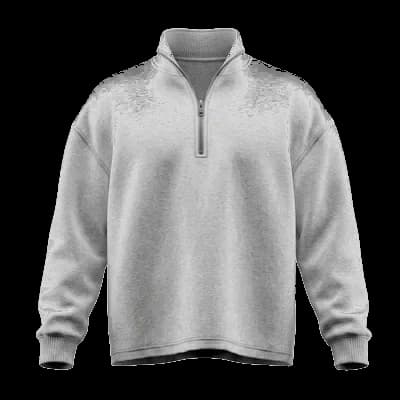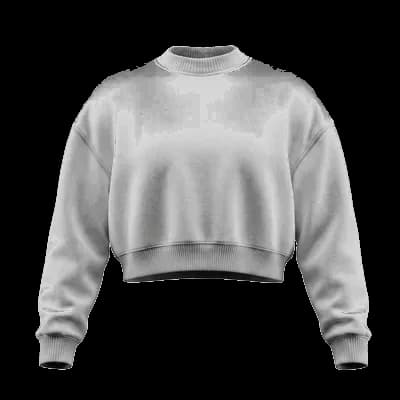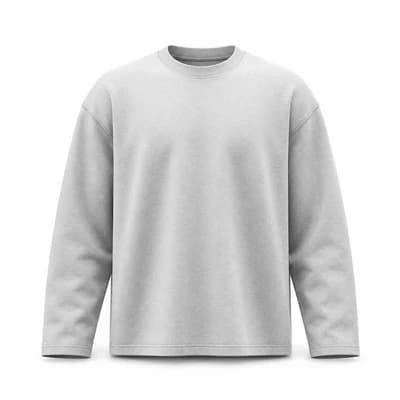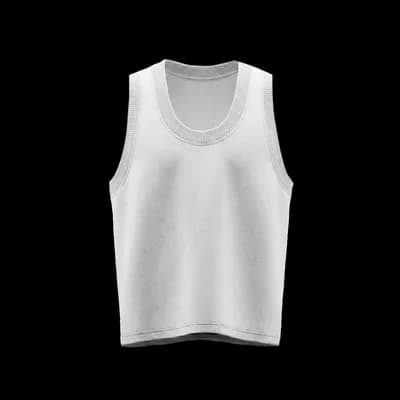
Production-ready specification
Woven Shirt Tech Pack Template
A woven shirt tech pack needs more rows than any knit, because woven has no stretch to absorb a wrong number. This one splits the collar into point length and stand height, specifies yoke depth, cuff depth, placket width and button spacing, and grades the block XS to XXL with tolerances.
Yoke depth, collar point length and stand height, cuff depth — woven has no stretch to hide a wrong number.
A free woven shirt tech pack, as a PDF download: 16 pages and 14 points of measure graded XS–XXL with tolerances, delivered as a vector PDF and an editable .ai file at no cost.
- 16 pages
- one garment
- 14 points
- 6 critical
- XS–XXL
- with tolerances
- PDF + .ai
- vector, editable
Commissioning a woven shirt spec from a technical designer typically runs €150 to €900 and takes days. This one was drawn inside a Portuguese factory that cuts the garment every week, and it is in your inbox in minutes.
Your Woven Shirt, finished
- Measurements graded XS–XXL, with tolerances
- Pantone references for every colourway
- Your brand, style code and logo placed
Every decision set in about five minutes. Works with any factory.
Why this one is different
Woven Shirt, specified
Woven has no stretch to hide a wrong number. Where a jersey garment absorbs a couple of millimetres, a poplin shirt shows them — in a yoke that sits too low, a collar point that reads short, a cuff that will not close. That is why this pack carries more rows than any other in the set and why the collar is split into two: point length and stand height are different measurements with different consequences.
The construction is also genuinely more complex: left and right fronts, a back panel, a yoke, a collar and stand, a placket and set sleeves. Every one of them is named on the inside-construction page.
The largest row count in the set, including the split collar group — point length and stand height — and yoke depth.
Specified down to
- Body (left/right front)
- Back panel
- Yoke
- Collar + stand
- Placket + buttons
- Sleeves
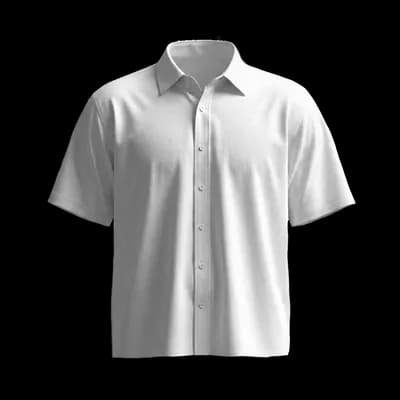
Silhouette
Reference: Stanley/Stella Oxford, men. Check the fit on a sample; secondary dimensions are derived.
Fabric on the spec
140gsm Cotton Poplin — a starting point on the material page, written to be overwritten with your own.
Points of measure
Every row in the pack
All 14 of them, with the convention each is measured to. 6 are marked as measurements a factory cannot cut without — they print in bold on the page. The values themselves are inside the document, graded XS–XXL with tolerances; we do not publish them here.
- AHalf chestcriticalMeasure across the garment 2 cm down from the armholes, laid flat.
- BBody length (HPS to hem)criticalMeasure from the highest point of shoulder straight down to the bottom edge.
- CShoulder widthcriticalShoulder point to shoulder point across the back
- DArmhole drop (shoulder to underarm)Shoulder point straight down to the underarm seam. NOTE: the Points of Measure page lists “Arm hole”, which is the bicep width — a different measurement
- ESleeve length (shoulder point to cuff)criticalShoulder point straight along the outer arm to the finished sleeve end
- FBicep width2.5 cm below the armhole, sleeve laid flat
- GCuff heightTop of the cuff rib to the sleeve end
- HCuff opening (relaxed)Sleeve end laid flat, rib unstretched
- Y1Yoke depthNeck seam to the yoke seam at centre back
- CL1Collar point lengthcriticalCollar break to the tip of the point
- CL2Collar stand heightNeck seam to the collar break at centre back
- PL1Front placket widthFinished width of the button placket
- PL2Button spacingCentre of top button to centre of bottom button
- CF1Cuff heightcriticalFinished depth of the buttoned cuff
Measurements in this pack are drafted from published industry sizing (EN 13402-3 body girths; Craft Yarn Council body lengths) with standard ease for the stated fit class. They are a production-ready standard block, not White Cotton house measurements. Confirm the graded spec against your own fit sample before bulk production.
The rest of the 16 pages
What else is in there
Specification — goes to the factory
- Cover & style summary
- Colourway flats, front and back
- Design details with numbered callouts
- Inside construction — every seam named
- Points of measure with tolerances
- Component measurements
- Graded specification, XS–XXL
- Material references
- Colourways with Pantone references
- Artwork placement & sizing
- Bill of materials
- Labels & care, to EU 1007/2011
- Packaging & hangtag
- Production notes
In the Textile Field Guide — with every pack
- Stitch & seam options
- Ribbing, cuffs, hems & necklines
- Washes & finishes
- 31 printing & decoration methods
- Trims & accessories
Every option, pictured, in a separate guide — so the pack itself stays the clean specification your factory reads.
Who it's for
Built for these brands
- Brands adding a woven shirt to a range built on knits
- Hospitality and uniform ranges where the collar has to look right every day
- Anyone who has specified a shirt with a single 'collar' measurement and regretted it
Not for
- Jersey polos and knit tops — a woven block needs different ease
- Overshirts and shirt jackets with lining, heavy trims or patch construction
Usually bought with
FAQ
Before you download
Where can I get a free woven shirt tech pack?+
Here — the woven shirt tech pack on this page is a free download, in exchange for an email address. It runs 16 pages and 14 points of measure, 6 of them marked critical, graded XS–XXL with tolerances, with 140gsm Cotton Poplin written on the material page as a starting point you overwrite with your own. It arrives as a vector PDF and an .ai file, editable in Illustrator, Affinity or CorelDRAW, and carries no supplier details, so it works with any factory.
Why are collar point and collar stand separate rows?+
They do different jobs. The stand sets how high the collar sits against the neck; the point sets how the collar reads from the front. Specifying one number for 'collar' is the most common reason a shirt looks wrong in a photo that is otherwise correct.
Does it handle a different fabric to the one listed?+
Yes — the fabric line is a starting point. Moving between poplin, oxford and twill changes the ease you want, and those rows are editable, with the measuring convention stated so the change is deliberate.
What do I actually receive?+
A vector PDF and an .ai file, by email, at no cost. Both open and edit in Illustrator, Affinity or CorelDRAW — nothing is flattened or locked.
Can I use it with any factory?+
Yes. The document is yours and carries no supplier details — no address, no contact, nothing that ties it to us. It is drawn to industry convention so any factory can read it.
Are the measurements already filled in?+
Yes, as a production-ready standard block graded XS–XXL with tolerances, drawn from published industry sizing. It is a starting point you overwrite to match your own fit sample — the pack says so on the page. Your own fields (brand, style code, season, colourway names, artwork) arrive marked [FILL IN] in red so nothing ships carrying someone else's data.
Wondering what each page is actually for? We walk a finished pack page by page.
The other 12
Every garment in the set
Each one is a different document, not the same file with a different drawing — the rows above exist on this garment and nowhere else. Select as many as you need on the main page and they arrive in one email.