Lightweight Garment Production
Lightweight Clothing Manufacturer in Portugal
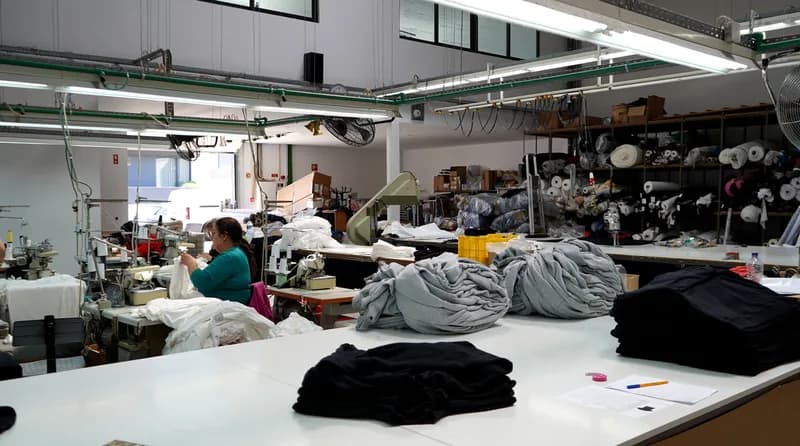
White Cotton manufactures lightweight clothing in Barcelos, Portugal for brands selling into hot climates. T-shirts, shirts, linen trousers, waffle-knit sets, and resort wear in 140-250 GSM breathable fabrics. We source OEKO-TEX certified linen, organic cotton poplin, cotton jersey, and waffle knit from European mills, then handle pattern making, sampling, decoration, and bulk production under one roof. MOQ from 100 units per style, free quotes on request.
140-250 GSM
Lightweight range
MOQ from 100 Units
Per colourway · 150 in one colour
4 Core Fabrics
Linen, poplin, jersey, waffle
Barcelos
Made in Portugal
Trusted by resort, streetwear & lifestyle brands from UAE, Saudi Arabia, Australia, UK & 15+ countries
Breathable Fabric Engineering
What Is Lightweight Clothing Manufacturing?
Lightweight clothing manufacturing is the production of garments optimised for breathability, moisture management, and comfort in warm-to-hot climates. The defining characteristic is fabric weight: 100-250 GSM (grams per square metre), compared to 280-400+ GSM for mid-weight and heavyweight categories. At this weight range, fabrics allow air to circulate through the weave or knit structure, wick perspiration away from the skin, and reduce heat retention — critical properties for garments worn in the Gulf (regularly 40°C+), Mediterranean summers, and tropical markets.
The engineering challenge of lightweight manufacturing is balancing three competing factors: breathability (lower GSM = more airflow), opacity (lower GSM = more see-through), and durability (lower GSM = less abrasion resistance). The sweet spot for most commercial garments is 140-200 GSM for knits (t-shirts, jerseys, basics) and 100-140 GSM for wovens (shirts, poplin pieces, resort wear). Below 100 GSM, fabrics become too sheer for standalone garments. Above 250 GSM, the thermal properties shift toward mid-weight territory and breathability drops.
At White Cotton, lightweight production starts with fabric selection matched to destination climate. For Gulf brands facing 40°C+ summers, we recommend 100% Linen at 180 GSM — the most breathable natural fibre, with an open weave structure that allows maximum airflow and feels cooler than ambient temperature on skin. For structured resort shirts, Organic Cotton Poplin at 100-140 GSM delivers a crisp hand-feel that holds its shape without trapping heat. For everyday basics, Organic Cotton Jersey at 140-200 GSM provides a soft, stretchy foundation. For textured sets, Waffle Knit at 180-220 GSM adds visual interest while the honeycomb structure creates air pockets that enhance ventilation.
Construction techniques differ from heavyweight production. Lightweight fabrics require finer needles (size 9-11 vs. 14-16 for heavy fabrics), lower presser foot pressure to prevent puckering, and adjusted thread tension. Seam finishes must be clean — overlock or flat-felled — because thin fabrics show interior construction more than thick ones. Pattern grading accounts for the drape characteristics of lightweight fabrics: they hang closer to the body, so ease allowances are adjusted to prevent cling without adding unnecessary volume.
Portugal is the natural manufacturing base for lightweight clothing destined for hot markets. Barcelos, in the northern textile corridor, combines generations of cut-and-sew expertise with access to premium European linen and cotton. EU labour standards guarantee ethical production. The geographic position enables 7-12 day sea shipping to the Gulf or 3-5 day air freight. And White Cotton's MOQ of 100 units per style (150 in one colourway) makes it accessible for emerging brands launching summer capsules, resort collections, or year-round lightweight lines without committing to factory minimums of 500-1000 units.
Product Categories
Lightweight Garments We Produce
Recommended for Hot Climates
Best Fabrics for Lightweight Clothing
Organic Cotton Jersey
140–300 gsm
A soft, stretchy knit made from certified organic cotton — the most versatile fabric in garment manufacturing. Available...
100% Linen
150–200 gsm
A lightweight fabric woven from flax fibres, prized for exceptional breathability and elegant drape. Has a distinctive s...
Waffle Knit
180–360 gsm
A textured knit with a distinctive 3D honeycomb grid pattern. The raised squares create air pockets for thermal regulati...
Cotton Poplin
100–140 gsm
A tightly woven, lightweight plain-weave fabric with a smooth surface and subtle sheen. The classic fabric for formal an...
Customization Options
Decoration Techniques for Lightweight Garments
Embroidery
Embroidery
Embroidery is the art of stitching thread directly into fabric using industrial multi-head machines to create durable, t...
Screen Printing
Screen Printing
Screen printing pushes ink through a mesh stencil onto fabric, one colour at a time, producing vibrant, opaque prints wi...
DTG (Direct-to-Garment) Printing
Digital Printing
DTG printing uses modified inkjet technology to spray water-based ink directly onto fabric, producing photo-quality prin...
Full-Package Solutions
Our Manufacturing Services
Private Label Manufacturing
Private label manufacturing is the process of producing garments exclusively to a client's specifications, bearing their brand name and labe...
White Label Manufacturing
White label manufacturing lets you start from one of our base fits — a standard pattern for the garment — and add your own branding: labels,...
Custom Clothing Manufacturing
Custom clothing manufacturing is a full-package production service covering every stage from pattern creation to finished, packed garments. ...
Collection Development
Collection development is an end-to-end service that takes your brand from concept to production-ready patterns at no extra design charge. W...
From Design to Delivery
How Lightweight Clothing Production Works
Climate Brief & Fabric Selection
Share your designs, target climate, and product vision. We analyse the destination market — Gulf heat (40°C+), Mediterranean summers, tropical humidity — and recommend the optimal GSM range and fabric composition. Linen for maximum breathability, cotton poplin for structured shirts, jersey for soft basics, waffle knit for textured sets. Every recommendation is matched to your price point and end-use.
Lightweight Sample Development
You receive a detailed quotation. We produce a physical sample in your chosen lightweight fabric and verify drape, opacity, breathability, and shrinkage tolerance. Wash tests at 30°C and 40°C confirm dimensional stability. We iterate until weight, hand-feel, and fit match your specification exactly.
Production & Decoration
Approved fabrics are spread, cut, and assembled with construction techniques optimised for lightweight materials — finer needles, adjusted tension, seam finishes that prevent puckering on low-GSM fabrics. Embroidery, screen printing, or DTG is applied with settings calibrated for thin fabrics. Inline quality checks verify GSM consistency, opacity, and stitch quality throughout the run.
QC, Packing & Climate-Ready Shipping
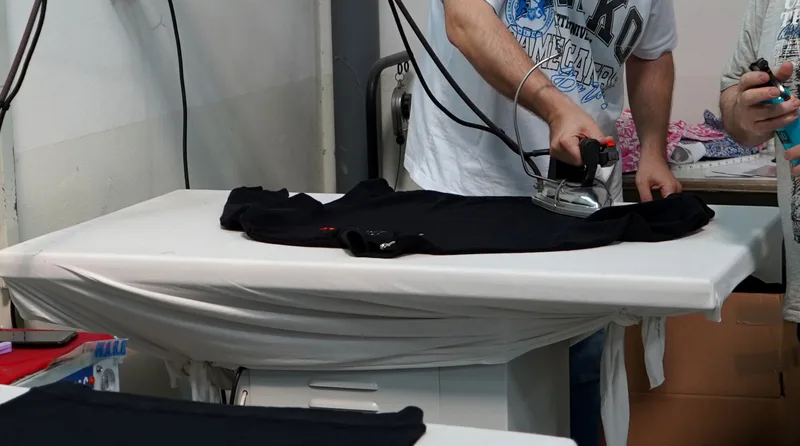
Every garment passes end-of-line inspection — weight verification, opacity check, measurement accuracy, decoration placement, and seam integrity. Approved pieces are pressed, folded, individually polybag-packed, and cartoned. Lightweight cartons mean lower shipping costs per unit. We handle export documentation for GCC, Mediterranean, and global delivery.
Common Questions
Frequently Asked Questions
What GSM range qualifies as lightweight clothing?
Lightweight clothing typically falls between 100 and 250 GSM. For hot climates (GCC at 40°C+, Mediterranean summers, tropical markets), the sweet spot is 140-200 GSM for t-shirts and basics, 100-140 GSM for woven shirts and poplin pieces, and 150-200 GSM for linen garments. Below 100 GSM the fabric becomes too sheer for most commercial use; above 250 GSM you enter mid-weight territory. We help brands select the exact GSM that balances opacity, drape, and breathability for their target climate.
Which fabrics are best for breathable, hot-climate garments?
Four fabrics dominate lightweight manufacturing for hot climates. 100% Linen (150-200 GSM) delivers the highest breathability of any natural fibre — air passes through the open weave, moisture wicks in seconds, and the fabric feels cooler than ambient temperature on skin. Organic Cotton Poplin (100-140 GSM) provides a crisp, structured hand-feel ideal for shirts and resort wear. Organic Cotton Jersey (140-200 GSM) is the workhorse for lightweight t-shirts and basics. Waffle Knit (180-220 GSM) adds textural interest while maintaining airflow through its honeycomb structure. All are natural fibres sourced from OEKO-TEX certified mills.
How do you prevent shrinkage in lightweight fabrics?
Shrinkage control starts before cutting. All lightweight fabrics undergo pre-wash or compressive shrinkage treatment at the mill to stabilise dimensions. We verify incoming fabric against the mill’s shrinkage test report (typically 3-5% for cotton jersey, under 2% for poplin). Patterns are graded with shrinkage tolerance built in. During sampling, we wash-test the finished garment at 30°C and 40°C to confirm dimensional stability. For linen, we inform brands that 3-5% relaxation shrinkage is natural on first wash and factor this into pattern grading.
Can you manufacture resort wear and summer capsule collections?
Yes. Resort wear and summer capsules are a core focus. We produce lightweight camp-collar shirts in cotton poplin and linen, relaxed-fit linen trousers, oversized cotton tees, waffle-knit sets (matching top and bottom), and linen overshirts. For resort collections, fabric choice typically centres on linen (180 GSM) for its luxurious drape and natural texture, combined with cotton jersey for basics. We handle the full package: fabric sourcing, pattern making, sampling, embroidery or print decoration, and bulk production. MOQ is 150 units per style in one colourway, or 100 per colourway when you order two or more.
Do lightweight garments offer UV sun protection?
Fabric weight, weave density, and colour all affect UV protection. Tighter weaves like poplin (100-140 GSM) block more UV than open-knit jerseys at the same weight. Darker colours absorb more UV than light colours. Linen’s open weave provides moderate UPF (15-20) while maximising airflow. For brands that need certified sun protection, we can source UPF 50+ treated fabrics or recommend tighter-weave options that naturally achieve UPF 30+. We always advise brands on the UV trade-off: maximum breathability means slightly lower UPF, and vice versa.
How does shipping work to hot-climate destinations (Gulf, Mediterranean, tropical)?
We ship regularly to the UAE, Saudi Arabia, Kuwait, Qatar, and other GCC countries, plus Mediterranean and tropical destinations. Sea freight from Portugal to Dubai takes 18-22 days; air freight takes 4-5 days. For lightweight garments, shipping costs are lower per unit because the cartons weigh less — a 160 GSM tee weighs roughly 40% less than a 320 GSM hoodie. We work EXW Barcelos: your courier or forwarder collects the goods at our factory, or we book the courier for you and invoice the transport separately. Freight, import duties and VAT in your country are yours. Full export documentation (commercial invoice, packing list, EUR.1, HS codes) is included. We do not offer DDP.
How should customers care for lightweight garments in hot climates?
We provide care label recommendations tailored to each fabric. General guidelines for lightweight garments: machine wash at 30°C (cold wash preserves fibre integrity and reduces energy), tumble dry low or line dry in shade (direct sun fades colours faster on lightweight fabrics), iron on medium heat. For linen, we recommend washing before first wear to achieve the relaxed texture customers expect, and advise against wringing. Cotton poplin can be ironed for a crisp finish or left slightly textured for a casual look. These care instructions are printed on woven care labels sewn into every garment.
Can I combine lightweight and heavyweight pieces in one order?
Absolutely. Many brands order lightweight summer pieces alongside mid-weight or heavyweight styles in the same production run. A typical mixed order might include 160 GSM cotton jersey tees, 180 GSM linen shirts, and 320 GSM french terry hoodies — all produced under the same timeline. The MOQ of 150 units per style in one colourway (or 100 per colourway on two or more) applies regardless of fabric weight. Mixing weights in one order is more cost-efficient than placing separate orders because it consolidates shipping, reduces setup costs, and simplifies logistics.
Manufacture Lightweight Clothing in Portugal
Send us your tech pack or design brief. No commitment required.