Certified Ethical Manufacturing
Sustainable Clothing Manufacturer
White Cotton is a garment manufacturer in Barcelos, Portugal, producing sustainable clothing using GOTS and OEKO-TEX certified fabrics for brands that take environmental responsibility seriously. We work with organic cotton, recycled materials, and BCI-sourced fibres — offering full-package production with complete supply chain traceability, water-based printing, low-waste cutting, and eco packaging from just 75 units per colourway (100 in a single colourway).
GOTS Certified
Organic cotton
OEKO-TEX 100
Tested for safety
MOQ from 75 Units
Per colourway · 100 in one colour
EU Production
Made in Portugal
The Case for Sustainability
Why Choose a Sustainable Clothing Manufacturer?
The fashion industry accounts for 8–10% of global carbon emissions — more than international flights and maritime shipping combined. Consumers are increasingly aware of this, and legislation is catching up. The EU Strategy for Sustainable and Circular Textiles, the French anti-waste law, and Germany's Supply Chain Act all signal a regulatory shift toward mandatory transparency and environmental accountability. Brands that build sustainable supply chains now are not just doing the right thing — they are future-proofing their business.
Sustainable manufacturing starts with materials. At White Cotton, we source GOTS-certified organic cotton that is grown without synthetic pesticides or fertilizers, protecting soil health, water systems, and farming communities. We offer OEKO-TEX Standard 100 fabrics across our entire range — every material has been independently tested and certified free from over 100 harmful substances. For brands exploring recycled materials, we work with recycled polyester (from post-consumer plastic bottles) and recycled cotton blends that divert textile waste from landfill.
Certification is only meaningful when it covers the full chain. Our GOTS certification extends beyond the raw fibre — it covers spinning, knitting, dyeing, cutting, sewing, and finishing. This means every step of production meets strict environmental and social criteria: no toxic chemicals in processing, wastewater treatment at every stage, fair wages and safe conditions for all workers, and energy-efficient manufacturing practices. When you put a GOTS label on your garment, your customer can trust that the entire supply chain was audited.
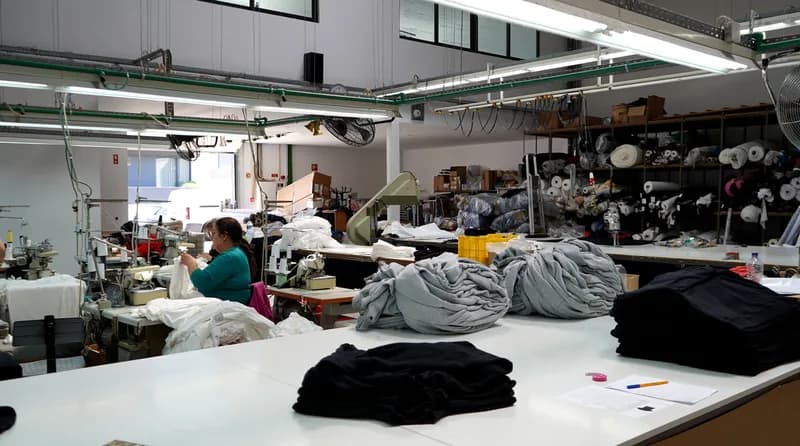
Portugal is an ideal location for sustainable manufacturing in Europe. Our factory in Barcelos operates under full EU environmental regulations, which are among the strictest in the world. Proximity to European markets means shorter shipping distances, lower transport emissions, and no need for air freight. The northern Portuguese textile cluster has invested heavily in modern, energy-efficient machinery and water recycling systems over the past decade. And unlike sourcing from distant regions, you can visit our facility, inspect our processes, and verify our claims in person.
We believe sustainability should be accessible, not exclusive. That is why our minimum order quantity is just 100 units per style in one colourway, or 75 per colourway on two or more, where most European factories start at 200–500. Whether you are an established brand transitioning to organic materials or a startup launching with sustainability at your core, we provide the same level of certification, traceability, and production quality. No sustainability surcharge on small orders. No compromises on environmental standards regardless of volume.
Our Commitments
How We Manufacture Sustainably
Certified Materials
GOTS organic cotton, OEKO-TEX Standard 100 fabrics, BCI cotton, and recycled polyester. Every material in our supply chain carries independent certification.
Ethical Production
EU-regulated factory in Barcelos, Portugal. Fair wages, safe working conditions, regular inspections. Full compliance with European labour and environmental law.
Low-Waste Cutting
Computerised marker making achieves 85–92% fabric yield. Offcuts are sorted by composition and sent to textile recycling partners — not landfill.
Water-Based Inks
PVC-free, phthalate-free water-based screen printing as standard. Softer hand-feel, better breathability, and full GOTS compliance.
Full Traceability
From farm to finished garment — we document every step. Fibre origin, mill certificates, dye records, and production logs available for every order.
Eco Packaging
Recycled poly bags or kraft paper as standard. Compostable packaging available on request. No single-use virgin plastic in our supply chain.
Product Categories
What We Manufacture
Certified Fabric Library
Sustainable Fabrics We Work With
Eco-Friendly Customization
Decoration & Finishing Techniques
Embroidery
Embroidery
3D Puff Embroidery
Embroidery
Screen Printing
Screen Printing
Discharge Printing
Screen Printing
DTG (Direct-to-Garment) Printing
Digital Printing
DTF (Direct-to-Film) Printing
Digital Printing
Sublimation Printing
Digital Printing
Heat Transfer & Vinyl
Digital Printing
Specialty Finishes & Effects
Specialty
Full-Package Solutions
Our Manufacturing Services
Private Label Manufacturing
Private label manufacturing is the process of producing garments exclusively to a client's specifications, bearing their brand name and labe...
White Label Manufacturing
White label manufacturing lets you start from one of our base fits — a standard pattern for the garment — and add your own branding: labels,...
Custom Clothing Manufacturing
Custom clothing manufacturing is a full-package production service covering every stage from pattern creation to finished, packed garments. ...
Collection Development
Collection development is an end-to-end service that takes your brand from concept to production-ready patterns at no extra design charge. W...
From Concept to Certified Garment
How It Works
Share Your Sustainable Vision
Tell us about your brand's sustainability goals, target certifications, and product requirements. Share tech packs, sketches, or reference images. We help you select the right certified fabrics and eco-friendly decoration techniques from the start.
Certified Quotation
You receive a detailed quotation specifying fabric certifications (GOTS, OEKO-TEX, BCI), sustainable trim options, water-based ink choices, and eco packaging. Every line item is transparent — you see exactly what goes into your garment and its environmental credentials.
Sustainable Sample
We produce a physical sample using the exact certified materials specified in your order. You review fit, fabric hand-feel, colour fastness, and decoration quality. We include a preliminary traceability report so you can verify the supply chain before committing to production.
Ethical Production & Delivery
Production runs under EU workplace standards with full environmental compliance. We provide regular updates, final quality control documentation, and a complete traceability certificate with every shipment. Garments are packed in recycled or compostable packaging and shipped directly to your warehouse.
Common Questions
Frequently Asked Questions
What certified fabrics does White Cotton use?
We source OEKO-TEX Standard 100 certified fabrics from our partner mills, meaning every fabric we use has been independently tested and verified free from harmful substances. We also source GOTS-certified organic cotton (with transaction certificates from certified mills), which covers the supply chain from raw fibre to finished garment. We work with BCI (Better Cotton Initiative) cotton from member supply chains. These are fabric-level certifications from our partner mills — we do not hold factory-level certifications ourselves. Our factory operates under full EU environmental and workplace regulations.
What is GOTS certification and why does it matter?
GOTS (Global Organic Textile Standard) is the world's leading processing standard for organic fibres. It covers the entire textile supply chain — from harvesting raw materials to manufacturing, labelling, and trading. A GOTS-certified garment guarantees that at least 70% of the fibres are organic, no toxic chemicals were used in processing, wastewater is treated, and workers are paid fair wages under safe conditions. For brands marketing sustainability, GOTS is the most recognised and trusted certification globally.
Is organic cotton actually better than conventional cotton?
Yes, from an environmental standpoint. Organic cotton uses 91% less water from blue water sources (rivers and groundwater) compared to conventional cotton, according to the Textile Exchange. It is grown without synthetic pesticides or fertilizers, which protects soil health, biodiversity, and the health of farming communities. Organic cotton also produces up to 46% fewer carbon emissions. The resulting fabric feels the same or softer than conventional cotton, with identical durability. The trade-off is a 15–30% higher raw material cost, but many consumers now expect and pay for this.
Can you provide full traceability documentation?
Yes. We provide complete supply chain traceability for every order. This includes the origin of the raw fibre (farm or cooperative), the mill that spun and knitted the fabric, the dyehouse and any chemical certifications (OEKO-TEX, GOTS), and our own production records covering cutting, sewing, and finishing. We can supply this as a traceability report or certificate for your customers, investors, or regulatory requirements. Full documentation is standard — you do not need to request it separately.
What are the minimum order quantities for sustainable production?
Our minimum order quantity is 100 units per style in one colourway, or 75 per colourway when you order two or more, regardless of whether you choose organic, recycled, or conventional fabrics. There is no sustainability surcharge on MOQs. That keeps GOTS and OEKO-TEX certified fabrics reachable for emerging brands, not only for high-volume ones. We recommend starting with one or two styles using organic cotton jersey or recycled jersey to test the market before scaling your sustainable range.
What is the difference between recycled and organic fabrics?
Organic fabrics (like GOTS organic cotton) are made from natural fibres grown without synthetic chemicals — they are biodegradable and have a lower farming footprint. Recycled fabrics (like recycled polyester or recycled cotton blends) are made from post-consumer waste such as plastic bottles or textile scraps — they divert waste from landfill and reduce the need for virgin raw materials. Both are valid sustainability choices. Organic is better for skin contact, breathability, and biodegradability. Recycled is better for performance wear and reducing plastic waste. Many brands combine both in their collections.
Do you use water-based inks for printing?
Yes. We offer water-based screen printing as our default sustainable printing option. Water-based inks penetrate the fabric rather than sitting on top, producing a softer hand-feel and better breathability. They contain no PVC or phthalates, making them safe for OEKO-TEX and GOTS compliance. For brands that require vibrant colours on dark garments, we also offer plastisol inks, but we recommend water-based for any brand with a sustainability positioning. Our DTG (direct-to-garment) printing also uses water-based pigment inks.
How do you minimise waste in production?
We use computerised marker making to optimise fabric utilisation and reduce cutting waste — typically achieving 85–92% fabric yield depending on pattern complexity. Fabric offcuts are sorted by composition and sent to recycling partners rather than landfill. We use digital pattern grading to minimise sample iterations. Thread, trim, and packaging waste is separated and recycled. We do not use single-use plastic in our packaging — garments are shipped in recycled poly bags or kraft paper. For brands that want zero-plastic packaging, we offer fully compostable alternatives.
Ready to Manufacture Sustainably?
Request a free quotation. Full traceability included.