For Copenhagen Brands
Portuguese Manufacturing for Copenhagen Fashion Brands
EU single market — zero customs. OEKO-TEX certified fabrics. 4–5 day delivery. CPHFW sustainability ready. MOQ from 75 units.
Trusted by brands from UK, Germany, France, Netherlands, Dubai & 15+ countries
What We Offer
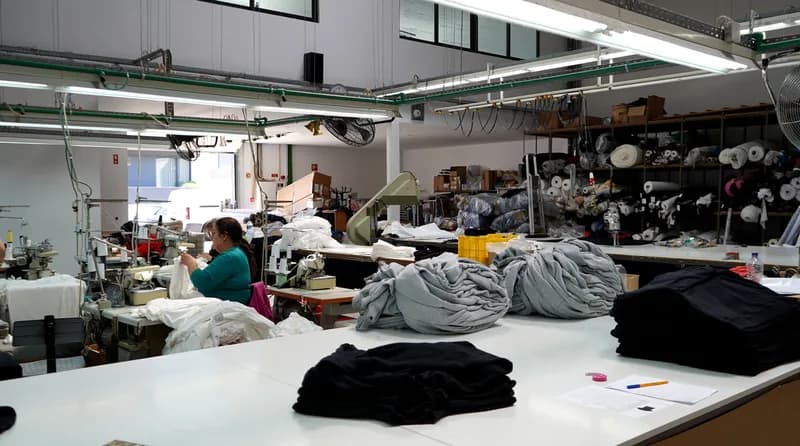
White Cotton manufactures garments for Copenhagen-based fashion brands from our factory in Barcelos, Portugal. Copenhagen doesn't do fashion for fashion's sake. The city produces garments the way it designs furniture and architecture — with intention, restraint, and an obsession with how things feel in your hands. When 60% of your collection must use certified materials just to show at CPHFW, you need a manufacturer who treats sustainability as infrastructure, not marketing. That's what we build.
Why Copenhagen Brands Choose Portuguese Manufacturing
Copenhagen Fashion Week celebrated its 20th anniversary in 2026 — and marked it by raising sustainability requirements to their strictest level yet. Participating brands must now satisfy 19 minimum standards spanning material sourcing, carbon measurement, labour conditions, and event production. At least 60% of each collection must incorporate certified, preferred, or deadstock materials, verified by external screening committees. No virgin fur. No wild animal skins. No single-use plastic. No destruction of unsold inventory. These aren't aspirational guidelines — they're gatekeeping criteria. Brands that don't comply don't show. For Copenhagen labels, sustainability certification isn't a differentiator. It's the entry ticket.
This is why Portuguese manufacturing matters for Copenhagen brands. Meeting the 60% certified materials threshold requires a manufacturer with certified fabric sourcing baked into their supply chain — not a factory that offers 'sustainable options' as an add-on. We source OEKO-TEX Standard 100 certified fabrics as standard, GOTS-certified organic cotton for brands that need the full supply chain certification, and GRS-certified recycled materials for circular fashion labels. Every order includes transaction certificates documenting exactly which certified materials were used, in what proportions, and from which certified suppliers. When CPHFW's screening committee reviews your sustainability documentation, the production data is already there.
Scandinavian minimalism sounds simple but it's the hardest aesthetic to manufacture well. When there are no graphics, no logos, no decorative seams to distract the eye, the fabric and construction ARE the design. A crewneck sweatshirt in oatmeal French terry is either perfect or it's nothing — there's no embroidery to divert attention from an uneven seam or a poorly matched colour. Ganni, Stine Goya, and Saks Potts didn't build global brands by being flashy — they built them by being precisely, intentionally, impeccably made. Our pattern makers and quality control process are built for this level of scrutiny. Measurements checked to the millimetre. Seams finished cleanly on the inside. Colour matched to Pantone lab dips and verified across the entire fabric lot before cutting begins.
The Copenhagen approach to collections — fewer pieces, better quality, curated ranges — is the opposite of the volume model that most manufacturers are optimised for. A typical Copenhagen capsule is 4–8 styles across 2–4 muted colourways, produced in quantities of 75–150 units per style. That's a 300–600 unit total order. Most Asian factories won't even return your email for that volume. Turkish factories will take it but at inflated per-unit costs because their lines are set up for 1,000+ runs. Portuguese manufacturing is the only region where a 75-unit order gets industrial-grade production — professional cutting, multi-station sewing, certified fabrics, quality inspection — without the premium surcharge that small batches attract everywhere else.
Copenhagen's winters are dark and cold — temperatures hover around 0–3°C from November through March, with short daylight hours and persistent damp. The Danish concept of hygge — that warm, cosy contentment — shapes how the city dresses. Heavyweight organic sweatshirts, brushed French terry joggers, and layered cotton canvas overshirts are wardrobe foundations, not seasonal add-ons. Danish consumers invest in fewer garments that they wear constantly, wash regularly, and expect to last for years. This is a market for 300–500 GSM mid-to-heavyweight fabrics with exceptional hand-feel and construction that improves with washing — not lightweight seasonal pieces that get discarded after one summer. Our fabric range at 200–580 GSM covers Copenhagen's sweet spot precisely.
Why Choose Us
Why White Cotton for Copenhagen Brands
CPHFW Sustainability Compliance
Copenhagen Fashion Week requires 60% certified/preferred materials per collection. We source OEKO-TEX, GOTS, and GRS certified fabrics with transaction certificates — the documentation your screening committee review needs. Meeting the 19 minimum standards starts with your manufacturer.
Built for the Capsule Model
Copenhagen brands produce fewer, better pieces — 4–8 styles in curated colourways at 75–150 units each. Our 75-unit MOQ and pattern archiving for instant reorders fit this cadence exactly. No overproduction, no dead stock, no waste. The collection model Copenhagen invented.
Fabric Quality for Minimalist Design
When there's no decoration to hide behind, the fabric IS the design. We source premium European cotton, organic jersey, and French terry with the hand-feel and consistency that Scandinavian minimalism demands. Lab-dip colour matching for the muted palettes Copenhagen brands are built on.
EU Single Market — Zero Barriers
Portugal and Denmark are both EU member states. Goods move freely with zero customs, zero duties. Road freight to Copenhagen in 4–5 days. Standard intra-community supply — as simple as ordering from a Danish supplier.
Product Catalog
Popular Products
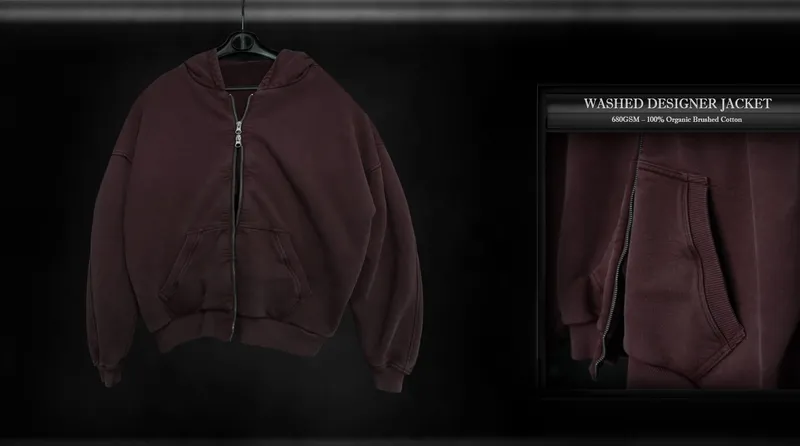
Washed Designer Jacket
680GSM — 100% Organic Brushed Cotton
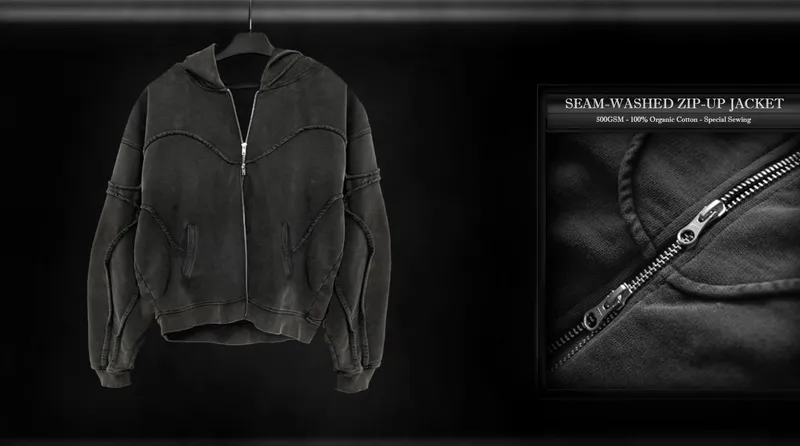
Seam-Washed Zip-Up Jacket
500GSM — 100% Organic Cotton — Special Sewing
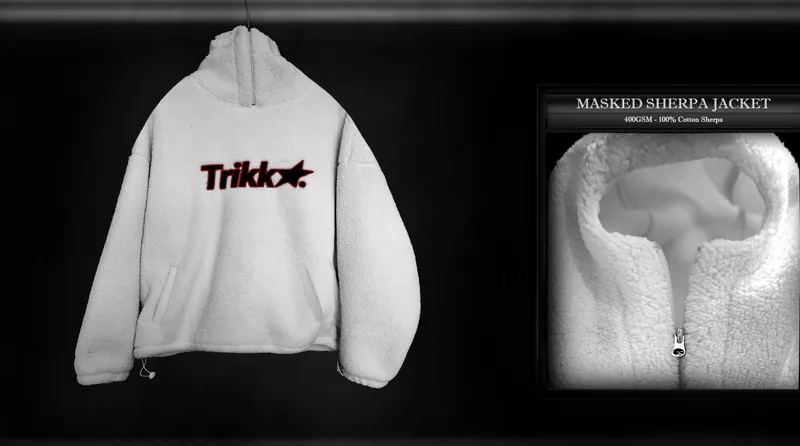
Masked Sherpa Jacket
400GSM — 100% Cotton Sherpa
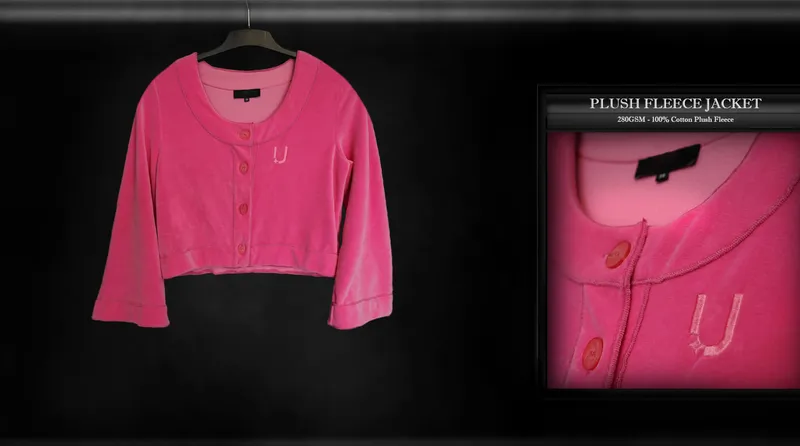
Plush Fleece Jacket
280GSM — 100% Cotton Plush Fleece
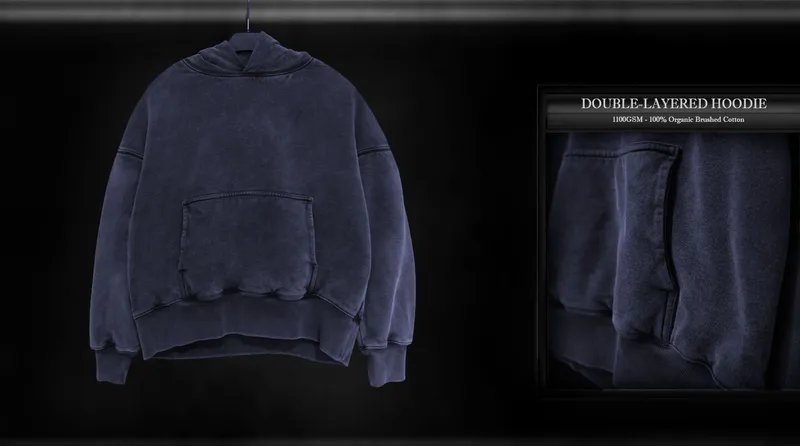
Double-Layered Hoodie
1100GSM — 100% Organic Brushed Cotton
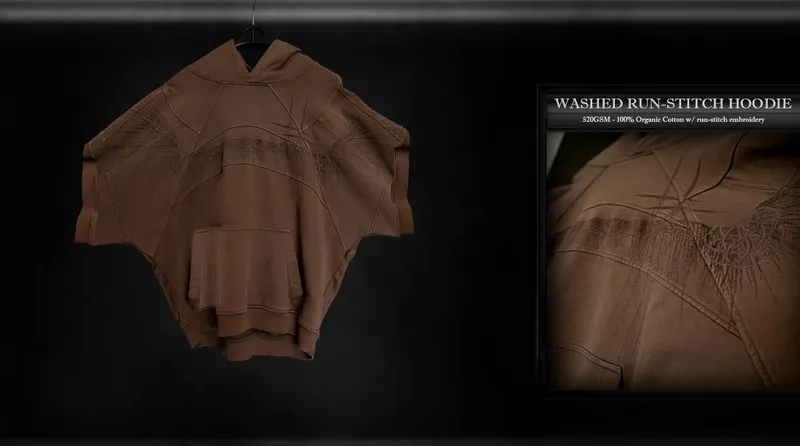
Washed Run-Stitch Hoodie
520GSM — 100% Organic Cotton w/ Run-Stitch Embroidery
Fabric Selection
Recommended Fabrics
Organic Cotton Jersey
GOTS-certified organic jersey is the non-negotiable baseline for Copenhagen brands. Counts toward CPHFW's 60% certified materials requirement. Heavyweight 200–280 GSM for the substantial, quality-first tees that anchor every Scandinavian capsule — not the thin, transparent jersey that signals fast fashion.
French Terry
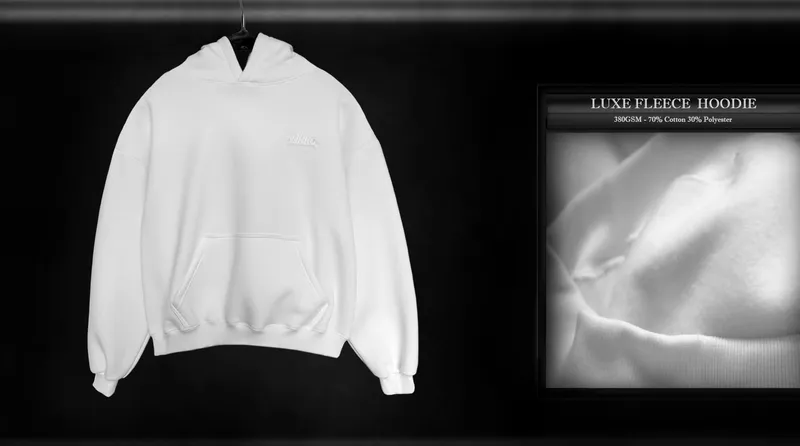
The defining Scandinavian casual fabric. Smooth exterior for clean, minimal lines; soft looped interior for the hygge warmth Danes build their wardrobes around. 340–420 GSM for the crewneck sweatshirts and relaxed joggers that Copenhagen consumers live in from September through April.
Cotton Canvas
Structured cotton canvas for the overshirts and lightweight jackets that complete Copenhagen's layering system. Functional enough for cycling, refined enough for Nørrebro coffee shops. Natural fibre that ages gracefully — developing character with each wear, which Copenhagen consumers value over pristine newness.
Decoration & Finishing
Recommended Techniques
Embroidery
Tonal, near-invisible embroidery is the signature of Copenhagen branding. Small chest placements, tone-on-tone thread, logos that reveal themselves only when you look closely. Anti-logo culture taken to its craft extreme — subtle branding that signals confidence, not insecurity.
Specialty Finishes
Enzyme washing and bio-polishing for the soft, lived-in hand-feel Copenhagen consumers expect from day one. These finishes make new garments feel like they've been in your wardrobe for months — the tactile equivalent of hygge. No harsh chemicals — GOTS-compatible processes only.
Screen Printing
Water-based inks for the occasional graphic or typographic detail Copenhagen brands use. Soft hand-feel, zero PVC — prints that become part of the fabric rather than sitting on top. For brands where even the print needs to feel Scandinavian: understated, precise, disappearing into the garment.
Real Example
How We Delivered
Scenario
A Copenhagen label producing biannual capsule collections needed to meet CPHFW's 60% certified materials requirement for their AW26 show application. Their previous Portuguese supplier required 200-unit minimums, which forced overproduction — 40% of each collection ended up in dead stock, contradicting the brand's zero-waste positioning.
Solution
We produced a 6-piece capsule: organic cotton tees (220 GSM GOTS jersey, 3 colourways), French terry sweatshirts (380 GSM, enzyme-washed), and cotton canvas overshirts — at 75–80 units per style. Tonal embroidery on all pieces. Full GOTS and OEKO-TEX transaction certificates with material percentages calculated for the CPHFW sustainability audit. Pantone-matched lab dips for sage, stone, and oatmeal colourways approved before production.
Result
Brand met CPHFW's certified materials threshold with 78% of the collection using certified fabrics (above the 60% minimum). Sold through 85% of inventory in the first month — zero dead stock for the first time in their history. Committed to a long-term production partnership with rolling capsules produced at 75–100 units per style, reordering only what sells.
Process
How It Works
Send Your Tech Pack
Share your tech pack with flat sketches, measurements, and fabric specs. Still developing it? Send what you have — we'll help you refine it.
Get a Detailed Quote
Receive a detailed, transparent quotation covering fabric, trims, manufacturing, and finishing. Factory-direct pricing, no middlemen.
Approve Your Sample
We produce a pre-production sample for your review. Iterate until every detail — fit, fabric, colour, construction — matches your vision.
Production & Delivery
Full production with quality control at every stage. Packed to your specs and shipped directly to your warehouse or fulfillment centre.
Common Questions
Frequently Asked
How does delivery work from Portugal to Copenhagen?
Road freight from Barcelos to Copenhagen takes 4–5 business days via Spain, France, Germany, and Denmark. Express courier for samples arrives in 2–3 days. All shipments include tracking and standard intra-EU documentation. While we're the furthest EU manufacturing hub from Scandinavia by road, the 4–5 day delivery is still faster than any non-EU alternative — and infinitely simpler than post-Brexit UK, Asian, or Turkish shipping with customs clearance.
Do your fabrics meet CPHFW sustainability requirements?
Yes. Copenhagen Fashion Week requires 60% of each collection to use certified, preferred, or deadstock materials. Our OEKO-TEX Standard 100 certified fabrics, GOTS-certified organic cotton, and GRS-certified recycled materials all count toward this threshold. We provide transaction certificates with material percentages per style — the exact documentation CPHFW's external screening committee reviews. Several of our clients have used this documentation to successfully pass the sustainability audit.
Can you match Pantone colours for muted Scandinavian palettes?
Yes — and we take this seriously because colour is the entire design language of Scandinavian minimalism. We colour-match to Pantone TPX references and produce lab-dip samples for your approval before any bulk fabric is cut. Copenhagen's signature muted tones — sage, stone, oatmeal, charcoal, dusty rose — require precise matching because there's nowhere for a wrong shade to hide on a plain garment. We produce lab dips until the shade is exact, and verify colour consistency across the full fabric lot.
What is the minimum order for Copenhagen brands?
100 units per style in one colourway, or 75 per colourway when you order two or more. This is designed for Copenhagen's capsule model: 4–8 styles at 75–150 units each. Produce what your stockists ordered, plus a small buffer for DTC. No forced overproduction, no dead stock. When CPHFW prohibits the destruction of unsold inventory, small-batch production isn't just sustainable — it's the only model that makes compliance effortless.
Are there customs duties between Portugal and Denmark?
No. Both countries are EU member states — goods move freely within the single market with zero customs declarations, zero import duties, and zero border inspections. Standard intra-community supply with reverse-charge VAT. Shipping to Copenhagen is as frictionless as ordering from a Danish manufacturer.
How do you ensure quality for minimalist garments?
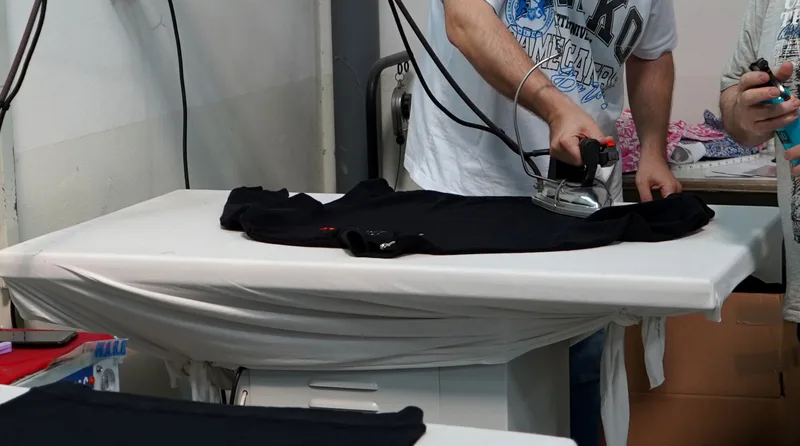
Minimalist garments are the hardest to manufacture well because every detail is visible. We apply enhanced quality control for Scandinavian brands: fabric inspected for colour consistency and surface defects before cutting, measurements verified to sub-millimetre accuracy during sewing, seams finished cleanly on both sides (because your customers will check), and finished garments pressed and inspected under daylight-balanced lighting. A single loose thread or uneven seam that would be invisible on a graphic hoodie becomes a defect on a plain Scandinavian crewneck.
Can I visit the factory?
Factory visits are available for production clients — once samples are approved and bulk production is underway. Copenhagen to Porto is a direct flight (approximately 3.5 hours with SAS, TAP, or Ryanair), and Barcelos is about 40 minutes from Porto airport. Porto is worth the trip beyond the factory visit — the city's architecture, ceramic tiles, and natural wine scene have made it a favourite weekend destination for Danish creatives.
Do you support the NewTalent programme brands?
We work with emerging brands at every stage — including those in accelerator or talent programmes. CPHFW's NewTalent programme offers financial support and mentoring to next-gen Nordic designers, many of whom need their first professional production partner. Our 75-unit MOQ, pattern development from sketches or references, and fabric sourcing guidance are designed for exactly this stage: turning a promising design into a professionally manufactured collection without requiring established-brand budgets or volumes.
Ready to manufacture for copenhagen brands?
Tools & Resources
Explore More
Also Manufacturing For