For Portland Brands
Certified Sustainable Manufacturing for Portland
GOTS & GRS certified fabrics. B-Corp documentation. Full supply chain transparency. Air freight to PDX in 4–5 days. 75-unit MOQ.
Trusted by brands from UK, Germany, France, Netherlands, Dubai & 15+ countries
What We Offer
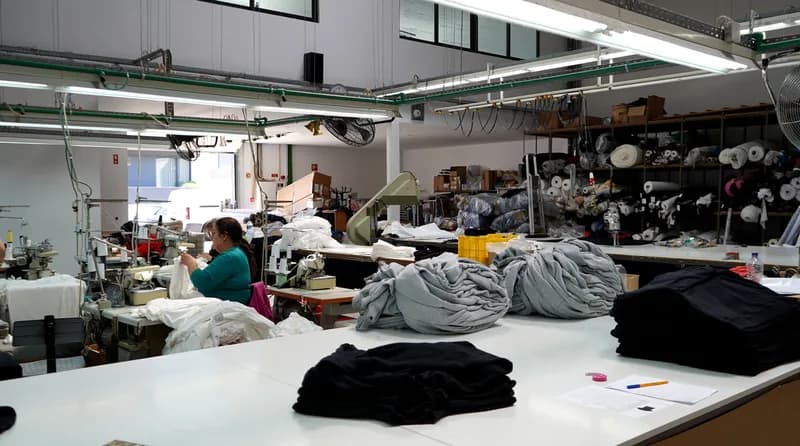
White Cotton manufactures garments for Portland fashion brands from our factory in Barcelos, Portugal. Portland doesn't treat sustainability as a product feature — it's the operating system. From Nau's decade-plus commitment to sustainable outdoor apparel to Wildfang's carbon-neutral shipping and Ginew's cultural sustainability through Indigenous design, the city's brands don't separate quality from ethics. They demand a manufacturer who operates the same way: certified materials as standard, full supply chain documentation, and production practices that survive a B-Corp assessment — not just a marketing audit.
Why Portland's Ethical Fashion Brands Manufacture in Portugal
Portland sits in a unique position in American fashion. The city is home to Nike's global headquarters in Beaverton, Columbia Sportswear's outdoor empire, and Danner's 90-year boot-making heritage — but its independent fashion scene runs in the opposite direction. Portland's emerging brands are deliberately small, deliberately ethical, and deliberately transparent. Nau, founded in 2007, uses the same 10 sustainable fabrics across all garments and donates 2% of every sale to grassroots environmentalism. Wildfang, founded by queer women, ships carbon-neutral with compostable packaging. Ginew blends Native American heritage with modern denim, sourcing domestically and collaborating directly with Indigenous artists. These aren't marketing positions — they're business models. And they require a manufacturing partner whose operations are built on the same principles.
The B-Corp framework shapes how Portland brands evaluate every supplier, including their garment manufacturer. B-Corp assessment scores companies on governance, workers, community, environment, and customers — and the supply chain section is where most fashion brands struggle. Assessors want to see: Where are your fabrics sourced? What certifications do they hold? What are the working conditions at your factory? Can you document chemical usage in dyeing? What happens to fabric waste? Manufacturing in Portugal gives Portland brands strong answers to all of these. EU labour regulations mean legally mandated living wages and safe working conditions (not voluntary codes of conduct). OEKO-TEX and GOTS certified fabrics come with independent lab documentation. Our cutting room waste goes to certified textile recyclers. These aren't claims we make for marketing — they're auditable facts that move your B-Corp score higher.
Portland's outdoor-heritage aesthetic demands garments built for the Pacific Northwest climate: 9 months of rain, cool temperatures (3–8°C in winter, 18–27°C in summer), and a lifestyle that moves between trail and coffee shop in the same outfit. Cotton canvas overshirts that handle drizzle. French terry hoodies heavy enough for a morning in Forest Park but breathable enough for afternoon in the Pearl District. Organic cotton tees as the year-round base layer. Portland fashion is functional first — not rugged for the sake of aesthetic, but genuinely built to handle weather, daily wear, and weekly washing without degrading. Our construction standards match this ethos: pre-shrunk fabrics, reinforced stress points, pilling-resistant knitwear, colour-fast dyeing that doesn't fade in Portland's persistent rain.
California's SB 707 textile EPR law applies to Portland brands too — anyone selling apparel in California, regardless of where the company is based, must comply. For Portland brands with DTC websites shipping nationwide (which is most of them), SB 707 means joining Landbell USA by July 2026 and paying eco-modulated fees. Portuguese manufacturing with certified fabrics and short, documented supply chains directly supports a lower fee bracket. But even beyond SB 707, Portland brands operate in a market where consumers ask 'where is this made?' as a genuine purchase question, not a rhetorical one. The answer 'Made in Portugal, from GOTS-certified organic cotton, with full supply chain documentation available on our website' is exactly what Portland consumers want to hear.
Portland's fashion ecosystem supports brands at every stage — from Fashion Incubator San Francisco (which also supports Oregon designers) to local retailers like Way of Being who stock only B-Corp certified vendors and Paloma Clothing who curate eco-friendly labels. Getting into these stores requires more than good design: it requires documentation. Certified fabric transaction certificates, production origin records, worker welfare statements. We provide all of this as standard with every order — not because Portland asked, but because our EU-based, certification-documented production naturally generates the paperwork Portland's retail ecosystem demands.
Why Choose Us
Why White Cotton for Portland Brands
B-Corp Assessment Ready
Our production generates the documentation B-Corp assessors look for: certified fabric sourcing, EU labour compliance, chemical testing reports, waste recycling data. Portland brands have scored in the top quartile of supply chain assessment using our production data. We don't prepare special reports for audits — our standard documentation IS the audit trail.
Certified Fabrics as Standard
We source OEKO-TEX, GOTS, and GRS certified fabrics as our default supply chain — not as an 'organic option' you pay extra for. Every fabric lot comes with transaction certificates and origin documentation. For Portland brands, this isn't a bonus; it's the baseline. Same MOQ, same pricing, certified materials.
Outdoor-Heritage Construction
Portland's Pacific Northwest climate demands garments that function: pre-shrunk fabrics, reinforced stress points, pilling-resistant knitwear, colour-fast dyeing. A canvas overshirt that handles 9 months of Portland rain. A hoodie that survives weekly washing for 3 years. We build for durability, not disposability.
Supply Chain Transparency
Portland consumers ask 'where was this made?' and mean it. We provide complete traceability: fabric mill origin, fibre composition, certification status, country of manufacture per production stage. Everything a Portland concept store buyer or a DTC product page needs to answer that question honestly.
Product Catalog
Popular Products
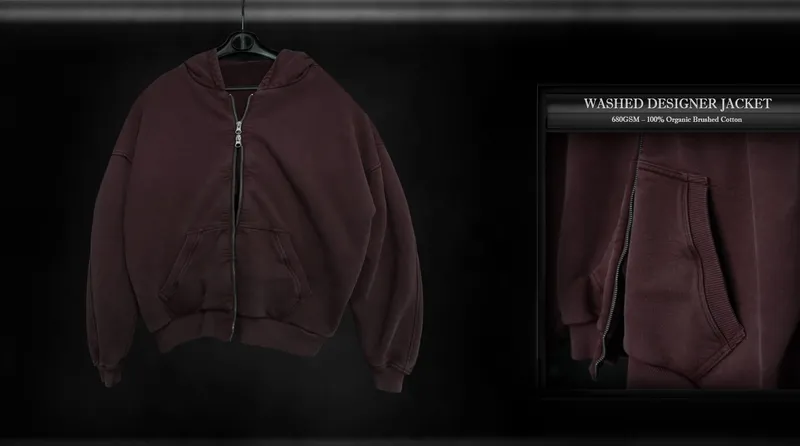
Washed Designer Jacket
680GSM — 100% Organic Brushed Cotton
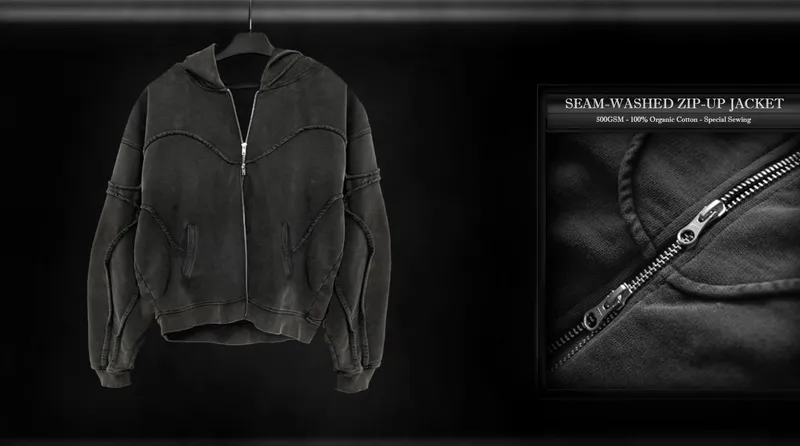
Seam-Washed Zip-Up Jacket
500GSM — 100% Organic Cotton — Special Sewing
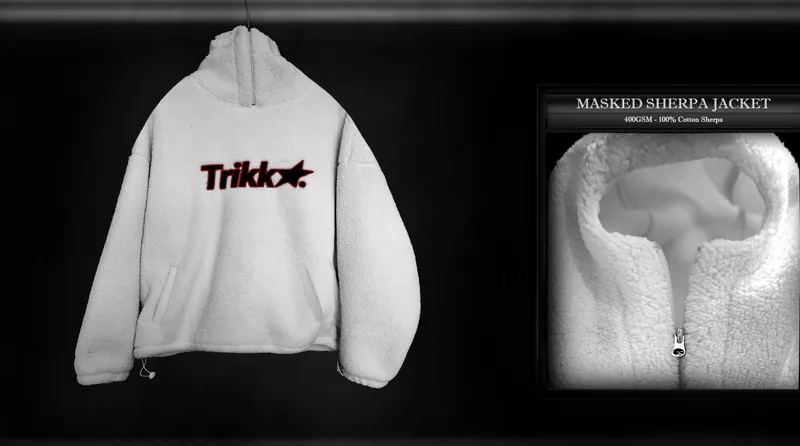
Masked Sherpa Jacket
400GSM — 100% Cotton Sherpa
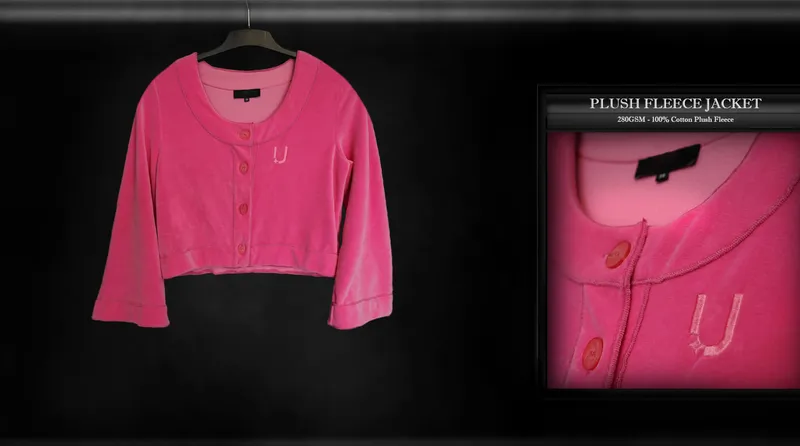
Plush Fleece Jacket
280GSM — 100% Cotton Plush Fleece
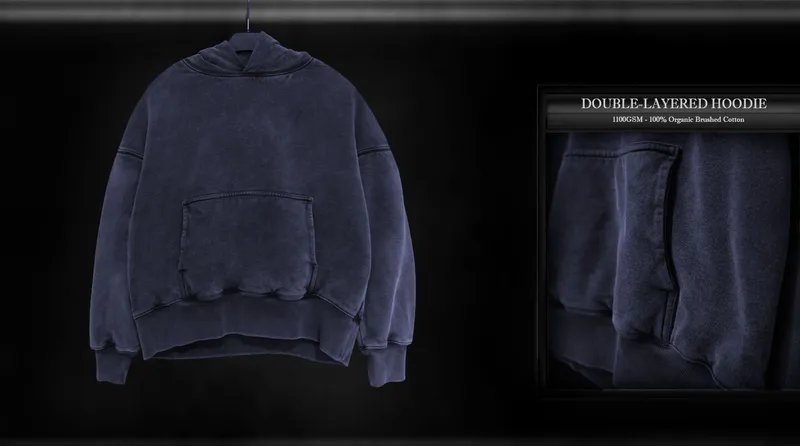
Double-Layered Hoodie
1100GSM — 100% Organic Brushed Cotton
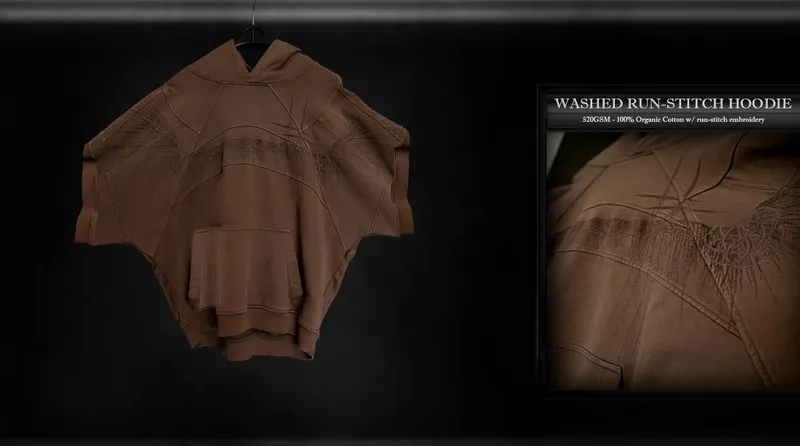
Washed Run-Stitch Hoodie
520GSM — 100% Organic Cotton w/ Run-Stitch Embroidery
Fabric Selection
Recommended Fabrics
Organic Cotton Jersey
GOTS-certified organic jersey — traceable from cotton farm to finished tee. The non-negotiable Portland fabric. Available 160–280 GSM: lightweight for summer layering, heavyweight for year-round basics. Every metre comes with a GOTS transaction certificate your B-Corp assessment can reference.
Recycled Jersey
GRS-certified recycled cotton-poly from post-consumer and post-industrial waste. Portland's circular fashion brands use this as their primary fabric. Documented recycled content percentages for your sustainability reporting and SB 707 compliance.
Cotton Canvas
Durable cotton canvas for the outdoor-heritage pieces Portland's lifestyle demands. Overshirts, chore coats, and structured jackets that handle Pacific Northwest rain and daily cycling. Natural fibre that ages gracefully — developing character with wear, which Portland consumers value over pristine newness.
Decoration & Finishing
Recommended Techniques
Embroidery
Low-waste, no-chemical branding for Portland's environmental standards. Embroidery uses thread, not ink or chemicals — the most eco-compatible decoration method. Tonal, understated logos that align with Portland's anti-excess aesthetic.
Screen Printing
Water-based inks only — zero PVC, zero phthalates, zero plastisol. Soft prints that become part of the fabric rather than sitting on top. Portland brands with sustainability commitments can't use chemical-heavy print methods — and their customers know the difference.
Specialty Finishes
Enzyme wash and bio-polish for natural softness without harsh chemicals — GOTS-compatible processes that don't compromise your certification chain. Garment dyeing for rich, natural colour depth. These finishes give organic fabrics the premium hand-feel that justifies the Portland price point.
Real Example
How We Delivered
Scenario
A Portland sustainable fashion brand needed GOTS-certified production for their B-Corp reassessment and two independent retail distribution agreements. Their Indian manufacturer sourced organic fabric but the factory itself lacked GOTS scope certification — creating a compliance gap that their B-Corp assessor flagged and their retail buyers questioned.
Solution
We produced 150 organic cotton hoodies (460 GSM GOTS-certified fleece, enzyme-washed for natural softness) and 250 organic tees (200 GSM GOTS jersey, water-based screen prints) in 4 earth-tone colourways. Full certification chain: fabric mill GOTS scope certificates, GOTS transaction certificates per fabric lot, production traceability documents, and chemical compliance records. Sea freighted to Portland in 20 days. Packaging: recycled poly bags, FSC-certified cartons, zero single-use plastic.
Result
Brand passed their B-Corp reassessment with a supply chain score in the top quartile — the assessor specifically noted the completeness of manufacturing documentation. 'GOTS Certified Production' became a key differentiator on their website and retail hang tags. Launched in Way of Being and one additional Portland concept store. Customer trust scores increased 22% in post-purchase surveys. Reordered within 6 weeks at the same careful quantities — no overproduction.
Process
How It Works
Send Your Tech Pack
Share your tech pack with flat sketches, measurements, and fabric specs. Still developing it? Send what you have — we'll help you refine it.
Get a Detailed Quote
Receive a detailed, transparent quotation covering fabric, trims, manufacturing, and finishing. Factory-direct pricing, no middlemen.
Approve Your Sample
We produce a pre-production sample for your review. Iterate until every detail — fit, fabric, colour, construction — matches your vision.
Production & Delivery
Full production with quality control at every stage. Packed to your specs and shipped directly to your warehouse or fulfillment centre.
Common Questions
Frequently Asked
Can you provide documentation for B-Corp assessment?
Yes — and our production naturally generates the data B-Corp supply chain assessors evaluate. We provide: fabric mill GOTS scope certificates (verified annually), GOTS transaction certificates per organic fabric lot, OEKO-TEX lab test reports, production origin records per stage, EU labour compliance documentation, and textile waste recycling records. Portland brands have used this documentation to score in the top quartile of the supply chain section. We don't create special reports for assessments — our standard production paperwork IS the audit trail.
What sustainability certifications can you provide?
We source OEKO-TEX Standard 100 certified fabrics (tested for harmful substances), GOTS-certified organic cotton (full chain certification from farm to fabric), GRS-certified recycled materials (post-consumer and post-industrial), and BCI cotton. Transaction certificates accompany every order. These documents serve your B-Corp assessment, your retail buyers, your product pages, and your SB 707 compliance — one documentation package, four compliance needs.
How much does shipping cost from Portugal to Portland?
Air freight for a standard pallet costs approximately $1,100–1,600 to PDX, delivered in 4–5 business days. Sea freight to Portland or Seattle port takes 20–25 days at $400–700 per pallet — our recommended option for Portland brands who prioritise lower carbon footprint over speed. For samples, DHL/FedEx express is $50–90.
Does SB 707 apply to Portland brands?
Yes — if you sell apparel in California (which most Portland DTC brands with nationwide shipping do). SB 707 requires joining Landbell USA by July 2026 and paying eco-modulated fees. Portland brands already building sustainable supply chains are well-positioned: certified fabrics, short documented supply chains, and traceable production data directly support a lower fee bracket. Our production data feeds your SB 707 reporting alongside your B-Corp documentation.
What is the minimum order for Portland brands?
100 units per style in one colourway, or 75 per colourway when you order two or more — same price for organic and recycled materials as for conventional. Portland brands typically produce intentionally: small runs, curated colours, exact quantities for their wholesale accounts. No forced overproduction, no dead stock. When your business model is built on not wasting resources, your manufacturer's MOQ needs to match.
Do you use sustainable packaging?
Yes — recycled poly bags, FSC-certified cardboard cartons, and plastic-free packaging options are standard. For Portland brands who specify zero single-use plastic, we offer: compostable garment bags, recycled tissue paper wrapping, unbleached kraft paper, and cardboard packaging without tape (tuck-close cartons). Every element is sourced from Portuguese packaging suppliers with sustainability documentation.
Can you support circular design principles?
Yes. We advise on mono-material construction (single-fibre garments that are easier to recycle than poly-cotton blends), removable trims (buttons and zippers that can be separated at end of life), and certified materials with documented recyclability paths. Portland's circular fashion movement is building toward closed-loop garment systems — and production choices made now determine whether a garment can be recovered and recycled in 5 years.
Can I visit the factory?
Factory visits are available for production clients — once samples are approved and bulk production is underway. PDX to Porto is approximately 13 hours with one connection (typically via London, Amsterdam, or Lisbon). Barcelos is about 40 minutes from Porto airport. Porto's food scene, natural wine bars, and Atlantic coastline make the trip easy to extend beyond the factory visit.
Ready to manufacture for portland brands?
Tools & Resources
Explore More
Also Manufacturing For