For Chicago Brands
Heavyweight Manufacturing for Chicago Brands
Cold-weather fleece up to 1100 GSM, workwear durability, extended sizing. Air freight to ORD in 3–5 days. 75-unit MOQ.
Trusted by brands from UK, Germany, France, Netherlands, Dubai & 15+ countries
What We Offer
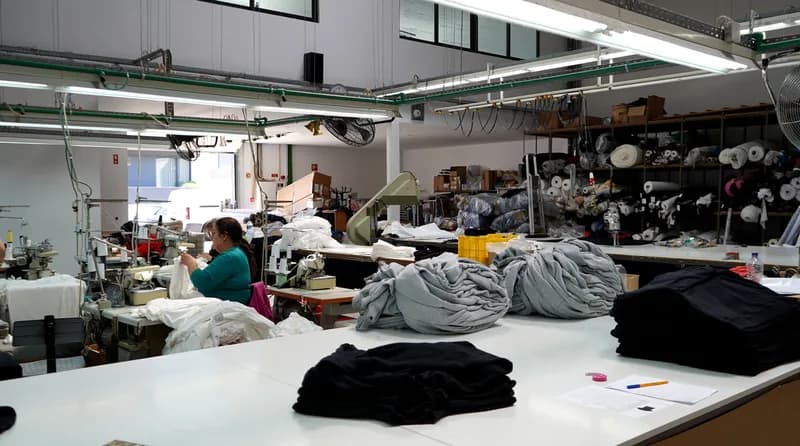
White Cotton manufactures garments for Chicago fashion brands from our factory in Barcelos, Portugal. Chicago doesn't play with the weather — when Lake Michigan wind chill drops to -15°C and the city keeps moving, the garments on people's backs better be built for it. This is the city that gave the world Virgil Abloh, Joe Freshgoods, and a workwear heritage that runs from Carhartt's industrial roots to Wicker Park's vintage-Japanese hybrid scene. Heavyweight, durable, no-nonsense — that's what Chicago demands, and that's what Portuguese manufacturing delivers.
Why Chicago Brands Need Portuguese Heavyweight Manufacturing
Virgil Abloh launched Off-White from Chicago — not from Paris or New York. Joe Freshgoods continues to put the city's South Side on the global streetwear map. The Chicago Streetwear Expo at Xoco House Gallery (May 2026) showcases 25–50 local brands to national buyers. Jugrnaut, operating from South Loop since the early 2000s, is one of the most respected home-grown streetwear institutions in the US. Production Mode, founded by Jamie Hayes on Lincoln Avenue, produces limited-edition garments sewn by local stitchers at living wages. This city doesn't chase trends — it creates them, often with a practicality and cultural integrity that coastal cities lack. Chicago fashion is built on substance, not hype.
But here's the manufacturing reality: Chicago's remaining local production is expensive and limited. The US garment industry has concentrated in LA and NYC, leaving Midwest brands with few domestic options. A heavyweight hoodie from a Chicago cut-and-sew shop runs $40–50+ per unit at quantities that barely reach 100. Portuguese manufacturing delivers the same construction quality — often better, with industrial-grade embroidery machines and certified fabric sourcing — at 30–40% lower per-unit cost. With 145% tariffs making Chinese manufacturing unviable, Portugal has become the rational production partner for any Chicago brand selling hoodies above $65 retail.
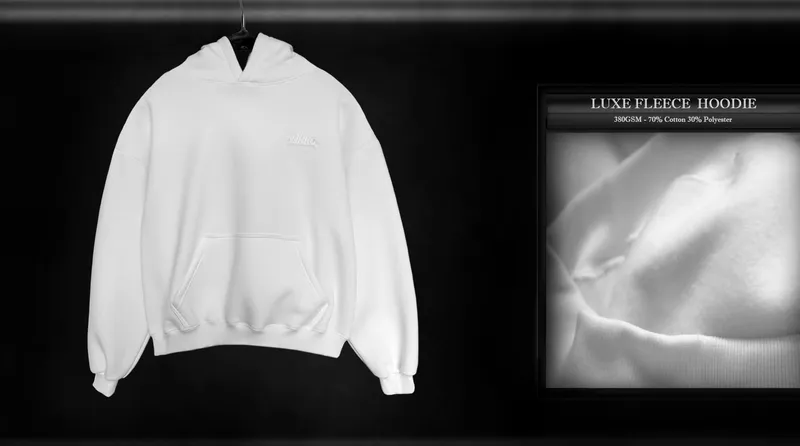
Chicago's climate is the most extreme of any major US fashion market. Winters average -5 to 0°C before wind chill, and the 'Hawk' — Lake Michigan wind — can push effective temperatures below -15°C. Spring and fall are unpredictable. Summers bring humid 30°C+ heat. This isn't London's cool drizzle or Berlin's grey cold — this is genuinely brutal weather that destroys garments built for aesthetic rather than function. A 380 GSM hoodie that works fine in LA is tissue paper in a January Chicago wind. The city's streetwear market has learned this: 480 GSM is the minimum weight consumers take seriously, and 540–580 GSM is the sweet spot for premium Chicago hoodies. We produce up to 1100 GSM double-layered constructions in organic cotton fleece.
Workwear isn't a trend in Chicago — it's in the city's DNA. Carhartt WIP's Detroit jackets, double-knee pants, and heavy flannel shirts aren't fashion references here, they're everyday garments. The Midwest pragmatism means garments must perform: reinforced seams at stress points (bartacked pockets, crotch gussets), heavy-duty YKK zippers that don't jam in cold, colour-fast fabrics that survive industrial washing. When Chicago consumers spend $120 on a canvas chore coat, they expect it to last three winters minimum. Our construction standards — chain-stitched hems, bartacked stress points, pre-shrunk fabrics — deliver the durability that Midwest expectations demand.
The Midwest market also requires extended sizing that most manufacturers handle poorly. Chicago skews larger than coastal markets — big and tall isn't a niche, it's a significant portion of the customer base. We produce up to 4XL with proper custom grading: adjusted proportions (not just scaled-up smalls), wider body panels, longer rise on pants, proportional sleeve length. Every size in the range is fitted specifically for that body — because a 3XL customer who feels like they're wearing a stretched-out Large won't come back. No extra charge for extended sizing, and we include 4XL in standard fit testing during sample development.
Why Choose Us
Why White Cotton for Chicago Brands
Built for Sub-Zero Wind Chill
Brushed fleece from 480–1100 GSM, double-layered constructions, sherpa-lined hoodies and jackets. When Lake Michigan's Hawk hits -15°C, the garments we build keep working. We don't produce fashion-weight hoodies for Chicago — we produce outerwear-grade warmth in hoodie form.
Workwear-Grade Construction
Bartacked stress points, chain-stitched hems, heavy-duty YKK zippers, reinforced pocket openings, pre-shrunk fabrics. The construction details that turn a $120 canvas jacket from a one-season piece into a three-year daily wearer. Chicago consumers inspect these details — and so do we.
Extended Sizing Up to 4XL
The Midwest market skews larger than coastal cities. We produce up to 4XL with custom grading — adjusted proportions, wider body panels, proportional sleeves. Not stretched-out smalls, but properly patterned garments for every body. No extra charge, included in standard fit development.
30–40% Below US Production Cost
With 145% tariffs on Chinese imports and $40+ per-unit Chicago production costs, Portuguese manufacturing is the rational middle ground: equivalent or better quality at 30–40% lower cost, with certified fabrics and 3–5 day air freight to O'Hare.
Product Catalog
Popular Products
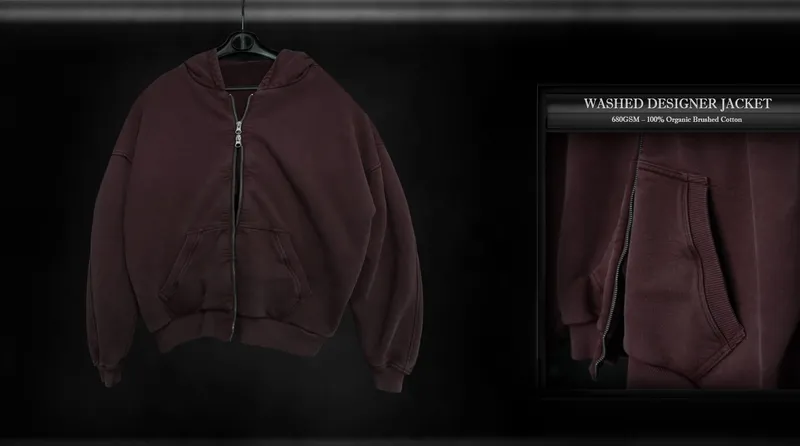
Washed Designer Jacket
680GSM — 100% Organic Brushed Cotton
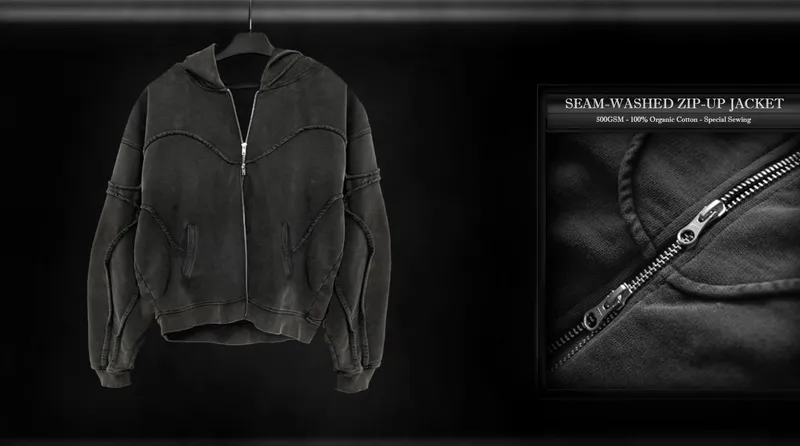
Seam-Washed Zip-Up Jacket
500GSM — 100% Organic Cotton — Special Sewing
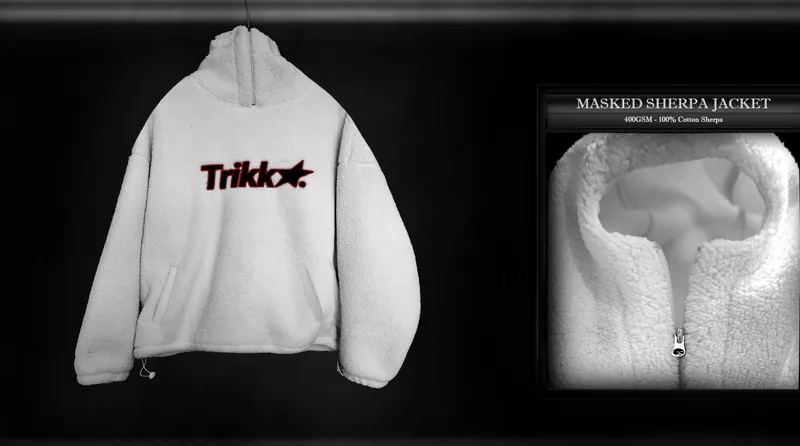
Masked Sherpa Jacket
400GSM — 100% Cotton Sherpa
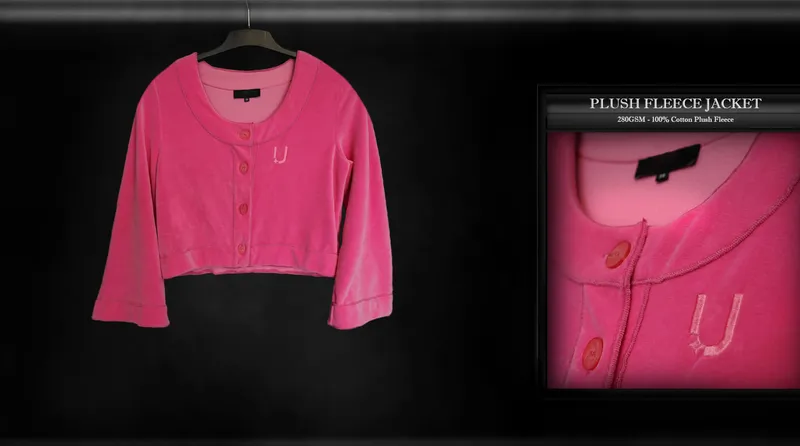
Plush Fleece Jacket
280GSM — 100% Cotton Plush Fleece
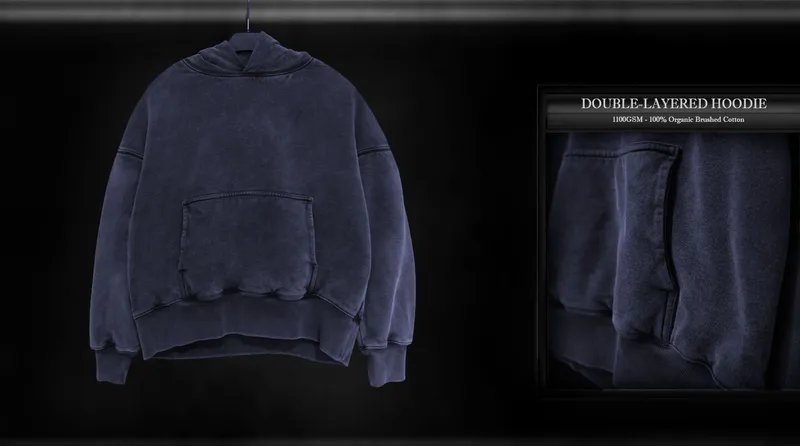
Double-Layered Hoodie
1100GSM — 100% Organic Brushed Cotton
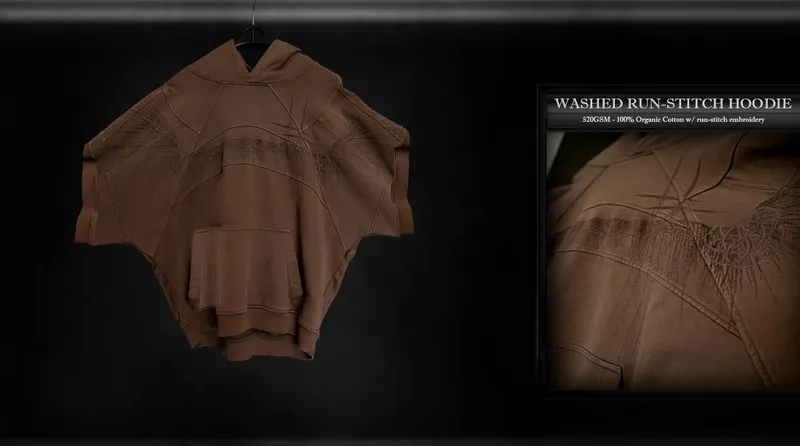
Washed Run-Stitch Hoodie
520GSM — 100% Organic Cotton w/ Run-Stitch Embroidery
Fabric Selection
Recommended Fabrics
Brushed Fleece
The Chicago essential. 480–580 GSM double-brushed fleece with a dense interior nap that traps heat — tested for the kind of cold that most European cities never experience. The top of our range: 1100 GSM double-layered organic fleece for brands building statement-weight pieces. This is the fabric Chicago streetwear is built on.
Sherpa Cotton
Sherpa-lined jackets and hoodies for genuine warmth in sub-zero conditions. Sherpa interior with a structured exterior — the layering piece that turns a hoodie into outerwear. Premium hand-feel with the insulation Chicago winters actually require.
Cotton Canvas
Workwear-grade cotton canvas (12–16 oz) for chore coats, Detroit-style jackets, and cargo pants that channel Chicago's industrial heritage. Pre-washed for controlled shrinkage, reinforced at stress points. The fabric of Carhartt's DNA — produced with cut-and-sew flexibility that Carhartt's mass production can't offer.
Decoration & Finishing
Recommended Techniques
Embroidery
Clean, durable embroidered branding that survives the heavy washing Chicago garments go through. When a hoodie gets washed weekly for three winters, screen print cracks — embroidery doesn't. Multi-colour chest and sleeve placements for Chicago streetwear's bold-but-clean aesthetic.
3D Puff Embroidery
Raised, textured logos on heavyweight fleece — the premium streetwear look that Joe Freshgoods and Jugrnaut popularised in Chicago. Foam-backed puff embroidery that adds tactile dimension to hoodies and crewnecks. Stands out even on 500+ GSM heavy fabrics.
Screen Printing
Bold, oversized graphic prints for Chicago's art-meets-streetwear scene. Plastisol and water-based inks rated for 50+ wash cycles — because a print that cracks after 10 washes won't survive a Chicago winter of weekly laundry. Large-format back and chest prints in up to 12 colours.
Real Example
How We Delivered
Scenario
A Chicago streetwear brand needed heavyweight cold-weather hoodies that could genuinely handle Lake Michigan wind chill. Their previous manufacturer's 380 GSM fleece felt thin after two washes, and domestic US production quoted $45+ per unit — making their $85 retail target impossible with healthy margins.
Solution
We produced 100 hoodies in 540 GSM double-brushed fleece with sherpa-lined hoods and 3D puff embroidered logos, plus 80 chore coats in 12 oz cotton canvas with bartacked pockets and YKK metal zippers. Extended sizing XS–4XL with custom grading. Air freighted to O'Hare in 4 days.
Result
The 540 GSM hoodies became their bestselling product — customers described them as 'the warmest hoodie I've ever owned.' Per-unit production cost of $27 (vs $45+ domestically) gave healthy margins at $89 retail. Chore coats sold through completely by December. Brand now runs seasonal production: heavyweight drops for October–March, lighter French terry and jersey for May–September.
Process
How It Works
Send Your Tech Pack
Share your tech pack with flat sketches, measurements, and fabric specs. Still developing it? Send what you have — we'll help you refine it.
Get a Detailed Quote
Receive a detailed, transparent quotation covering fabric, trims, manufacturing, and finishing. Factory-direct pricing, no middlemen.
Approve Your Sample
We produce a pre-production sample for your review. Iterate until every detail — fit, fabric, colour, construction — matches your vision.
Production & Delivery
Full production with quality control at every stage. Packed to your specs and shipped directly to your warehouse or fulfillment centre.
Common Questions
Frequently Asked
How heavy can your fabrics go?
Our standard range tops out at 1100 GSM double-layered organic brushed fleece. For Chicago, most brands find the sweet spot at 480–580 GSM: warm enough for serious cold, wearable enough to not feel like armour. We sample at multiple weights so you can feel the difference before committing to bulk.
Do you offer extended sizing for the Midwest market?
Yes — up to 4XL with custom grading at no extra charge. Chicago's market skews larger than coastal cities, and we build this into every production run. Extended sizes are properly patterned: wider body panels, proportional sleeve length, adjusted rise on pants. We include 4XL in fit testing during sample development so you can verify proportions across the full range before bulk.
How much does shipping cost from Portugal to Chicago?
Air freight for a standard pallet (100–200 garments) costs approximately $900–1,400 to ORD (O'Hare), delivered in 3–5 business days. Sea freight (15–20 days to East Coast port, then rail/truck to Chicago) costs $350–650 per pallet. For samples, DHL/FedEx express is $45–85. Most Chicago brands air-freight initial orders for speed.
Are there import duties on clothing from Portugal?
Yes — US import duties on cotton hoodies are approximately 17% effective rate (base duty plus Section 122 surcharge). Cotton canvas jackets face a similar range. This is dramatically lower than the 145% tariffs on Chinese imports. At $27 per-unit production cost plus ~17% duty, a Portuguese-made heavyweight hoodie lands in Chicago at approximately $32 — less than the $45+ domestic US production quote.
What is the minimum order for Chicago brands?
100 units per style in one colourway, or 75 per colourway when you order two or more. For a seasonal heavyweight drop (2–3 styles in 2–3 colourways), that's 200–450 total units — enough to stock your Wicker Park pop-up, supply Jugrnaut if they carry your line, and fulfil online DTC orders. Reorder bestsellers in 3–4 weeks as sell-through data comes in.
Can you produce for both Chicago seasons?
Yes — and most Chicago clients do exactly that. October–March: heavyweight fleece hoodies (480–580 GSM), sherpa-lined outerwear, canvas chore coats, heavy joggers. May–September: French terry crewnecks (320–380 GSM), organic cotton tees (200–280 GSM), lightweight joggers. We hold your patterns year-round and switch fabric weights seasonally.
How does workwear-grade construction differ from standard?
Standard garment construction uses single-needle stitching with basic seam finishing. Workwear-grade adds: bartacked stress points (pocket corners, fly, belt loops), double-needle topstitching on collars and cuffs, chain-stitched hems (the coveted 'roping' effect), heavy-duty YKK metal zippers, reinforced crotch gussets on pants, and taped shoulder seams to prevent stretching. These details add 2–3 minutes per garment on the sewing line — and 2–3 years to the garment's functional life.
Can I visit the factory?
Factory visits are available for production clients — once samples are approved and bulk production is underway. Chicago to Porto is approximately 10 hours with one connection (typically via London, Lisbon, or Frankfurt). Barcelos is about 40 minutes from Porto airport. Several Chicago brand owners have visited during winter — they say our Barcelos weather in January feels like a Chicago April.
Ready to manufacture for chicago brands?
Tools & Resources
Explore More
Also Manufacturing For