GOTS-Certified Production
Organic Clothing Manufacturer in Portugal
White Cotton is an organic clothing manufacturer in Barcelos, Portugal, specialising in GOTS-certified organic cotton garments. From lightweight 140 GSM tees to heavyweight 1100 GSM double-layered hoodies — we produce custom organic garments with full traceability, verifiable certification, and chemical-free processing. MOQ from 75 units per colourway (100 in a single colourway).
GOTS Certified
Organic supply chain
Organic Cotton
140–1100 GSM
MOQ from 75 Units
Per colourway · 100 in one colour
Barcelos
Made in Portugal
Trusted by brands from UK, Germany, France, Netherlands, Dubai & 15+ countries
Organic Textiles
What Is Organic Clothing Manufacturing?
Organic clothing manufacturing is the production of garments using fibres grown and processed according to strict organic agricultural and textile standards. The most recognised standard is GOTS (Global Organic Textile Standard), which certifies the entire supply chain — from the cotton farm to the finished garment. For cotton to be called organic under GOTS, it must be grown without synthetic pesticides, herbicides, or genetically modified seeds, and processed without the use of toxic chemicals at any stage from spinning to dyeing to finishing.
The key difference between organic and conventional cotton is in the farming. Conventional cotton is one of the most chemically intensive crops in the world — accounting for roughly 16% of global insecticide use despite covering only 2.4% of agricultural land. Organic cotton farming replaces synthetic chemicals with natural pest management, crop rotation, and composting. The result is cotton that is safer for farm workers, better for soil health, and free from chemical residues that can persist through processing into the finished garment.
At the manufacturing stage, organic certification controls how the cotton is processed. GOTS mandates that all chemicals used in spinning, knitting, dyeing, and finishing meet strict environmental and toxicological criteria — no banned azo dyes, no heavy metals above safe limits, no formaldehyde-based resins. Wastewater from organic textile processing must be treated before discharge. These requirements mean organic garments are not only better for the environment during farming — they are also safer for the end consumer wearing them.
Portugal has developed a strong organic textile ecosystem. Mills in the northern textile corridor source GOTS-certified organic cotton (primarily from Turkey, India, and Tanzania), spin it into yarn, and knit or weave it into fabric — all within certified European facilities. White Cotton works with these mills to source organic cotton jersey (140-300 GSM), organic French terry (280-500 GSM), organic brushed fleece (260-580 GSM), and organic canvas (220-480 GSM). Every fabric lot arrives with a GOTS Transaction Certificate proving its organic chain of custody.
For brands considering the switch to organic, the cost premium is real but manageable. Organic cotton fabric typically costs 15-30% more than conventional equivalent, which translates to roughly 10-20% higher finished garment cost. Many successful brands position organic as a value differentiator — consumers increasingly expect and are willing to pay for verifiable organic claims, especially in the basics and essentials category. Factory visits are available for production clients — once your samples are approved and bulk production is underway, you can see the organic production process firsthand at our Barcelos facility.
Product Categories
Organic Garments We Produce
Organic Fabric Library
Fabrics We Work With
Customization Options
Decoration & Finishing Techniques
Embroidery
Embroidery
3D Puff Embroidery
Embroidery
Screen Printing
Screen Printing
Discharge Printing
Screen Printing
DTG (Direct-to-Garment) Printing
Digital Printing
DTF (Direct-to-Film) Printing
Digital Printing
Sublimation Printing
Digital Printing
Heat Transfer & Vinyl
Digital Printing
Specialty Finishes & Effects
Specialty
Organic Production Solutions
Our Manufacturing Services
Private Label Manufacturing
Private label manufacturing is the process of producing garments exclusively to a client's specifications, bearing their brand name and labe...
White Label Manufacturing
White label manufacturing lets you start from one of our base fits — a standard pattern for the garment — and add your own branding: labels,...
Custom Clothing Manufacturing
Custom clothing manufacturing is a full-package production service covering every stage from pattern creation to finished, packed garments. ...
Collection Development
Collection development is an end-to-end service that takes your brand from concept to production-ready patterns at no extra design charge. W...
From Farm to Garment
How Organic Production Works
Organic Fabric Selection
Choose from our library of GOTS-certified organic cotton fabrics — jersey, French terry, brushed fleece, and canvas in weights from 140 to 1100 GSM. Every fabric lot comes with a GOTS Transaction Certificate proving its organic origin from farm to mill.
Quotation & Sample Development
You receive a detailed quotation including organic fabric costs, trims, production, and finishing. We produce a physical sample using the exact organic fabric for your order — you check fit, hand-feel, weight, and construction before committing to bulk.
Certified Production
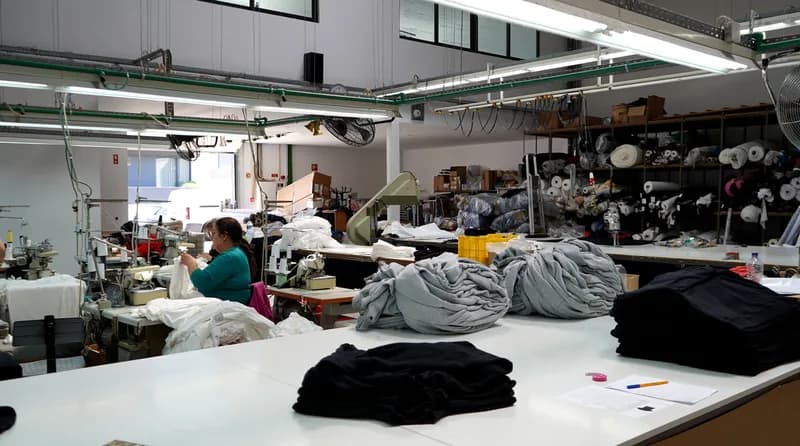
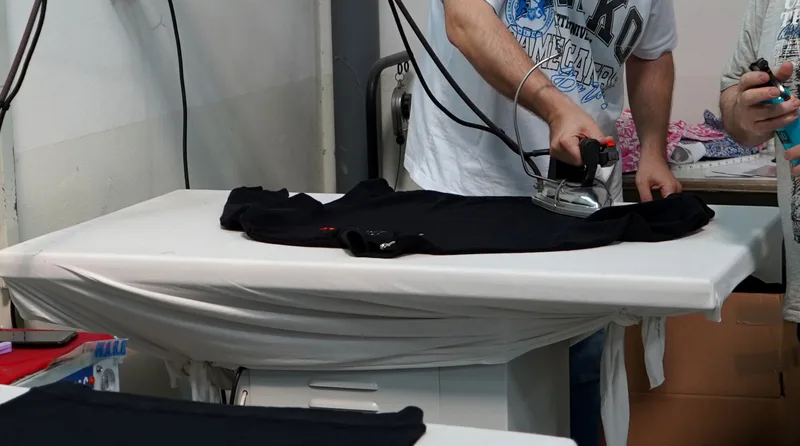
Your organic garments are cut, sewn, and finished in our Barcelos factory under controlled conditions. Organic fabrics are stored and handled separately to avoid contamination. GOTS-mandated processing standards are followed at every stage — no prohibited chemicals, no mixing with conventional materials.
QC, Documentation & Delivery
Every garment passes end-of-line quality inspection. For organic orders, we provide GOTS Transaction Certificates, fabric composition reports, and dye safety documentation. Your garments ship with the paperwork you need to make genuine organic claims to your customers and retailers.
Common Questions
Frequently Asked Questions
What is GOTS certification and why does it matter?
GOTS (Global Organic Textile Standard) is the world's leading standard for organic fibre textiles. It covers the entire supply chain — from harvesting raw organic cotton to manufacturing, packaging, and labelling. A GOTS-certified garment guarantees the cotton was grown without synthetic pesticides or GMO seeds, processed without toxic chemicals, and manufactured under fair labor conditions. For brands, GOTS certification provides a verifiable, globally recognised claim that their garments are genuinely organic — not just marketing.
Do all your fabrics come in organic options?
Our core cotton fabrics — jersey, French terry, brushed fleece, and canvas — are all available in GOTS-certified organic versions. Organic cotton jersey ranges from 140 to 300 GSM, organic French terry from 280 to 500 GSM, and organic brushed fleece from 260 to 580 GSM. Non-cotton fabrics like linen and recycled jersey have their own sustainability certifications (OEKO-TEX for linen, GRS for recycled). We work with you to find the right organic or certified option for each garment in your collection.
How much more does organic cotton cost compared to conventional?
Organic cotton typically costs 15-30% more than conventional cotton at the fabric level, depending on weight and composition. For a finished garment, the organic fabric premium translates to roughly 10-20% higher total cost because fabric is only one component of the final price (labor, trims, finishing, and packing remain the same). At higher production volumes, the per-unit premium decreases. Many brands absorb part of the cost and pass a small increment to the consumer, positioning organic as a value-add that justifies a higher retail price.
Can I mix organic and conventional fabrics in the same order?
Yes. Many brands produce their core basics (t-shirts, hoodies) in organic cotton and use conventional or recycled fabrics for more technical pieces (outerwear, performance wear). We manage fabric sourcing per style, so each garment in your order can use a different fabric. The only requirement is that garments labelled as organic must use GOTS-certified fabric throughout — you cannot mix organic and conventional cotton within a single garment and call it organic.
What weight range is available for organic cotton fabrics?
Our organic cotton fabric range covers everything from lightweight tees to heavyweight winter sweats. Organic cotton jersey: 140-300 GSM (ideal for t-shirts, long sleeves, and tanks). Organic French terry: 280-500 GSM (ideal for sweatshirts, hoodies, and joggers). Organic brushed fleece: 260-580 GSM (ideal for heavyweight hoodies and winter pieces). Organic cotton canvas: 220-480 GSM (ideal for workwear and structured garments). At the top of the range is a double-layered organic brushed fleece at 1100 GSM for ultra-premium hoodies.
What about organic or natural dyes — do you offer chemical-free dyeing?
We offer multiple dyeing approaches depending on your sustainability goals. Standard dyeing uses OEKO-TEX certified dye processes — safe for skin contact, tested for harmful substances, but not chemical-free. Low-impact dyeing uses reactive dyes with higher fixation rates, meaning less water waste and chemical discharge. Natural and plant-based dyeing is available for small batches, using indigo, madder root, and other botanical dyes, but colour fastness and range are more limited. GOTS certification mandates that all dyes used on organic fabrics meet strict chemical limits — no toxic heavy metals, no banned azo dyes, no formaldehyde.
How do you verify that organic cotton is genuinely organic?
Every organic fabric lot we source comes with a GOTS Transaction Certificate (TC) — an official document issued by the mill's GOTS-accredited certifier. The TC confirms the organic status of the specific fabric shipment, including the lot number, weight, composition, and the certifier's licence number. This chain of certificates runs from the cotton farm to the spinning mill to the weaving or knitting mill to our factory. If you need organic traceability documentation for your own customers or retailers, we provide the relevant TCs with your production order.
What is BCI cotton and how does it compare to organic?
BCI (Better Cotton Initiative) is a sustainability standard focused on improving conventional cotton farming practices — reducing water use, minimising chemical inputs, and promoting fair labor. However, BCI cotton is NOT organic: it still allows synthetic pesticides and fertilizers, just in reduced quantities. BCI is a mass-balance system (not traceable lot-by-lot like GOTS), so a garment labelled 'BCI cotton' may not contain any BCI cotton — the brand purchased credits. For brands wanting verifiable, traceable organic claims, GOTS certification is the stronger, more rigorous standard.
Start Organic Production in Portugal
Send us your tech pack or design brief. No commitment required.
Explore More