Quality-First Production
Premium Clothing Manufacturer in Portugal
White Cotton is a premium clothing manufacturer in Barcelos, Portugal, specialising in heavyweight fabrics and expert construction for brands that refuse to compromise on quality. From 300 GSM mid-weight tees to 1100 GSM ultra-heavyweight outerwear, we produce garments built to last — reinforced seams, chain stitching, bar tacking, and multi-stage quality control on every order. MOQ from 75 units per colourway, OEKO-TEX certified fabrics.
Up to 1100 GSM
Heavyweight fabrics
38+ Styles
Product catalog
OEKO-TEX
Certified production
Barcelos
Made in Portugal
Trusted by brands from UK, Germany, France, Netherlands, Dubai & 15+ countries
The Premium Standard
What Makes Premium Clothing Manufacturing Different?
Premium clothing manufacturing is defined by three things: fabric weight, construction quality, and finishing standards. It occupies the space between fast fashion and luxury — garments are made with heavyweight fabrics and industrial precision, but without the artisanal hand-finishing and exotic materials that push production into luxury territory. For brands targeting the mid-to-high market, premium manufacturing is the sweet spot where quality meets scalable production.
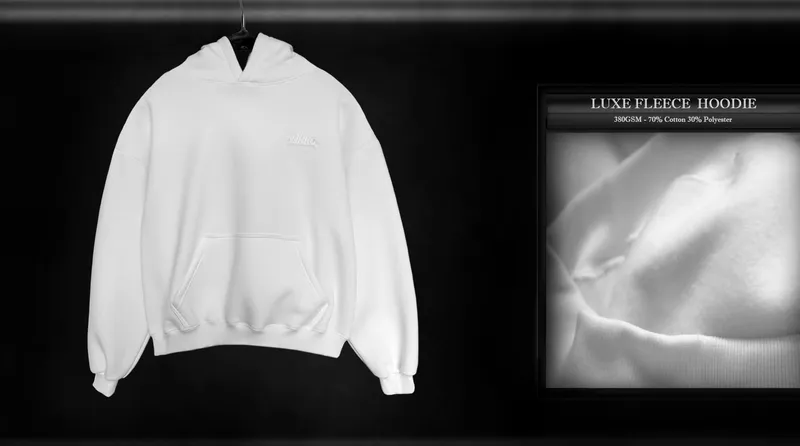
Fabric weight is the first indicator of premium quality that customers feel the moment they pick up a garment. A standard fast-fashion t-shirt weighs 150-180 GSM. A premium tee starts at 280 GSM and can reach 350 GSM — noticeably heavier, with better drape, opacity, and durability. For hoodies, the premium range is 400-550 GSM versus 280-320 GSM for standard. Ultra-heavyweight pieces for streetwear and outerwear brands go even further, reaching 800-1100 GSM. White Cotton sources fabrics across this full spectrum from certified European mills, and our team advises on the right weight for each garment type and intended use.
Construction is what separates a garment that lasts from one that falls apart. Premium construction includes chain stitching on hems — the technique that creates the coveted roping effect and actually improves the look over time with washing. Bar tacking reinforces stress points at pocket corners, fly openings, and belt loops. Taped shoulder seams prevent the neckline from stretching out of shape. Double-needle topstitching on collars and cuffs provides durability and a clean visual line. These are not cosmetic choices — each one extends the life of the garment and justifies a higher retail price.
Quality control in premium production goes beyond basic end-of-line checks. At White Cotton, we run a multi-stage QC process: incoming fabric inspection for weight, colour, and defects; cutting verification for pattern accuracy; inline sewing checks at every workstation; and a 20+ point end-of-line inspection covering stitching, measurements, symmetry, and decoration. We also pull random garments for wash testing to confirm shrinkage stays within tolerance. This level of inspection adds time, but it is what allows premium brands to stand behind their product with confidence.
Portugal is one of Europe's strongest regions for premium clothing manufacturing. The northern textile corridor — stretching from Porto through Barcelos, Guimaraes, and Famalicao — has over a century of manufacturing expertise. Factories here work to EU labour and environmental standards, use OEKO-TEX and GOTS certified fabrics, and typically deliver shorter lead times than Asia. Factory visits are available for production clients — once your samples are approved and bulk production is underway, you are welcome to visit our Barcelos facility and see your garments being made. White Cotton sits at the centre of this corridor, producing premium garments for brands across Europe, the UK, Australia, and North America.
Product Categories
Premium Garments We Produce
Fabric Library
Premium Fabrics We Work With
Customization Options
Decoration & Finishing Techniques
Embroidery
Embroidery
3D Puff Embroidery
Embroidery
Screen Printing
Screen Printing
Discharge Printing
Screen Printing
DTG (Direct-to-Garment) Printing
Digital Printing
DTF (Direct-to-Film) Printing
Digital Printing
Sublimation Printing
Digital Printing
Heat Transfer & Vinyl
Digital Printing
Specialty Finishes & Effects
Specialty
Full-Package Solutions
Our Manufacturing Services
Private Label Manufacturing
Private label manufacturing is the process of producing garments exclusively to a client's specifications, bearing their brand name and labe...
White Label Manufacturing
White label manufacturing lets you start from one of our base fits — a standard pattern for the garment — and add your own branding: labels,...
Custom Clothing Manufacturing
Custom clothing manufacturing is a full-package production service covering every stage from pattern creation to finished, packed garments. ...
Collection Development
Collection development is an end-to-end service that takes your brand from concept to production-ready patterns at no extra design charge. W...
From Fabric to Finished Garment
How Premium Production Works
Design Review & Fabric Selection
Share your tech pack, reference garment, or design brief. We review your quality requirements and recommend the optimal fabric weight, composition, and construction approach. For premium production, fabric selection is the most critical decision — we source from certified European mills and provide swatch sets for your approval before anything is cut.
Premium Sampling & Fit Testing
We produce a proto sample for fit and construction review, followed by a pre-production sample (PPS) in final fabrics, trims, and decoration. Fabric is tested for shrinkage, colourfastness, and pilling. You receive detailed measurement charts, construction photos, and the physical sample for hands-on evaluation. We iterate until every detail meets your quality standard.
Precision Cut & Sew Production
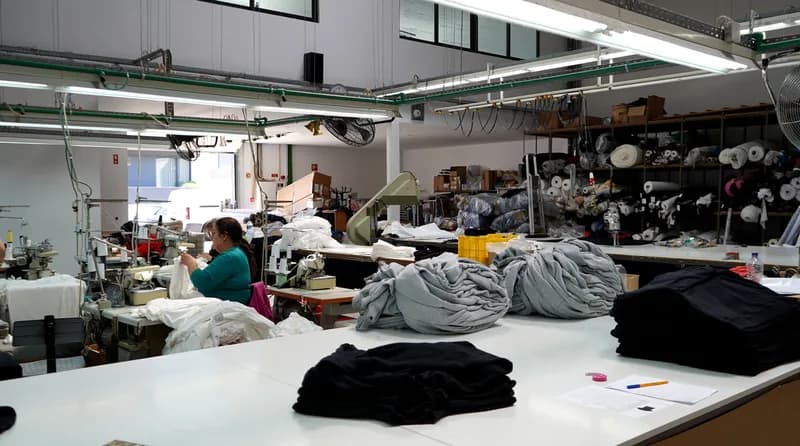
Approved fabric is spread, matched for shade consistency, and cut using the finalised patterns. Cut panels move to dedicated sewing lines configured for your garment type. Operators follow the approved construction sequence with premium details — reinforced seams, chain stitching, bar tacking, taped shoulders. Inline QC checks run at every workstation throughout production.
Multi-Stage QC & Premium Finishing
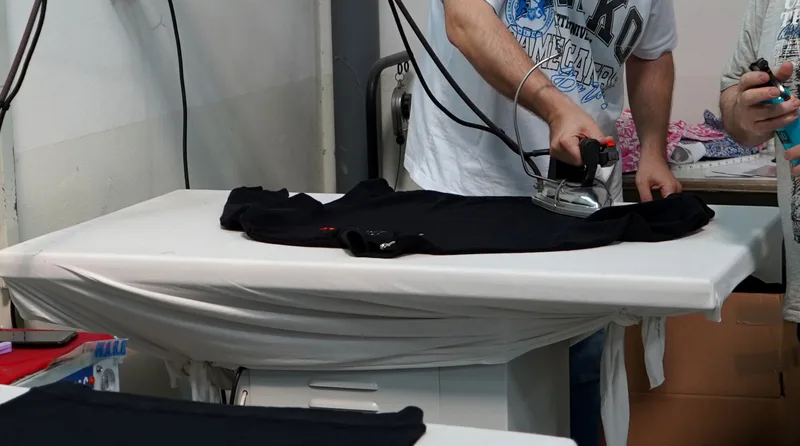
Every garment passes a 20+ point end-of-line inspection. We check stitching quality, measurement accuracy, symmetry, decoration placement, and overall finish. Random pieces are pull-tested for seam strength and wash-tested for shrinkage. Approved garments are steam-pressed, folded to your specifications, and packed with custom labels, hang tags, and branded packaging as required.
Common Questions
Frequently Asked Questions
What GSM range is considered premium clothing?
Premium clothing typically starts at 300 GSM for t-shirts and goes up to 1100 GSM for heavyweight outerwear and hoodies. For context, fast-fashion tees sit around 150-180 GSM, while a premium-weight tee is 280-350 GSM. Heavyweight hoodies in the premium segment range from 400-550 GSM, and ultra-heavyweight pieces (popular in streetwear and luxury) can reach 800-1100 GSM. White Cotton sources fabrics across this entire range, and our team advises on the optimal weight for your specific garment type, intended use, and target market positioning.
What is the difference between premium and luxury clothing manufacturing?
Premium manufacturing focuses on high-quality materials, durable construction, and consistent finishing at a price point that allows for healthy margins without luxury-tier retail prices. Luxury manufacturing adds hand-finishing, exotic fabrics, couture-level construction details, and significantly higher per-unit costs. Premium sits between fast fashion and luxury — it uses heavyweight fabrics, reinforced seams, and careful quality control, but relies on efficient industrial processes rather than artisanal hand-work. Most emerging and mid-market brands target the premium segment because it delivers perceived quality without the cost structure of luxury.
What reinforced construction options do you offer?
Our premium construction options include chain stitching on hems (the coveted roping effect that improves with washing), bar tacking at stress points (pocket openings, fly, belt loops), flatlock seaming for activewear comfort, double-needle topstitching on collars and cuffs, taped shoulder seams to prevent stretching, reinforced gussets on pants and jackets, and bonded seams for technical outerwear. We also offer blind hemming for a cleaner finish and coverstitching on knitwear. Each construction detail is selected based on the garment type and your quality tier — we recommend the right combination during the sampling stage.
How does premium manufacturing pricing compare to standard production?
Premium production typically costs 30-60% more per unit than standard manufacturing, depending on fabric weight, construction complexity, and decoration. The main cost drivers are fabric (heavyweight fabrics cost more per metre and require more material per garment), construction time (reinforced seams and premium finishing take longer on the sewing line), and quality control (more inspection checkpoints). However, premium garments command higher retail prices — a 400 GSM hoodie that costs EUR 18-25 to produce can retail for EUR 80-150. The margin structure is typically better than standard-weight garments despite higher production costs.
What makes Portuguese manufacturing premium compared to other countries?
Portugal's textile industry has over 100 years of expertise concentrated in the northern corridor between Porto and Barcelos. What makes it premium: skilled operators trained in European construction standards, access to OEKO-TEX and GOTS certified fabrics, proximity to Italian and Turkish fabric mills for fast sourcing, strict EU labour and environmental regulations that ensure ethical production, and a culture of craftsmanship passed down through generations. Lead times from Portugal are typically shorter than from Asia, and production clients can visit the factory once samples are approved and bulk is underway. Many of Europe's leading premium and contemporary brands manufacture in this region.
How does your sample testing process work for premium garments?
For premium production, our sampling process is more rigorous than standard. We produce an initial proto sample for fit and construction review, followed by a fabric swatch set so you can feel the exact weight and hand of the production fabric. Once you approve the fit sample, we make a pre-production sample (PPS) using final fabrics, trims, labels, and decoration — this is the exact garment that will go into bulk. We test fabric shrinkage, colourfastness, pilling resistance, and seam strength. You receive detailed measurement charts and photos at every stage. Most premium styles are finalised in two rounds of sampling.
Can you produce small batches of premium clothing?
Yes. Our minimum order quantity is 100 units per style in one colourway, or 75 per colourway when you order two or more, which is ideal for premium brands running limited collections or testing new products. Small batches at premium quality are one of our specialities — many of our clients start with 75-100 units of a single style, validate sell-through, and then scale to larger orders. We maintain the same construction standards and quality control whether the order is 75 units or 5,000 units. There is no compromise on quality for smaller runs.
What quality control process do you use for premium production?
Premium production at White Cotton follows a multi-stage QC process. Incoming fabric inspection checks weight, colour consistency, and defects before cutting begins. During cutting, we verify pattern accuracy and fabric alignment. Inline QC during sewing checks stitch density, seam allowance, measurement accuracy, and construction quality at every workstation. Post-sewing, every garment passes a 20+ point end-of-line inspection covering stitching, symmetry, measurements, decoration placement, label position, button/zip function, and overall finish. We also pull random garments for wash testing to verify shrinkage stays within tolerance. Only garments that pass all checks are approved for packing and shipment.
Start Your Premium Production in Portugal
Send us your tech pack or design brief. No commitment required.
Explore More